
The UK digital market is changing quickly. People now use online services for banking, shopping, subscriptions, travel, entertainment and everyday support. This growth brings convenience, but it also raises one important question: how can digital spaces grow without putting users at risk?
The Netherlands offers a useful example for UK businesses. Its digital market shows how clear rules, strong identity checks and consumer protection can help build trust. Even search interest around terms such as best online casino Nederland shows why regulated online entertainment needs strict licensing, safer user checks and clear public guidance rather than a loose, unmonitored system.
For UK brands, the lesson is not only about technology. It is about creating digital services that feel fast, local, transparent and safe from the first click.
Why This Matters For UK Consumers
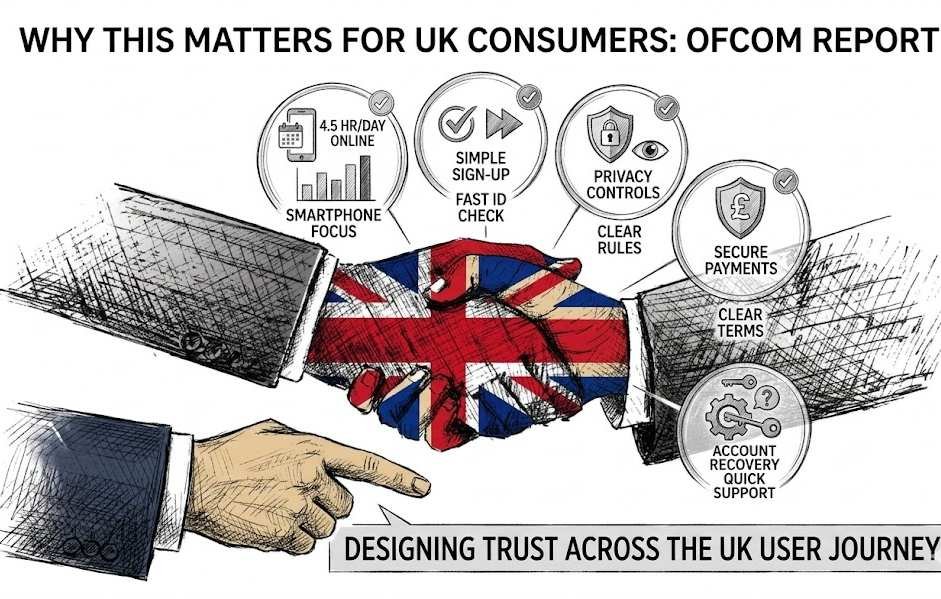
UK users are spending more time online than ever. Ofcom’s Online Nation 2025 report says UK adults spend around four and a half hours online each day. Most of that time is now spent on smartphones, and adults use dozens of apps in a normal month.
This means digital trust is no longer a small issue. It affects daily life. A slow checkout, weak privacy notice, unclear refund process or poor account security can quickly push people away.
For UK businesses, trust now has to be designed into the full user journey.
What UK Users Now Expect
UK consumers are used to quick digital services. They expect:
- Simple sign-up steps
- Fast identity checks
- Clear privacy controls
- Secure payments
- Easy account recovery
- Fair terms and conditions
- Quick support when something goes wrong
- Clear rules around personal data
These are no longer “extra” features. They are part of the basic digital experience.
Netherlands Shows That Rules Can Improve Digital Services
Many businesses worry that regulation slows growth. The Dutch example shows a different picture. Clear rules can force companies to improve their systems, remove weak operators and build better user journeys.
When digital companies know what is expected from the start, they can build around those rules. This is better than adding safety tools later, after users have already had bad experiences.
Old Digital Thinking Vs Modern Digital Thinking
| Area | Old Digital Thinking | Modern Digital Thinking |
|---|---|---|
| User sign-up | Collect details first, check later | Verify safely during onboarding |
| Privacy | Long policy pages few people read | Clear consent and simple controls |
| Customer support | Slow email-based replies | Fast help through secure channels |
| Risk checks | Manual review after a problem | Automated checks before harm grows |
| Growth | More users at any cost | Safer growth with stronger trust |
This shift matters for UK companies because online users are more aware of digital risk. They know that convenience is useful, but they also want to know who is handling their data and how they are protected.
What Makes The Dutch Digital Model Worth Watching
The Netherlands has strong broadband and mobile infrastructure, but that is only one part of the story. The real strength is how digital services, public policy and consumer expectations work together.
A market becomes stronger when users know what to expect, and businesses understand the rules.
Strong Infrastructure Supports Better Experiences
Good digital infrastructure allows services to work smoothly. Fast connections help with banking apps, e-commerce platforms, healthcare portals, education tools and customer service systems.
But speed alone is not enough. A website can load quickly and still feel unsafe if the user does not trust the brand.
For UK businesses, the lesson is this:
| Digital Feature | Why It Matters To Users |
|---|---|
| Fast loading pages | Reduces frustration and lost conversions |
| Secure login | Protects accounts and personal data |
| Simple verification | Saves time and reduces drop-offs |
| Clear privacy settings | Gives users control |
| Transparent pricing | Builds confidence before purchase |
| Easy complaint process | Shows the business takes users seriously |
What UK Businesses Can Learn From This Approach
The UK already has strong digital regulation in areas such as data protection, online safety, financial services and consumer rights. The challenge is not only following the law. The real challenge is turning compliance into a better customer experience.
A business that treats compliance as a box-ticking task will usually create a poor user journey. A business that builds compliance into design can make users feel safer without making the process feel heavy.
Compliance Should Feel Smooth, Not Stressful
A good digital service should not make the user feel like they are being pushed through a legal form. The best platforms explain things in plain language and only ask for what is needed.
For example, a UK user opening a finance app, joining a paid platform or buying from an online store should clearly understand:
- What data is being collected
- Why is that data needed
- How long can it be kept
- How payments are protected
- How to close the account
- How to get help
- What happens if something goes wrong
This is where insights on sustainable business growth become important. A business cannot grow well for long if users do not trust the systems behind it.
Why Localisation Matters More Than Simple Translation
Many digital companies enter new markets by changing the language on a website and calling it localisation. That is not enough.
Real localisation means understanding how users in that country behave, what rules they expect businesses to follow and what kind of support they need.
For UK audiences, this means using UK spelling, clear pricing, local payment options, clear VAT information where needed and support that matches UK working hours.
Better Localisation Includes
| Localisation Area | What UK Users Expect |
|---|---|
| Language | Clear British English |
| Payments | Trusted card and digital wallet options |
| Privacy | GDPR and UK data protection clarity |
| Support | Simple contact routes and response times |
| Pricing | Transparent fees with no hidden charges |
| Accessibility | Mobile-friendly pages and readable design |
Good localisation helps users feel that a service was built for them, not just copied from another market.
Role Of Consumer Safety In Digital Growth
A safer digital space does not mean a boring one. It means users can interact, buy, subscribe and manage accounts with more confidence.
The Dutch model is useful because it shows that consumer protection can sit beside innovation. In fact, it can support innovation by removing low-quality operators and giving serious businesses a clearer path.
Safety Features That Build Trust
UK businesses can improve trust by adding safety features that users can understand quickly.
Useful examples include:
- Two-step login options
- Clear account activity alerts
- Easy password reset
- Transparent refund rules
- Plain privacy summaries
- Account spending controls for paid services
- Stronger age-appropriate design where needed
- Clear reporting tools for harmful behaviour
- Human support for serious complaints
These features do not just protect users. They also protect the business from complaints, reputational damage and regulatory problems.
What UK Digital Brands Should Improve Now
The UK market is already advanced, but many websites still have weak points. Some bury important information in long policy pages. Some make cancellation difficult. Some collect too much data during sign-up. Some use pop-ups and dark patterns that make users feel trapped.
These issues can damage trust even when the product itself is good.
Practical Improvements For UK Websites
| Problem | Better Approach |
|---|---|
| Long confusing privacy pages | Add a short plain-English summary |
| Hidden charges | Show full cost before checkout |
| Difficult cancellation | Add a clear cancel option in account settings |
| Too many sign-up fields | Ask only for needed information |
| Slow support | Offer clear response times |
| Weak mobile design | Test every key page on smartphones |
| Unclear complaints process | Add a simple help and complaints page |
Small changes can make a big difference. A user who understands a service is more likely to trust it.
Why Trust Is Becoming A Competitive Advantage
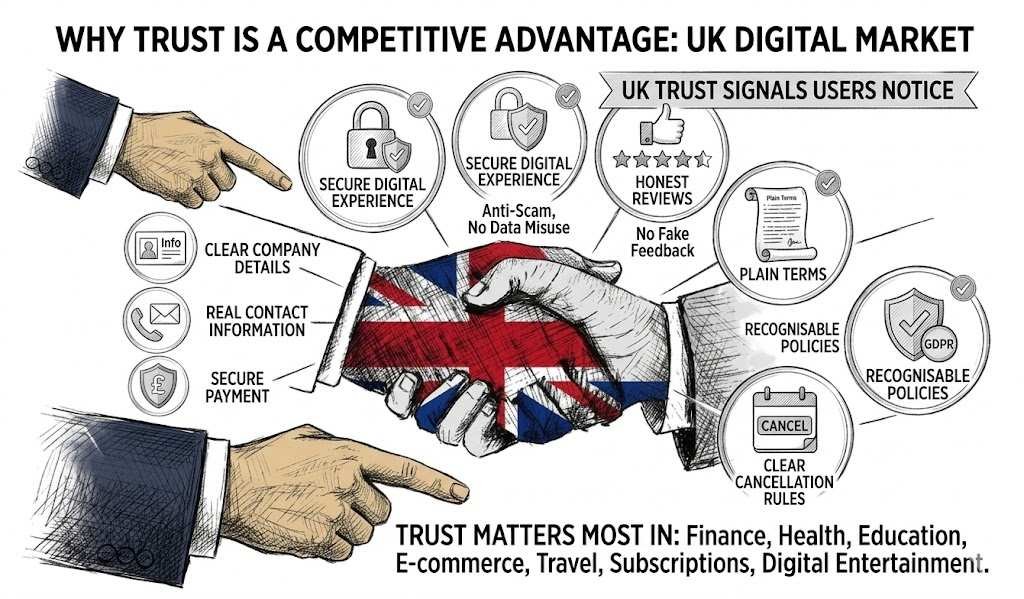
In the past, many digital businesses competed mostly on price, speed or features. Those things still matter, but trust is becoming just as important.
UK consumers are more careful about scams, fake reviews, unclear subscriptions and misuse of personal data. A clean, honest and well-regulated digital experience can make a brand stand out.
Trust Signals Users Notice
Users often look for simple signs before they make a decision. These include:
- Clear company details
- Real contact information
- Secure payment pages
- Honest reviews
- Plain terms
- Recognisable policies
- No misleading buttons
- No pressure-based pop-ups
- Clear cancellation rules
These trust signals are especially important for businesses in finance, health, education, e-commerce, travel, subscriptions and digital entertainment.
UK Lesson From The Netherlands
The Netherlands shows that a strong digital market is not built by removing rules. It is built by making the rules clear enough that good businesses can grow and weak operators cannot hide.
For the UK, this lesson matters because digital life is now part of normal life. People do not separate “online” from “real world” as much as they used to. A bad online experience can affect money, time, safety and trust.
UK businesses that want long-term growth should focus on three things:
- Better infrastructure and faster performance
- Clearer user protection and privacy design
- More local, human and transparent communication
Final Thoughts
Digital growth should not come at the cost of consumer trust. The strongest markets are not the ones with the fewest rules. They are the ones where users understand their rights, businesses know their responsibilities, and technology makes safe choices easier.
For UK businesses, the Dutch digital model offers a useful reminder. A better online experience is not only about speed or design. It is about helping people feel informed, protected and respected every time they use a digital service.