
Every new clothing brand eventually has to decide who makes the product, and that decision starts with a sample, not a purchase order. Getting this stage right is what separates founders who launch with confidence from those who discover a fit problem, a colour mismatch, or a fabric that bobbles after one wash, only once several hundred units have already arrived at a UK warehouse.
The UK’s fashion and textile industry contributes £62 billion to the economy and supports 1.3 million jobs, according to research commissioned by UKFT, the UK Fashion & Textile Association. It’s a genuinely huge sector, but almost every brand inside that figure, from heritage tailoring houses to the newest label selling out of a spare room, started the same way: by asking an unfamiliar supplier to send something over before any money changed hands on a bulk order.
This guide covers how to approach suppliers for samples, what to expect to pay realistically, the specification detail that saves you a wasted sample round, and the import and legal checks that rarely make it into the usual advice on this topic.
Why Sampling Is Worth Slowing Down For
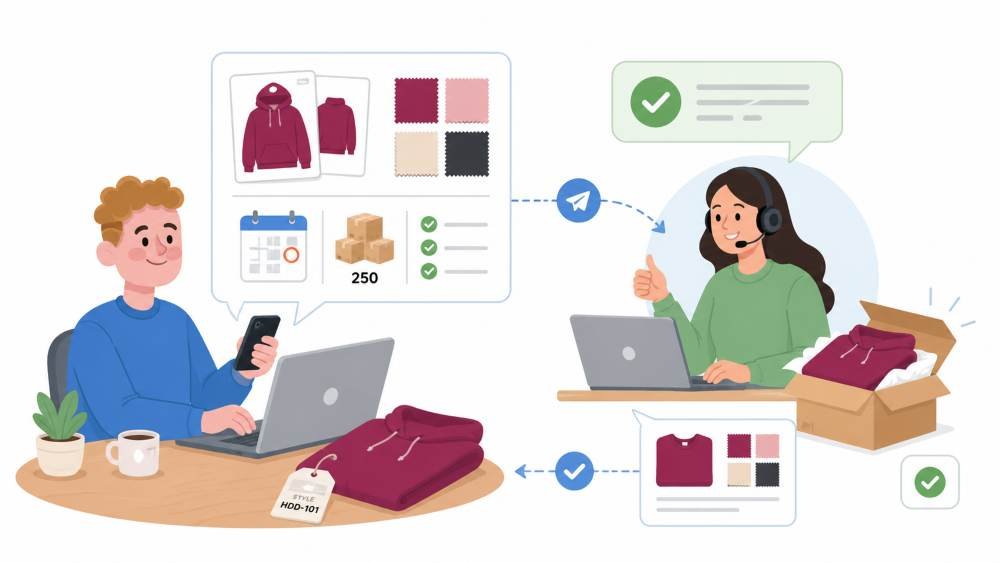
A realistic starting budget for a UK clothing brand is often put at somewhere between £5,000 and £20,000, once you account for stock, branding, a website and basic marketing. Bulk orders from most manufacturers come with a minimum order quantity, so once you commit, you’re committing properly. There’s rarely a version of “let’s just try twenty and see.” If the fit is off, the fabric feels cheap, or the colour comes out three shades warmer than the swatch suggested, you’re not quietly swapping it out. You’re either selling stock you’re not proud of or writing off a meaningful slice of your budget.
Sampling is the one point in the process where you can still catch these problems cheaply. Treat it as due diligence rather than a formality, and the rest of the launch gets considerably less stressful.
Reach Out Directly, And Make It Easy For A Sales Rep To Say Yes
What Belongs In Your First Message
Sales reps at clothing suppliers, whether that’s a wholesaler in Manchester or a factory overseas, deal with dozens of enquiries a week, and most go nowhere. The ones that get a fast, useful reply are specific. Name the exact product or style code if you have one, the fabric or weight you’re after, roughly how many units you’d expect to order once you’re through sampling, and when you’re hoping to launch. A vague “do you do samples?” message can sit unanswered for days. A message that reads as if it came from someone who’s done their homework tends to get a same-day reply, because the rep can see there’s a real order somewhere down the line.
Be ready to answer follow-up questions quickly too. Suppliers often ask about your target market, expected order volume, or any customisation you need, and a prompt, clear answer signals you’re worth prioritising over an enquiry that’s already gone quiet.
Respond Quickly, But Don’t Chase Too Soon
UK suppliers, and most overseas ones who deal with UK brands regularly, work to a Monday to Friday rhythm. A message sent on a Friday evening won’t get picked up until the following week, and chasing within 24 hours reads as impatience rather than enthusiasm. Give a UK-based supplier two to three working days before a polite follow-up, and allow longer for factories abroad, where time zones and public holidays can add days you wouldn’t expect. Once you’re in a live conversation, though, keep replying yourself quickly. Sample requests can queue up behind faster-moving customers, and being the brand that answers promptly is a simple way to stay near the front of that queue.
Know What You’re Paying For
Two Very Different Kinds Of Sample
Not all samples cost the same, because not all samples involve the same amount of work. If you’re asking a wholesale supplier for a sample of something they already stock, a plain hoodie in a specific colour and size, for instance, you’re really just asking them to send you one unit ahead of a bulk order. That usually costs whatever the unit price is, plus postage, and sometimes a small handling fee.
Commissioning a bespoke sample, where a UK manufacturer builds your design from scratch using your pattern, fabric and spec, is a different proposition. This is proper development work: pattern cutting, a toile, fit adjustments, then the finished sample itself. UK sampling studios typically price this at two to three times what the finished garment would cost per unit in bulk production, or bill it by the hour for pattern work. It isn’t a discount version of production. It’s the development phase, and it’s priced accordingly.
Knowing which one you’re asking for before you get a quote saves an awkward conversation later. If a UK factory’s sample quote looks high compared to what you expected, it’s very likely because you’re paying for development, not a stock item.
When The Fee Starts To Disappear
Overseas manufacturers are often more willing to offer a free or heavily discounted sample upfront, on the understanding that the cost gets folded into your first bulk order if you go ahead. UK manufacturers tend not to work this way, largely because they can’t spread the cost across a large enough run to make it worthwhile. If a UK factory does offer a free sample, check where that cost has gone instead. It’s often built into a higher minimum order quantity or a steeper per-unit price once you’re in production.
The fee softens properly once a supplier knows you. Repeat customers and brands that have already placed a solid first order are far more likely to see sample costs waived or credited back against the next run.
Approach More Than One Supplier Before You Decide
Where To Find UK Manufacturers
Make It British maintains a directory of UK clothing manufacturers, many of whom work specifically with small brands and startups, including some with a minimum order quantity as low as a single piece. Filtering by product type and MOQ before you reach out saves you contacting factories that were never going to be a fit, and it’s a faster starting point than cold-searching and hoping for the best.
It’s also worth checking whether a manufacturer offers a full package, sourcing fabric, cutting, sewing, and finishing all under one roof, or works on a CMT basis (cut, make, trim), where you supply the fabric yourself. CMT tends to be cheaper per unit, but it means you’re separately responsible for sourcing fabric and getting it to the factory on time, which is its own relationship to manage and its own round of samples to approve.
Meeting Suppliers In Person
Trade shows remain one of the most efficient ways to compare suppliers, because you can handle fabric, ask pointed questions, and get a feel for how a company operates in a couple of hours rather than a couple of weeks of email. Pure London, held at Olympia London twice a year, brings sourcing and ready-to-wear suppliers together under one roof and is the UK’s largest event of its kind. Even if you don’t order anything on the day, walking the halls with a clear brief in mind- your GSM range, your rough quantities, your budget- is a quick way to build a shortlist worth following up with properly.
Comparing suppliers isn’t only about the garment either. Note how quickly each one replies, how clearly they answer technical questions, and whether the sample turns up when they said it would. A supplier who’s vague about lead times during sampling is unlikely to become more precise once you’re relying on them for a launch date.
Be Specific, Right Down To The GSM
Why A Vague Brief Wastes A Sample Round
GSM, grams per square metre, is the standard measure of how heavy or light a fabric is, and it’s one of the details new brands most often leave vague. As a rough guide, anything under around 150gsm counts as lightweight (summer shirting, a soft, drapey tee), 150 to roughly 220gsm is the mid-weight most everyday T-shirts sit in, and anything above that moves into heavyweight territory, where sweatshirts and premium tees typically live, with hoodies often landing at 280gsm or more. These bands shift a little between suppliers, so always ask for the exact GSM of the fabric you’re being quoted, not just a description like “heavyweight.”
Wholesale suppliers such as Screen Textiles carry blanks across several brands and weights, which is exactly the kind of range where an unspecified request causes problems. “A heavyweight black hoodie” could describe any one of a dozen different products, and the sample that arrives might not be the one you had in mind. Ask for the GSM, the brand or product code, and the exact colour reference before the sample gets dispatched, not after.
Other Details Worth Nailing Down
GSM is only one part of a proper specification. Colour needs a reference that means the same thing to you and the supplier, ideally a Pantone code rather than a description like “navy,” since screens and lighting distort colour more than most people expect. Sizing should be based on a size chart agreed in advance, particularly with an overseas factory, where block patterns are often built to different national sizing conventions than the UK is used to. Trims (zips, drawcords, labels, thread colour) are easy to forget and just as easy to get wrong, so list them explicitly rather than assuming a supplier will match what you had pictured.
None of this is about being difficult. It’s about giving the supplier everything they need to get it right the first time, which is faster and cheaper for both sides than a second or third sample round.
Know The UK’s Import Rules Before Ordering From Overseas
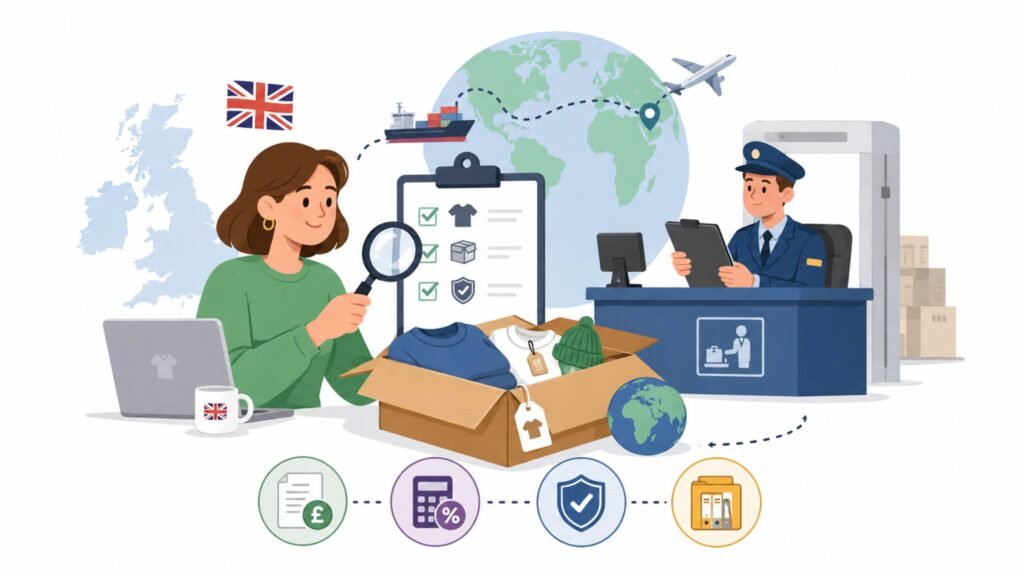
If you’re requesting samples from a supplier outside the UK, it’s worth knowing that HMRC allows relief from Customs Duty and VAT on genuine commercial samples, provided certain conditions are met. The goods have to be imported solely to help you secure future orders; they can’t be resold, and they need to be prepared in a way that clearly marks them as samples before they’re shipped: torn, perforated or defaced in some way, labelled “commercial sample” in indelible pen, or limited in quantity and size range so they can’t reasonably be sold on. A parcel with “sample” scrawled on the customs form isn’t automatically covered. HMRC is specific about how the goods need to be prepared, so raise this with your supplier before they ship anything, since the marking has to happen on their end, before the parcel leaves.
If the relief conditions aren’t met, you’ll be liable for the usual import duty and VAT on the parcel’s value, which can catch new brands off guard when a “free sample” from an overseas factory arrives with an unexpected customs bill attached. Keep basic records of what you’ve imported and what happened to each item afterwards. HMRC can ask for evidence for up to four years, particularly if you’re claiming relief regularly while sampling from several suppliers at once.
Protect Yourself Before You Commit
Check Who You’re Dealing With
Before paying a new UK supplier for samples, particularly one found through a cold search rather than a referral or a directory, it’s worth a quick check on Companies House, the UK’s free public register of companies. It takes a couple of minutes to confirm a business is properly registered, how long it’s been trading, and whether its filing history looks normal. It won’t catch every problem, and it won’t help at all with an overseas supplier who isn’t UK-registered, but it’s a fast, free way to rule out an obviously fake or dormant company before any money changes hands.
Beyond that, the instincts you’d use anywhere else in business apply here too. A supplier who avoids a phone call, pushes for payment to a personal account rather than a business one, or offers pricing that looks too good against everyone else you’ve contacted is worth a second look before you commit further, sample fee or not.
Know Your Own Obligations Before You Sell
It’s easy to focus entirely on the supplier’s side of the relationship and forget that, once you’re selling finished garments in the UK, you have your own legal obligations to meet. Fibre content labelling is a legal requirement under the Textile Products (Labelling and Fibre Composition) Regulations 2012, and it applies to almost anything you’d sell as a clothing brand. Business Companion, the guidance service backed by the Chartered Trading Standards Institute, sets out exactly what needs to appear on the label and in what form. If you’re planning to sell children’s nightwear or certain other garments, there’s an additional flammability labelling requirement to be aware of as well.
This matters at the sampling stage because it’s the point where you can check whether a supplier understands UK requirements, rather than assuming so and finding out otherwise once stock has arrived. A supplier used to working with UK brands should be able to talk you through labelling without much prompting. One who looks blank when you ask about it is a sign you’ll be doing more compliance work yourself than you’d planned for.
Stay Professional. This Is A Relationship, Not A Single Order
Every supplier you contact, whether or not they end up making your first collection, is a potential future partner, and UK fashion and textiles is a smaller world than it looks from the outside. Reputations travel between manufacturers, agents and wholesalers faster than you’d expect, and being remembered as easy to work with, clear in your briefs, and reasonable about timelines opens doors later that a difficult first impression closes for good.
Staying close to the wider industry helps too, not just the suppliers you’re actively talking to. Drapers has covered UK fashion retail since 1887 and remains the trade’s main source of news and analysis. Reading it occasionally tells you far more about how suppliers, buyers and the wider market really behave than any single sales conversation will.
Bottom Line
Sampling properly takes longer than most new founders expect, and it costs more than the word “sample” suggests it should. But every hour spent getting the brief right, and every supplier compared rather than settled for, is time and money saved at the point where mistakes cost you the most: the bulk order you can’t easily undo. Take the time. Ask the specific questions. Check who you’re dealing with. Everything else about running a clothing brand gets easier once you know the product is right.