
The traditional footwear retail model has long been built around a simple principle: brands predict what consumers will want, produce products in large quantities, and place them in front of customers ready to purchase. Whilst this approach offers convenience and accessibility, the rise of customization is beginning to challenge the idea that consumers should simply choose from what is already available.
However, the large quantities of readily available shoes are unable to offer individuality, thus seeing many consumers consider customization as a means of self-expression. Rather than the customer adapting their preferences to suit an existing product, customization allows the product itself to be shaped around the customer. This shift is not only changing the way consumers shop for shoes, but also influencing how footwear is designed, produced, marketed, and ultimately sold.
Reversing The Off-The-Shelf Model
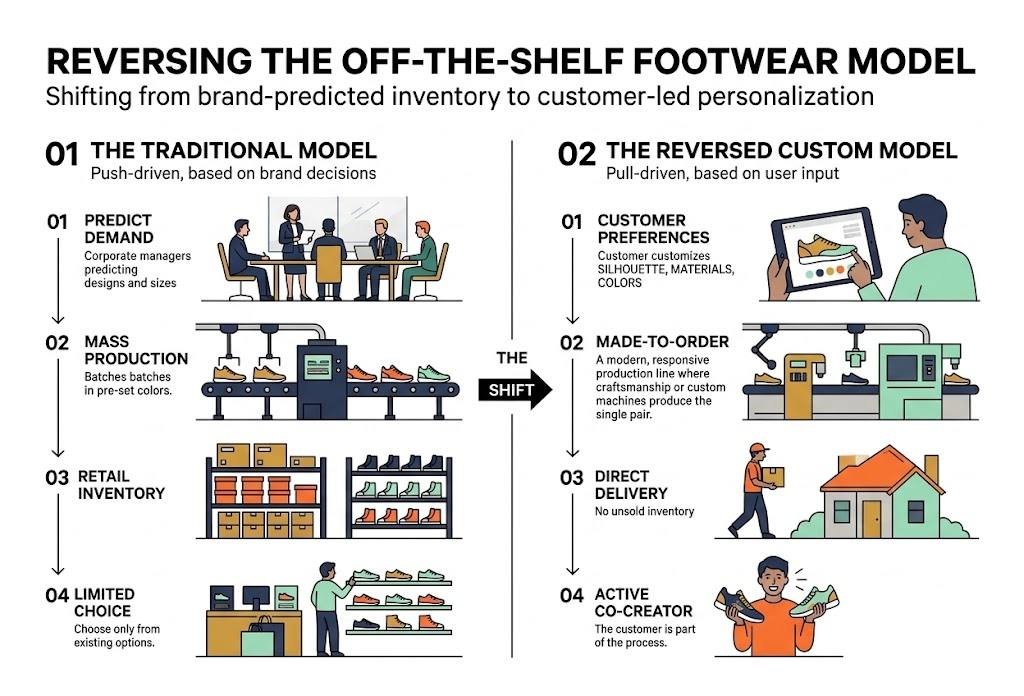
For decades, footwear retail has largely relied on an off-the-shelf model, where brands predict consumer demand, manufacture products in predetermined sizes and designs, and distribute them through retailers before the customer has even decided what they want to purchase. This model allows footwear to be produced and sold efficiently, but it also places limitations on the consumer, who is forced to choose from the colours, materials, silhouettes and sizes that a brand has already decided to offer. Therefore, whilst a range of different shoes on a shelf might feel like a vast offering, in reality, the products on offer are largely limited.
With custom footwear, elements such as the silhouette, material, colour and finer design details can be adapted according to the individual’s preferences. This creates a more responsive approach to footwear retail, where the product is shaped around the customer rather than the customer having to adapt their preferences around an existing design. Instead of asking which shoe from a collection best meets their requirements, consumers can increasingly play a role in determining what their finished pair looks like.
This shift places custom shoes at the forefront of a broader change in footwear retail, where personalisation is becoming an increasingly important part of the purchasing experience. The customer is no longer simply the final stage of the production process; they can now become part of it.
Technology And Customization
One of the biggest factors driving the growth of custom footwear is the development of digital technology. Traditionally, creating a bespoke pair of shoes could involve multiple in-person consultations, fittings and design discussions, making the process relatively time-consuming and accessible to a limited number of consumers. Today, digital platforms are making elements of this experience available online, allowing customers to customise their footwear from wherever they are.
For instance, online options such GIROTTI custom footwear allow customers to experiment with different colours, materials and design features before committing to their purchase. A key benefit of this is that rather than relying solely on their imagination or looking at a selection of pre-made samples, customers can see how their choices come together as they build their shoe through the digital design configurator.
For footwear retailers, this represents a significant development. Customisation can now form part of the online shopping journey itself, combining the convenience of e-commerce with the sense of involvement traditionally associated with bespoke footwear. This allows custom shoes to appeal to a much wider audience, whilst giving retailers another way to differentiate the purchasing experience.
Standing Out In A Competitive Market
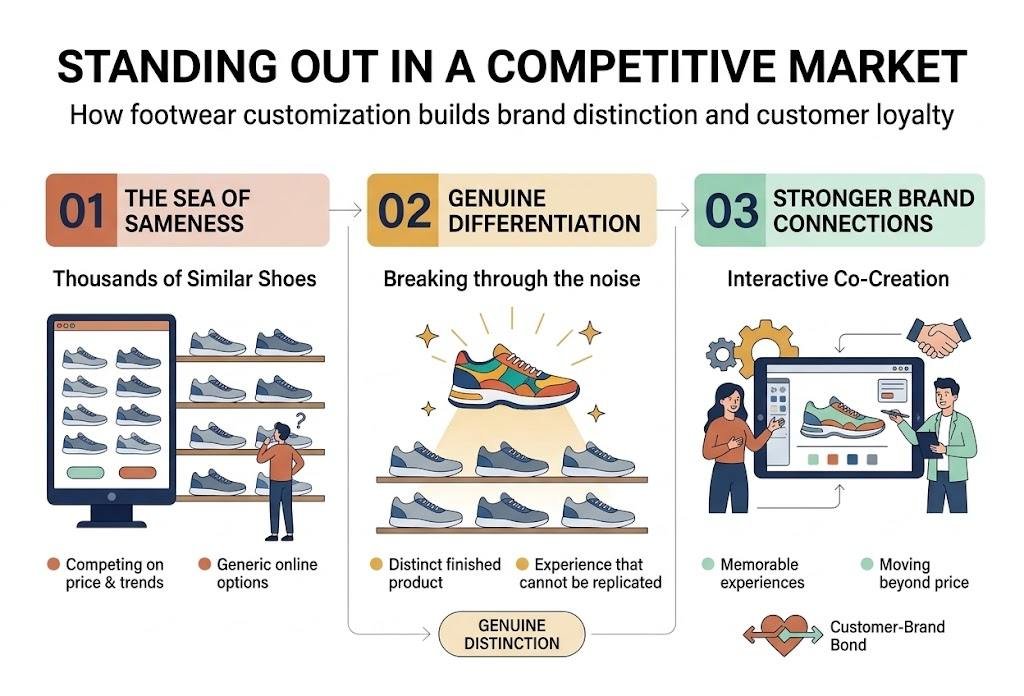
For footwear retailers, the growing demand for customization presents an opportunity to differentiate themselves within an increasingly competitive market. When consumers can find thousands of very similar shoes online at the click of a button, offering something that feels genuinely distinctive can become an important part of attracting and retaining customers. Custom shoes provide this distinction by offering an experience and finished product that cannot be replicated by simply purchasing a pre-designed alternative.
Customization can also create a stronger connection between the customer and the brand, where when shoppers have influenced the design of their footwear, the purchasing experience becomes more interactive and memorable. This can help brands move beyond competing solely on price, trends or aesthetics, instead offering consumers a reason to choose them based on the experience they provide.
Conclusion
Customization is ultimately changing the footwear retail model by placing the individual consumer at the heart of both the design and purchasing process. From the growing accessibility of digital customisation to the ability for brands to offer a more personalised experience, custom shoes are challenging the traditional idea that consumers should simply choose from what is already available.
Whilst custom footwear is unlikely to completely replace the convenience of off-the-shelf retail, it represents an increasingly valuable alternative for those seeking greater individuality and involvement in what they buy. As technology continues to develop and consumer expectations become increasingly focused on personalisation, customisation looks set to play an increasingly important role in shaping the future of footwear retail.
Disclaimer: This article is for general information only and reflects broad trends in footwear retail. It is not business, financial or purchasing advice. Customisation options, materials, pricing, delivery times and availability vary by brand and can change, so check the details directly with the retailer before placing an order. External links are shared for reference only, and their inclusion does not imply endorsement of any brand, product or service.