
On a cold British evening, a pan of soup can make a kitchen feel like somewhere you want to stay. For many Bengali families, that familiar comfort has a particular flavour: bitter greens, warming ginger, soft lentils and a squeeze of lemon just before serving. It is food made with care, especially when someone has had a tiring week or is finding their appetite again after being unwell.
One of the greens associated with this tradition is kulekhara. It has a long history in regional cooking, although the stories told about its benefits go further than the clinical evidence. That distinction matters. Soup can provide fluids, vegetables and useful nutrients; it cannot, by itself, correct a blood disorder.
Here is how to bring the tradition into a UK kitchen without turning a comforting meal into an unsupported health promise.
What Does It Mean to Nourish Your Blood?
The phrase blood-nourishing belongs as much to family food traditions as to nutrition. In medical terms, healthy red blood cell production depends on several nutrients, including iron, vitamin B12 and folate. Iron helps the body make haemoglobin, which carries oxygen in the blood. The NHS guidance on dietary iron lists beans, nuts, dried fruit and fortified cereals among useful sources.
Iron is not the whole picture. The NHS also explains the roles of vitamin B12 and folate in anaemia. A bowl of greens and lentils can contribute to a varied diet, but it should not be expected to supply every nutrient a person needs, particularly vitamin B12.
That is why the most useful question is not, “Which herb will raise my blood count?” It is, “How can I make a simple meal that I enjoy eating and that contributes to a balanced diet?”
Kulekhara and the Bengali Tradition of Bitter Greens
Kulekhara is commonly associated with Hygrophila auriculata, a plant found in wetland habitats. The Royal Botanic Gardens, Kew, botanical record recognises that scientific name. In Bengali home cooking, its leaves have traditionally been prepared as greens or in light broths, often with restrained seasoning so that their distinctive taste remains.
There is a reason to be careful with names when shopping. One retail listing for kulekhara also describes it as purslane. However, common purslane is generally Portulaca oleracea, which Kew lists as a different botanical species. A shared or inconsistent product name is not enough to establish that two plants are interchangeable.
If you are buying an unfamiliar regional green, ask the seller to confirm its identity and that it is intended for cooking. Do not collect plants from ponds, canals or roadsides for a homemade tonic. And while kulekhara has a reputation in some households as a restorative food, reliable human evidence showing that it treats anaemia is insufficient.
Why a Slow-Simmered Broth Feels Good

A clear broth asks very little of a tired appetite. It is warm, easy to portion and adaptable to whatever vegetables are in the fridge. Ginger, garlic and a little turmeric bring aroma; the green leaves give the broth a pleasantly earthy edge.
Its most dependable practical benefit is simpler than any claim about a special herbal extraction: soup adds liquid to a meal. The NHS advice on water and hydration notes that fluid comes from foods as well as drinks, and that people who are ill or recovering may need additional fluids.
Gentle simmering is useful for flavour and texture, but there is no proven steeping time that turns kulekhara into a treatment. Keep the cooked leaves in your bowl when possible rather than drinking only the strained liquid.
Recipe One: Ginger and Kulekhara Clear Soup
Serves 2 | Preparation: 10 minutes | Cooking: approximately 15 minutes
Ingredients
- 1 small handful of correctly identified, food-grade kulekhara leaves, or spring greens if unavailable
- 750 ml water or unsalted vegetable stock
- 3–4 thin slices of fresh ginger
- 1 small garlic clove, lightly crushed
- A small pinch of turmeric
- 1 teaspoon rapeseed oil, optional
- A little salt and black pepper, to taste
- Lemon juice, to finish
Method
- Sort the leaves, remove any tough or damaged parts and wash them thoroughly.
- Put the water or stock, ginger, garlic and turmeric in a saucepan. Bring to a gentle simmer.
- Add the leaves and cook until tender and thoroughly cooked, around 10–15 minutes depending on the type and thickness of the greens.
- Season lightly. Ladle the broth and the leaves into two bowls and add a squeeze of lemon just before eating.
For a more substantial lunch, add leftover cooked rice or serve with a slice of wholemeal toast. If you cannot verify the plant identity, use a familiar edible green instead.
Recipe Two: Red Lentil, Greens and Lemon Soup
This is the one to make when you need dinner rather than just a warming mug. Red lentils thicken the liquid without cream, while carrot and potato give it a softer, slightly sweet flavour. The greens remain part of the meal instead of disappearing into a strained tonic.
Serves 3–4 | Preparation: 10 minutes | Cooking: 25–30 minutes
Ingredients
- 120 g red lentils (masoor dal), rinsed
- 1 small potato, diced
- 1 carrot, grated or finely chopped
- 1 small onion, finely chopped
- 1 teaspoon cumin seeds
- 1 tablespoon rapeseed oil or a small amount of ghee
- 1 litre water or low-salt vegetable stock
- 1–2 handfuls of verified edible kulekhara leaves, kale or spring greens, chopped
- 1 lemon, cut into wedges
- Salt and black pepper, to taste
Method
- Warm the oil or ghee in a saucepan. Add the cumin seeds, then the onion, and cook gently until softened.
- Stir in the potato, carrot and rinsed lentils. Add the water or stock and bring to a simmer.
- Cook for about 15–20 minutes, stirring occasionally, until the lentils are soft and the potato is nearly tender.
- Add the chopped greens and continue cooking until fully tender, allowing roughly another 5–10 minutes depending on the leaves.
- Season to taste. Serve with a lemon wedge to squeeze over the bowl.
The lemon is more than a finishing touch. Vitamin C can help the body absorb non-haem iron from plant foods such as lentils. The British Dietetic Association’s iron-rich foods guidance also explains how tea and coffee taken with meals can reduce iron absorption. There is no need to ban either drink; having them away from an iron-focused meal may be helpful.
Finding Regional Greens in the UK
In London, Birmingham, Leicester and Manchester, South Asian grocers may carry seasonal leafy vegetables that are absent from larger supermarket ranges. Stock changes, and the same green may appear under several local names. Ask what has arrived that week, and check how the leaves have been stored. Leaves should look fresh, not slimy, and should not have an off smell.
The practical shopping rules are the same whether you buy from a local market or a digital shop:
- Check the common name and, where possible, the scientific name.
- Buy produce sold for food rather than unidentified plants marketed as remedies.
- Check the quantity and condition before accepting a delivery.
- Refrigerate perishable greens promptly and use them while fresh.
- Wash and cook them appropriately. NHS inform’s food preparation advice explains safe handling of fruit and vegetables.
For people arranging groceries for family in India, an online grocery delivery app can make it easier to put regional greens, dal and fresh spices in one order. That linked service operates in India; UK readers should use retailers that actually deliver to their own postcode. Availability of a particular herb should always be checked rather than assumed.
A Few Small Changes That Make the Bowl More Nourishing
Herbs need not carry the whole nutritional burden. A few ordinary additions can turn a light soup into a more satisfying meal:
- Keep the lentils. They contribute plant protein and iron and make the meal more filling.
- Use familiar greens when needed. Kale, spring greens and spinach are straightforward UK supermarket alternatives, though they are not botanical substitutes for kulekhara.
- Add a vitamin C-rich side. Lemon, peppers or a little fresh tomato work well with a savoury soup.
- Serve something alongside it. Rice, a chapati or wholemeal bread may be welcome when appetite returns.
- Vary meals across the week. One favourite soup is only one part of eating well.
When Comfort Food Is Not Enough
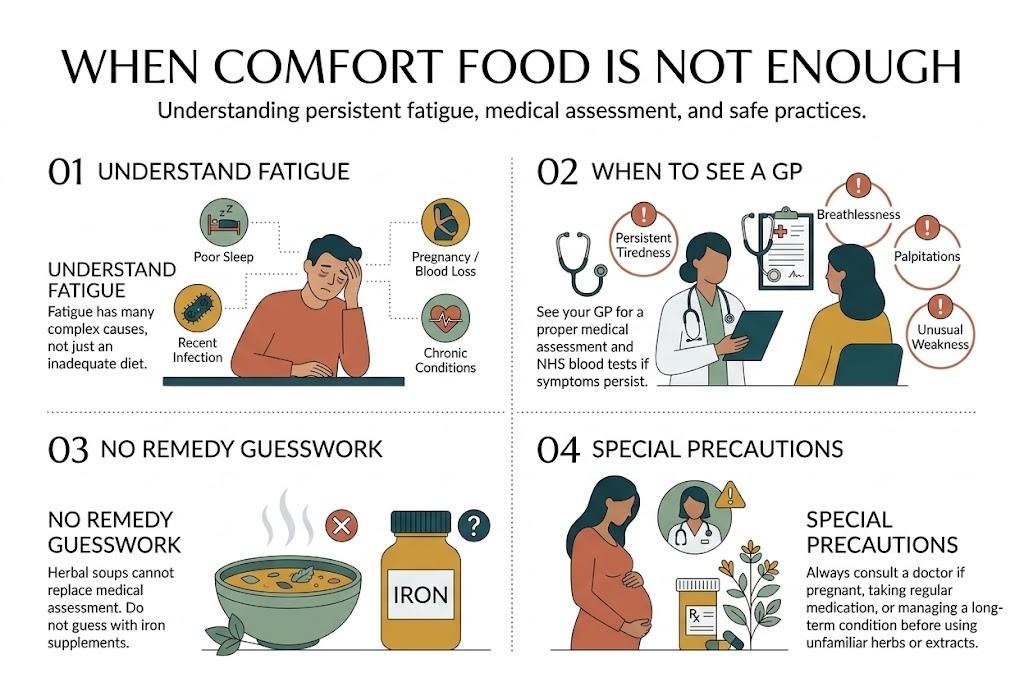
Feeling unusually tired does not necessarily mean your body needs more iron. Poor sleep, recovery from infection and many medical conditions can contribute to fatigue. Iron deficiency anaemia can also be linked to heavy periods, pregnancy or blood loss, not simply to an inadequate diet.
If tiredness persists, or you experience breathlessness, palpitations or unusual weakness, speak to your GP. The NHS explains that iron deficiency anaemia is diagnosed with blood tests and may require prescribed treatment. Herbal soups cannot replace that assessment, and iron supplements should not be taken as a guess.
If you are pregnant, taking regular medication or managing a long-term condition, check with a qualified healthcare professional before using unfamiliar herbs or concentrated herbal preparations. Culinary vegetables and medicinal extracts are not necessarily the same thing.
Keep the Tradition, Leave Out the Miracle Claims
A small pan of lentils, ginger and greens will not solve every reason someone feels worn down. But it can provide a warm, practical meal that connects a British kitchen with Bengali cooking traditions. That is worthwhile without attaching promises to it.
Choose greens you can identify, wash them well, eat the cooked vegetables rather than relying on a strained tonic, and pay attention to the wider pattern of your meals. Let soup be nourishing food and comforting routine, while leaving the diagnosis and treatment of anaemia to healthcare professionals.
Medical disclaimer: This article provides general food and nutrition information, not medical advice. Traditional uses of herbs are not evidence that they prevent or treat anaemia or other conditions. Seek advice from a GP or registered dietitian for ongoing symptoms, diagnosed deficiencies, pregnancy-related concerns or questions about herbal products.