
Most people want to do more with their free time, but finding the right event is not always simple. One friend sends a link in WhatsApp, another sees something on Instagram, a local venue posts late, and the council website has a different list again. By the time you notice a good concert, food market, comedy night, or festival, the tickets may already be gone.
This is why local event platforms have become so useful. They bring different kinds of events into one place, so people can see what is happening nearby without searching through ten different websites. For anyone who wants a better way to plan weekends, evenings, or last-minute days out, this comment is here can be used as a helpful starting point.
Local Plans Should Not Feel Like Homework
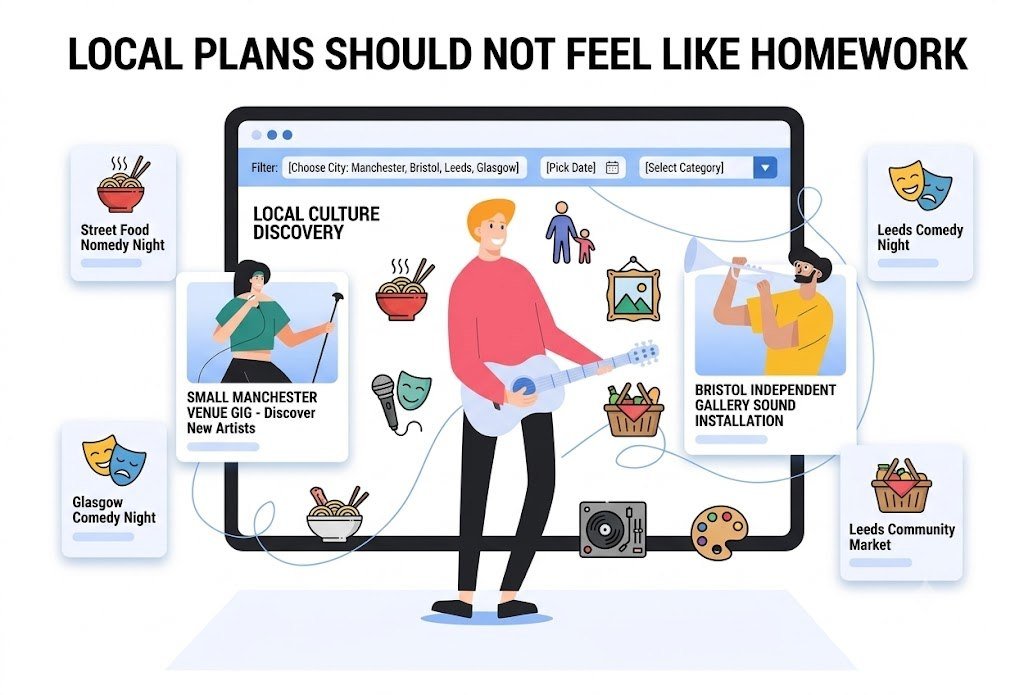
Finding something to do should be simple. You should be able to check what is on, choose the date, see the location, and know whether it suits your mood or budget.
That is where event discovery platforms can help. Instead of showing random listings, they usually sort events by city, date, category, and interest. This makes it easier to find live music, street food events, family-friendly festivals, theatre, comedy, exhibitions, club nights, workshops, and local markets.
For UK readers, this can be especially useful because many good events are not always heavily advertised. A small venue in Manchester, an independent gallery in Bristol, a community market in Leeds, or a comedy night in Glasgow may only post updates on its own page. Unless you already follow that venue, you may never see it.
Platforms that collect these listings save time and make local culture easier to access.
Festivals Are Easy to Miss Without a Good Guide
The UK has events running throughout the year. Spring brings food festivals, Easter markets, outdoor theatre, and music events. Summer is full of open-air gigs, park festivals, family days, and street celebrations. Autumn brings arts festivals and film events, while winter is packed with Christmas markets, light trails, and seasonal shows.
The problem is not a lack of choice. The problem is knowing what is happening before it is too late.
A good events platform helps people plan. This is important for popular festivals where tickets sell out quickly, but it also matters for smaller local events that may only run for one weekend.
Useful authority sources such as VisitBritain and local council websites are also helpful for checking official tourism and cultural information. But for everyday planning, many people prefer one place that gives them quick ideas based on location and interest.
Concerts and Grassroots Venues Need Better Visibility
Big arena shows are easy to hear about. They are advertised everywhere. Smaller gigs are different. Many of the best live music nights happen in independent venues, pubs, arts spaces, and community halls.
These places are important because they give new artists somewhere to perform and give local people affordable ways to enjoy live music. The Music Venue Trust works to protect and support grassroots music venues across the UK, showing how important these spaces are for culture and local communities.
Platforms that highlight smaller gigs can help people find artists before they become well known. They can also support venues that rely on regular audiences to keep going.
This is good for music fans too. A small gig can feel more personal than a large show. You are closer to the stage, tickets are often cheaper, and the atmosphere can be much more relaxed.
Nights Out Are Not Only About Clubs
A night out does not have to mean going to the same bar or club every weekend. Many cities now offer more varied evening events. These can include late museum openings, live jazz, rooftop cinema, comedy, poetry, cabaret, themed parties, supper clubs, and small theatre shows.
For people who do not enjoy loud venues, there are still plenty of options. A board game café, local quiz night, acoustic gig, or evening art event can be just as enjoyable.
This is where a better event listing really helps. People can filter by mood, music style, venue type, price, and location. That makes it easier to find something that feels right instead of just choosing the usual place because nobody has any better ideas.
Small Local Events Often Feel More Personal
Some of the best events are not the biggest ones. A small makers’ market, community cinema night, open mic session, art show, or food pop-up can feel more memorable than a crowded event with long queues and expensive tickets.
These smaller events often show the real character of a place. They bring together local artists, traders, performers, and residents. They also give people a reason to visit parts of their city or town they may normally ignore.
This is especially valuable for people who have recently moved somewhere new. Going to one local event can make a place feel less unfamiliar. It can also help people build real bonds with people in their city, especially when the event is based around shared interests.
The NHS also recognises that Loneliness can affect people in many different situations, whether they live in a busy city or a rural area. Its loneliness advice explains why connection and regular contact matter for wellbeing.
Community Events Support More Than Entertainment
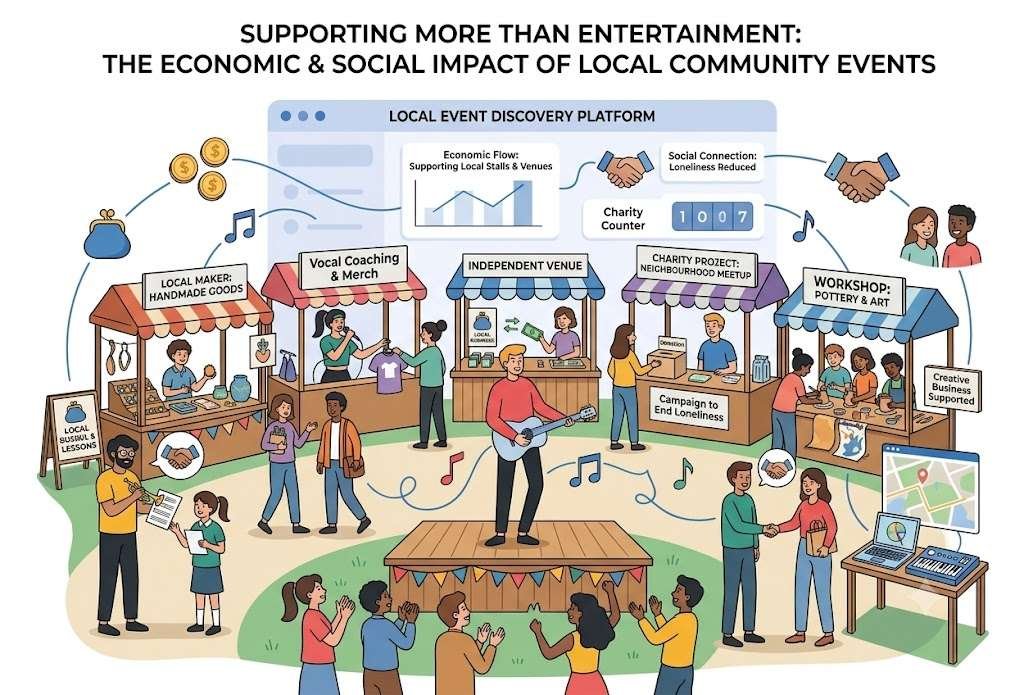
Local events are not only about filling a Saturday night. They also support small businesses, independent venues, artists, charities, and community groups.
When people attend local events, money often stays closer to the community. A ticket may support an independent venue. A market purchase may help a local maker. A workshop may keep a small creative business running.
Groups such as the Campaign to End Loneliness also show why community connection matters. Events can give people a simple reason to leave the house, meet others, and feel more involved in local life.
This is one reason event platforms are useful beyond entertainment. They help people see what is around them and make it easier for small organisers to reach the right audience.
Better Event Listings Save Time
Nobody wants to spend an hour searching for something to do, only to give up and stay in. Good event platforms reduce that effort.
A useful platform should help people quickly understand:
- What is happening
- Where it is taking place
- When it starts
- How much it costs
- Whether tickets are needed
- Who the event is suitable for
- How to get there
This matters in the UK because transport, weather, and timing can change plans quickly. People want to know whether they can get home by train, whether the event is indoors, and whether they need to book in advance.
Clear event listings make decisions easier.
Independent Venues Deserve Attention
Independent venues often shape the cultural life of a town or city. They host early gigs, comedy nights, spoken word events, film screenings, charity nights, and community projects.
The UK’s Independent Venue Week celebrates these spaces and the people who run them. This shows how much local venues matter, not just to artists but also to audiences and neighbourhoods.
Event platforms can give these venues a fairer chance to be seen. Not every organiser has a large marketing budget. A good listing can put a small local event in front of people who would genuinely enjoy it.
People Want Plans That Fit Real Life
Not everyone wants a huge night out. Some people want a quiet Sunday market. Others want a Friday gig, a family-friendly festival, or a low-cost comedy show after work.
The best event platforms understand this. They do not only show the biggest or loudest events. They help people find something that fits their life, budget, location, and energy.
This feels more useful because real people make plans around work, travel, childcare, weather, and money. A good local guide should make that easier, not harder.
Final Thoughts
Finding festivals, concerts, nightlife, and local events should not feel complicated. People want clear choices, useful information, and ideas that match how they actually spend their time.
Event platforms help by bringing local listings into one place. They make it easier to plan, try something new, support independent venues, and feel more connected to the place you live in.
For UK readers, this is especially useful because many great events happen outside the big headline venues. They take place in cafés, galleries, music rooms, parks, markets, theatres, and community spaces.
The more people know about these events, the more likely they are to go. That is good for audiences, organisers, local businesses, and the wider community.