
Not long ago, talking about the odds before a match meant a quick word with your mate down the pub or a glance at the back pages. Now it’s something millions of people do on their phone before the whistle’s even gone. Checking the odds has quietly become part of how a lot of us follow football, not always to put a bet on, but to get a read on the game.
A big part of this is simply that the odds are easier to find than they used to be. Open almost any sports app, and the prices sit right next to the team news, the table and the injury list. You don’t have to go looking for them. They come to you, seconds before kick-off, and you can take in late team news or a shift in the market without leaving the app.
What The Odds Actually Tell You Before A Match
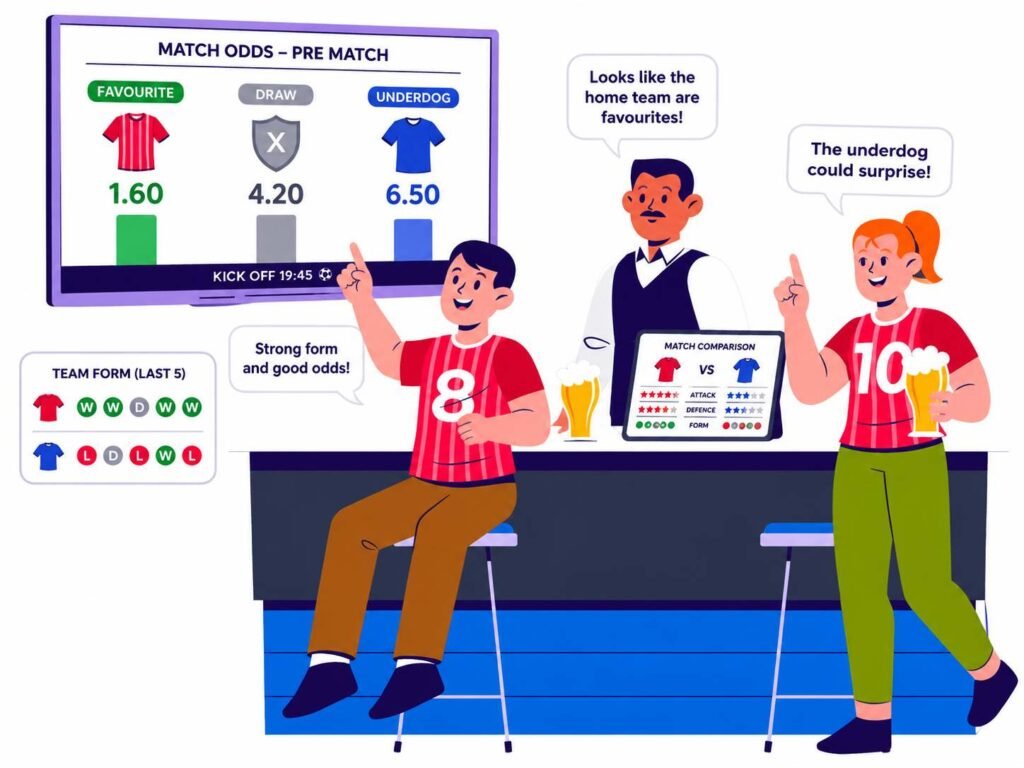
People like a bit of context before something unpredictable, and a football match is about as unpredictable as it gets. The odds give you a rough sense of who’s expected to win and by how much. See that one side is a heavy favourite and you’ll probably watch the build-up a little differently. You might settle in for a comfortable home win, or you might fancy the underdog to cause a stir.
For most people, that’s as far as it goes. They read the odds the same way they read form, injuries and recent results: as one more piece of the picture. The Gambling Survey for Great Britain shows betting is one of the more common gambling activities in the country. However, it’s still a minority pursuit; roughly one in six men, and a much smaller share of women, had a bet in any given four-week period. Plenty more keep half an eye on the prices without ever backing anything.
There’s a social side to it too. If you don’t know your xG from your elbow, the odds give you an easy way in. Saying “they’re big favourites” or “the draw looks decent value” is quick shorthand for what the experts and the wider market reckon, and it lets people join the chat without sounding like a pundit. Comparison tools and football betting sites lay these prices out side by side, which makes it simple to see how the market is leaning before a ball is kicked.
How Odds Crept Into The Pre-Match Routine
Go back a couple of decades, and odds lived in the back pages of specialist papers. Most fans never looked at them unless they were planning a bet. That changed as coverage grew and broadcasters started putting prices on screen, in previews and across social feeds.
These days the odds turn up next to the score, the league table and the team news as a matter of course. You check who’s fit, and the price is sitting right underneath. See the two together often enough, and you start treating them as part of the same thing.
This didn’t happen by accident. Years of deals between broadcasters and bookmakers brought betting language into ordinary commentary, to the point where “odds-on favourite” is how people describe a fixture now.
Pub Talk And Group Chats
Walk into any pub before a big Saturday kick-off, and you’ll hear someone mention the odds. It’s become a normal part of the pre-match natter, the same as arguing over the team sheet or who should be dropped. The language has worked its way into everyday football talk, whether you bet or not.
Fantasy football has pushed this along as well. If you’re picking a side each week, you’re weighing up which players have a kind fixture and which have a nightmare. The odds give you a quick read on that. A striker up against a leaky defence is a far more tempting captain pick than one facing the meanest backline in the league.
Knowing how to read a price has become a bit of a badge of football literacy, too. If you understand why a favourite has shortened or why a market has moved, you can follow the analysis more closely. It shows you’re paying attention beyond just turning up for the match.
Looking At Odds Isn’t The Same As Betting
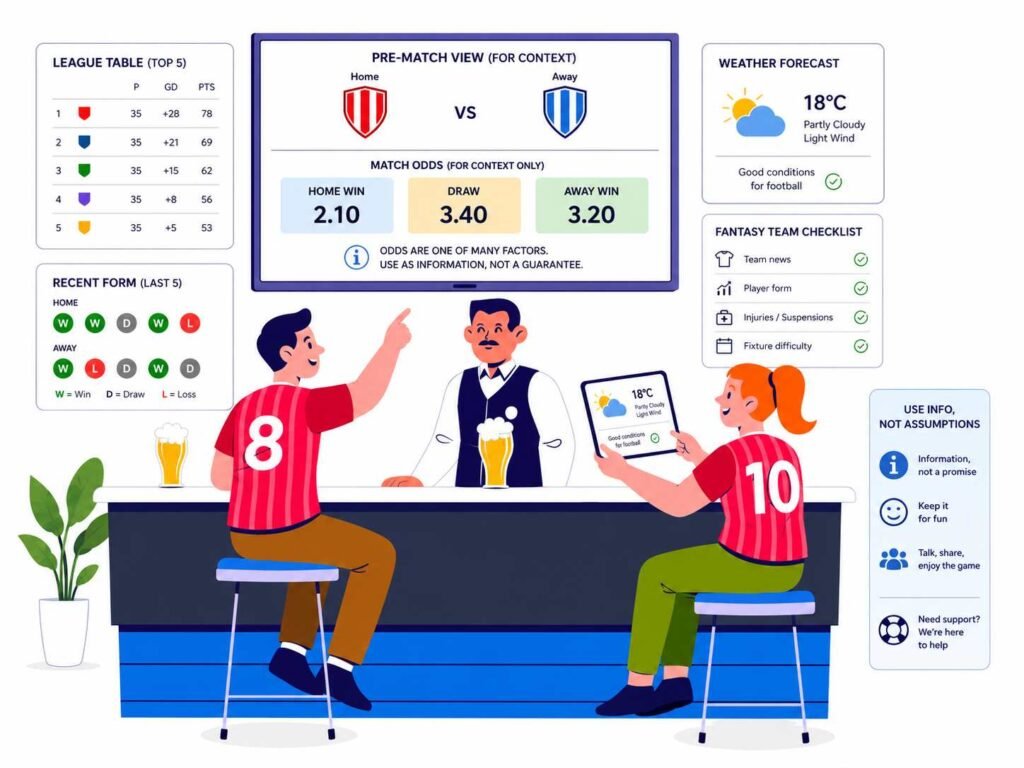
Checking the odds and placing a bet are two different things, and most people doing the first aren’t doing the second. A lot of fans look at prices for the same reason they glance at the table: to get a sense of where each side stands. Seeing who the favourite is tells you how the match is being read, nothing more.
Used this way, odds are just a reference point. They help with the small calls which game to watch on a busy weekend, whether a transfer rumour stacks up, who to back in your fantasy side without ever turning into a bet. Approached with that mindset, they add a bit of detail to your analysis, and that’s it.
The responsible gambling charities are clear about this distinction. Organisations like GamCare and BeGambleAware point out that treating odds as information is a world away from treating them as a nudge to get your wallet out. Looking at a price to weigh up two teams is much like checking the league table for context.
A decent comparison is the weather. You check the forecast on the Met Office to plan your day, not because looking at it changes whether it rains. A lot of people treat the odds the same way: a quick summary of what the experts and the market expect before kick-off. As more fans go looking for that context, the habit has spread well beyond the people who actually have a bet.
If you do bet, keep it for fun and within what you can afford to lose. Free, confidential help is available any time through the National Gambling Helpline and the NHS, and you can find support and self-exclusion tools through the Gambling Commission’s guidance.
Disclaimer
This article is for general information only and is intended for adult readers in the UK. It discusses football odds as part of modern sports media and fan culture, but it does not provide betting advice, predictions or encouragement to gamble. Betting involves financial risk and should never be treated as a way to make money or solve financial problems.
Gambling is restricted to adults aged 18 and over in the UK. Anyone who chooses to gamble should only do so legally, responsibly and within affordable limits. If gambling stops feeling controlled, or if it causes stress, debt, relationship problems or harm, support is available.
References
- Gambling Commission. Gambling Survey for Great Britain Annual Report 2024 Official Statistics. Published 2 October 2025. Last updated 12 March 2026. The report gives official data on gambling participation among adults aged 18 and over in Great Britain.
- Gambling Commission. 2024 Gambling Survey for Great Britain. Published 2 October 2025. This news release explains the second annual GSGB report and its role in measuring gambling participation, behaviour and consequences in Britain.
- Gambling Commission. Organisations That Can Help. Public and Players Guide. This guidance lists support services for people affected by gambling harm and explains where to find help.
- GamCare. Looking for Support? GamCare. The page explains GamCare support services and the National Gambling Helpline, including free 24-hour support by phone, live chat and WhatsApp.
- Advertising Standards Authority and Committee of Advertising Practice. Gambling, Betting and Gaming General. ASA CAP Advice Online. This guidance explains that gambling advertising must be socially responsible and must not exploit young or vulnerable people.
- Ofcom. Media Nations 2025 UK Report. Published 30 July 2025. The report reviews UK media habits across TV, online video, radio and audio, including changing audience behaviour across digital platforms.
- Met Office. UK Forecast Guide. Met Office. The guide explains how UK weather forecasts are used to help people make informed everyday decisions, supporting the comparison between checking forecasts and checking odds for context.