
Edmonton’s polygraph market is easy to misunderstand from a distance. A search may produce polished websites, rapid appointment offers and confident claims about accuracy. What it rarely provides is a clear explanation of what the examination can establish, how the result may be used and what separates a careful examiner from someone merely selling access to a machine.
For UK residents dealing with a Canadian business, family disagreement, private investigation or legal matter, these questions become even more important. Canadian rules do not mirror those in England, Scotland, Wales or Northern Ireland. A report that appears persuasive in a private discussion may have little or no value in formal proceedings.
This guide explains who uses Edmonton polygraph services, why enquiries may be increasing and how to assess a provider without treating the result as automatic proof.
Edmonton Is Growing, but Polygraph Demand Is Not Officially Measured
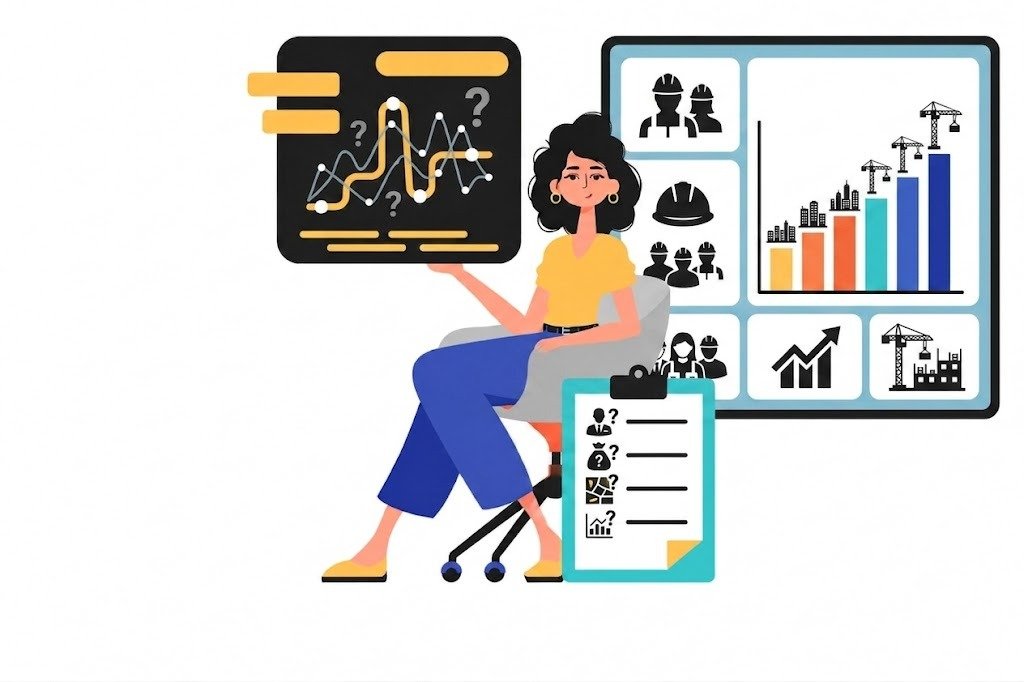
There is a good factual basis for describing Edmonton as a fast-growing metropolitan area. According to Statistics Canada’s metropolitan population estimates, the Edmonton Census Metropolitan Area grew from approximately 1.47 million people in 2021 to about 1.69 million in 2025.
Edmonton recorded population growth of around 3 per cent between July 2024 and July 2025, the highest rate among Canada’s census metropolitan areas during that period. This followed several years of particularly strong urban growth across Canada.
Population growth matters because it creates more employment relationships, tenancy agreements, commercial partnerships, insurance claims and family cases. It also brings more people whose documents, witnesses or business interests are spread between countries.
However, there is an important difference between population evidence and polygraph industry evidence.
No official public dataset shows:
- How many private polygraph examinations take place in Edmonton each year
- What percentage involve businesses, relationships or legal disputes
- How many practising examiners are based permanently in the city
- Whether demand has risen by a particular percentage
- Which Edmonton neighbourhood handles the most appointments
- The average fee charged across all providers
The City of Edmonton’s economic reports track employment, labour force conditions, construction, inflation and economic activity. They do not track private polygraph appointments. Claims about exact corporate market shares or examiner numbers should therefore be treated as provider estimates unless supporting records are shown.
A more accurate conclusion is that Edmonton now contains more people, organisations and cross-border relationships capable of producing complicated disputes. This creates conditions in which credibility assessment services may receive more enquiries, but it does not prove every claim made about the size of the market.
Why Edmonton Produces a Broad Range of Cases
Edmonton is not simply an oil and gas city. Energy remains important, but the metropolitan economy also includes government, healthcare, construction, logistics, education, technology, professional services and retail.
This mix creates several kinds of cases in which someone may consider a polygraph.
Workplace Losses and Internal Investigations
A company may find that money, equipment, stock or confidential information has disappeared. Management may believe only a small number of employees had access.
The temptation is to test everyone and use the results to identify the responsible person. That is rarely a sensible starting point.
A better internal process normally begins with:
- Access records
- Stock and accounting data
- CCTV where lawfully collected
- Device and login records
- Witness interviews
- A written timeline
- Advice from human resources and legal counsel
A polygraph may then be considered as one part of the investigation. It should not replace ordinary evidence or become a way of pressuring employees into making statements.
Business Partnership Disputes
Edmonton businesses frequently work across Alberta, British Columbia, the United States and overseas. A dispute may involve an undeclared payment, contact with a competitor, missing company property or an alleged breach of confidentiality.
A polygraph can sometimes narrow a private factual disagreement. It cannot audit accounts, recover deleted messages or determine the legal meaning of a contract.
For example, the question “Did you betray the company?” is too broad and emotionally loaded. A more workable question might concern whether a specific person transferred a named file to an outside party during a defined period.
The quality of the question often matters more than the price of the equipment.
Family and Relationship Disagreements
Private relationship cases form a visible part of the consumer market. Common enquiries concern alleged infidelity, secret contact, missing money, undisclosed accounts or a particular event.
These appointments require care. A polygraph should not be presented as a relationship cure, nor should one partner be threatened, controlled or forced into attending.
Before booking, both people should understand:
- The precise event being examined
- The questions that will and will not be asked
- Who will receive the report
- What happens if the result is inconclusive
- Whether the result will genuinely settle the matter
- Whether professional counselling or legal advice is also needed
A technically completed examination may still worsen a relationship when the underlying problem is fear, control or a lack of trust rather than one disputed fact.
Private Investigations and Insurance Matters
Private investigators may use polygraph examinations to help assess a statement, plan further interviews or decide where to look for supporting records.
An insurer, however, will normally require documents, expert evidence, financial records and compliance with the policy terms. A private polygraph report should not be assumed to prove or disprove an insurance claim.
Anyone considering a test for an active insurance dispute should first ask the insurer or solicitor whether the report would have any recognised purpose.
Criminal Defence Preparation
A person accused of an offence may want to take a polygraph to demonstrate innocence. The result might assist private case preparation or help a legal team understand a client’s account. Still, Canadian courts do not generally admit polygraph results as proof that someone is truthful.
A defence solicitor in the UK should coordinate with Alberta counsel before arranging an examination connected with Canadian proceedings. An independently purchased report can create disclosure, strategy or expectation problems if its role has not been considered properly.
Security and Public-Sector Screening
Polygraph testing has a more established role in some Canadian law enforcement, intelligence and security settings than it does in ordinary private employment.
The Canadian Police College’s polygraph and interviewing programme trains eligible law enforcement, military and intelligence personnel. This should not be confused with a universal licence for every commercial examiner advertising services online.
What the Machine Actually Records
The phrase “lie detector” can give the wrong impression. A polygraph does not read thoughts, locate a lie inside the brain or produce a direct measurement of honesty.
It records physiological activity while questions are asked. Depending on the equipment, this may include:
- Breathing patterns
- Cardiovascular activity
- Skin conductivity
- Movement or pressure changes
The examiner then assesses the recorded reactions within a structured testing method.
The American Psychological Association’s explanation of polygraph testing notes that the machine measures bodily responses that may be associated with stress or anxiety. Those reactions are not unique to deception. A truthful person may feel frightened, whilst a deceptive person may appear relatively calm.
This does not mean every examination is useless. It means the result should be described accurately.
A professional report is an examiner’s interpretation of recorded physiological responses under particular testing conditions. It is not a certificate of objective truth.
How an Edmonton Appointment Should Work
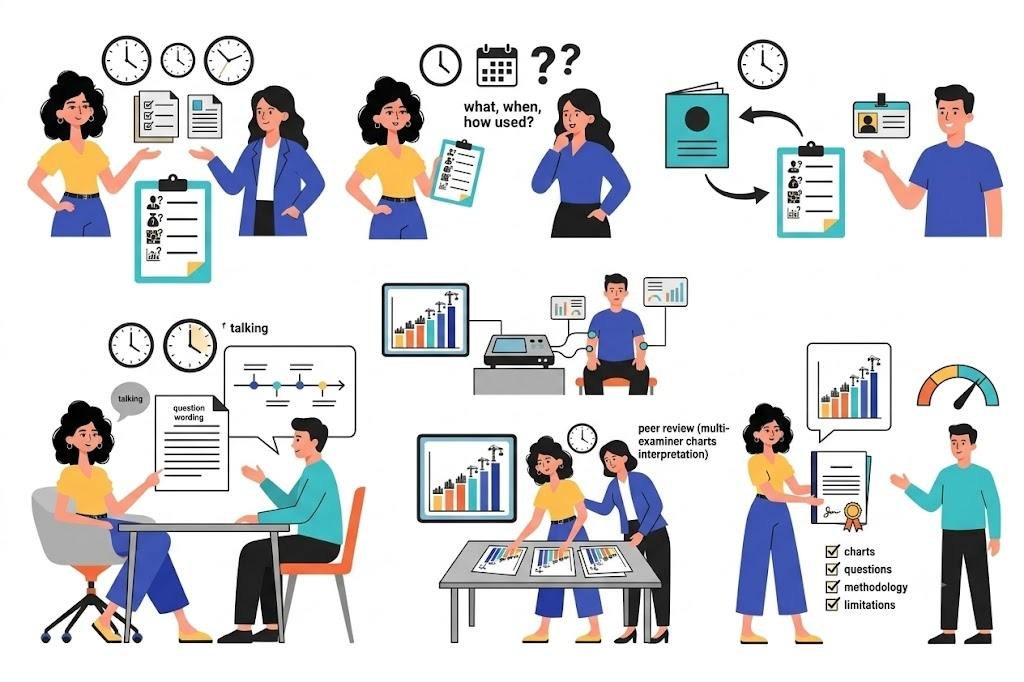
The machine is the smallest part of a careful polygraph service. The real work lies in deciding whether the case is suitable, reducing the issue to a testable event, reviewing the questions and recording the examination properly.
A typical process may look like this:
| Stage | What Should Happen | What the Client Should Check |
|---|---|---|
| Initial enquiry | The provider asks what happened, when it happened and how the result will be used | Avoid providers who promise a certain result before hearing the facts |
| Suitability review | The examiner considers whether the issue can be tested fairly | Ask what circumstances could make the test unsuitable |
| Consent and identification | The examinee receives clear information and agrees voluntarily | Read the consent and privacy terms before attending |
| Pre-test interview | The event, timeline and wording of each question are discussed | No surprise relevant questions should appear during testing |
| Instrument recording | Sensors record physiological activity whilst question sequences are repeated | Ask what system and recognised technique will be used |
| Data analysis | The examiner scores and interprets the recorded charts | Ask whether another qualified examiner can review the data |
| Post-test discussion | The examiner explains the outcome and any limitations | Do not accept pressure to make an immediate confession or decision |
| Written report | The client receives the agreed findings and scope | Check whether charts, questions, methodology and limitations are included |
The full appointment may take much longer than the short period during which questions are asked. An unusually rapid service can indicate that the pre-test interview, question review or chart collection has been reduced.
Question Design Can Decide Whether the Test Is Useful
The strongest polygraph questions are usually narrow, factual and linked to a defined event.
A weak question asks:
“Have you ever been dishonest with your employer?”
Almost everyone could interpret that differently. It covers an unlimited period and mixes serious wrongdoing with minor everyday behaviour.
A stronger question might ask:
“Between 1 March and 30 April, did you personally remove cash from the locked office safe without authorisation?”
This wording identifies:
- The action
- The object involved
- The location
- The time period
- The question of authorisation
Questions about feelings, motives, future conduct and broad character are difficult to test properly.
Examples of unsuitable wording include:
- “Do you still love your partner?”
- “Are you a loyal employee?”
- “Will you steal again?”
- “Are you a good parent?”
- “Did you mean to cause harm?”
A responsible examiner should refuse to test a question simply because the client wants it asked.
In-Person and Online Services Are Not the Same Thing
People searching for a lie detector test Edmonton provider may encounter both local offices and websites serving customers across Canada.
It is important to establish whether “online” means:
- Booking an appointment online
- Completing an initial video consultation
- Reviewing documents remotely
- Receiving results through a secure portal
- Conducting the full test without attending a properly equipped location
A conventional polygraph examination relies on physical sensors recording physiological responses during a controlled session. A page inviting clients to book an online polygraph test may offer remote scheduling or consultation. When it claims that the complete examination can be performed through an ordinary video call, ask exactly what is being measured and whether the service is truly a polygraph examination.
Do not assume that voice analysis, facial observation, an automated questionnaire and a conventional polygraph are interchangeable. They use different methods and may have very different limitations.
For a UK client who cannot travel immediately, a remote consultation can still be useful for:
- Discussing whether the case is suitable
- Reviewing the disputed event
- Preparing possible questions
- Confirming identification requirements
- Arranging an Edmonton appointment
- Speaking with the examiner alongside Canadian counsel
The actual examination method should remain clear in the written agreement.
The Canadian Legal Position Is More Restrictive Than Many Advertisements Suggest
The leading Canadian decision is R v Béland. The Supreme Court of Canada’s judgment on polygraph evidence held that polygraph results are not admissible as evidence of truthfulness in a criminal trial. The Court was concerned that such evidence would interfere with established evidence rules and the Court’s responsibility to assess credibility.
This creates an important distinction.
A polygraph may be used privately to:
- Guide an investigation
- Help lawyers assess an account
- Encourage further disclosure
- Narrow the factual issues in a dispute
- Support a private decision
- Assist risk-management discussions
That does not make the result admissible proof.
Clients should be cautious when a provider promises a “court-ready” report without first asking which Court, what proceeding is involved and what the instructing lawyer requires. Professional formatting cannot make inadmissible material admissible.
Family, employment, immigration, insurance and civil cases each operate under their own legal and procedural rules. A person should obtain advice from a lawyer practising in the relevant Canadian field rather than relying on the examiner’s view of admissibility.
Alberta Privacy Rules Matter
A polygraph examination can involve sensitive information about relationships, employment, finances, alleged misconduct and criminal accusations. It also creates physiological recordings, interview notes and a written conclusion.
Alberta’s guidance on collecting personal information under PIPA explains that private organisations must limit how personal information is collected, used and disclosed. Special provisions apply to employee information, and collection must be reasonable for the stated purpose.
Before agreeing to a test, ask:
- Who is the examiner’s client?
- Who owns the report?
- Who will receive the charts and interview notes?
- Will the session be audio or video recorded?
- Where will the records be stored?
- How long will they be retained?
- Can the information be transferred outside Canada?
- What happens if a third party requests it?
- Can the examinee obtain a copy?
- How is identity verified during remote communication?
A vague privacy statement is not enough when the examination concerns a serious allegation.
Employment Testing Requires Particular Care
It is unsafe to apply a single Canadian rule to every province. Ontario has an explicit statutory prohibition on employers requesting or requiring lie detector tests. Still, Alberta’s legal position involves privacy, employment, human rights and reasonableness considerations rather than an identical blanket rule.
The Alberta Human Rights Commission’s guidance on pre-employment enquiries explains that recruitment questions and selection practices must avoid discrimination connected with protected grounds.
An Edmonton employer considering polygraph testing should obtain local legal advice before:
- Asking an applicant to participate
- Requesting tests from several employees
- Sharing allegations with an examiner
- Collecting medical or personal information
- Using the result in a disciplinary process
- Treating refusal as evidence of guilt
- Storing the result in a personnel file
- Sharing the report with insurers or law enforcement
A test result should never become a substitute for a fair investigation. Employees should know whether attendance is genuinely voluntary and what consequences, if any, may follow from refusing.
The UK Uses Polygraphs in a Much Narrower Official Setting
UK readers may have heard that the Probation Service uses polygraphs. That is true, but the context is tightly defined.
The UK Ministry of Justice polygraph examination framework concerns eligible people managed under specific licence conditions. It forms part of a structured public risk-management process rather than ordinary commercial dispute resolution.
This official use does not mean a privately purchased Edmonton result will be accepted by a UK court, police force, employer or family solicitor.
A British client should tell the relevant UK professional before commissioning a Canadian report. That person may recommend:
- Taking a formal witness statement
- Preserving messages and transaction records
- Obtaining Canadian legal advice
- Instructing a regulated investigator
- Using an independent forensic expert
- Avoiding the test entirely
The purpose should be agreed before money is spent.
What Edmonton Polygraph Services Cost
There is no official Edmonton tariff and no reliable public source that establishes a city-wide average fee. Advertised prices can also exclude important parts of the service.
The cheapest figure on a website may cover only a basic appointment. The final bill may change when the client requests several issues, urgent scheduling, travel, a detailed report or attendance by the examiner at a meeting.
Instead of comparing headline prices alone, request an itemised quotation.
| Cost Question | Why It Matters |
|---|---|
| How many relevant questions are included? | Some advertised fees cover only one issue |
| Is the pre-test interview included? | It is a central part of the examination |
| Is a written report included? | Some providers charge separately for documentation |
| Are charts or scoring details supplied? | These may be needed for independent review |
| Is a second opinion included? | Quality-control review may cost extra |
| Are cancellation charges applied? | Last-minute changes can be expensive |
| Is travel included? | Mobile appointments may involve mileage and time fees |
| Is urgent processing available? | Rush work may attract a surcharge |
| Is tax included? | Canadian prices may be shown before applicable tax |
| Is legal testimony included? | Attendance, preparation and travel are separate services |
The cheapest provider may be suitable for a low-stakes private question, but price should not decide a case involving employment, children, criminal allegations or a large financial loss.
How to Assess an Edmonton Examiner
A polished website is not proof of competence. Nor is a long list of case types.
Ask the examiner to explain their background in language that can be checked.
Training and Experience
Find out:
- Where the examiner completed their initial training
- Whether an established professional body recognised the programme
- How much supervised work followed the course
- Whether the examiner completes continuing education
- How often they handle your type of case
- Whether their main experience is police, workplace, relationship or private testing
Training at a recognised school is useful, but it is not the same as professional regulation by a statutory college.
Method and Equipment
Ask for the name of the examination technique and the type of digital equipment used. The examiner should be able to explain the process without hiding behind technical language.
Modern equipment alone does not guarantee a sound examination. Poor interviewing, vague questions and biased interpretation can undermine data collected by an expensive system.
Independence
An examiner should not act as though they are employed to produce the result requested by the paying client.
Warning signs include:
- Promising that the examinee will pass
- Guaranteeing a confession
- Describing one party as guilty before testing
- Writing accusatory questions
- Refusing to discuss inconclusive outcomes
- Pressuring the person to attend
- Marketing the test as certain court proof
- Claiming 100 per cent accuracy
The paying client purchases a professional process, not a preferred conclusion.
Reporting
A useful written report should identify:
- The instructing client
- The examinee
- The date and location
- The stated purpose
- The relevant questions
- The method used
- The result for each testable issue
- Any limitations
- Who received the report
- Whether recording or independent review occurred
A one-line email saying “passed” or “failed” provides very little context for a serious decision.
When a Polygraph Is the Wrong Tool
Some cases should not proceed to testing.
A provider should be willing to decline when:
- The issue cannot be reduced to a clear factual event
- The person is being threatened or coerced
- The client expects automatic court admission
- The questions concern beliefs, feelings or future behaviour
- The result will be treated as the only evidence
- The examinee cannot understand the questions or consent process
- The disputed event is too broad or poorly defined
- The client wants an instant result without a proper interview
- Relevant records have not yet been preserved
- A solicitor advises that testing may damage the case
Refusing unsuitable work is a sign of judgement, not poor customer service.
A Practical Checklist Before Booking
Before paying a deposit, obtain written answers to the following questions.
| Check | Satisfactory Answer |
|---|---|
| Purpose | The provider can explain what the result may and may not be used for |
| Consent | Participation is documented and informed |
| Questions | Relevant questions are reviewed before chart collection |
| Method | The examiner names and explains the technique |
| Privacy | Storage, disclosure and retention are addressed |
| Qualifications | Training and current professional affiliations can be verified |
| Report | The scope and format are confirmed in advance |
| Price | The quotation includes all expected charges |
| Limitations | Accuracy and admissibility are described realistically |
| Legal coordination | The provider is willing to work with the client’s lawyer |
| Inconclusive result | The contract explains what happens next |
| Complaints | A written complaint or review process exists |
Keep copies of the advertisement, quotation, consent form, invoice and correspondence. Marketing promises can change after an appointment, but written records preserve what was originally offered.
What the Edmonton Market Really Looks Like in 2026
Edmonton’s growth is real. Its metropolitan population reached approximately 1.69 million in 2025, and its recent annual growth rate was among the strongest in Canada. That growth creates more businesses, employment relationships, personal disputes and cross-border cases.
What cannot be supported confidently is the idea that Edmonton has a neatly measured polygraph industry with published sector shares, standard neighbourhood specialisms, a fixed number of certified examiners and a recognised city-wide price scale.
The private market is better understood as a collection of different services:
- Experienced former public-sector examiners
- Private investigation businesses
- National companies taking Edmonton bookings
- Alberta providers travelling between cities
- Relationship-focused consumer services
- Corporate investigation specialists
- Remote consultation and appointment platforms
Quality can vary widely between providers that appear similar in a search result.
The best examiner is therefore not necessarily the closest, cheapest or most confident. It is the person who narrows the question carefully, explains the scientific and legal limits, protects personal information and accepts that a polygraph is only one source of information.
For a UK client, one final rule is especially useful: decide what the report is meant to achieve before booking the examination. When the answer is unclear, speak to the relevant solicitor or Alberta lawyer first. A carefully planned test may assist a private investigation. A poorly planned one may produce little more than an expensive argument.