
Every year seems to start the same way. New goals. New plans. A new notebook, maybe. A list of things that should finally get done. Exercise more. Save money. Eat better. Spend less time scrolling. Read more. Get organised. Then a few weeks pass and real life gets in the way. That’s not necessarily because there’s something wrong with the goals. Sometimes the list was simply too long to begin with.
A better way to start the year can be to stop and look at what’s already happening. What’s actually important right now? What has been taking up too much time? What keeps getting put off? It sounds simple, but it can change the whole way goals are set.
Start with What Happened Last Year
Before making another list, look at the old one. Some goals probably worked. Some didn’t. There may also be things that were never written down but still ended up becoming important. Maybe work became more demanding. Maybe there was an unexpected expense. Maybe spending more time with family became a priority. There’s no point carrying an old goal into another year just because it was written down twelve months ago.
And the things that went well deserve some attention too. A small improvement can be easy to overlook. Getting into a better sleep routine, saving a little each month, exercising more regularly or finally finishing something that had been sitting around for ages still counts. It doesn’t have to be a huge achievement.
Fewer Goals Can Actually Help
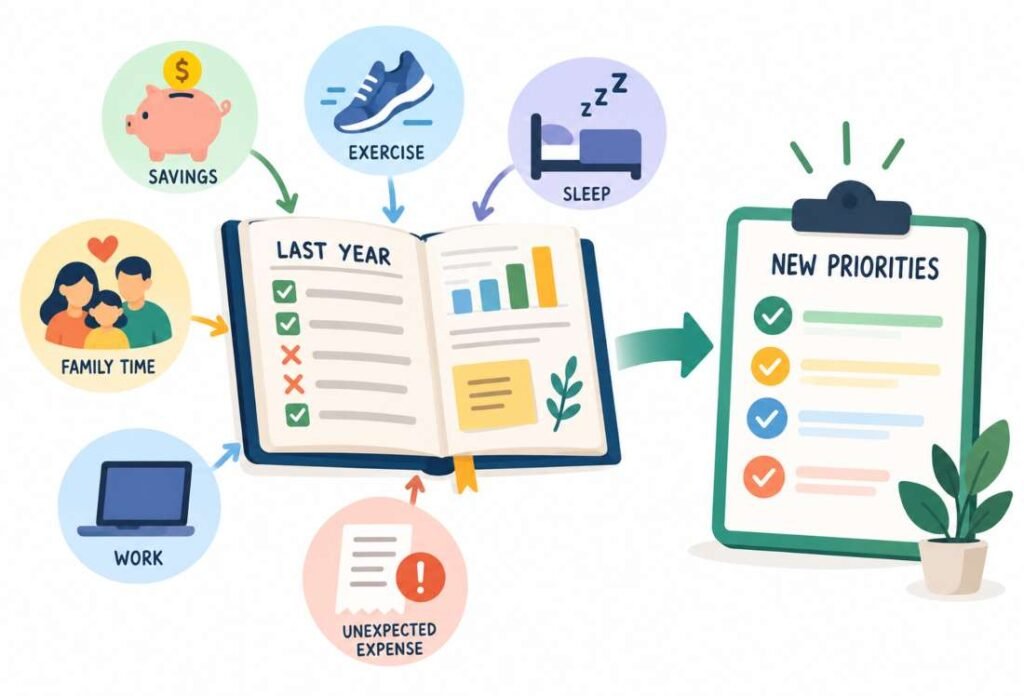
There’s a temptation to make a very ambitious list at the beginning of the year. Health. Career. Money. Travel. Fitness. Learning. Hobbies. Relationships. Everything needs improving. But when everything becomes a priority, nothing really is.
Pick a few things that genuinely matter. That might mean getting finances under control, becoming more active and making more time for family. For someone else, work and learning may need more attention. There’s no universal list. The point is to have a list that can actually survive a normal week.
Money Should Be Part of the Conversation
Financial goals often get separated from everything else, even though money affects most other areas of life. It’s worth checking the basics at the start of the year. Regular bills. Subscriptions that are no longer being used. Savings. Upcoming travel. School or household expenses.
And then there are things that may not happen every month but still need planning. Charitable giving is one example. For those planning to give zakat in 2027, looking at finances ahead of time can make the process much easier. There’s less chance of trying to work everything out at the last minute, especially when other expenses are already competing for attention.
It doesn’t need to become a complicated budgeting exercise either. Even knowing roughly what’s coming in, what’s going out and what needs to be set aside gives a much clearer picture. MoneyHelper has a useful budgeting tool that can help with this kind of review.
Look at The Calendar, Not Just the Goal
This is where a lot of plans fall apart. Someone says they want to exercise more, but there’s no actual time for exercise. Someone wants to read more, but every evening is already taken up. Someone wants to spend more time with family, but weekends are packed with errands. The goal sounds good. The schedule doesn’t support it.
Have a look at a normal week and be honest about where the time is going. That doesn’t mean turning every free hour into “productive time”. There needs to be time to do nothing too. But if something matters, it needs somewhere on the calendar. Even small blocks can help. Twenty minutes of reading. A short walk after work. Three exercise sessions instead of trying to work out every single day. The NHS recommends at least 150 minutes of moderate physical activity a week for adults, but that doesn’t mean it all needs to happen in one go. Smaller sessions can be spread across the week.
Make The Goal a Little Less Perfect
A lot of goals fail because they leave no room for bad days. If the plan is to exercise seven days a week, missing two days can feel like the whole thing has failed. If the plan is to save a very large amount every month, one unexpected expense can throw everything off.
Make the target realistic enough that it can still work when the week is messy. “Eat healthier” is vague. Cooking at home three more times a week is something that can actually be measured. “Save more” is vague. Putting a fixed amount aside after payday is much clearer.
Not Everything Needs to Be Productive
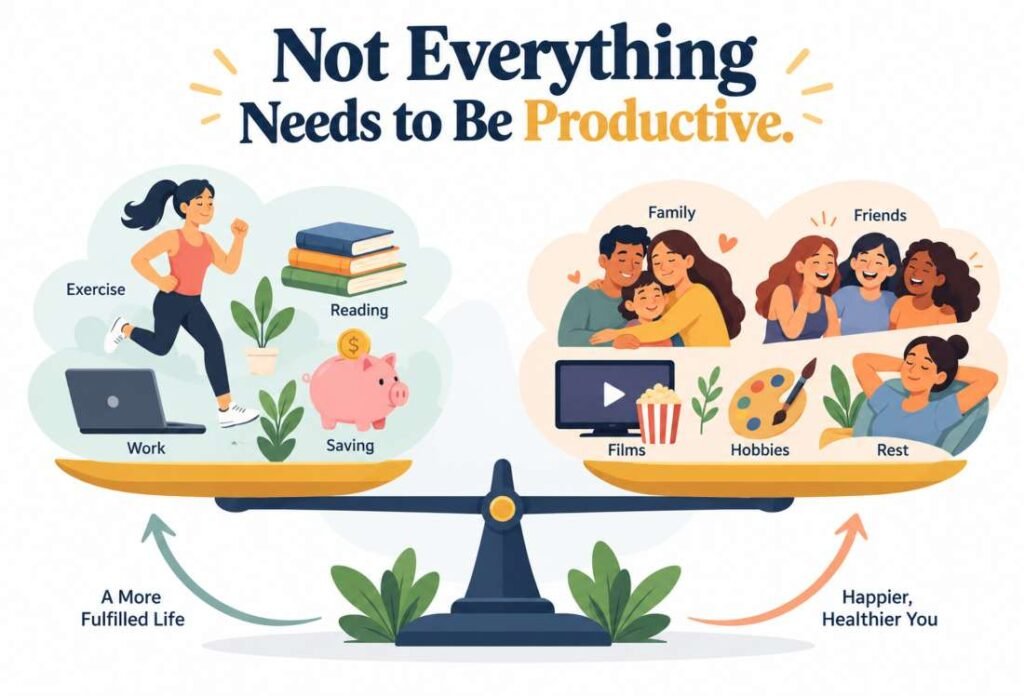
This part tends to get forgotten. Personal goals can become another form of pressure. There’s always something else to improve. More exercise. More reading. More work. More saving. More learning. There should also be space for things that are simply enjoyable. Seeing friends. Going somewhere for the weekend. Watching a film. Sitting with family. Picking up an old hobby. Those things don’t need a productivity benefit attached to them. They are part of having a life.
And The List Can Change
There’s no reason to wait until next January to rethink everything. A few months into the year, priorities might look completely different. A new responsibility might come up. Something that seemed important may turn out not to be.
Change the list. Drop the goal that no longer makes sense. Make the difficult one smaller. Keep the things that are working. That’s probably a more useful way to think about personal goals than trying to stick perfectly to a plan made months ago. The aim isn’t to have the most impressive list. It’s to have a life that actually reflects what matters.