
Old photographs often sit in drawers for years. They lose their color and get covered in dust. You might feel a sense of loss when you look at a blurry picture of a loved one. AI technology now offers a way to fix these images and even make them move. You can take a static portrait and turn it into a talking video. This process helps families connect with their history in a way that was never possible before.
You can use a Lip Sync Video tool to give a voice to these silent faces. This technology analyzes the movements of a human mouth and applies them to a still image. It makes the person in the photo look like they are actually speaking. You can use your own voice or a recorded clip from a relative. It creates a powerful emotional experience for anyone watching the final result.
Before you make a photo talk, you should make sure the image looks clear. You can restore old photos online free to remove scratches and bring back the original colors. Many old prints have cracks or water damage from sitting in damp basements. AI tools can fill in these gaps by looking at the surrounding pixels. Once the photo is clean, the animation process looks much more realistic and professional.
Scenario 1: Bringing Family History to Life
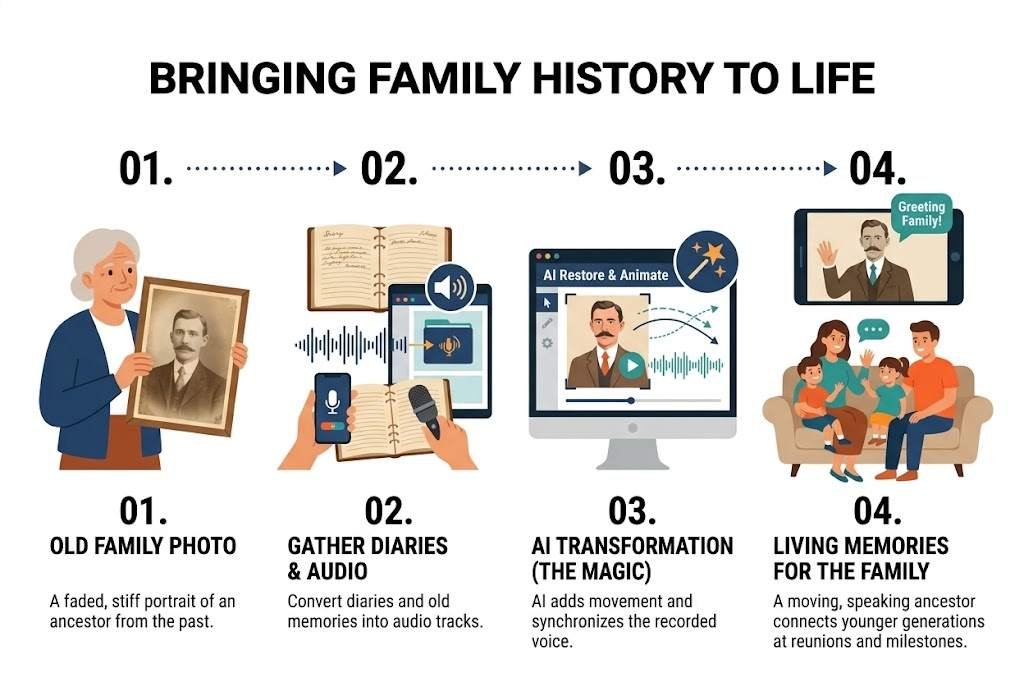
Many people spend years researching their family tree. They find names and dates, but they often lack a personal connection to their ancestors. You might have a single photo of a great-great-grandfather from the early 1900s. He looks stiff and formal because people had to stand still for long exposures back then. AI changes this dynamic by adding movement and sound.
Imagine showing a video to your children where their ancestor greets them. You can take an old diary entry and record it as an audio file. By syncing that audio with the restored photo, you create a living piece of history. This makes the past feel real rather than just a collection of stories. It helps younger generations appreciate where they came from.
Families often use these tools for special events like reunions or milestone birthdays. A slideshow of old photos is nice, but a video of a late family member offering a blessing or a joke is unforgettable. It brings a sense of presence to the room. You don’t need to be a video editor to make this happen. The software does the heavy lifting for you.
Scenario 2: Making Education More Engaging
History teachers often struggle to keep students interested in the past. Textbooks provide facts, but they don’t always provide a spark. When students see a historical figure speaking directly to them, their attention levels rise. You can take a famous portrait of someone like Frederick Douglass or Eleanor Roosevelt and animate it.
This use case is perfect for museum exhibits as well. Instead of reading a long plaque, visitors can watch a short clip of a historical figure explaining an artifact. It creates an immersive environment. The restoration part is vital here because historical photos are often very grainy. Improving the resolution makes the figure look like a contemporary person rather than a ghost from the past.
Students can also use these tools for their own projects. Instead of a standard presentation, they can create a mock interview with a person from the 18th century. This encourages them to research how people spoke and what they cared about. It turns a simple homework assignment into a creative exercise. The combination of clear visuals and realistic lip movement makes the project stand out.
Scenario 3: Creative Social Media and Marketing
Content creators are always looking for ways to grab attention. Vintage aesthetics are very popular on platforms like TikTok and Instagram. You can use old public domain photos to create unique characters for your videos. By restoring these images, you give them a high definition look that fits modern screens.
Marketers can use this technology to tell a brand story. If a company has been around for a century, they can use photos of their founders to talk about their values. It builds trust and shows a long history of service. The contrast between an old fashioned photo and modern animation is very eye catching. It stops people from scrolling and makes them curious about the content.
This approach also works well for storytelling channels. If you run a channel about true crime or historical mysteries, you can animate the people involved. It adds a layer of production value that usually requires a large budget. With AI, a solo creator can produce high quality visuals in just a few minutes. It levels the playing field for small creators who want to compete with big studios.
Benefits of Using AI for Content Restoration
The primary benefit of these tools is the emotional impact they provide. Seeing a loved one smile or speak after they have passed away is a profound experience. It helps preserve the essence of a person beyond just their physical likeness. The technology captures subtle movements like eye blinks and head tilts that make the animation feel natural.
Another benefit is the accessibility of these tools. In the past, you would have to pay a professional artist hundreds of dollars to fix a torn photo. It would take weeks of manual work with specialized software. Now, you can get a high quality result in seconds. This allows more people to save their family memories before the physical photos degrade completely.
The cost savings are significant for both individuals and organizations. Libraries and archives can process thousands of images in the time it used to take to do ten. This means more history is saved for the public to see. The speed of AI also allows for experimentation. You can try different voices or different levels of restoration until you find the perfect match for your project.
Practical Workflow for Reviving Old Content
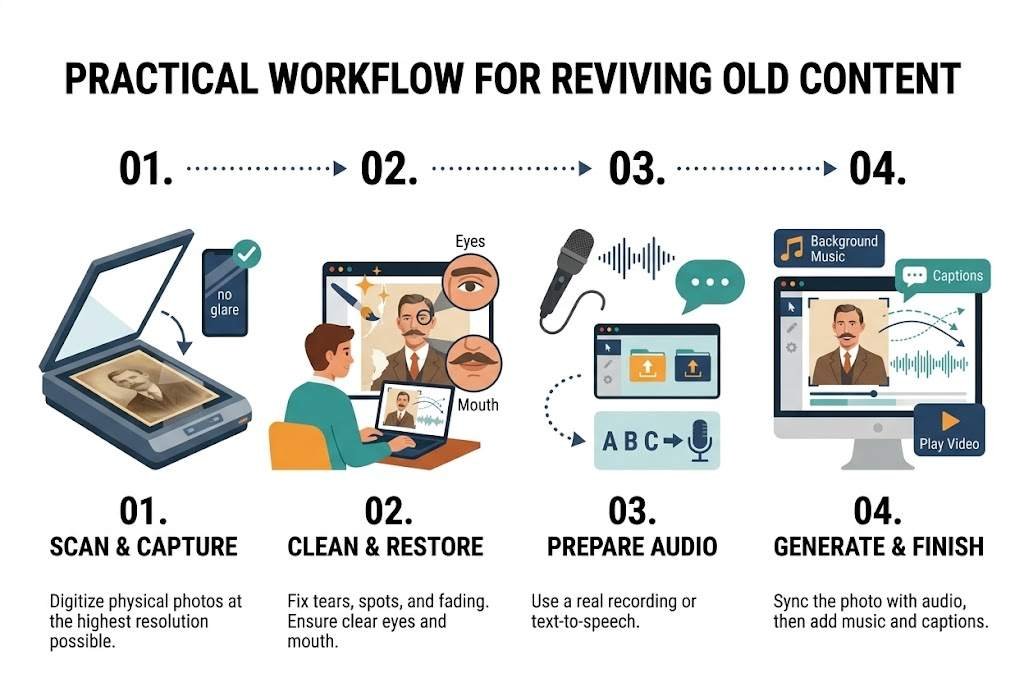
To get the best results, you should follow a specific order of operations. Start by scanning your physical photos at the highest resolution possible. If you use a phone camera, make sure the lighting is even and there is no glare on the photo surface. A flatbed scanner is usually the best choice for preserving detail.
Next, you need to clean up the digital file. Upload your image to a restoration tool to fix any tears, spots, or fading. You should focus on getting the eyes and mouth as clear as possible. These are the areas the AI will focus on when it creates the animation. If the face is blurry, the lip sync will not look as convincing.
Once you have a clean image, choose your audio. You can use a real recording or a text to speech tool. Upload both the photo and the audio to the lip sync software. The AI will then map the sounds to the mouth movements. After the video is generated, you can add background music or captions to finish the project. This simple workflow turns a static piece of paper into a dynamic video.
Conclusion
AI technology has changed how we interact with the past. We no longer have to settle for faded memories and silent portraits. By combining photo restoration with lip sync tools, we can create a bridge between generations. These tools are useful for families, teachers, and creators who want to tell better stories.
The process is simple enough for anyone to use, yet powerful enough to produce professional results. As the technology continues to improve, the line between old and new content will continue to blur. You can start today by looking through your own collection of photos. You might find a story waiting to be told. Giving a voice to the past is a unique way to ensure that history is never forgotten.