
Moving abroad used to begin with a long list of browser tabs, embassy pages, forum posts and half-clear advice from people who had already been through the process. For UK residents, that research has become even more complicated in recent years.
After Brexit, British citizens no longer have automatic freedom of movement across most EU countries. At the same time, remote working, international hiring, investment migration, retirement abroad and ancestry-based citizenship routes have all become more common. A move overseas is no longer just about choosing a country. It is about checking eligibility, costs, tax rules, visa timelines, healthcare access, family requirements and long-term rights.
This is where AI-supported relocation research is starting to change the process. Instead of asking people to read through dozens of government pages one country at a time, newer platforms can compare routes, filter options and help users understand which pathways may be realistic before they speak to a lawyer or adviser.
Why Planning an International Move Is Harder for UK Residents Today
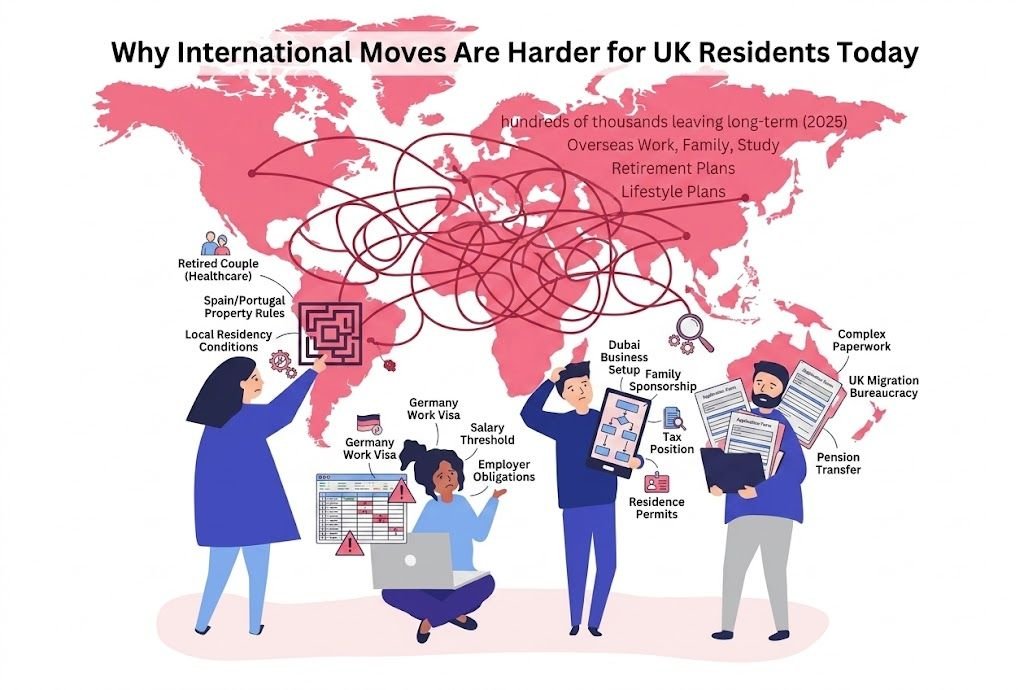
An international move can look simple from the outside. Someone chooses a country, applies for a visa, packs their belongings and starts again. In reality, the planning stage is often the hardest part.
A UK professional moving to Germany may need to understand work visa rules, salary thresholds, employer obligations and registration requirements. A founder looking at Dubai may need to compare business setup, residence permits, family sponsorship and tax position. A retired couple considering Portugal, Spain or Cyprus may need to think about healthcare, pensions, property rules and local residency conditions.
Recent UK migration data also shows that international movement remains a real issue for British households. Official figures recorded hundreds of thousands of people leaving the UK long-term in the year ending December 2025. That does not mean all are leaving permanently, but it does show how many people now have overseas work, family, study, retirement or lifestyle plans.
Problem With Traditional Immigration Research
Most people still begin with the wrong question: “Which country do I want to move to?”
- That sounds logical, but it can waste time. A country may look attractive because of the weather, tax rules, schools or business opportunities, but the visa route may not fit your situation. You might not meet the income threshold. Your dependants may not qualify. The investment route may require more capital than expected. The processing time may be too long for your plans.
A better starting point is:
“What route am I actually eligible for, and which countries match my circumstances?”
- This is where AI tools can help. They can take basic details such as nationality, budget, profession, family position and timeline, then compare them against multiple immigration routes. That gives users a clearer shortlist before they spend money on professional advice.
How AI Is Improving the Relocation Planning Process
AI does not replace official immigration rules or qualified legal advice. What it can do is make the first stage of research faster, more structured and easier to compare.
It Starts With Your Goal, Not Just the Country
A good relocation search should begin with the reason for the move. A skilled worker, investor, digital nomad, retiree, student, founder and family applicant all need different information.
For example, a UK software developer may want a route that does not require a local employer from day one. A business owner may care more about company formation, tax treatment and residency duration. A family may place schools, healthcare and dependant rights above speed.
AI-supported platforms can group these goals and show programmes that match the person’s situation, rather than forcing them to research each country manually.
It Makes Costs Easier to Compare
Immigration costs are not always obvious. A government fee may look affordable, but the full cost can include legal fees, translations, document certification, health insurance, minimum income evidence, property requirements, investment thresholds and renewal fees.
For UK readers, currency movement is another factor. A visa route priced in euros, US dollars or local currency can change in real cost depending on exchange rates. That matters for investment migration, passive income visas and family relocation budgets.
A clear comparison tool helps users see the difference between application fees, required capital and ongoing living costs.
It Helps Users Spot Hidden Requirements
Many overseas routes include conditions that are easy to miss. These can include:
- Minimum days you must spend in the country each year
- Clean criminal record checks
- Private health insurance requirements
- Local address registration
- Proof of income over several months
- Rules for spouses, partners and children
- Restrictions on remote work or local employment
- Language or integration requirements
- Renewal deadlines and long-term residence conditions
Missing one of these points can delay an application or make a route unsuitable. AI tools can help bring these details into one comparison view.
Where WorldPath AI Fits Into This Process
For people who want a clearer first step, WorldPath AI offers a structured way to compare international residency, citizenship and visa options across more than 60 countries. It is designed as a research platform rather than a single-country immigration consultancy, which makes it useful for UK residents who are still deciding where they may qualify.
The platform covers several common pathways, including work visas, digital nomad visas, residency by investment, citizenship by investment, startup and entrepreneur routes, family reunification, retirement visas, passive income options and ancestry-based citizenship.
That matters because many UK residents do not have just one possible route. A person may qualify through employment, business ownership, family connection, heritage or investment capacity. Comparing those options early can prevent costly mistakes.
Common UK Use Cases
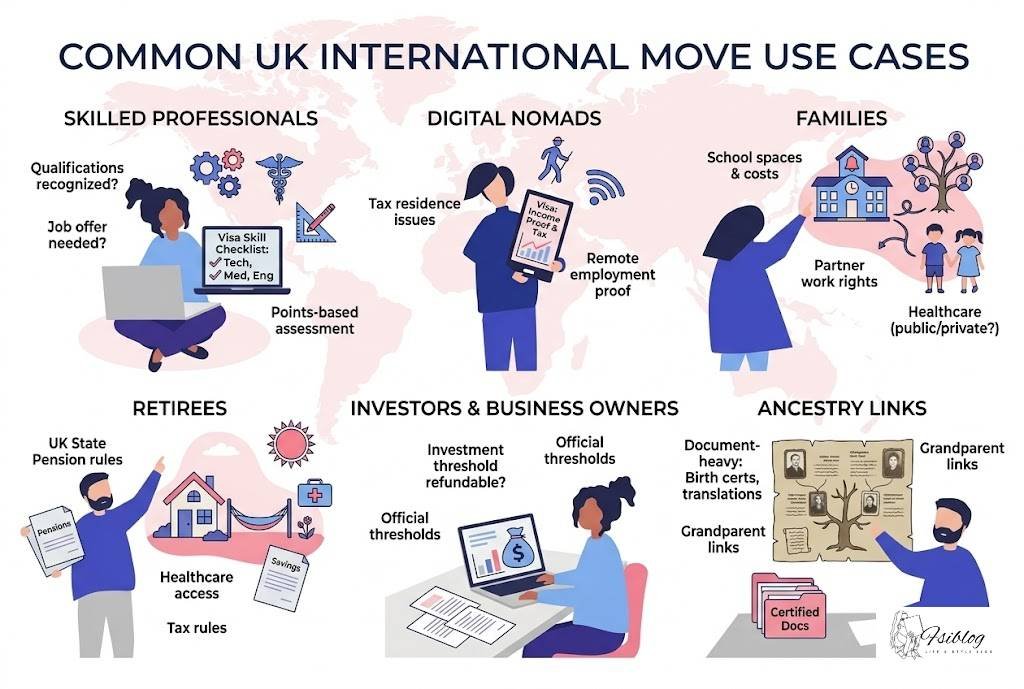
Skilled Professionals Looking Beyond the UK Job Market
Many UK workers now look at overseas roles because of salary, lifestyle, sector demand or career growth. Countries such as Canada, Australia, Germany, the UAE and several European states have routes aimed at qualified workers, but each system works differently.
Some use points-based assessments. Some require a job offer. Some prioritise shortage occupations. Others offer special routes for technology, healthcare, engineering or research talent.
A UK applicant should check:
- Whether their qualification is recognised overseas
- Whether a job offer is needed before applying
- Whether dependants can come with them
- Whether the route can lead to permanent residence
- Whether professional registration is required
Digital Nomads and Remote Workers
Remote work has made international relocation more realistic for freelancers, consultants and employees who can work online. But digital nomad visas vary widely.
Some countries require a minimum monthly income. Others require private health insurance, proof of remote employment, a clean criminal record or a fixed rental address. Some allow renewal, while others are designed only for a short stay.
UK workers should also check tax carefully. Working remotely from another country can create tax residence questions, and it may affect both the worker and their employer.
Families Moving Abroad
For families, the visa is only one part of the decision. A country may look suitable for one adult, but not for a spouse, partner or children.
Important questions include:
- Can dependants join the main applicant?
- Can a partner work?
- Are school places available and affordable?
- Is healthcare public, private or mixed?
- Are there vaccination, document or translation requirements?
- What happens if the main applicant loses their job?
A family move should be planned more carefully than a solo relocation because a mistake can affect schooling, housing, income and healthcare at the same time.
Retirees and Passive Income Applicants
Retirement abroad remains popular among UK residents, especially those looking for warmer weather, lower living costs or a slower pace of life. But retirement visas often require proof of pension income, savings, private healthcare and a long-term address.
Retirees should also consider UK State Pension rules, local tax treatment, inheritance planning, healthcare access and whether they can return to the UK easily if health needs change.
Investors and Business Owners
Investment routes can offer residency or, in some countries, citizenship. These routes can be attractive, but they carry higher financial risk.
A UK investor should never rely only on marketing material. They should check the official investment threshold, whether the money is refundable, whether the property qualifies, how long the investment must be held and whether family members are included.
Professional advice is especially important before committing capital.
People With Ancestry or Heritage Links
Some British residents may qualify for citizenship or residence through parents, grandparents or wider family heritage. Ireland, Italy, Poland and other countries have ancestry-based routes, but the rules are document-heavy.
Applicants may need birth certificates, marriage certificates, naturalisation records, translations and official document certification. In many cases, missing paperwork is the biggest delay.
A Practical Checklist Before Using Any Relocation Tool
AI can help organise research, but users should still prepare the right information before comparing routes.
| Area to Prepare | What You Should Check |
|---|---|
| Personal Details | Know your current nationality, any other citizenships, age, marital status, and whether dependants will move with you. |
| Work and Income | Prepare details of your job, business, savings, pension income, qualifications, and likely monthly income after moving. |
| Documents | Common documents may include passports, birth certificates, marriage certificates, degree certificates, bank statements, police certificates, and proof of address. |
| Timeline | Be realistic about when you want to move. Some visas are processed in weeks, while others can take months or longer. |
| Risk Tolerance | Some countries offer faster routes with higher costs. Others are slower but more stable. The right choice depends on your budget, family needs, and long-term goal. |
Safety Points UK Readers Should Not Ignore
International relocation is a major legal and financial decision. AI tools can help with research, but they should not be treated as a final answer.
Before applying, UK residents should:
- Check the official immigration website of the destination country
- Use qualified immigration lawyers or licensed advisers where needed
- Avoid anyone promising guaranteed approval
- Be cautious with upfront payments
- Confirm whether the adviser is regulated in the relevant country
- Keep copies of every document submitted
- Check tax, pensions, healthcare and insurance before leaving the UK
- Tell the right UK authorities when moving abroad
The UK government also advises people moving or retiring abroad to consider visas, healthcare, tax, pensions, driving, benefits and local legal requirements before they leave.
What AI Cannot Do
AI can make research easier, but it cannot remove the need for judgment. Immigration rules can change quickly. Government pages can be updated without much notice. Some applications depend on personal circumstances that software cannot fully assess.
AI should be used as a starting point for comparison, not as a replacement for official checks or legal advice.
The best approach is to use AI to narrow your options, then confirm the details through official sources and a qualified professional where the decision involves money, family, work rights or permanent relocation.
Final Thoughts
For UK residents planning an international move, the biggest challenge is no longer a lack of information. The challenge is knowing which information applies to your situation.
AI-supported relocation platforms are useful because they turn scattered research into a clearer comparison. They can show likely routes, highlight costs, flag timelines, and help users avoid wasting time on countries or programmes that do not fit.
Whether someone is moving for work, retirement, investment, family, remote work or heritage reasons, the first step should be the same: compare the real options before committing.
A well-planned move abroad is not built on guesswork. It is built on eligibility, evidence, budget, timing and proper advice.