
Rome is one of the easiest European capitals to enjoy on foot, but it is also one of the easiest to get wrong. The main sights look close on a map, yet the heat, uneven cobbled streets, crowds and long museum queues can quickly drain your time and energy.
For UK travellers planning a long weekend, the best way to enjoy Rome is not to rush through every landmark. It is to build a walkable plan, understand the city’s layout and leave enough space for slow meals, shaded breaks and evening wandering. Rome rewards people who move at the right pace.
Why Rome Works So Well as a Walking City
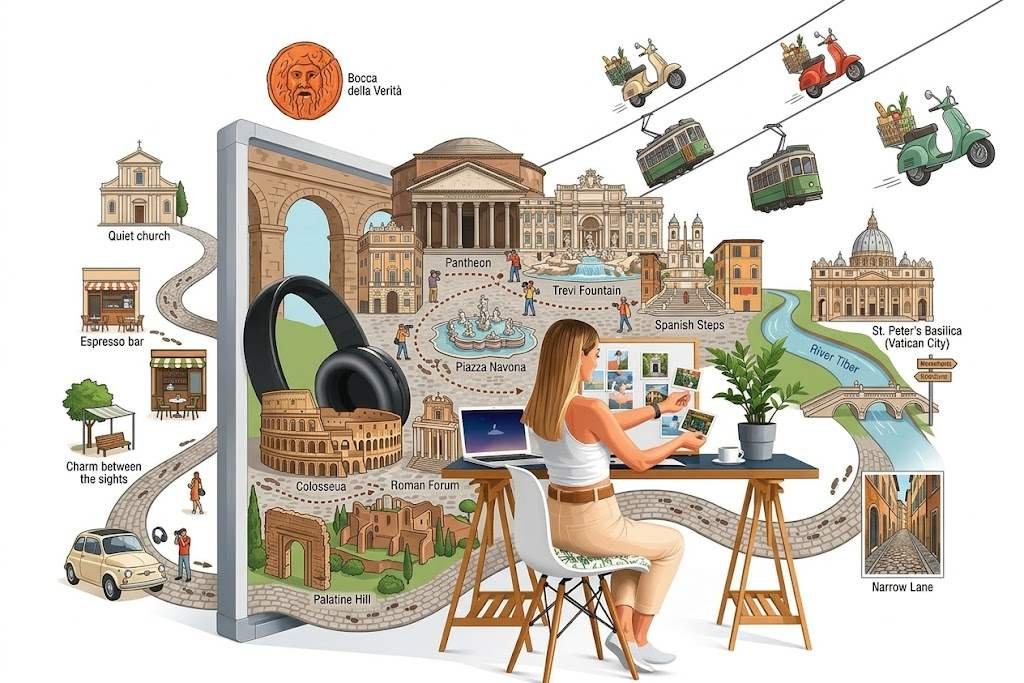
Rome’s historic centre is compact compared with many major capitals. The Pantheon, Trevi Fountain, Piazza Navona, Spanish Steps and Campo de’ Fiori can all be linked together on foot with a sensible route. The Colosseum, Roman Forum and Palatine Hill sit slightly further south, while Vatican City is across the River Tiber.
Walking matters because Rome’s charm is often found between the famous sights. A quiet church, a small coffee bar, a shaded square or a view down a narrow lane can be just as memorable as a major monument.
For British visitors used to weekend breaks in cities such as Paris, Barcelona or Amsterdam, Rome feels different. It is less about neat districts and more about historical layers. Ancient walls, Renaissance buildings, Baroque fountains and modern traffic often sit side by side on the same street.
Start Your First Morning With Local Context
A guided walk on your first morning can make the rest of the trip much easier. Rome is full of details that are easy to miss if you are following Google Maps from one attraction to another.
Joining a Rome free walking tour early in your visit can help you understand how the city fits together, where the main neighbourhoods sit and why certain ruins, piazzas and churches matter. It also gives you practical local knowledge, such as which routes are more pleasant, where to avoid tourist-trap restaurants and how far places really feel on foot.
Free walking tours usually work on a pay-what-you-think-it-was-worth model. That means you should still budget for a fair tip, especially if the guide has given useful advice and helped you make better use of your time.
What UK Travellers Should Plan Before Flying
A Rome city break is simple compared with long-haul travel, but a few checks can prevent problems.
Check Your Passport Before Booking
Italy is in the Schengen Area, so British passport rules are different from travelling within the UK or Ireland. Check that your passport meets current entry rules before booking flights or accommodation. This is especially important if your passport was renewed early and has extra months added.
Do not leave this check until the week before travel. If there is a problem, replacing a passport can be stressful and expensive.
Think About Travel Insurance, Not Just Flights
Rome involves a lot of walking, stairs, old pavements and busy streets. Even a minor injury can spoil a short break. Travel insurance should cover medical needs, lost belongings, delays and cancellation risks.
A UK GHIC or EHIC can help with some state healthcare access in Europe, but it is not a replacement for travel insurance. It will not cover everything a traveller may need, such as private treatment, repatriation or lost luggage.
Use ATOL Protection for Package Trips
If you book flights and accommodation together through a UK travel company, check whether the booking is ATOL protected. This matters if the travel company fails before or during your trip.
For independent travellers booking separate flights and hotels, use a credit card where suitable and read the cancellation terms carefully. Cheap rates are not always a good value if they are fully non-refundable.
Getting From the Airport Into Rome
Most UK visitors arrive at either Rome Fiumicino or Rome Ciampino.
Fiumicino is Rome’s main international airport and is used by many flights from London, Manchester, Birmingham, Edinburgh and other UK airports. The Leonardo Express is usually the simplest option if you are heading to the city centre. It runs between Fiumicino Airport and Roma Termini in around 32 minutes.
Termini is not Rome’s prettiest area, but it is useful for onward travel. From there, you can walk, take the metro, use a taxi from the official rank or connect by bus.
If you arrive late at night, plan your transfer before leaving the UK. After a delayed evening flight, you do not want to be working out routes with luggage on a busy pavement.
Build Your Rome Walking Route Around Neighbourhoods
The biggest mistake on a short Rome trip is jumping across the city too many times in one day. A better approach is to group sights by area.
Ancient Rome
This area includes the Colosseum, Roman Forum, Palatine Hill, Capitoline Hill and Via dei Fori Imperiali. It is best visited early in the day, especially in warmer months.
Book tickets in advance for major archaeological sites. The queues can be long, and the midday sun can be harsh. Wear proper walking shoes because the surfaces inside ancient sites are often uneven.
Historic Centre
This is where many first-time visitors spend most of their time. You can link the Pantheon, Piazza Navona, Trevi Fountain, Spanish Steps and surrounding lanes in one walk.
This area is busiest from late morning to early evening. For better photos and a calmer atmosphere, go early in the morning or return after dinner.
Vatican and Prati
Vatican City deserves its own block of time. St Peter’s Basilica, the Vatican Museums and the Sistine Chapel can take several hours. Do not combine a full Vatican visit with a packed afternoon at the Colosseum unless you are comfortable with a very tiring day.
The nearby Prati district is a good place for lunch because it often feels less chaotic than the streets directly around major tourist sites.
Trastevere
Trastevere is best saved for late afternoon or evening. Its narrow lanes, small restaurants and warm lighting make it one of the most atmospheric parts of Rome.
It can be busy, but it still works well for a relaxed dinner after a day of sightseeing. Cross the river on foot and take your time rather than rushing there in a taxi.
Wear the Right Shoes for Rome’s Streets
Rome’s historic centre is famous for sanpietrini, the small dark cobblestones found across many streets and squares. They look beautiful, but they can be hard on your feet.
For UK travellers used to smooth pavements, this can be a surprise. Trainers or supportive walking shoes are a much better choice than sandals, heels or new shoes that have not been worn in.
A smart packing rule is simple: if you would not comfortably wear the shoes for a full day walking in London, Edinburgh or Bath, do not take them as your main footwear for Rome.
Use Rome’s Free Drinking Fountains
Rome has thousands of public drinking fountains known as nasoni. These small fountains provide free drinking water across the city and are especially useful during spring and summer visits.
Bring a reusable water bottle from the UK and refill it during the day. It saves money, reduces plastic waste and helps you avoid buying overpriced bottled water near tourist attractions.
The water from Nasoni is safe to drink unless a sign says otherwise. Avoid drinking from decorative fountain basins, even if the water looks clear.
Understand Rome’s Historical Layers
Rome is not a city where history sits neatly inside museums. It is built in layers.
In one short walk, you may pass ancient columns reused in later buildings, medieval streets built over Roman remains and grand churches standing close to archaeological ruins. This is why Rome can feel confusing at first. The city has been rebuilt, adapted and reused for centuries.
You do not need to know every emperor or architectural style to enjoy it. Instead, look closely. Notice where old stone appears inside newer walls, where ground levels change and where modern life carries on around ancient remains.
This way of seeing Rome makes walking more rewarding. You stop treating the city as a checklist and start reading it like a story.
Plan Around Heat, Crowds and Energy
Rome can be demanding, especially between late spring and early autumn. British visitors often underestimate the heat because a weekend itinerary looks manageable on paper.
A good daily rhythm is:
- Morning for major sights
- Lunch and rest during the hottest part of the day
- Late afternoon for slower wandering
- Evening for piazzas, dinner and relaxed walks
This approach is especially useful for families, older travellers and anyone who does not want to return home feeling more tired than when they left.
Safety Tips for Walking Around Rome
Rome is generally a comfortable city for tourists, but busy areas attract pickpockets. Take extra care around Termini station, crowded buses, metro platforms, the Trevi Fountain, the Colosseum area and queues near major attractions.
Keep your phone and wallet secure, avoid carrying your passport around unless necessary and do not leave bags hanging from the back of a restaurant chair.
Use official taxis from marked ranks or trusted apps where available. If a driver approaches you inside an airport or station offering a ride, it is safer to avoid it and use the official transport options.
Where to Eat Without Falling Into Tourist Traps
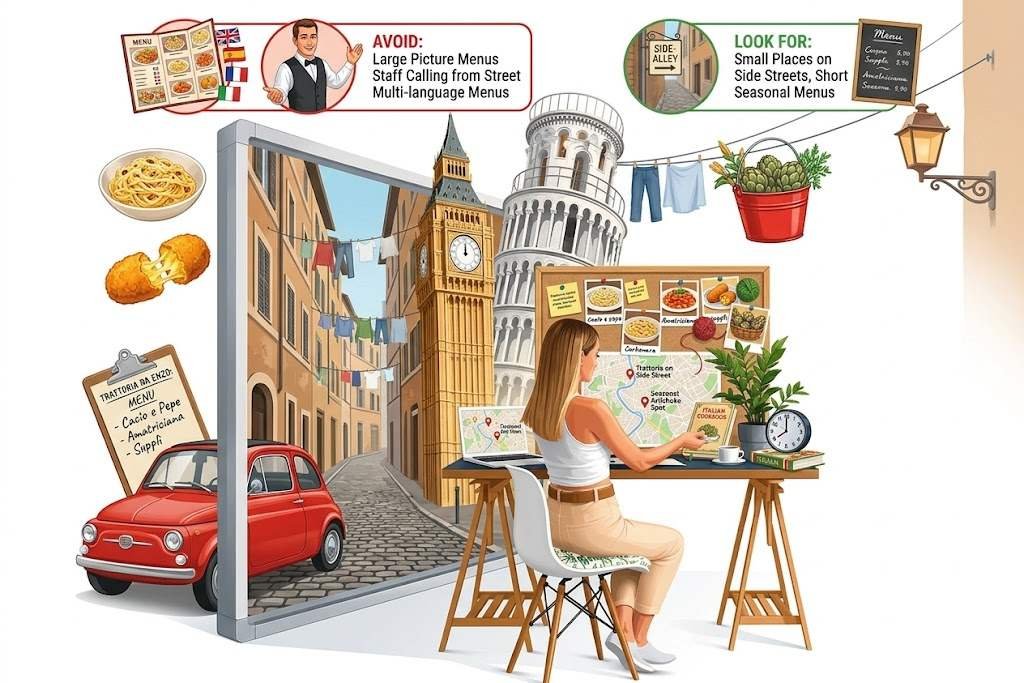
A simple rule in Rome is to avoid restaurants that rely heavily on large picture menus, staff calling people in from the street or menus translated into too many languages.
Look for smaller places on side streets, especially where the menu is short and seasonal. Roman classics include cacio e pepe, carbonara, amatriciana, supplì and artichokes when in season.
For UK travellers, meal times may feel later than usual. Many good dinner spots become livelier after 8 pm. If you prefer eating early, check opening times before walking across the city.
A Simple Two-Day Rome Walking Plan
Day One: Ancient Rome and the Historic Centre
Start early at the Colosseum and Roman Forum. Take your time rather than rushing through both sites. After lunch, walk towards Piazza Venezia, then continue into the historic centre.
Spend the afternoon around the Pantheon, Piazza Navona and Trevi Fountain. Return to one of these spots in the evening when the light changes and the crowds begin to thin.
Day Two: Vatican, River Walk and Trastevere
Begin with Vatican City if it is on your list. Book ahead if visiting the Vatican Museums. Afterward, walk towards Castel Sant’Angelo and follow the river.
In the late afternoon, cross into Trastevere. Have dinner there, then walk back slowly through the lit streets and bridges if your accommodation is central.
Final Advice for a Better Rome City Break
Rome is not a place to rush. The city becomes far more enjoyable when you plan fewer sights, walk in sensible sections and leave time for small discoveries.
For UK travellers, the best Rome trip combines practical planning with a slower pace. Check your passport, book key tickets early, pack proper shoes, carry a refillable bottle and use your first day to understand the city rather than trying to complete it.
The real pleasure of Rome is not only standing in front of famous monuments. It is walking between them, noticing the layers of history and letting the city unfold one street at a time.