
A gym routine rarely fits neatly into the rest of life. One person squeezes a session in before a train to work; another trains at a local leisure centre after college or on a quiet Sunday. The setting may change, but the essentials of becoming stronger remain much the same: purposeful movement, enough food, recovery and patience.
Bodybuilding conversations sometimes give more attention to products than to those foundations. Anabolic steroids are a particularly visible example. They are often mentioned alongside training plans and supplements, although they are prescription-only medicines with important health and legal considerations. Understanding that distinction helps keep fitness decisions grounded in evidence rather than online promises.
Understanding Anabolic Steroids
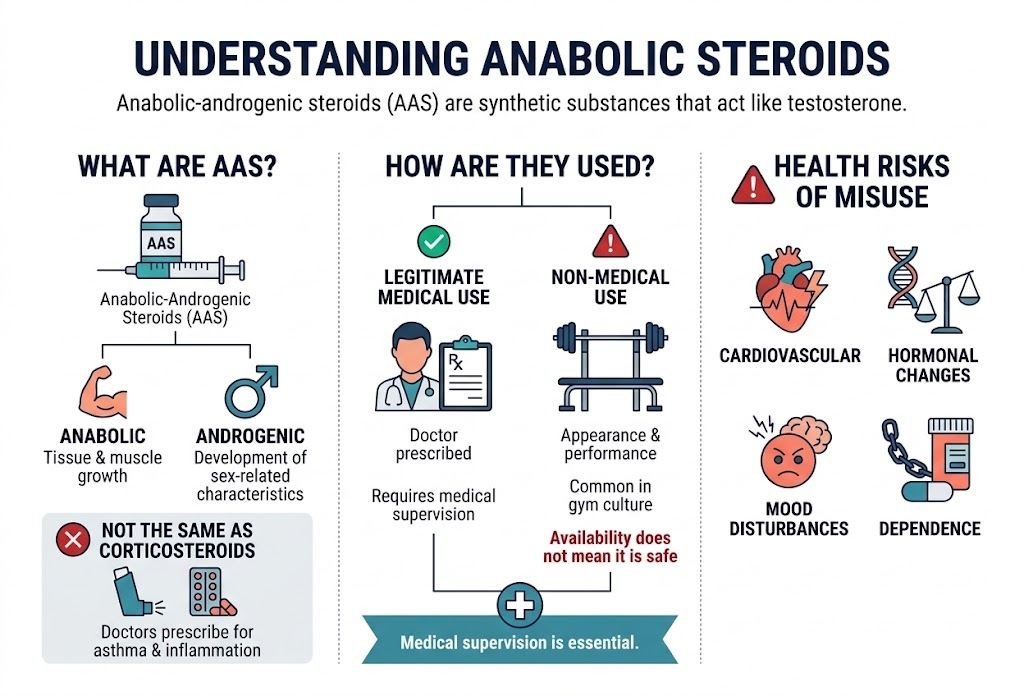
Anabolic-androgenic steroids are manufactured substances that act in ways similar to testosterone. Their anabolic effects relate to tissue growth, while their androgenic effects involve the development and maintenance of sex-related characteristics. They have certain legitimate medical uses, but using them without medical supervision for appearance or sporting performance is a different matter.
They should not be confused with corticosteroids, which doctors prescribe for conditions such as asthma and inflammation. The medicines have different purposes and effects.
The NHS guidance on anabolic steroid misuse explains that non-medical use can cause serious harm, including cardiovascular problems, hormonal changes, mood disturbances and dependence. Although products such as Steroids UK Shop may appear in discussions about bodybuilding, a product’s availability or familiarity in gym culture is not evidence that it is safe. The effects of misuse are not always obvious when they begin, and medical supervision is important when considering any hormone-related treatment.
Why the UK Legal Position Matters
Online discussion can make the rules sound simpler than they are. In the UK, anabolic steroids are controlled Class C drugs and prescription-only medicines. Possession for personal use is treated differently from unauthorised supply; giving or selling steroids to someone else can be a criminal offence.
The Government’s guidance on drug possession and supply penalties sets out this distinction. Legal status, however, should never be mistaken for medical approval. A substance may present substantial health risks even where personal possession itself is not an offence.
There is also a practical problem with relying on websites, social media posts or anonymous forum accounts for medical information: the person describing a product may have no clinical knowledge, and claims about purity or effects may be impossible to verify. For questions about hormones, medication or possible adverse effects, a GP or appropriately qualified healthcare professional is a more dependable starting point.
Strength Comes From Training You Can Repeat
Meaningful strength gains do not require an elaborate gym set-up. They come from practising movements regularly, building confidence with technique and allowing the demands of exercise to progress at a manageable pace.
For adults, the NHS recommends muscle-strengthening activity on at least two days each week. Its guide to improving strength and flexibility includes weights, resistance bands, bodyweight movements and everyday activities such as carrying shopping or climbing stairs.
A useful programme does not have to look like a professional bodybuilder’s schedule. Someone working long shifts might manage two full-body sessions a week. Another person might prefer supervised gym classes and a walk at the weekend. What matters is that the plan fits their health, experience and daily commitments.
Good training also makes room for adjustment. Feeling unusually fatigued, experiencing pain or struggling with technique is a reason to reconsider the session, not to force a personal best. A qualified instructor can help with technique, while a GP can advise people returning to exercise after illness or managing a health condition.
Food Is Part of the Training Plan
It is easy to picture muscle-building nutrition as a shelf of tubs and shakes. In reality, regular meals do much of the work.
Protein supports the repair and adaptation of muscle tissue, carbohydrates supply energy for exercise, and fats contribute to a balanced diet. The British Dietetic Association’s sport and exercise nutrition guidance stresses variety, adequate energy, hydration and matching food intake to activity.
In a UK household, that might mean porridge and yoghurt before a busy morning, a jacket potato with beans at lunch, or rice, vegetables and fish or lentils at dinner. There is no need for every meal to be specially branded as fitness food.
The NHS Eatwell Guide provides a useful everyday picture: include fruit and vegetables, starchy foods, protein sources, dairy or alternatives, and appropriate fluids across the day or week. Individual needs vary, particularly for people with medical conditions or dietary requirements, so a registered dietitian can help where tailored advice is needed.
Recovery Is Not Time Wasted
Progress does not happen only while lifting a weight. The body needs opportunities to recover and adapt between demanding sessions, and a workable routine includes days when the priority is something other than the gym.
Sleep is part of this picture. The NHS advice on sleep problems notes that most healthy adults need around seven to nine hours a night, while children and teenagers generally need more. Consistent sleep, manageable training loads and regular meals offer a more dependable basis for wellbeing than chasing rapid changes.
An occasional missed workout does not undo months of activity. If work, school, family life or illness interrupts a routine, returning gradually is usually more sensible than trying to make up for every missed session at once.
Supplements and Competitive Sport: Two Different Questions
Food supplements and anabolic steroids are not interchangeable categories. A nutritional supplement may be intended to address a dietary need; anabolic steroids are medicines with hormonal effects. Neither should be judged simply by how confidently it is advertised.
For athletes competing under anti-doping rules, there is an additional responsibility. UK Anti-Doping’s Prohibited List guidance identifies anabolic agents among the substances banned at all times in regulated sport. A medical prescription does not automatically remove the need to comply with relevant sporting rules.
Even ordinary-looking supplements require care. UK Anti-Doping’s advice on supplement risks warns that labels can be inaccurate and products may contain prohibited substances. Claims such as “tested” or “natural” are not a substitute for independent evidence and professional guidance.
Making Informed Fitness Decisions
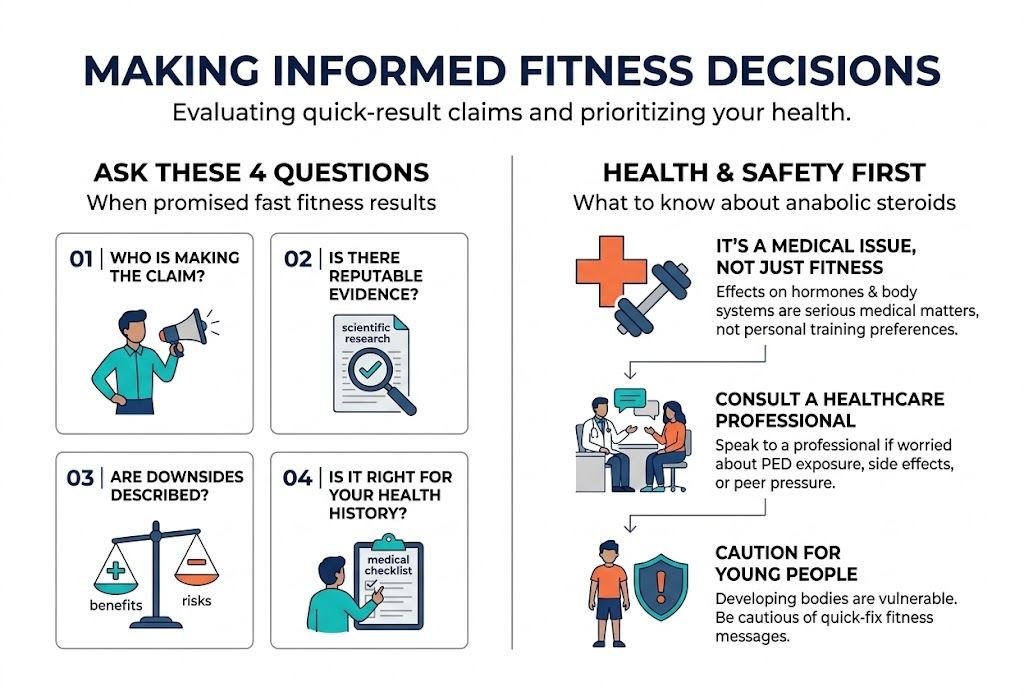
When a claim promises unusually fast results, it helps to ask a few basic questions. Who is making the claim? Is there reputable evidence behind it? Are the possible downsides described as clearly as the supposed benefits? And is the advice appropriate for someone with your health history and level of experience?
These questions matter especially with anabolic steroids. Their effects on hormones and other body systems are medical issues, not simply matters of personal training preference. Anyone worried about steroid exposure, unwanted effects or pressure to use performance-enhancing drugs should speak with a healthcare professional. Young people, whose bodies are still developing, should be particularly cautious about messages that present such substances as an ordinary part of fitness.
Final Thoughts
The most valuable fitness routine is often an unremarkable one: regular movement, food that supports everyday life, sound sleep and goals that make sense beyond a single photograph or competition. Strength and physical capability can develop through consistent, appropriately supported training, without turning every decision into a search for a new product.
Anabolic steroids deserve accurate explanation because they appear in real conversations about bodybuilding and performance. In the UK, understanding their medical risks, legal status and sporting restrictions is far more useful than treating marketing claims as guidance. Good fitness information should leave people better equipped to protect their health as well as pursue their goals.