Three ingredients. No plastic. Skin that actually feels nourished after washing. Aleppo soap was the last beauty swap I expected to love this much.
I am not someone who easily switches up their skincare. When something works, I stick with it. So when a friend told me to ditch my entire collection of shower gels, face washes, and shampoos in favour of a single bar of ancient Syrian soap, I nodded politely and carried on with my routine.
That was four months ago. I now have a single bar on my bathroom shelf, and I have not looked back once.
Aleppo soap has been around for over two thousand years. UNESCO inscribed its craftsmanship as Intangible Cultural Heritage in December 2024. It has three ingredients. It replaced four products in my shower. And the skin science behind it is genuinely fascinating once you start reading.
Here is everything I have learned, and what you should know before you decide to buy Aleppo soap for yourself.
What Aleppo Soap Actually Is and Where It Comes From
Before I get into what it did for my skin, let me explain what it actually is, because most people have no idea, and that is part of why it is so underrated in the UK.
Ancient Syrian Origins of Aleppo Soap
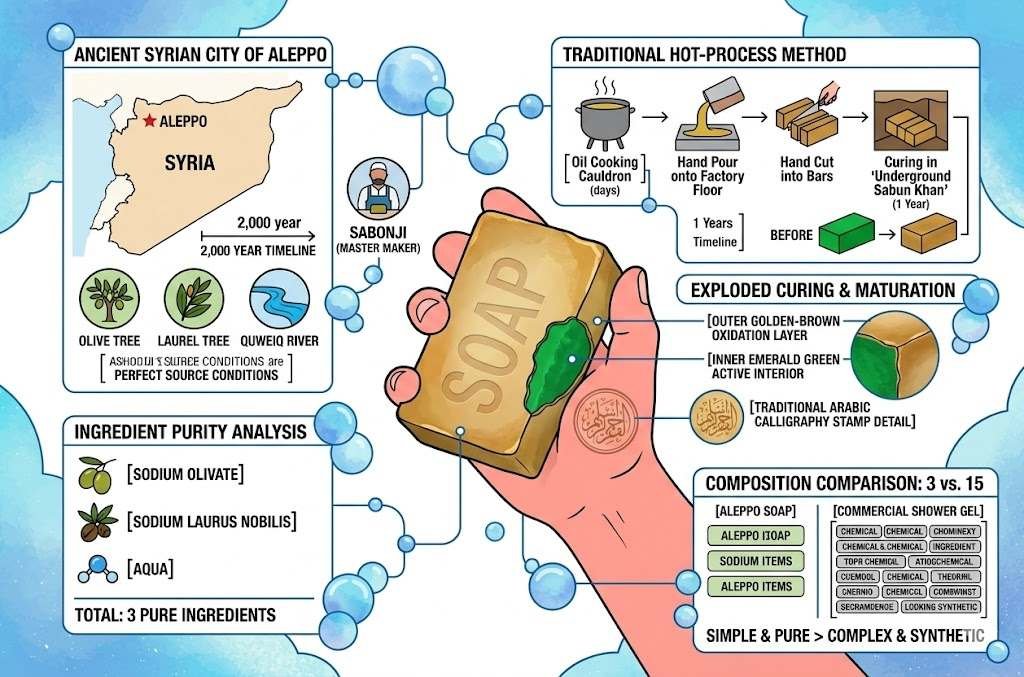
Aleppo soap is named after the ancient Syrian city of Aleppo. The city was situated at the intersection of olive groves and laurel forests, with the Quweiq River nearby, providing the perfect conditions for soap-making. The craft was passed down through generations of Sabonji (master soap-makers), who operated the city’s famous sabun khans, underground warehouses where freshly made bars were stored for up to a year to cure and mature.
Traditional Hot-Process Recipe
The recipe has not changed. Olive oil and laurel berry oil (Laurus nobilis fruit oil) are cooked together over several days using the traditional hot-process method, then poured onto a factory floor by hand, cut into bars and stored to cure. During curing, the vivid green bars slowly develop a golden-brown exterior as the laurel oil oxidises at the surface. Cut one open, and the interior glows emerald green, preserved, active, beautiful.
Every bar gets hand-stamped with a traditional Arabic calligraphy seal before it leaves the workshop—two thousand years of craft in your hand.
Why a Three-Ingredient Soap Beats a Fifteen-Ingredient Shower Gel
Now look at the ingredient list on an authentic bar: Sodium Olivate (saponified olive oil), Sodium Laurus Nobilis (saponified laurel berry oil), Aqua. Three ingredients. Compare that to the 15-plus items in most commercial shower gels, and it makes a lot of sense.
What the Two Oils in Aleppo Soap Actually Do for Your Skin
This is the bit that genuinely surprised me. I expected Aleppo olive oil soap to be gentle and moisturising. I did not expect it to be actively therapeutic.
Olive Oil and the Hidden Role of Natural Glycerin
Olive oil is the nourishing base. Its dominant fatty acid, oleic acid, is structurally similar to the skin’s natural lipids, which is why it absorbs beautifully and leaves no greasy residue. The really interesting part is what happens during saponification: the process of turning olive oil into soap naturally produces glycerin. Commercial soap manufacturers extract this glycerin and sell it separately to beauty brands. Artisan Aleppo olive oil soap keeps it in the bar. That retained glycerin is what makes your skin feel genuinely moisturised after washing rather than reaching for body lotion the second you step out of the shower.
Laurel Berry Oil and Its Bioactive Compounds
Laurel berry oil is where Aleppo soap becomes something else entirely. It contains a remarkable set of bioactive compounds:
- Lauric acid: directly antibacterial against Cutibacterium acnes, the bacterium responsible for inflammatory acne.
- Linalool: antifungal and anti-inflammatory, effective against the Malassezia yeast that causes most persistent dandruff.
- 1,8-Cineole: broad-spectrum antimicrobial that also acts as a penetration enhancer, helping other compounds work more deeply.
- Beta-pinene: a natural antiseptic.
These are not added compounds. They are the inherent chemistry of the laurel berry, present in every bar. The concentration depends on the percentage of laurel oil, which is the only decision you actually need to make.
Aleppo Soap Percentage System and How to Choose the Right Bar
When you first look at Aleppo soap, the percentages are confusing. They are also the only thing that matters. The percentage tells you how much laurel berry oil is in the bar relative to the olive oil base.
A low percentage means more olive oil and a gentler bar, perfect for sensitive or dry skin. A highA high percentage means more laurel oil and stronger medicinal action, ideal for specific skin concerns.
Best Aleppo Soap for Sensitive and Dry Skin
Here is how to find your starting point at the gentler end of the range:
- 0 percent (pure olive oil bar): zero laurel oil, maximum nourishment. The Aleppo olive oil soap is equivalent to a traditional Castile soap. Ultra-gentle, ideal for very reactive skin, post-procedure recovery, or baby washing.
- 5 percent laurel oil bar: the most gentle option in the range with laurel oil included. Almost entirely olive oil-based. Perfect for sensitive skin, rosacea, dry skin, and babies. Also, a great choice if you are nervous about trying Aleppo soap for the first time.
Best Aleppo Soap Bars for Daily Use and Combination Skin
16 percent laurel oil bar: the all-rounder and my personal starting recommendation. This is where most people find their long-term bar. Enough laurel oil for genuine antibacterial cleansing, enough olive oil to keep the skin nourished and comfortable. Works for daily face washing, body washing, and as a general-purpose soap.
Higher Percentage Bars for Acne, Dandruff, and Eczema
- 30 percent laurel oil bar: for oily skin, mild acne, and everyday scalp washing. The earthy, herbal scent of the laurel oil becomes more present here, which I personally love.
- 40 percent laurel oil bar: addresses moderate acne, persistent dandruff, and eczema. This is the bar I moved to after the first month, because I wanted more help with my scalp. The difference was noticeable within two weeks.
- 50 to 75 percent laurel oil bars: high-potency bars for intensive skin or scalp conditions. The 75 percent bar is the most medicinal in the range, deeply herbal, highly concentrated, for experienced Aleppo soap users or those dealing with stubborn skin issues.
- 100 percent laurel oil shampoo bar: pure laurel oil soap, zero olive oil dilution. The dedicated scalp treatment bar for dandruff and scalp conditions. Nothing else on the market does what this bar does for a persistent itchy or flaky scalp.
Where I Bought My Bars and Why It Matters
I started on the 16 percent and moved up to the 40 percent for my scalp. Both are available in Avlia’s Aleppo soap collection, a brand I trust because they work directly with Syrian Sabonji artisans who resettled in Turkey after the Syrian conflict, preserving the craft and the community simultaneously. Every bar is made with the traditional hot-process method, full ingredient transparency, and nothing synthetic anywhere in the formula.
My Honest Month-One Experience With Aleppo Soap
I will be real with you: the first week felt a bit different.
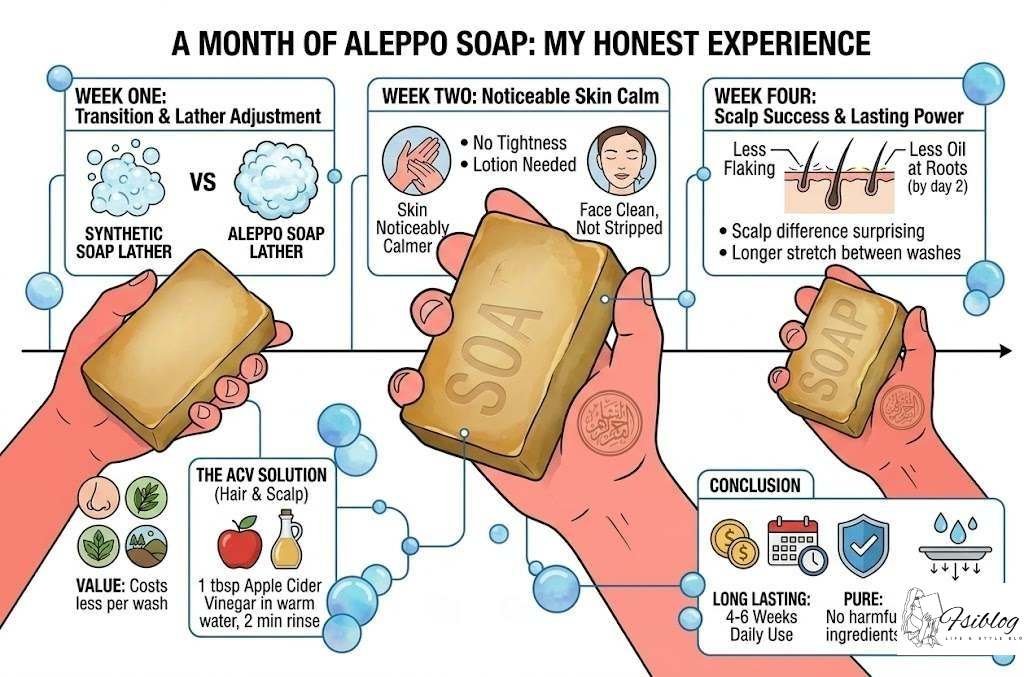
Week One: Adjusting to a New Lather and Scent
The lather is not what I was used to. It is creamier and denser than synthetic soap, producing a richer foam than a light, bubbly lather. The scent is herbal and earthy, not sweet or floral. On the first morning, I used it as shampoo, and my hair felt slightly different. I had read about the transition period beforehand, so I did not panic. I just added an apple cider vinegar rinse (one tablespoon in a cup of warm water, poured through after washing, left two minutes, then rinsed), and it helped considerably.
Week Two: The First Real Skin Changes
By week two, my skin already felt noticeably calmer after washing. No tightness. No reaching for body lotion. My face felt clean without that stripped feeling I had normalised with gel cleansers.
Week Four: The Scalp Result That Surprised Me Most
By week four, the scalp difference was the thing I kept mentioning to people. Less flaking. Less oiliness at the roots by day two. Longer stretches between washes that actually felt comfortable rather than necessary.
It is not a miracle. It is a better bar. One that does its job, contains nothing harmful, lasts four to six weeks in daily use on a draining soap dish, and costs less per wash than most of what it replaces.
How to Use Aleppo Soap Correctly for Best Results
The one thing that catches people out is technique. Use it wrong, and the results are middling. Use it right, and it works immediately.
Right Way to Lather and Wash With Aleppo Soap
Always build lather between wet palms first. Never rub the bar directly against your face. For body washing, thirty seconds of lather contact before rinsing is enough. For scalp and hair, apply the lather directly to the scalp and massage in firm circular motions for sixty seconds. The scalp is the target, not the hair length.
Rinse everything with cool water. Cool water helps seal the hair cuticle in a way that warm water does not, leaving hair smoother and skin less irritated.
How to Store an Aleppo Soap Bar to Make It Last Longer
Store the bar on a draining soap dish, not a solid base. A bar kept dry between uses lasts twice as long as one sitting in a water puddle. This sounds basic, but it genuinely doubles the lifespan of the bar in use. Switching to a solid bar also reduces plastic packaging, which is one reason solid soap bars are increasingly recommended as a low-waste swap.
Where to Buy Authentic Aleppo Soap in the UK
If you are ready to buy Aleppo soap and want a trustworthy starting point, I recommend Avlia. Full ingredient list published on every product page, genuine artisan production, and a range that covers every skin type from the most sensitive to the most condition-specific.
Two thousand years of daily use. Three ingredients. One very good morning ritual.
Final Conclusion
After a full month of using nothing but Aleppo soap, my honest verdict is that it has earned its place as the only bar in my shower. It is not magic. It is not a replacement for medical treatment if you have a serious skin condition. But it is one of the very few products I have used where the ingredient list, the tradition behind it, and the actual results on my skin and scalp all line up. Three ingredients. No plastic. Calmer skin. A scalp that finally feels balanced. A bar that lasts weeks rather than days.
If you have been thinking about simplifying your shower shelf, cutting down on plastic bottles, or just trying something with a bit more substance behind it than another celebrity-endorsed body wash, this is the swap I recommend. Start with the 16 percent if you have normal skin, the 5 percent if you are sensitive, and the 40 percent or higher if your scalp has been giving you trouble. Use it correctly, store it on a draining dish, and give it a full four weeks before you decide. That is when the real difference shows up.
Disclaimer
This article is based on personal experience and general research and is intended for informational purposes only. It does not constitute medical, dermatological, or professional skincare advice. Aleppo soap, like any new skincare or haircare product, can cause irritation, allergic reactions, or unexpected effects in some individuals, particularly those with sensitive skin, allergies to laurel, olives, or related botanicals, or pre-existing skin conditions such as eczema, psoriasis, or acne. Always perform a patch test on a small area of skin before regular use, and discontinue use if you experience redness, itching, burning, or any other adverse reaction. If you have a diagnosed skin or scalp condition, are pregnant or breastfeeding, or are unsure whether a product is suitable for you, consult a qualified dermatologist or medical professional before adding Aleppo soap to your routine. Mentions of specific brands or retailers in this article are for illustrative purposes only and do not constitute medical endorsement.
References
- UNESCO. (2024). Intangible Cultural Heritage Lists and Inscriptions.
- UNESCO World Heritage Centre. Ancient City of Aleppo, Syria.
- ScienceDirect. Laurus nobilis: Botanical Profile and Bioactive Constituents.
- PubChem, U.S. National Library of Medicine. Oleic Acid Compound Summary.
- Encyclopaedia Britannica. Saponification: The Chemistry of Soap Making.
- American Academy of Dermatology. Acne: Causes and Role of Cutibacterium acnes.
- Harvard Health Publishing, Harvard Medical School. Showering Daily: Is It Necessary?
- Journal of Ethnopharmacology. Antimicrobial and Anti-Inflammatory Activities of Laurus nobilis Essential Oil.
- International Journal of Cosmetic Science. Glycerin in Soap and Its Role in Skin Hydration.
- Mayo Clinic. Dandruff: Symptoms, Causes, and Common Triggers.
- National Eczema Association. Choosing Cleansers and Soaps for Sensitive and Eczema-Prone Skin.