
Free social video chat apps look simple from the outside. You open the app, join a live room, meet people, watch creators, send messages and sometimes join a video chat within seconds. Because the app is free, many users do not think about the cost behind it.
But running a video chat platform is not cheap. Every live stream needs servers, safety tools, moderators, app developers, payment systems and customer support. When thousands or even millions of people are using video at the same time, the cost becomes even higher.
So the big question is simple: if users do not pay to download the app, how does the business make money?
The answer is that most free social video apps use a mix of revenue methods. Some money comes from in-app purchases. Some comes from premium features. Some comes from creator earnings, ads, brand partnerships and user activity. Apps such as Tango Live Video Chat show how social video platforms can build a business around live interaction, creators and virtual spending.
Why Free Apps Are Not Really Free To Run
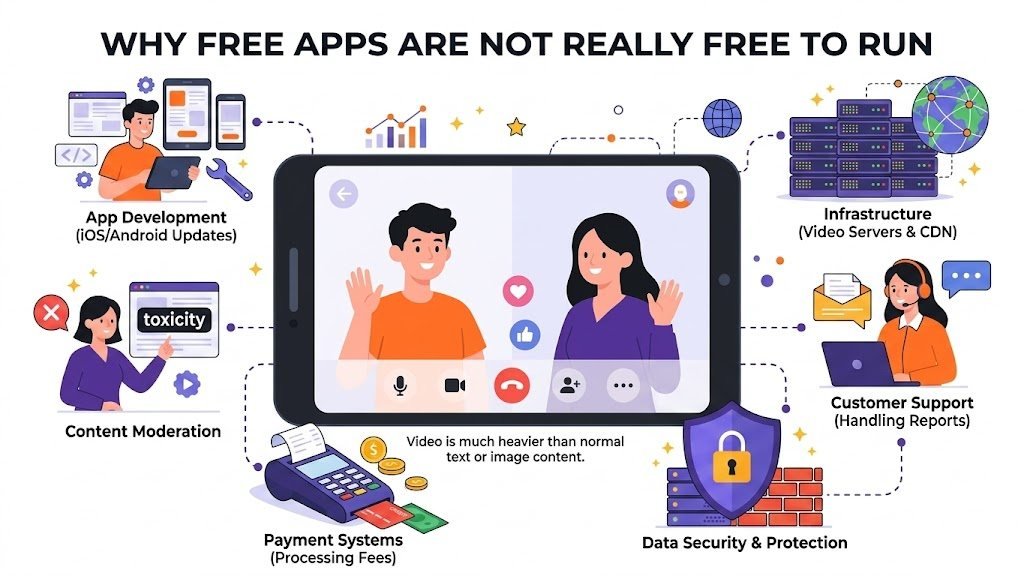
A free video chat app still needs a full business system behind it. The company must pay for real-time video streaming, storage, security, updates and moderation. It also needs people to fix bugs, manage complaints and keep the app safe.
Video is much heavier than normal text or image content. A simple chat message costs very little to send. A live video call uses far more data and server power. That is why video apps need a strong infrastructure.
Main Costs Behind Social Video Apps
| Cost Area | Why It Matters |
|---|---|
| Video servers | Needed to support live calls and streaming |
| Content delivery | Helps video load faster in different countries |
| App development | Keeps the app working on iOS and Android |
| Moderation | Helps remove harmful content and fake accounts |
| Payment systems | Supports coins, gifts and subscriptions |
| Customer support | Handles reports, refunds and account problems |
| Security | Protects user accounts and personal data |
This is why these apps need revenue even when the download is free.
Free Model Helps Apps Grow Faster
Most social video apps start with free access because they need people. A social app without users feels empty. The more people join, the more useful the app becomes.
Free access removes the first barrier. Users can try the app without thinking too much. They can create a profile, join a live room and see what the platform offers before spending anything.
This model works because not every user needs to pay. A small group of active spenders can support a much larger group of free users.
How The Free Model Usually Works
| User Type | How They Use The App | Business Value |
|---|---|---|
| Free users | Watch, chat and join rooms | Help grow activity and community |
| Paying users | Buy coins, gifts or premium features | Bring direct revenue |
| Creators | Host live sessions and build audiences | Keep users engaged |
| Brands | Run ads or partnerships | Add extra income |
| Loyal users | Return often and invite others | Increase long-term app value |
Virtual Gifts Are A Big Revenue Driver
One of the most common ways social video apps make money is through virtual gifts. Users buy coins or credits inside the app. They then use those coins to send gifts to creators or other users during live streams.
These gifts may look like simple animations, stickers or special effects, but they have real money behind them. The user pays for the gift. The creator may receive part of the value. The platform keeps a percentage.
Why People Spend On Virtual Gifts
Virtual gifts work because they are emotional. A user may send a gift to show support, get noticed, thank a creator or stand out in a live room.
In a normal comment section, one message can disappear quickly. But a gift is more visible. It may appear on screen, trigger an animation or show the sender’s name to everyone watching.
What Virtual Gifts Give Users
| User Reason | What The Gift Does |
|---|---|
| Support | Helps a creator earn money |
| Attention | Makes the sender more visible |
| Appreciation | Shows thanks during a live stream |
| Status | Shows the user is active or generous |
| Interaction | Encourages the creator to respond |
This is why virtual gifting is powerful. It turns a small digital item into a social moment.
Creators Help Keep The Business Alive
Creators are very important to social video apps. They give people a reason to return. A platform may have good technology, but without interesting people, users will not stay for long.
Many apps allow creators to earn money through gifts, fan support, paid content or live events. The platform then takes a percentage from these earnings.
This creates a shared business model. Creators want more viewers and gifts. The platform wants more activity and transactions. If creators do well, the app also does well.
Why Creators Matter
- They bring regular content
- They build loyal communities
- They encourage users to return
- They drive gifting and paid interaction
- They make the app feel active
- They help the platform grow without traditional advertising only
A strong creator community can turn a simple video app into a full social economy.
Premium Features: Add Another Income Stream
Many free social video apps also offer paid upgrades. These may come as monthly subscriptions, VIP memberships or one-time purchases.
Premium features do not always change the whole app. They often improve the experience for users who want more control, visibility or convenience.
Common Premium Features
| Premium Feature | Why Users Pay For It |
|---|---|
| Better profile visibility | Helps users get noticed |
| Special badges | Shows status inside the app |
| Extra filters | Makes the experience more fun |
| Higher video quality | Improves live sessions |
| No ads | Creates a cleaner experience |
| More chat options | Gives users extra ways to connect |
| Priority support | Helps with faster issue handling |
The challenge for apps is balance. The free version must still be useful. The paid version must feel valuable enough to buy.
Advertising Can Support The Free Experience
Some social video apps use ads to make money. But ads in live video spaces must be handled carefully. If an ad interrupts a live chat too often, users may leave.
That is why many platforms place ads around the experience instead of directly inside the conversation. For example, ads may appear on home feeds, profile pages, discovery areas or between sessions.
Common Ad Placements
- Sponsored content in the feed
- Display ads around profile pages
- Promoted live rooms
- Brand partnership campaigns
- Sponsored creator events
- App install ads
- Limited-time promotional banners
Advertising can help support free users, but too many ads can damage the experience. Good platforms try to keep this balance.
Data Helps Apps Understand User Behaviour
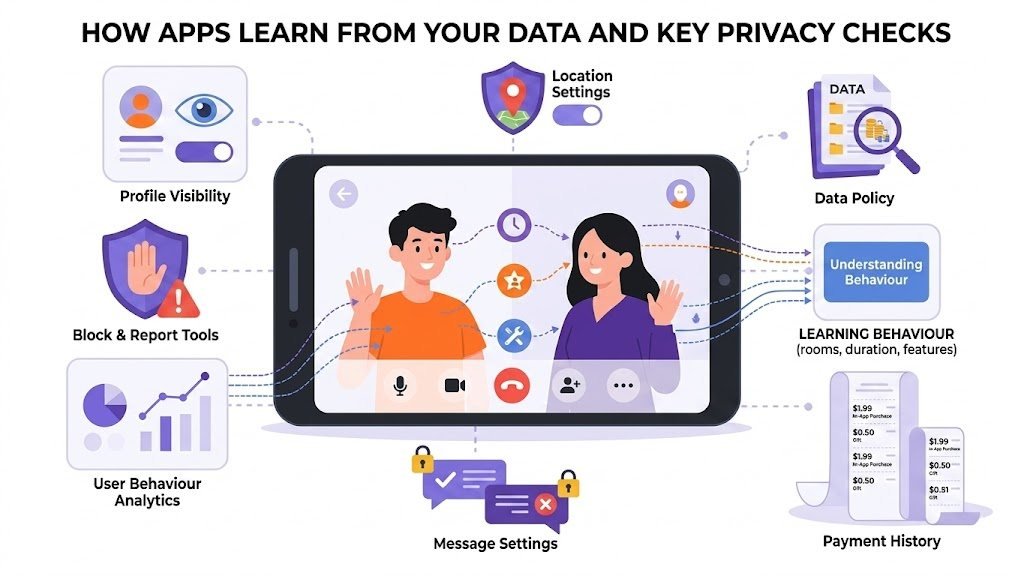
Social video apps also learn from user behaviour. They may track which rooms people join, how long they watch, what features they use and which creators keep people engaged.
This information helps the app improve recommendations, safety systems, product design and advertising. It can also help the company understand which features are worth building next.
This does not mean users should ignore privacy. Anyone using a free app should check the privacy settings and understand what data may be collected.
What Users Should Check
| Privacy Area | Why It Matters |
|---|---|
| Profile visibility | Controls who can see your details |
| Location settings | Helps protect personal privacy |
| Message settings | Reduces unwanted contact |
| Data policy | Explains what the app collects |
| Payment history | Helps track spending |
| Block and report tools | Keeps the experience safer |
A free app can still be useful, but users should know what they are agreeing to.
Why Apps Focus So Much On Engagement
Social video apps care a lot about engagement because active users create business value. The more time people spend in the app, the more chances there are for gifts, subscriptions, ads and creator income.
This is why apps often use notifications, trending rooms, creator rankings, badges and reward systems. These tools encourage users to return.
Engagement Tools Commonly Used
- Daily login rewards
- Live room recommendations
- Creator leaderboards
- Gift streaks
- Special badges
- Push notifications
- Limited-time events
- Fan clubs
- In-app challenges
These tools are not only for fun. They are part of the business model.
Trade-Off Users Should Understand
Free social video apps can be entertaining and useful. They help people meet others, watch creators and enjoy live interaction. But there is always a trade-off.
If users are not paying at the start, the app must earn money in other ways. That may be through gifts, ads, premium features, creator fees or data-based systems.
This does not make the model bad. It simply means users should understand how the platform works.
Simple User Advice
Before spending money on any social video app, it is smart to:
- Set a personal spending limit
- Check refund rules
- Read privacy settings
- Use strong passwords
- Avoid sharing private information
- Report unsafe behaviour
- Be careful with strangers
- Keep online spending under control
A better understanding of the business model helps users enjoy the app more safely.
Final Thoughts
Free social video chat apps are not free behind the scenes. They cost money to build, run and protect. The reason users can join without paying upfront is that the platform earns through other methods.
Virtual gifts, premium features, creator fees, advertising and user engagement all play a role. The most successful platforms make these systems feel natural, so users can enjoy the app while creators and the business both earn.
For users, the main lesson is simple. Free access is convenient, but it is still part of a business model. When you understand how these apps make money, you can use them with more awareness and better control.