
Men can be strangely loyal to bad shoes.
A pair may be worn out, narrow, stiff, rubbed at the heel, flattened at the sole and old enough to have its own memories, but still somehow described as “fine”. Fine, in this case, often means they have not fully fallen apart yet.
For most people, uncomfortable shoes are annoying. For men living with diabetes, the wrong shoes can be much more serious. Footwear becomes part of everyday foot care, not just something chosen for work, walking, shopping or weekend plans.
This does not mean every man with diabetes needs shoes that look medical or oversized. It means the shoe should be designed with the realities of diabetic foot health in mind: pressure, circulation, nerve sensitivity, swelling, friction, support and daily comfort.
The feet carry a lot. Workdays, errands, family responsibilities, travel, exercise, chores, and those quick trips outside that somehow turn into longer walks. If diabetes makes foot care more important, then shoes deserve more attention too.
Why Foot Care Matters More With Diabetes

Diabetes can affect the feet in ways that are easy to miss at first.
One major concern is nerve damage, often called neuropathy. When sensation in the feet becomes reduced, a man may not notice a small blister, cut, hot spot or pressure mark straight away. A shoe could be rubbing the little toe, pressing against a bunion or causing irritation under the foot, and the warning signs may not feel strong enough.
That is where small problems can quietly grow.
Diabetes can also affect blood flow. When circulation is not as strong as it should be, the body may heal more slowly. This means a minor wound can become stubborn if it is ignored, especially if the same pressure or rubbing continues every day.
Foot care is not about fear. It is about staying ahead of problems. Daily checks, proper hygiene, good socks, regular professional advice and suitable footwear all work together. Shoes are not the whole plan, but they are one of the most visible parts of it.
After all, the feet spend much of the day inside them.
Ordinary Shoes Are Not Always Enough
Many standard men’s shoes are built for appearance, price or general use. They may be narrow at the front, hard underfoot, rough inside or too shallow for swollen feet. That may be uncomfortable for anyone, but it can be especially unhelpful for diabetic feet.
A narrow toe box can squeeze the toes together. A stiff upper can rub against the skin. A thin sole can increase pressure on the heel or ball of the foot. A loose shoe can allow the foot to slide, creating friction. A poor fastening can make the fit unreliable.
These issues may sound small, but daily repetition matters. A little rubbing today, tomorrow and the next day is not really little anymore.
This is why specially designed diabetic shoes focus on reducing avoidable stress. They are usually made to offer more room, softer interiors, better cushioning and more stable support. The aim is simple: protect the foot from the kind of pressure and friction that should not be there in the first place.
A good shoe should not make the foot work around its design. The design should work around the foot.
Importance of a Roomy Toe Box
The front of the shoe is where many problems begin.
Men with diabetes may also deal with wide feet, swelling, bunions, hammertoes, thick nails or sensitive joints. A narrow shoe can press all of this into a tight space and hope for the best. The foot, understandably, may not appreciate that.
A roomy toe box gives the toes more space to sit naturally. It can reduce squeezing across the forefoot and help lower the risk of rubbing between toes or against the upper of the shoe.
This does not mean wearing shoes that are too large. Oversized shoes can create sliding, and sliding can create friction. The best fit is secure at the heel and midfoot, with enough space at the front for comfort.
The difference between roomy and loose matters. Roomy feels supportive. Loose feels uncontrolled. Diabetic footwear should aim for the first one.
Cushioning Helps Reduce Daily Pressure
Every step creates impact. On soft grass, that impact may not feel too harsh. On concrete, tile, pavements, warehouse floors, office corridors, railway platforms and shop aisles, the feet get a much less forgiving deal.
Cushioning helps soften that repeated impact. For men with diabetes, cushioning can make walking and standing feel easier, especially if they spend long hours on their feet.
Good cushioning should not feel like walking on a wet sponge. Too much softness without structure can make the foot unstable. The better option is controlled cushioning: enough softness to reduce harsh pressure, enough firmness to keep the foot steady.
This is especially useful under the heel and forefoot, where pressure often builds during walking. A well-cushioned diabetic shoe can help make everyday movement less tiring.
And when walking feels easier, men are more likely to stay active. That matters because comfort is often the difference between “I should go for a walk” and “absolutely not, these shoes are coming off.”
Soft Interiors Can Prevent Unnecessary Rubbing
The outside of a shoe gets most of the attention. The inside deserves more respect.
A rough seam, stiff lining, folded material or hard edge can rub against the skin. For someone with full sensation, this may be noticed quickly. For a man with reduced foot feeling, it may go unnoticed until irritation has already appeared.
Specially designed diabetic shoes often use smoother interiors, padded collars and softer linings to reduce friction. Some designs also avoid unnecessary internal stitching in areas that may rub.
This sounds like a small detail, but it is one of the most important comfort features.
Before wearing shoes, it is also wise to check inside them by hand. Small stones, loose threads, damaged insoles or objects inside the shoe can cause problems. It only takes a few seconds, but those few seconds can protect the foot from a day of hidden irritation.
The foot may not always speak loudly. The hand can help inspect what the nerves may not report.
Adjustable Fastenings Make Daily Life Easier
Feet can change during the day. They may swell after walking, standing, warm weather or long periods sitting. For men with diabetes, swelling or sensitivity can make fixed-fit shoes difficult.
Adjustable fastenings can help. Laces, straps, hook-and-loop closures or other easy systems allow the fit to be changed as needed. A shoe can feel secure in the morning without becoming too tight later.
This is also useful for men who have difficulty bending down or tying traditional laces. If a shoe is hard to put on, it may be avoided. If it is easy to wear properly, it becomes part of the routine.
Footwear should not be a wrestling match before breakfast.
A diabetic shoe that is simple to put on, adjust and remove can support better daily habits. Convenience matters because the best shoe is the one that actually gets worn.
Support Helps the Whole Body Move Better
Diabetic shoes are not only about the skin of the foot. Support matters too.
A shoe with proper arch support and heel stability can help the foot move in a more controlled way. This may reduce fatigue through the feet, ankles, knees and lower back during long days.
Men with flat feet, tired arches, heel pain or balance concerns may notice this especially. If the foot rolls too much or lacks support, the body may compensate. Over time, that compensation can make walking feel more tiring.
A stable shoe gives the foot a better base. The heel should not slip too much. The midfoot should feel supported. The sole should not twist too easily. The outsole should provide grip on normal daily surfaces.
This does not mean the shoe should feel heavy or stiff. The best diabetic footwear feels protective without feeling awkward.
The aim is confidence underfoot, not clumsiness.
Breathability and Moisture Control Matter
Feet spend long hours inside shoes, and that environment matters.
Heat and moisture can make skin softer and more vulnerable to rubbing. Damp socks can increase friction. Poor airflow can make the foot feel uncomfortable, especially during warm weather or long workdays.
Breathable materials can help keep the foot environment more comfortable. Good socks also make a difference. Socks should be clean, well-fitting and free from rough seams that might irritate the skin.
Men sometimes treat socks as an afterthought. That is a mistake. A great shoe with poor socks is like a good meal on a dirty plate. The whole experience suffers.
Foot care works best when the shoe, sock and daily hygiene routine support each other.
Diabetic Shoes Should Fit Real Men’s Routines
A man may need diabetic-friendly footwear for many different parts of life.
He may need walking shoes for daily exercise. Work shoes for long shifts. Slippers for home use. Boots for outdoor jobs. Dress shoes for formal events. Easy slip-ons for quick errands. The need for foot protection does not disappear just because the setting changes.
That is why diabetic footwear should be practical and wearable. If shoes are too unattractive, too heavy or too awkward, they may stay in the cupboard. That defeats the point.
Modern options are much better than the old stereotype. Many now look like regular walking shoes, casual shoes, trainers, slippers or work-friendly footwear. The best ones combine comfort features with a style men can actually live with.
A man should not have to choose between protecting his feet and looking normal while doing it.
Collections such as diabetic shoes for men show how diabetic-friendly footwear can include wider fits, extra room, supportive soles and everyday designs for different routines.
That kind of variety is important because foot care is not a once-a-week activity. It follows the person through the whole day.
Daily Foot Checks Still Matter
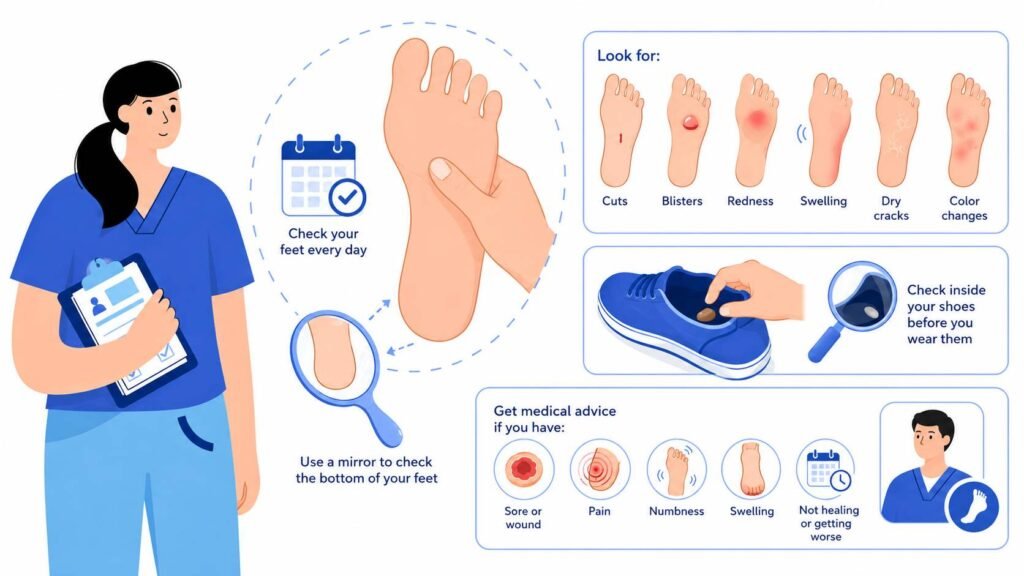
Specially designed shoes are helpful, but they are not a replacement for daily foot checks.
Men with diabetes should check their feet every day for cuts, blisters, redness, swelling, dry cracks, colour changes or anything unusual. The soles of the feet matter too. If bending is difficult, a mirror or help from someone trusted may make the check easier.
Shoes should also be checked before wearing. Look inside. Feel inside. Make sure the lining is smooth and there is nothing trapped in the shoe.
This habit may feel boring. Many useful health habits do. But it can catch small problems early, before they become harder to manage.
Any sore, wound, infection sign, persistent pain, swelling, numbness or slow-healing area should be discussed with a healthcare professional. A podiatrist, GP or diabetes care team can give advice based on personal risk level.
Shoes are protection. Medical care is still medical care.
Do Not Wait Until Shoes Hurt
One of the worst footwear rules is the old idea that shoes need to be broken in.
Some shoes soften slightly with wear. That is normal. But diabetic men should be careful with shoes that pinch, rub, squeeze or hurt from the beginning. Pain is not proof that the shoe is becoming customised. It is usually proof that something is wrong.
The right shoe should feel comfortable and secure early. There should be no sharp pressure, rubbing seams or cramped toes. The heel should not slide excessively. The foot should not feel trapped.
It is better to reject a bad shoe before it causes trouble than to suffer through it because it was expensive or looks good.
The foot does not care about the price tag. It cares about pressure.
When Men Should Get Professional Footwear Advice
Some men need more than general diabetic footwear. If there is a history of foot ulcers, severe neuropathy, poor circulation, deformity, amputation risk, major swelling or ongoing pain, professional advice is especially important.
A podiatrist may recommend specific shoes, insoles, orthotics or pressure-relieving features. In some cases, custom or specialist footwear may be needed.
Even without major problems, regular foot reviews can be useful. A professional can spot risk factors that may not be obvious at home.
It is not overreacting to ask for help. With diabetic foot care, early attention is the sensible option.
Men are often told to “walk it off”. Diabetic foot problems are a very good reason not to follow that advice blindly.
Footwear as Part of a Bigger Health Routine
Diabetic shoes work best when they are part of a larger routine.
Blood sugar management, foot checks, moisturising dry skin where appropriate, careful nail care, clean socks, regular medical reviews and safe activity all support foot health. Shoes provide protection during movement, but they cannot do everything alone.
That said, footwear is one of the easiest parts of the routine to improve. A man may not be able to control every factor immediately, but he can stop wearing shoes that squeeze, rub or fail to support his feet.
Small changes can have a large daily effect. Better shoes can make walking more comfortable, reduce pressure points and help men feel more confident staying active.
Good foot care is not dramatic. It is usually made of ordinary habits repeated consistently.
That is not glamorous, but it works.
Final Thoughts
Diabetic men need specially designed shoes because their feet may face risks that ordinary footwear does not properly address.
Reduced sensation, circulation concerns, swelling, pressure points and slower healing can turn small shoe problems into bigger concerns. The right footwear can help reduce friction, provide room for the toes, cushion hard surfaces, support the foot and improve daily comfort.
A good diabetic shoe should feel protective without feeling awkward. It should fit securely without squeezing. It should be soft inside, stable underneath and practical enough for real life.
Most importantly, it should help men take foot care seriously before something goes wrong.
Shoes will never replace daily checks, good diabetes management or professional advice. But they can make everyday foot protection much easier.
And for feet that carry a man through work, family, errands, travel and all the small demands of daily life, that support is not a luxury. It is essential maintenance.