
Cannabis oil is often discussed online as though it were one simple wellness product. In reality, the term can refer to several very different products, including shop-bought CBD supplements, licensed medicines and prescription-only cannabis-based medicinal products. For patients exploring regulated treatment options, providers such as Releaf have also helped increase awareness of legally prescribed medical cannabis in the UK. However, treatment should always begin with an individual clinical assessment.
These products do not have the same legal status, ingredients, quality controls or medical uses. A bottle sold online should not be treated as equivalent to medicine prescribed by a specialist.
Anyone considering cannabis oil for pain, sleep problems, anxiety or another health concern should begin with a qualified healthcare professional. Cannabis products can cause side effects, interact with medicines and affect a person’s ability to drive or operate machinery.
Understand What “Cannabis Oil” Means
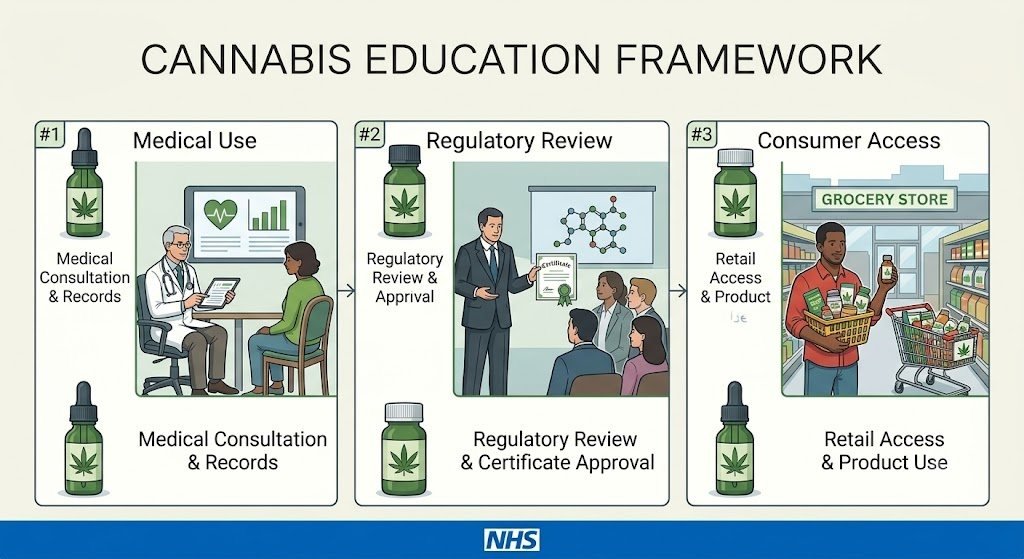
The phrase cannabis oil is used loosely. Before discussing possible treatment, it helps to separate three main categories.
| Product Category | What It Usually Means | Important Consideration |
|---|---|---|
| Prescription cannabis-based medicine | A product prescribed for a particular patient following a clinical assessment | Use only according to the prescriber’s instructions |
| Licensed cannabinoid medicine | A medicine authorised for specific medical circumstances | Its approved uses, formulation and monitoring requirements are clearly defined |
| Consumer CBD product | A food supplement or similar retail product containing CBD | It must not be assumed to treat or cure a medical condition |
The NHS provides an overview of medical cannabis and cannabis oil, including the limited circumstances in which cannabis-based medicine may be considered. NHS prescribing is generally restricted to a small number of patients and involves specialist oversight.
CBD and THC Are Not the Same
Two of the best-known cannabis compounds are CBD and THC.
cannabidiol (CBD) does not normally produce the intoxicating effect associated with THC. However, this does not mean that every CBD product is risk-free, medically effective or suitable for everyone. The Food Standards Agency provides separate consumer guidance for CBD products sold as foods or supplements.
THC can affect perception, alertness, coordination and mood. Prescription products containing THC are controlled medicines and should only be used under the direction of the prescribing clinician.
Consumers should also be cautious about products advertised as “THC-free.” Product quality can vary, and small amounts of controlled cannabinoids may still create legal, workplace, sporting or driving concerns.
Shop-Bought CBD Is Not the Same as Medical Cannabis
Retail CBD products are frequently promoted for stress, sleep, pain and general wellbeing. Marketing language does not make a product an approved medicine.
The MHRA explains that products presented for treating or preventing disease may fall within medicines regulation. An authorised medicinal product must meet requirements relating to quality, safety and effectiveness before it can be marketed for medical use. Review the MHRA statement on CBD products for the regulatory distinction.
A consumer CBD oil should therefore not be used as a substitute for assessment, diagnosis or prescribed treatment.
Medical Cannabis Requires Specialist Assessment
Cannabis-based products for medicinal use became legally available on prescription in the UK in November 2018. This did not legalise recreational cannabis or make cannabis oil an over-the-counter treatment for every condition.
NHS England explains that prescribing unlicensed cannabis-based medicinal products is restricted to clinicians on the General Medical Council’s Specialist Register. People can use the official GMC medical register to check a doctor’s registration and listed qualifications.
A proper medical assessment may examine:
- The condition being treated
- Treatments already attempted
- Current prescriptions and supplements
- Previous reactions to medicines
- Mental health history
- Pregnancy or breastfeeding
- Heart, liver or kidney conditions
- Driving and employment responsibilities
- Possible risk of dependence or misuse
Not everyone who requests medical cannabis will be considered suitable.
Evidence Depends on the Condition and Product
Claims that cannabis oil can cure a wide range of illnesses are misleading.
Evidence differs according to the condition, cannabinoid, formulation and patient group. Results from one product should not automatically be applied to another oil with a different CBD-to-THC ratio.
The NICE guideline on cannabis-based medicinal products considers areas including severe treatment-resistant epilepsy, chemotherapy-related nausea and vomiting, multiple-sclerosis spasticity and chronic pain. The existence of guidance does not mean cannabis-based products are routinely recommended for every person with these conditions.
Patients should discuss the expected benefits, uncertainties and alternative treatments with the prescribing specialist.
Never Set or Change the Amount Yourself
There is no single amount of cannabis oil that is safe or effective for everyone.
Prescription instructions can differ depending on the product’s strength, ingredients, formulation, medical purpose and the person’s response. Advice found in social-media posts, forums or another patient’s prescription may be inappropriate or unsafe.
Patients should:
- Follow the dispensing label and prescriber’s directions
- Avoid increasing or reducing treatment independently
- Contact the clinical team if instructions are unclear
- Attend requested monitoring appointments
- Report new or troublesome side effects
- Never use another person’s prescribed product
- Never share their medicine with anyone else
NICE recommends discussing possible harms, medicine interactions, licensing status, treatment duration, driving and the risk of dependence before treatment begins.
Discuss Other Medicines and Supplements
Cannabinoid products can interact with other medicines.
Particular care may be needed when someone uses medicines that cause drowsiness or affect the central nervous system. Interactions may also be relevant to anti-epileptic medicines, hormonal contraception and other treatments.
Before starting a cannabis-based product, provide the clinician or pharmacist with a complete list of:
- Prescription medicines
- Pharmacy medicines
- Vitamins and supplements
- Herbal products
- Alcohol use
- Other cannabis or CBD products
Do not stop an existing medicine or replace it with cannabis oil without professional advice.
Know the Possible Side Effects
Side effects depend partly on whether a product contains CBD, THC or a combination.
Possible effects described by the NHS include:
- Dizziness
- Tiredness
- Weakness
- Nausea
- Diarrhoea
- Reduced appetite
- Mood or behavioural changes
- Feeling unusually intoxicated
- Hallucinations
The risk and intensity can differ between people. Contact the prescribing team when side effects are persistent, concerning or interfere with normal activities. Seek urgent medical assistance for a severe reaction or a sudden major change in physical or mental condition.
Suspected medicine side effects can also be reported through the MHRA Yellow Card scheme. The scheme helps UK regulators monitor possible safety problems involving medicines and healthcare products.
Take Driving Restrictions Seriously
A prescription does not make it safe to drive while impaired.
UK law makes it an offence to drive when a legal or prescribed drug affects driving ability. THC-containing medicine may cause sleepiness, slower reactions, altered perception or poor coordination.
The Government’s drug-driving guidance advises patients to discuss driving with their doctor when prescribed medicines covered by drug-driving laws.
Patients should:
- Ask the prescriber how treatment may affect driving
- Avoid driving when feeling tired, dizzy, intoxicated or mentally slowed
- Keep the medicine in its original labelled packaging
- Carry reasonable evidence of a valid prescription when appropriate
- Check workplace rules when operating vehicles or machinery
A medical defence may apply in certain circumstances, but it does not protect someone who drives while impaired.
Be Careful With Consumer CBD Products
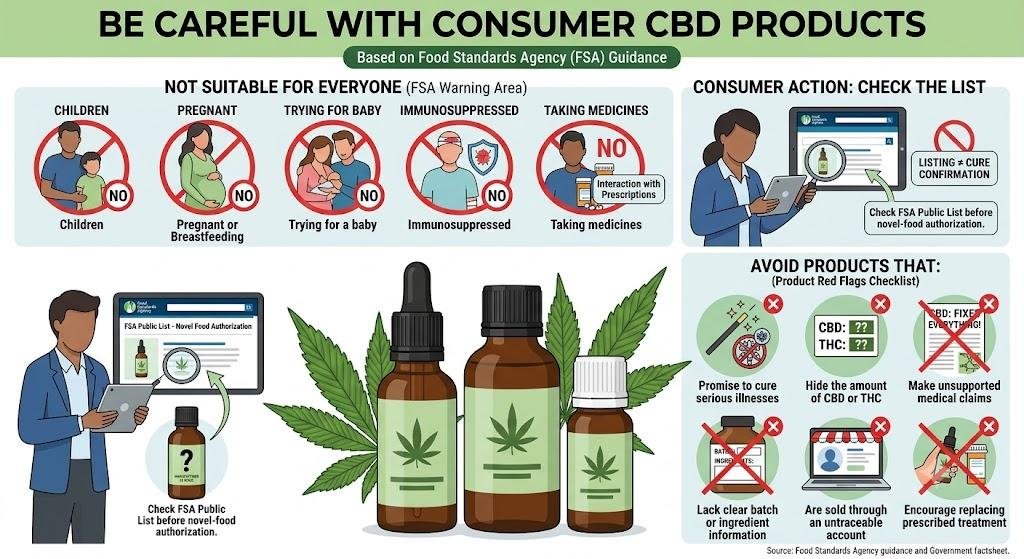
The Food Standards Agency advises that CBD food products are not suitable for everyone. Its guidance highlights concerns for children, people who are pregnant or breastfeeding, people trying for a baby, those who are immunosuppressed and people taking medicines.
Consumers should also check whether a product appears on the FSA’s public list connected with the novel-food authorisation process. Inclusion on a list should not be misunderstood as confirmation that a product can treat a health condition.
Avoid products that:
- Promise to cure serious illnesses
- Do not identify the manufacturer
- Hide the amount of CBD or THC
- Make unsupported medical claims
- Lack clear batch or ingredient information
- Are sold through an untraceable account
- Encourage replacing prescribed treatment
The Government’s cannabis and cannabinoid licensing factsheet explains the legal controls affecting cannabis, CBD and other cannabinoids in the UK.
Store Prescribed Products Responsibly
Cannabis-based medicine should be treated like any other controlled or potentially harmful medicine.
Keep it:
- In its original pharmacy-labelled packaging
- In accordance with the storage instructions
- Away from heat, moisture or direct sunlight where directed
- Out of sight and reach of children
- Away from pets
- In a place where visitors cannot access it
Do not transfer the oil to an unlabelled container. Do not give or sell prescribed medicine to another person.
Ask the dispensing pharmacy how to dispose of expired or unwanted products safely.
Travelling Requires Advance Checks
Cannabis-based medicines are not treated the same way in every country.
A legal UK prescription does not guarantee that the product can be taken across another country’s border. Some destinations prohibit THC-containing medicines or require documents and approval before travel.
NICE advises patients to seek information about the legality of cannabis-based medicines in the destination country before travelling.
Check with:
- The destination country’s embassy
- The prescribing clinic
- The dispensing pharmacy
- The airline or transport provider
- Official UK travel guidance
Do this well before the planned journey.
Questions to Ask a Prescribing Specialist
A patient may find it helpful to ask:
- What is the exact name and legal status of this product?
- Why is it being considered for my condition?
- What benefits are realistically expected?
- What are the main uncertainties or risks?
- Could it interact with my medicines?
- How will my response be monitored?
- Which side effects require medical advice?
- Could it affect driving, work or study?
- What should I do if I miss a prescribed amount?
- How should the medicine be stored and disposed of?
Clear answers are more valuable than general promises that cannabis oil is “natural” or “safe.”
A Safer Starting Point
Cannabis oil should not be approached as a harmless wellness shortcut—the product’s legal category, ingredients, quality, medical evidence and possible risks all matter.
For people considering treatment, the safest first step is a conversation with a GP, pharmacist or appropriately registered specialist. Prescription products should be used only as directed and monitored like other medicines.
Consumer CBD products should not be used to self-treat serious or persistent symptoms. Medical concerns such as ongoing pain, seizures, severe sleep disruption, unexpected weight loss or changes in mental wellbeing deserve a proper clinical assessment.
Disclaimer: This article provides general information for a UK audience and does not constitute medical or legal advice. Cannabis laws, prescribing rules, product classifications and safety guidance may change. Do not use cannabis-based products to diagnose or treat a medical condition without guidance from an appropriately qualified healthcare professional. Seek urgent medical help following a severe reaction or sudden serious change in health.