
Many people feel tired, stressed, and emotionally drained. Even when life looks good from the outside, it is common to feel disconnected on the inside. This feeling is often called burnout, but for some, it goes deeper than just stress.
Because of this, more people are starting to look for something meaningful, not just a break or a holiday, but a real change in how they feel and understand themselves. This search has led many to explore experiences that focus on inner healing and self-discovery.
One such experience is an ayahuasca retreat in the Amazon. Unlike traditional travel, this type of journey is not about sightseeing or relaxation. It is about slowing down, looking inward, and reconnecting with yourself more deeply.
Why More People Are Choosing an Ayahuasca Retreat for Inner Transformation
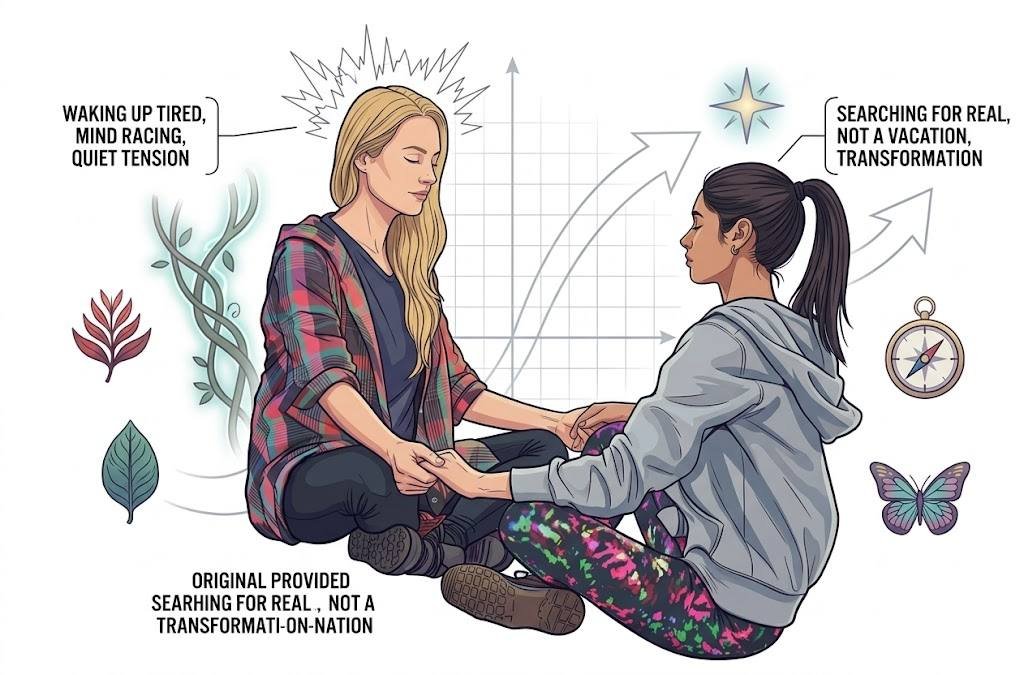
There comes a point in life when everything looks fine on the surface, but inside, something feels off. You wake up tired. Your mind is constantly racing. Even when you try to relax, there is a quiet tension you cannot quite shake.
Many people today call it burnout, stress, or emotional exhaustion. But for others, it feels deeper than that, like a disconnect from themselves.
This is exactly why more and more people are travelling across the world in search of something real. Not another vacation. Not another quick fix. Something that actually changes them. And for many, that journey leads to an ayahuasca retreat in the Amazon.
Shift From Traditional Travel to Transformational Experiences
How Modern Travellers Are Redefining the Purpose of a Trip
Travel has changed. It is no longer just about beaches, luxury hotels, or ticking places off a list. People are searching for experiences that go beyond the surface, something meaningful, something that stays with them long after they return home.
Rise of Transformational and Wellness Travel
This shift has given rise to what many call transformational travel. Instead of escaping life, people want to understand it better. Instead of distractions, they seek clarity. And instead of temporary pleasure, they look for long-term healing.
An ayahuasca retreat represents one of the most powerful forms of this type of travel. Deep in the Amazon rainforest, far from modern distractions, participants are guided through ancient ceremonies used for generations by indigenous healers. But this is not traditional tourism. It is a process.
What Actually Happens During an Ayahuasca Retreat
An authentic ayahuasca retreat experience in the Amazon is not just about the ceremonies themselves. It is about everything around them.
Pre-Retreat Preparation and Dietary Guidelines
Preparation begins even before arriving. Participants are usually advised to follow a specific dietary protocol, reduce stimulation, and come with a clear intention. Certain foods, alcohol, recreational drugs, and many medications, especially SSRIs and other antidepressants, must be avoided well in advance for safety reasons.
Daily Life and Atmosphere Inside an Amazon Retreat Centre
Once in the jungle, the environment itself plays a role. The sounds of nature, the simplicity of daily life, and the absence of constant digital noise create a space where the mind begins to slow down. Days are usually quiet, with light meals, rest periods, conversations with the facilitators, and time spent in nature between ceremonies.
Ceremony Itself: Icaros, Shamans, and the Inner Journey
Ceremonies are typically held at night, guided by an experienced shaman. Through traditional songs known as icaros and individual attention, each participant is supported throughout their experience. For many, the first ceremonies can be challenging. Emotions that have been suppressed for years may surface. Patterns become visible. Once overwhelming thoughts begin to make sense. But this is where the real work begins.
Facing Yourself Without Distractions in the Jungle
Why Removing Distractions Accelerates Self-Awareness
In everyday life, it is easy to avoid discomfort. We stay busy. We distract ourselves. We push things aside. But in the setting of an ayahuasca retreat, those distractions disappear. You are left with yourself. And while that may sound intimidating, it is also incredibly powerful.
Common Insights People Report After the Experience
People often report gaining insights into their relationships, their past, and the way they think. Some begin to understand why they feel stuck. Others reconnect with emotions they have not felt in years. Emerging research from institutions such as Johns Hopkins Center for Psychedelic and Consciousness Research is exploring how psychedelic-assisted experiences may influence mood, perspective, and well-being, though the science is still developing. It is not always easy, but for many people the experience feels real and meaningful.
Role of the Shaman and Why Guidance Matters
Who the Shaman Is in Traditional Amazonian Practice
One of the most important aspects of a safe and meaningful experience is the presence of an experienced shaman. In traditional Amazonian practice, the shaman is not just a facilitator. They are a guide, a healer, and someone who has spent years, often decades, working with plant medicine. Their role is to hold the space, support each individual, and guide the process in a way intended to be both safe and meaningful within their tradition.
How to Choose a Safe and Reputable Retreat Centre
This is why choosing the right retreat is essential. A small group setting, personal attention, transparent screening of medical and psychological history, on-site first aid, and a strong, experienced guide can make a significant difference in how the experience unfolds. Avoid centres that promise miracle cures, accept anyone without medical screening, or operate without clear safety protocols.
For those seeking a deeper and more authentic experience, many choose a traditional ayahuasca retreat in Ecuador, where ceremonies are still held in their original cultural context.
Why the Amazon Setting Matters for Plant Medicine Work
Natural Environment as Part of the Healing Process
There is something about the Amazon that cannot be replicated elsewhere. It is not just the location. It is the energy, the environment, and the deep connection to nature. Being surrounded by the jungle creates a sense of grounding. The constant noise of modern life fades away, replaced by the sounds of insects, birds, and the river.
Reconnecting With Nature and Slowing Down
This natural setting supports the process in a way that feels almost effortless. Studies on the mental health benefits of time in nature consistently show reductions in stress, improved mood, and better sleep. The Amazon takes this to an extreme. It reminds you of something simple, something essential, something that is often forgotten.
Integration: The Most Important Part of the Journey
What Integration Really Means After a Retreat
One of the biggest misconceptions about an ayahuasca retreat is that the transformation happens only during the ceremonies. In reality, the most important part comes after. Integration is the process of bringing the insights from the experience into everyday life. It is about making changes, shifting habits, and applying what you have learned.
Practical Ways to Apply Your Insights at Home
Without integration, even the most powerful experience can fade over time. With it, real change becomes possible. Many people use psychedelic integration support, journaling, therapy, meditation, breathwork, and time in nature to ground their insights. People often return home with a new perspective. Some make changes in their careers. Others improve their relationships. Many feel more at peace with themselves.
Is an Ayahuasca Retreat Right for Everyone?
Why It Is Not Suitable for Certain People
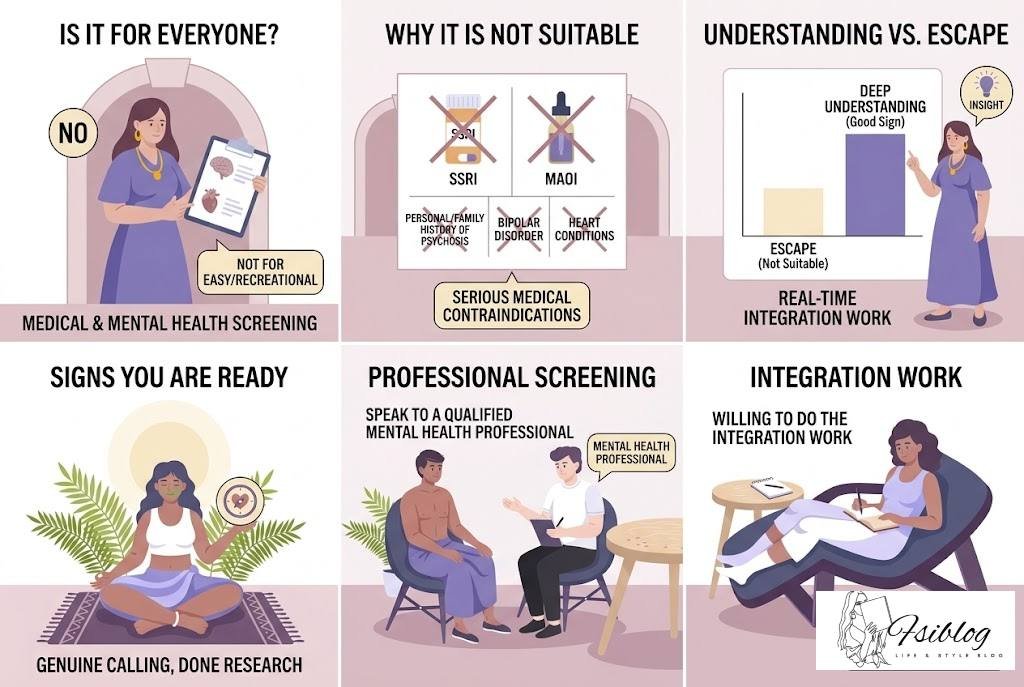
The honest answer is no. This type of experience is not for those looking for something easy or purely recreational. It requires openness, willingness, and a certain level of mental and emotional readiness. There are also serious medical contraindications. People with personal or family histories of psychosis, schizophrenia, or bipolar disorder, certain heart conditions, and those taking SSRIs, MAOIs, or other interacting medications, should not participate. A proper retreat will screen for these conditions before accepting anyone.
Signs You Might Be Ready for This Kind of Experience
For those who feel genuinely called to it, who have done their research, spoken to a qualified mental health professional, and are willing to do the integration work afterward, the experience can be meaningful and lasting. It is not about escaping reality. It is about understanding it more deeply.
A Different Kind of Journey Back to Yourself
At its core, an ayahuasca retreat is not about the Amazon, the ceremonies, or even the experience itself. It is about the relationship you have with yourself. In a world that constantly pulls your attention outward, this journey brings it back inward. And sometimes, that is exactly what is needed.
Final Conclusion
The growing interest in ayahuasca retreats reflects a deeper shift in how people approach health, well-being, and personal growth. It is no longer enough to feel fine. People want to feel connected, clear, and alive. The Amazon, the ceremony, the shaman, and the silence of the jungle all play a part, but the real work happens inside the participant and continues long after the flight home.
If you are considering this path, treat it with the seriousness it deserves. Research the retreat thoroughly, be honest about your medical and mental health history, follow the dietary and medication guidelines exactly, and commit to the integration process before you ever book a ticket. Done with care, this can be one of the most meaningful experiences of a person’s life. Done carelessly, it can also be one of the most harmful. The most important journey you can take is the one that leads you back to yourself, and that journey deserves real preparation, real guidance, and real respect.
Important Legal and Medical Disclaimer
This article is provided for general informational and educational purposes only. It is not medical, psychological, or legal advice and should not be treated as such. Ayahuasca contains DMT (N, N-Dimethyltryptamine), which is classified as a controlled substance in many countries, including the United Kingdom (Class A under the Misuse of Drugs Act 1971), the United States, Canada, Australia, and most of Europe. Possession, use, importation, or facilitation of ayahuasca may be illegal where you live, regardless of whether the ceremony itself takes place in another country. Readers are responsible for understanding and complying with all applicable laws in their own jurisdiction.
Ayahuasca can also pose serious physical and psychological risks. It can interact dangerously with many prescription medications, including SSRIs, SNRIs, MAOIs, lithium, tramadol, and certain blood pressure and migraine drugs. It is not safe for individuals with personal or family histories of psychosis, schizophrenia, or bipolar disorder, certain heart conditions, severe liver disease, pregnancy, or other medical concerns. Adverse psychological reactions, lasting distress, and rare but serious medical events have been reported. This article does not endorse, recommend, or encourage the use of ayahuasca. Always consult a qualified medical doctor and a licensed mental health professional before considering any plant medicine experience, and only ever participate in legal, screened, and medically supervised settings.
References
- World Health Organization. (2019). Burnout: An Occupational Phenomenon. International Classification of Diseases.
- Encyclopaedia Britannica. (2024). Ayahuasca: Definition, History, and Use.
- UNESCO Courier. (2021). Ayahuasca: Spirit of the Shaman, Shaman of the Spirit.
- Johns Hopkins Center for Psychedelic and Consciousness Research. (2024). Psychedelic Research and Mental Health.
- Multidisciplinary Association for Psychedelic Studies (MAPS). (2024). Psychedelic Integration and Harm Reduction Resources.
- National Institutes of Health, PubMed Central. (2018). Ayahuasca: Pharmacology, Subjective Effects, and Dietary Considerations.
- American Psychological Association. (2020). The Mental Health Benefits of Spending Time in Nature.
- National Geographic. (2017). Why Transformative Travel Will Be the Travel Trend of the Year.
- World Wildlife Fund. (2024). The Amazon: Places We Protect.
- Drugs.com. (2024). Ayahuasca Drug Interactions and Contraindications.
- UK Government. Misuse of Drugs Act 1971: Classification of Controlled Substances.