
Many men in the UK only think about shoe size in terms of length. If the shoe is a size 9, 10, or 11 and the toes do not hit the front, they assume the fit is right.
But shoe fit is not only about length. Width matters as much.
A shoe can be the correct size in length but still be too narrow across the front of the foot. It may feel fine when you first try it on, then become tight, hot, and uncomfortable after walking to work, standing through a shift, commuting, or spending a full day on your feet.
For men with broad feet, bunions, swelling, flat feet, high insteps, or jobs that involve long hours standing, extra-wide shoes can make a real difference. They are not just about comfort. The right fit can help reduce pressure, rubbing, instability, and everyday foot fatigue.
UK podiatry and NHS guidance often highlight the importance of shoes that are wide and deep enough, with enough room for the toes to move naturally. Poorly fitting shoes may contribute to issues such as corns, calluses, bunions, ingrown toenails, and general foot pain.
Why Extra Wide Shoes Matter
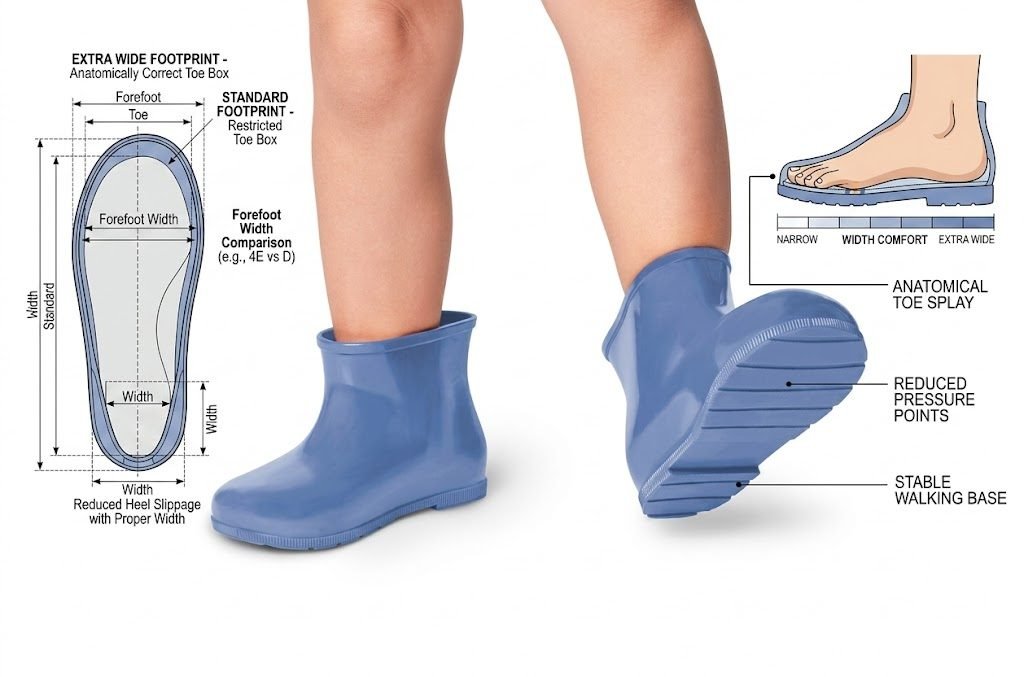
Mens extra wide shoes are designed to give more space across the forefoot, toe box, and sometimes the midfoot. This is different from simply buying a bigger size.
Going up a size may give more room, but it can also make the shoe too long. That can cause heel slipping, rubbing, poor support, and an unstable feeling while walking. Extra-wide shoes solve the width problem more directly. They allow the foot to sit properly inside the shoe without adding unnecessary length.
This matters because many men have feet that are naturally wider than standard shoe shapes. Others develop wider feet over time due to age, weight changes, swelling, foot conditions, or years of standing and walking on hard surfaces.
For UK men who work in retail, healthcare, warehouses, construction, hospitality, delivery, transport, security, or office jobs with long commutes, footwear is not a small detail. It affects how comfortable the whole day feels.
Less Toe Pressure Means Better Daily Comfort
One of the biggest benefits of extra-wide footwear is reduced pressure on the toes.
Many standard men’s shoes and trainers narrow towards the front. This can squeeze the toes together, especially around the big toe and little toe. Over time, that pressure can lead to soreness, rubbing, redness, calluses, corns, and general discomfort.
Your toes are not meant to stay trapped all day. They help with balance, grip, and push-off when walking. When they are compressed, your foot cannot move as naturally as it should.
A well-fitted extra-wide shoe gives the toes more space to spread comfortably. This can make walking feel smoother and may reduce the end-of-day soreness many men wrongly blame only on age, work, or being on their feet for too long.
Guy’s and St Thomas’ NHS Foundation Trust notes that wide-fitting shoes can give more space across the ball of the foot, but the toe area still needs to be round or square so the toes are not squeezed.
Better Fit Can Support Healthier Walking
When shoes are too narrow, men often adjust how they walk without noticing.
They may shift weight to the outside of the foot. They may shorten their stride. They may avoid pressure on a sore toe or painful forefoot. These small changes can affect the ankles, knees, hips, and lower back over time.
Extra-wide shoes are not a medical cure and will not fix every posture or walking problem. However, a better fit can reduce unnecessary strain caused by tight footwear.
When the forefoot has enough space, the foot can land more naturally. The sole sits under the foot properly, and the toes are not forced into an awkward position. For men who walk to the train station, stand on hard floors, or spend weekends outdoors, that difference can be noticeable.
Reduced Friction Helps Protect the Skin
Tight shoes do not just feel uncomfortable. They rub.
Friction is one of the most common causes of blisters and sore patches. For men with wide feet, the outer edge of the foot and the little toe area often suffer first. The shoe presses from the side, the foot keeps moving, and the skin becomes irritated.
Extra-wide shoes help reduce that side pressure. Instead of the foot constantly pushing against the shoe, it has more room to sit comfortably inside it.
This is especially useful for men who wear shoes for long periods, including commuters, shift workers, teachers, drivers, warehouse staff, and anyone who spends most of the day on their feet.
More Room Can Help With Swelling
Feet can swell during the day. This can happen because of heat, walking, standing, travel, age, long shifts, or certain health conditions.
A standard shoe that feels comfortable in the morning may feel tight by late afternoon. This is a common problem for men with wider feet.
Extra-wide shoes give the foot more room to cope with natural changes during the day. They do not crush the forefoot as quickly when swelling starts. They can also reduce the need to loosen laces repeatedly or take shoes off to get relief.
Some NHS footwear advice also recommends buying or trying shoes later in the day because feet can become bigger after activity and daily swelling.
Extra Wide Shoes Can Improve Stability
A narrow shoe on a wide foot can feel unstable. The foot may slightly spill over the sole, or the base of the shoe may not properly support the widest part of the foot.
That can affect balance.
A properly designed extra-wide shoe gives the foot a broader and steadier base. This can make standing, walking, turning, and moving across uneven pavements feel more secure.
This can be helpful for older men, heavier men, men with flat feet, or anyone who feels uncomfortable in slim trainers or narrow formal shoes.
Good stability is not always something you notice when it is there. But you definitely notice when it is missing.
Less Foot Fatigue During Long UK Workdays
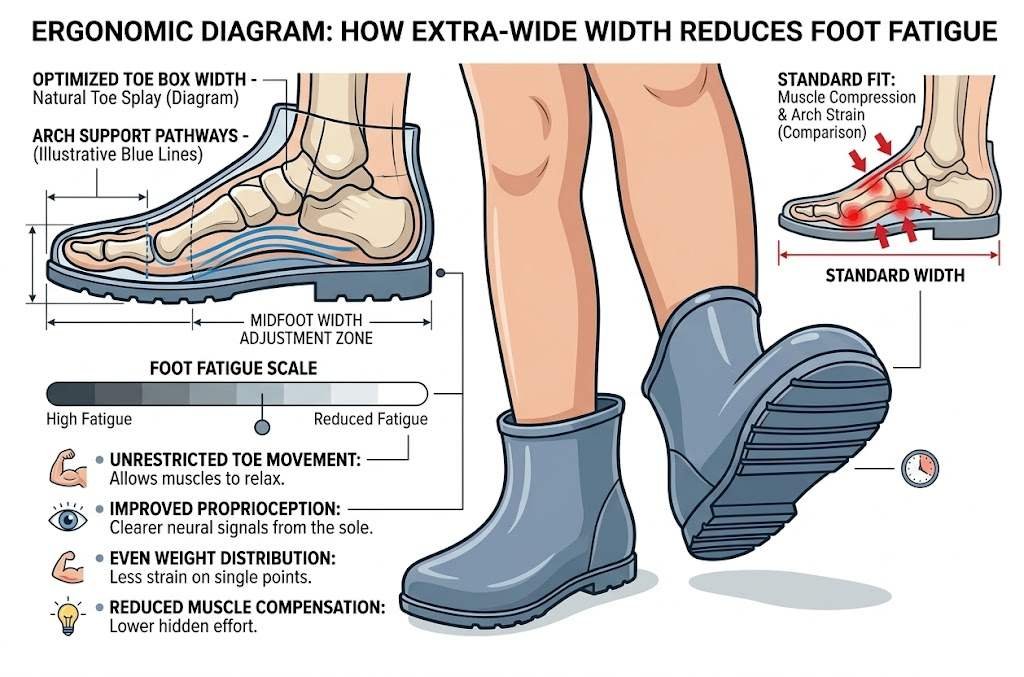
Foot fatigue is not always caused by doing too much. Sometimes it happens because the foot is working too hard inside the wrong shoe.
When the toes are squeezed and the forefoot is compressed, the muscles of the foot cannot move freely. The arch may feel strained, the heel may compensate, and tiredness builds throughout the day.
Properly fitted extra-wide shoes can reduce that hidden effort. The foot has more space to settle, and the shoe supports the body more evenly.
For men working long shifts in the NHS, retail, hospitality, manufacturing, security, logistics, or trade work, this can make everyday movement feel less draining.
They May Help Men Stay More Active
This benefit is often overlooked.
Uncomfortable shoes discourage movement. If every walk causes pressure, rubbing, or soreness, you naturally start avoiding extra steps. You take the lift instead of the stairs. You skip the evening walk. You sit down sooner. You delay errands because your feet already feel tired.
Comfortable footwear can do the opposite. It makes movement easier to say yes to.
Extra-wide shoes are not a fitness solution, but they can remove one common barrier to daily activity: foot discomfort. For many men, that is enough to make walking more consistent.
The Royal College of Podiatry encourages people to choose footwear based on comfort, support, activity, and fit rather than appearance alone.
Extra Wide Shoes and Common Foot Conditions
Extra-wide shoes may be useful for men dealing with:
- Bunions
- Hammertoes
- Flat feet
- High insteps
- Swollen feet
- Corns and calluses
- Forefoot pain
- Wider feet caused by age or long-term pressure
A bunion, for example, can become more irritated when a narrow shoe presses directly against the joint. Hammertoes can feel worse when the toe box is too shallow or too tight. Flat feet may feel less supported in shoes that are narrow through the midfoot.
The right shoe will not remove these conditions, but it may reduce daily irritation and pressure.
Men with diabetes, circulation problems, nerve issues, wounds, ulcers, or ongoing foot pain should speak to a GP, podiatrist, or diabetes foot care team before choosing footwear. This is especially important because foot problems can become more serious when sensation or circulation is affected.
Extra Wide Does Not Mean Loose
There is one important point to remember: extra wide does not mean oversized.
A good extra-wide shoe should feel roomy at the front but still secure around the heel and midfoot. If the foot slides around inside the shoe, rubbing can increase. If the heel slips, walking can feel unstable. If the shoe is too long, the foot may bend in the wrong place.
The goal is proper space, not sloppy space.
When trying on extra-wide shoes, check three areas:
- Your toes should not feel squeezed.
- The sides of your feet should not feel pressed.
- Your heel should stay in place without rubbing.
If all three feel right, you are much closer to a healthy fit.
What UK Men Should Look for in Extra Wide Shoes
A good pair of men’s extra-wide shoes should include:
- A roomy, round or square toe box
- Enough width across the ball of the foot
- Good heel support
- A cushioned but stable sole
- Breathable materials
- Adjustable fastenings such as laces, straps, or Velcro
- Enough depth if you use insoles or orthotics
- A grippy outsole for wet UK pavements
Avoid shoes that need “breaking in”. Shoes should feel comfortable from the start. South Tees Hospitals NHS Foundation Trust advises that footwear should fit well straight away and should be measured regularly.
Final Thoughts
The hidden health benefits of extra-wide shoes come from one simple idea: your feet should not be forced into a shape that does not match them.
When footwear fits properly, toes have more room, pressure is reduced, balance feels better, friction decreases, and walking becomes easier. Over time, that can affect comfort, confidence, and daily movement in ways many men do not expect.
Men’s extra-wide shoes are not only for men with unusually large feet. They are for any man whose feet need more space than standard shoes provide.
The right pair should not constantly remind you that you are wearing shoes. It should simply let you get through the day without thinking about your feet every few minutes. That is usually the sign that your shoes are doing their job.
Disclaimer
This article is for general information only and should not be taken as medical advice. Foot pain, swelling, numbness, wounds, diabetes-related foot concerns, circulation problems, or long-term discomfort should be discussed with a GP, podiatrist, pharmacist, or other qualified healthcare professional. If you have diabetes or reduced feeling in your feet, seek professional footwear advice before changing shoes or using insoles.
References and Publication Details
- NHS Inform — “Looking after your feet.” Publisher: NHS Inform. Published/updated: 25 March 2026. Used for guidance on poorly fitting shoes, foot problems, and what to look for in supportive footwear.
- Guy’s and St Thomas’ NHS Foundation Trust — “Choosing shoes to reduce foot pain.” Publisher: Guy’s and St Thomas’ NHS Foundation Trust. Accessed: 25 May 2026. Used for information on shoe width, toe shape, and avoiding narrow or pointed shoes.
- Royal College of Podiatry — “Walking – Footwear.” Publisher: Royal College of Podiatry. Accessed: 25 May 2026. Used for general footwear selection advice for walking and daily activity.
- South Tees Hospitals NHS Foundation Trust — “Footwear advice.” Publisher: South Tees Hospitals NHS Foundation Trust. Published: 23 February 2022. Used for advice on regular measuring and choosing shoes that fit properly from the start.
- East Sussex Healthcare NHS Trust — “Footwear: Helping you make the right choices.” Publisher: East Sussex Healthcare NHS Trust. Published: 20 April 2020. Used for guidance on shoes being long, wide, and deep enough, and trying shoes later in the day when feet may swell.