
Herringbone flooring has moved well past trend status. It shows up in commercial lobbies, rental hallways, and family homes where the brief is the same: a floor that handles real use without looking like it does. The zigzag arrangement does something a straight lay cannot. It breaks up scuff marks visually, makes narrow corridors read as wider, and gives open-plan areas definition without additional furniture or partition work.
The decision between carpet and hard surface in a herringbone layout runs deeper than appearance. Cuts multiply. Seams need precise alignment. Each material asks something different from whoever maintains it. First-time renovators often underestimate what that difference costs over time.
Why Patterned Floors Hold Up Better in High-Traffic Homes
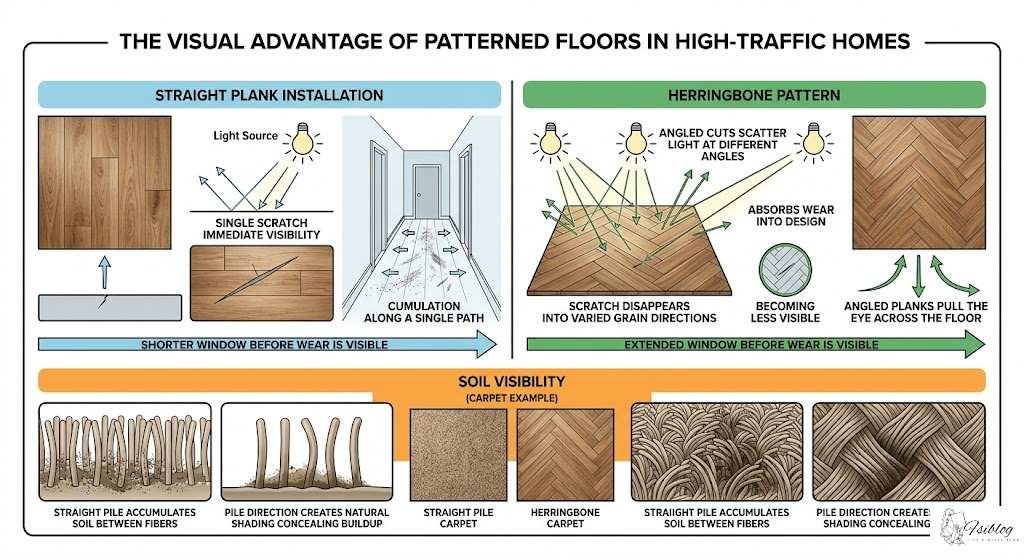
A straight plank makes a single scratch visible immediately. That same scratch across a herringbone layout disappears into the varied grain directions of the pattern. Angled cuts scatter light at different angles and absorb surface wear into the design in a way that straight-lay installations cannot replicate. Not a cosmetic trick. More like a visual advantage that helps the floor look presentable for longer between cleans.
Soil visibility works differently across materials, too. Pile direction in a herringbone carpet creates natural shading that conceals buildup between cleans. On hard surfaces, plank angles pull the eye across the floor rather than toward any single scuff or mark. The base material still defines real long-term resilience. Pattern choice extends the window before that resilience becomes visible as wear.
Comparing Herringbone Carpet and Hard-Surface Options for Lifecycle Costs
Material costs vary sharply once installation is included. Carpet herringbone, engineered wood, and LVP all sit in different cost brackets, and pattern-matching complexity can increase labour and waste in rooms with awkward corners or irregular shapes. The more cuts a layout needs, the more important accurate planning becomes.
For households comparing patterned floors across busy rooms, Urmston Carpets keeps the focus on herringbone carpet choices that balance visible wear, comfort, and long-term upkeep before a floor is fitted.
Long-term ownership cost tells a different story from the purchase price. Carpet in heavy-use areas may need replacing sooner than some hard-surface options. Engineered wood can last well when maintained correctly. LVP often sits between the two on longevity and upkeep. Maintenance costs tend to favour hard surfaces, while carpet brings comfort and sound absorption that harder materials do not offer in the same way.
Installation Realities That Affect Long-Term Performance
Pattern-matched installation requires additional material for cuts and alignment. Skipping it produces mismatched seams that grow more visible as the floor settles. A saving at installation can become a visible problem later. Not worth making.
Moisture checks matter before any hard-surface herringbone goes down. Concrete subfloors need proper testing before installation. Skip that step, and buckling or delamination can appear later, particularly in basements and ground-floor rooms. On stairs, carpet herringbone needs careful pattern alignment at every nosing. Visual breaks at the most trafficked point on the staircase appear fast and worsen quickly.
DIY installation works against herringbone more than it does straight-lay flooring. Every cut needs to sit at a precise angle. Spacing must stay consistent throughout, or the pattern loses coherence across the room. Carpet stretching and seaming in herringbone requires specialist tools that most homeowners do not have. Hard-surface herringbone needs careful layout planning to hold visual continuity across rooms and doorways. Professional pattern matching costs more upfront. It also reduces the chance of callbacks and remedial work.
Material-Specific Durability in Busy Households
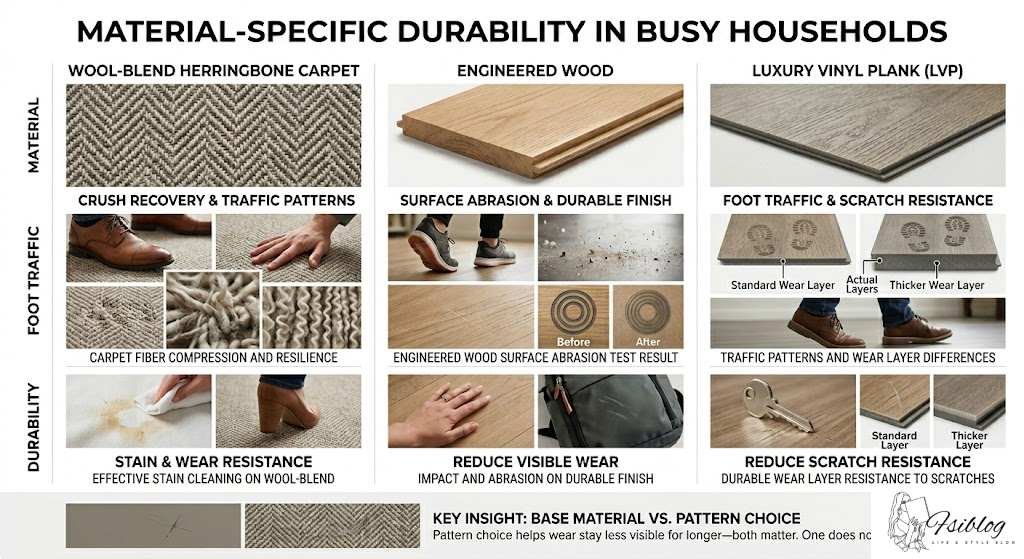
Wool-blend herringbone carpet handles staining and crushing better than many synthetic-only options in heavy-use zones. The fibre recovers from compression rather than flattening permanently. That recovery matters in hallways and living rooms where foot traffic follows the same narrow paths every day. Engineered wood with a durable surface finish handles abrasion well and suits entry areas. The LVP wear layer thickness affects scratch resistance. Thicker wear layers generally reduce visible surface damage over time, especially in busy rooms.
The base material does most of the durability work. Pattern choice helps the wear stay less visible for longer—both matter. One does not replace the other.
Maintenance Requirements That Determine the True Cost of Ownership
Herringbone carpet in high-traffic areas needs regular professional cleaning to keep the fibre condition and pattern contrast looking fresh. Skip those cleans and fibre wear accelerates, the pattern dulls, and the floor starts looking tired ahead of its actual lifespan. Stain-resistant treatments add to the upfront cost. They can reduce cleaning pressure over the floor’s life. Worth considering in the initial budget from the start.
Hard-surface herringbone asks less day to day. Damp mopping covers routine maintenance. Wood may need occasional resealing. LVP can benefit from a periodic polish refresh, depending on product type and wear. That reduced maintenance load suits rental properties and commercial spaces where scheduled professional cleaning is not always practical. Carpet shows visible wear faster in entryways under heavy use. Hard surfaces often hold their appearance longer with basic, consistent care.
Matching material to actual conditions from the start reduces total ownership cost. A herringbone floor chosen only for appearance, without accounting for how the space gets used, will usually cost more to maintain and replace than one selected with both factors in mind. The right herringbone floor should make a room look considered while still coping with the way the household actually uses it.
Final Conclusion
Herringbone flooring can be a smart choice for busy households because the pattern helps hide everyday scuffs, marks, and wear better than many straight-laid floors. However, the best option depends on how the space is used. Carpet herringbone can add warmth, comfort, and sound control, while hard-surface choices such as engineered wood or LVP may offer easier cleaning and longer-lasting appearance in high-traffic areas. The most important step is choosing the right material, planning the installation properly, and thinking about maintenance before the floor is fitted. A herringbone floor should not only look stylish but also handle daily family life, foot traffic, cleaning needs, and long-term costs practically.