
There’s a moment most of us experience, usually around 3 PM, when our energy dips or when we catch our reflection and wonder why our skin looks tired, when we realize that what we’re eating is actually showing on the outside. It’s not a dramatic revelation, but it’s real. And unlike the promise of another skincare serum or energy drink, what we put on our plates genuinely builds the foundation for how we look and feel.
The thing about whole-food nutrition is that it’s not sexy marketing material. It’s not an 8-week transformation plan or a celebrity-endorsed supplement. It’s quieter than that. But the more you pay attention, the more you notice the difference: clearer skin, steadier energy, better sleep, even that elusive glow that no highlighter can replicate.
Real Food, Real Results
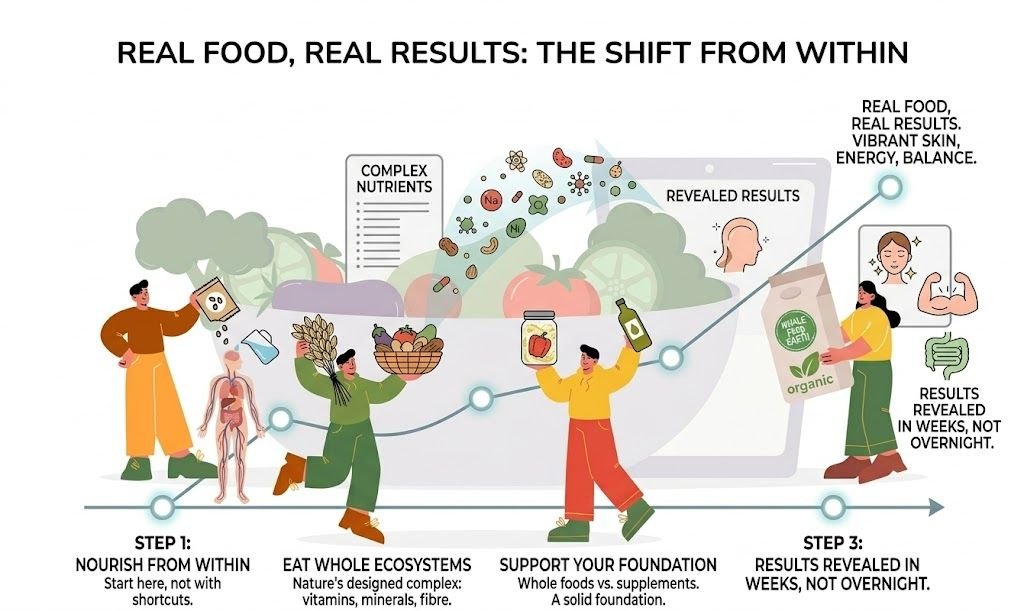
Let’s be honest: most of us have tried shortcuts. We’ve bought the fancy face masks, invested in the right serums, and swapped our coffee for matcha lattes. Some of these things help. But if you’re not eating real, nourishing food, you’re essentially trying to paint over a foundation that isn’t solid.
Whole foods work differently from supplements or isolated nutrients. When you eat a handful of seeds or a bowl of fermented vegetables, you’re not just getting individual vitamins; you’re getting the whole ecosystem of nutrients that nature designed to work together. Your body understands this language better than any lab-created formula ever could.
This is where the shift happens. Not overnight, but within weeks of consistently eating better ingredients, most people notice something has changed. Your energy stabilizes. Your skin clears up. You don’t need as much coffee. Your digestion improves. These aren’t coincidences; they’re the visible results of your body having what it actually needs to function well.
Seeds: Small But Mighty
If you’re looking for one category of food to add to your life right now, make it seeds. Pumpkin seeds, sunflower seeds, flax, chia, hemp, these little nutritional powerhouses pack an almost absurd amount of goodness into a small handful.
What makes seeds so effective is their balance. They contain plant-based protein, healthy fats that support skin barrier function, minerals like zinc that help with hormone balance and skin clarity, and fiber that keeps your digestion running smoothly. That smooth digestion? That’s directly connected to clearer skin. Your body can’t properly eliminate waste if your digestive system isn’t working well, and it often shows up first on your face.
The beauty of seeds is how easy they are to incorporate. Sprinkle them on your morning yogurt, add them to salads, blend them into smoothies, or eat them straight as a snack. Unlike more complicated superfoods, seeds don’t require special preparation or acquired taste. They’re just genuinely good food that makes you feel better.
Superfoods That Aren’t Hype
The term “superfood” gets thrown around so much that it’s lost meaning, but certain foods really do deserve the label. Spirulina, maca, raw cacao, and nutritional yeast aren’t trendy for no reason; they’re genuinely nutrient-dense in ways that support energy and skin health.
Raw cacao, for instance, contains polyphenols and magnesium. The polyphenols have antioxidant properties that protect your skin from oxidative stress (which ages you faster). At the same time, magnesium helps with stress and sleep, both of which have an immediate impact on how your skin looks. One square of high-quality dark chocolate or a spoonful of cacao powder in your morning smoothie is a simple way to get these benefits without feeling like you’re doing something virtuous.
The key with superfoods is this: they work best when they’re part of a foundation of regular, whole foods. One tablespoon of spirulina isn’t going to transform your life if you’re still eating processed foods the rest of the time. But layered on top of a diet that’s already mostly whole ingredients? That’s when they shine.
Fermented Foods: The Digestion Secret
Your gut health affects everything: your skin, your mood, your energy and how well your immune system functions. Fermented foods like sauerkraut, kimchi, miso, and kombucha are some of the best tools you have for supporting a healthy gut.
Fermentation creates beneficial bacteria that help your digestive system break down food more efficiently and absorb nutrients better. This alone is worth paying attention to. When your digestion is working properly, you absorb more of the good stuff from your food, and you eliminate waste more effectively. Both of these show up on your skin almost immediately, less bloating, clearer complexion, and often a natural glow that comes from your body actually being able to use the nutrition you’re eating.
The simplest approach is to add small amounts of fermented foods to your meals. A spoonful of miso in your broth, some sauerkraut on the side of your dinner, and a glass of kombucha in the afternoon. You don’t need to overdo it; consistency matters more than quantity.
Building a Sustainable Practice
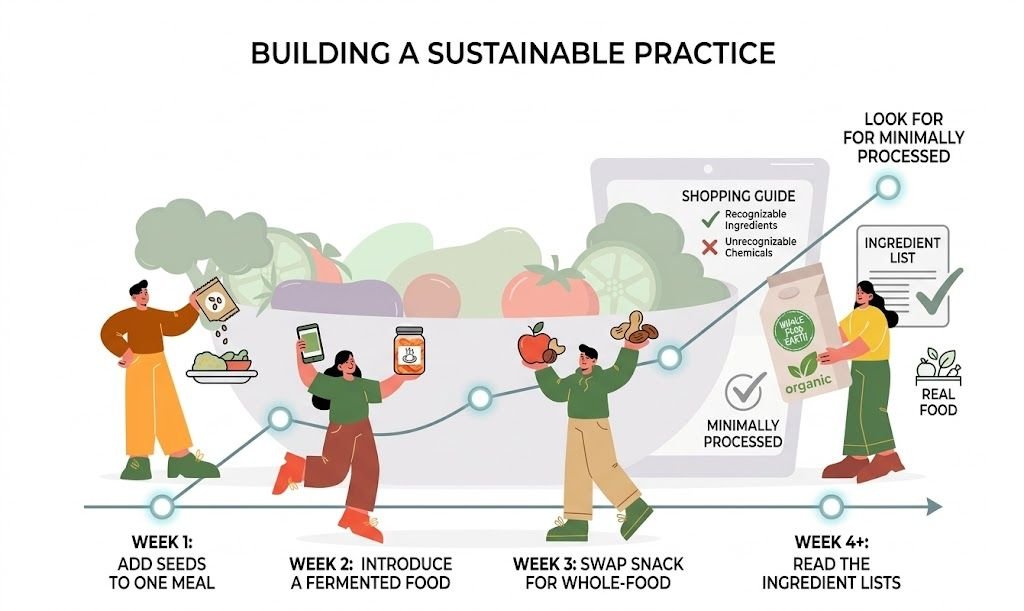
The reason so many nutrition plans fail is that they ask too much too fast. One day, you’re eating however you want, and the next, you’re supposed to have a perfectly balanced macronutrient ratio and meal prep everything. That’s not how real life works.
Instead, think of it as a gradual shift. This week, you can add seeds to one meal a day. Next week, you will introduce a fermented food. The week after, you swap your usual snack for something whole-food-based. Over a month or two, without dramatically restricting yourself, your diet has fundamentally changed, but it doesn’t feel like deprivation.
When you’re shopping, look for ingredients from retailers like Whole Food Earth that focus on organic, minimally processed options. Read the ingredient lists. If you don’t recognize most of the ingredients, that’s a sign to find something else. Real food doesn’t have a complicated ingredient list.
Compound Effect
Here’s what I’ve noticed about whole-food nutrition: the benefits compound. After a month, you have more energy. After three months, your skin is visibly clearer. After six months, people start asking what you’ve changed because you look… better. Your eyes are brighter. You carry yourself differently because you actually feel better.
This isn’t magic, and there are no shortcuts. But it’s also not as complicated as the wellness industry wants you to believe. Eat real food, seeds, whole grains, fermented vegetables, quality proteins and fresh produce. Move your body. Sleep well. Manage stress. These boring fundamentals work because they’ve always worked.
The ingredients that actually make a difference aren’t the ones promising the most dramatic transformation. They’re the quiet ones, the seeds, the fermented foods, the whole grains, that your body recognizes and knows how to use. Start there, and watch what happens.
Conclusion
Whole-food nutrition is not about quick fixes or trendy superfoods—it’s about giving your body the nutrients it actually knows how to use. Small, consistent choices like incorporating seeds, fermented foods, whole grains, and nutrient-dense proteins create a foundation that supports energy, skin health, digestion, and overall well-being. The benefits compound over time: steadier energy, clearer skin, improved digestion, and a natural glow that comes from real nourishment.
By focusing on real ingredients instead of marketing promises, you build a sustainable approach to health that lasts far beyond any short-term plan. The quiet power of whole foods, those simple, nutrient-rich staples, truly makes the difference in how you look, feel, and perform every day. Start with small steps, stay consistent, and let your body reap the rewards.