
A car can feel suitable for years, then suddenly it starts making ordinary life harder. But after a disability diagnosis or a change in mobility, every trip can begin to take more time, more lifting and more planning than it used to.
That is usually where families start to notice the problem. The vehicle still runs, but it no longer fits the life around it. Getting to appointments, shops, work, or family visits should not feel like a small operation every time someone leaves the house.
Simple Journeys Now Take Too Much Planning
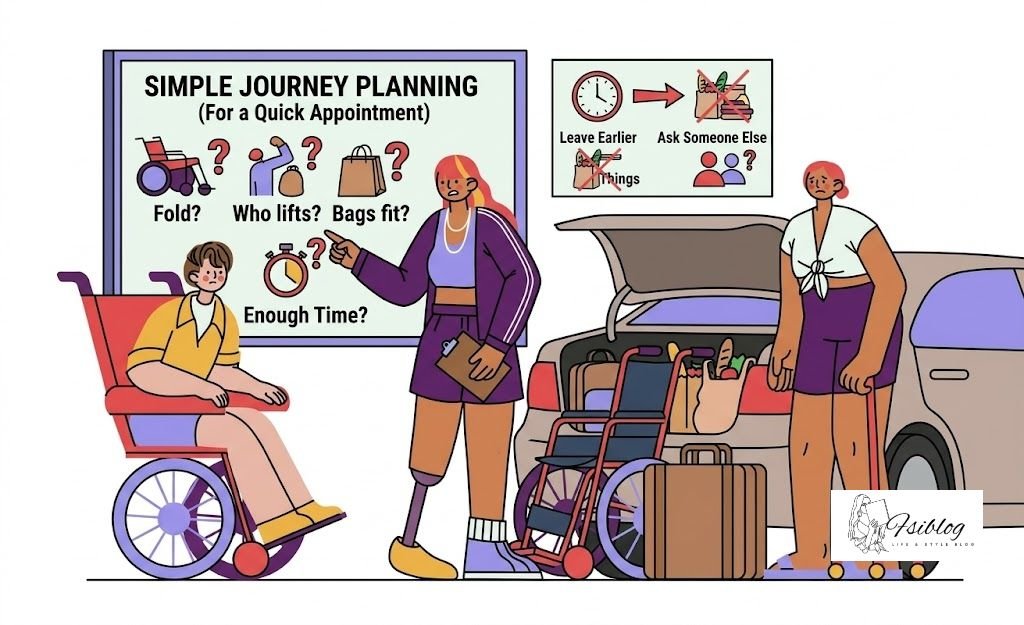
One clear sign is that short trips stop feeling simple. A quick appointment becomes a list of questions before anyone even gets in the car.
- Can the wheelchair fold?
- Who is lifting it?
- Will it fit with bags in the boot?
- Is there enough time to park, unload and get inside without rushing?
At first, families often work around the problem. They leave earlier, travel with fewer things, choose familiar places or ask someone else to come along. That may help for a while, but if every outing needs extra hands and a backup plan, the car may no longer be supporting daily life properly.
Wheelchair No Longer Fits the Car Comfortably
A wheelchair that technically fits in a car does not always fit in a way that works day after day. It may need to be folded at an awkward angle. Maybe the boot only closes if everything else is moved. Maybe someone has to lift it in a way that is already causing strain.
When families need wheelchair accessible vehicles for sale, the next step is often to find accessible vehicles built around wheelchair passengers, ramp access, seating positions and everyday travel needs.
That matters because a wheelchair is not luggage. It is part of a person’s independence. If loading it feels difficult, rushed or unsafe each time, the problem is more than space. It affects the whole journey, from leaving the house to getting home again.
A suitable vehicle should account for the wheelchair, the passenger and the driver, not just the space in the boot.
Transfers Are Becoming Tiring or Stressful
Transfers can change quickly from manageable to exhausting. On a good day, moving from wheelchair to car seat may feel possible. On a bad day, with pain, fatigue, rain or a tight parking bay, the same movement can feel too much.
This is often when families realise the old car is asking too much. The wheelchair user may feel exposed or uncomfortable. A partner, parent or carer may be doing more lifting than they should. Someone may begin to hesitate before saying yes to a trip because they already know the transfer will be hard.
Wheelchair accessible vehicles can reduce some of that strain, depending on the layout and the person’s needs. Some people travel while seated in their wheelchairs. Others still transfer but need more room, better access and a setup that does not make every journey feel like a test.
Parking and Loading Are Limiting Where You Can Go
Another sign is when parking starts deciding the day. A side ramp needs room beside the vehicle. A rear ramp needs space behind it. Some car parks seem fine until another car parks too close. Some driveways slope badly. Some streets leave no safe space for loading at all.
Families often start thinking about the parking before the destination.
- Can the door open fully? Is there space for the ramp?
- Will the person be able to get in safely when everyone is tired?
- What happens if it is raining or dark?
A Blue Badge can help with parking access, but it does not guarantee enough room for every ramp, doorway or loading setup.
A wheelchair accessible vehicle cannot make every car park perfect. No vehicle can. But the right layout can make regular trips more predictable, especially around home, shops, appointments and places the family visits often.
Medical Appointments Feel Harder Than They Should
Medical appointments already come with enough pressure, especially when hospital appointments mean planning transport, parking, and extra time before the visit even begins.
If getting to a GP surgery, hospital, physio session, or clinic means leaving much earlier than necessary, arriving stressed or depending on last-minute lifts, the current transport setup may not be working well enough. This matters because appointments are not optional extras. They are part of keeping life stable after a diagnosis.
Ordinary Errands Are Being Avoided
A big sign is when people stop doing small things because travel feels too difficult, not the big hospital trips, but the smaller parts of life that used to be easy, from a quick shop and a haircut to a birthday lunch, a visit to a friend or a short drive to get out of the house.
Those trips are easy to dismiss, but they matter. They help life feel normal and stop everyday plans from quietly turning into social isolation.
If the current car only works when the journey is essential, it may not be enough anymore. The right vehicle should support ordinary life too. It should make it more realistic to say yes to plans that do not look important on paper but matter in real life.
Person Travelling Feels Uncomfortable or Left Out
A wheelchair accessible vehicle is not only about mechanics. It also affects how someone feels while travelling.
- Can they see out?
- Can they hear the driver?
- Do they feel stable?
- Are they sitting somewhere that feels comfortable, or just wherever the layout allows?
These details can carry a lot after a diagnosis, especially when independent living starts depending on small daily choices.
If the wheelchair user feels awkward, separate, exposed or uncomfortable during journeys, the vehicle may need to change. Access matters, but dignity matters too. Nobody wants every trip to feel public, heavy or overly managed.
Cost of Workarounds Keeps Growing
Sometimes the old car looks cheaper because it is already there. Then the hidden costs begin to show in extra taxis, more help from relatives, missed trips, longer appointment days and more strain on the person doing the lifting.
There may also be the cost of trying to adapt around a car that was never designed for the job. A new cushion here. A different folding routine there. Another workaround that helps a little but does not solve the main problem.
Upgrading is still a serious decision, of course. Families may need to look at finance, lease options, used vehicles or support schemes before doing anything. But if the current setup keeps costing time, energy and independence, the real cost is already there.
Daily Life Is Starting to Shrink Around the Current Car
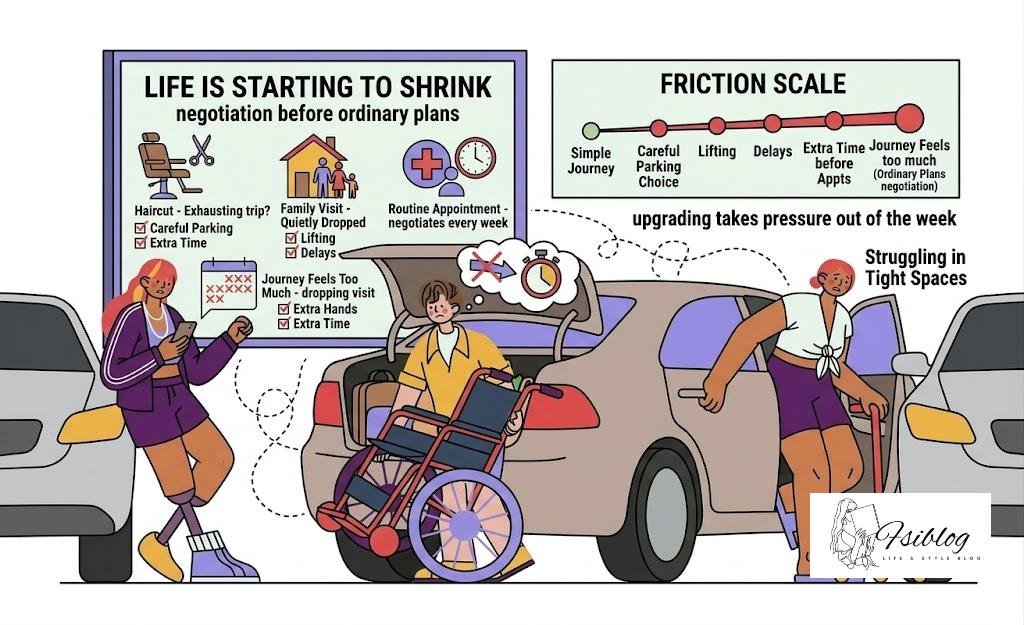
That is usually the point where families stop asking only whether the car still runs. They start noticing what the car is asking from everyone else, from the extra time before appointments and the careful parking choices to the lifting, the delays, and the plans quietly dropped because the journey feels like too much.
No vehicle makes every trip easy after a disability diagnosis. A wet Tuesday clinic visit may still take longer than planned, and some car parks will still be a pain when the spaces are tight. But if a haircut, a family visit or a routine appointment feels exhausting before the front door is even open, the car is adding more pressure than help.
At that point, upgrading is not only a bigger purchase to think through. It is a way to take pressure out of the week, so ordinary plans stop needing quite so much negotiation before they happen.