
Travelling by car offers a level of freedom that few other forms of transport can match. You can change your route at any time, explore small villages, stop at scenic viewpoints, and control your own schedule. For many UK travellers, road trips remain one of the most flexible and affordable ways to explore both Britain and nearby European destinations.
However, the excitement of choosing destinations, planning playlists, and booking attractions often overshadows the practical side of preparation. Small planning mistakes can quietly turn into expensive problems. A poorly prepared trip may lead to breakdown costs, emergency accommodation, insurance complications, accident expenses, or unexpected budget overruns.
Understanding the most common road trip planning errors and how to avoid them can protect both your finances and your peace of mind.
Skipping Essential Vehicle Checks Before Departure
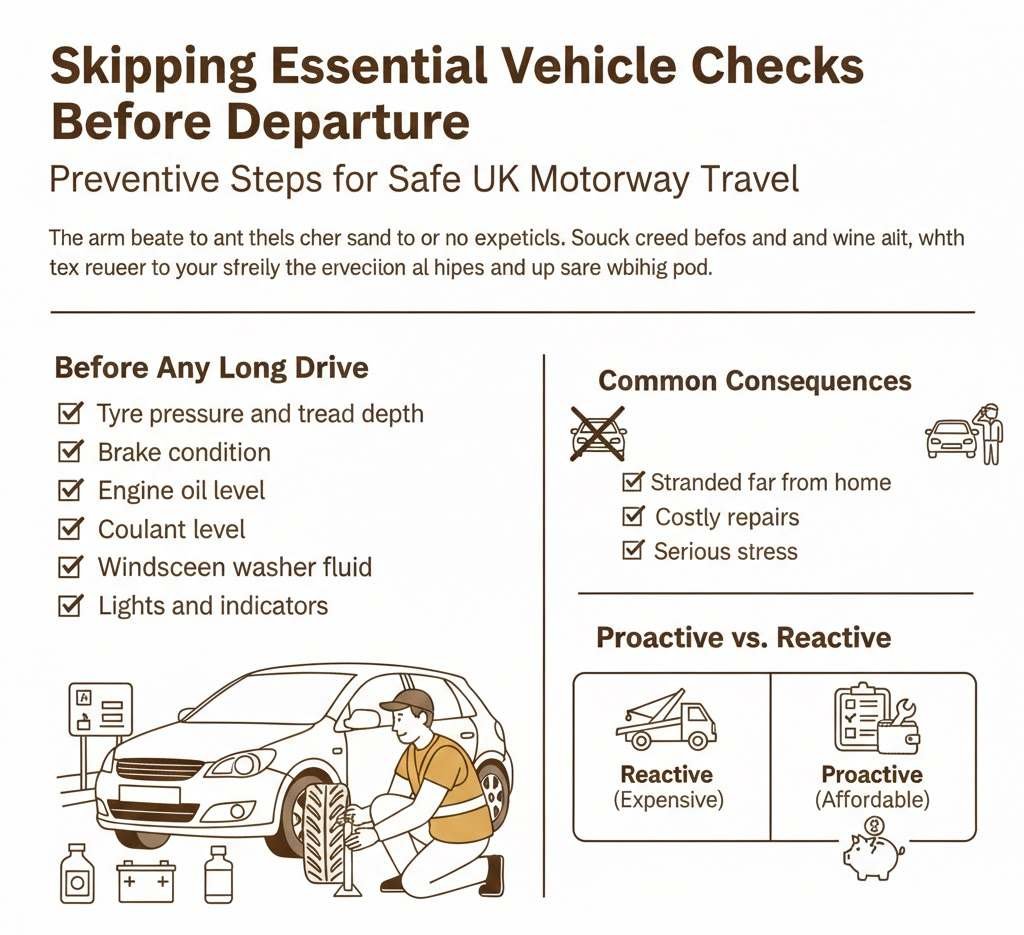
One of the biggest mistakes happens before the journey even begins. Many drivers assume their car is ready for long-distance travel without performing basic checks.
Before any long UK drive, especially motorway travel, you should inspect:
- Tyre pressure and tread depth
- Brake condition
- Engine oil level
- Coolant level
- Windscreen washer fluid
- Battery health
- Lights and indicators
Even a minor mechanical issue can worsen during extended motorway driving at high speeds. A worn tyre or weak battery might seem manageable locally, but on a long journey, it could leave you stranded far from home.
Emergency roadside recovery, last-minute hotel bookings, and urgent mechanical repairs typically cost far more than preventive servicing.
A simple pre-trip inspection can save hundreds of pounds and prevent serious stress.
Forgetting Essential In-Car Supplies
Breakdowns are not the only concern. Long road trips also require basic practical preparation inside the vehicle.
According to travel preparation advice shared by Southern Living, useful road trip essentials include:
- Snacks and drinking water
- Portable phone chargers
- Trash bags
- Wipes and hand sanitiser
- Sunglasses
- Basic medication kit
- Offline entertainment like audiobooks
For UK travellers, you should also consider adding:
- High-visibility jacket
- Warning triangle
- Phone mount for navigation
- Printed emergency contacts
- Paper map in case the signal fails
These items are inexpensive but extremely valuable during delays, traffic jams, or breakdown situations.
Not Carrying the Correct Vehicle Documents
Documentation problems can quickly become costly if you are stopped or involved in an incident.
Always carry:
- Valid driving licence
- Vehicle registration document
- Proof of insurance
- MOT certificate if applicable
- Roadside assistance details
If travelling from the UK to Europe, you may also need:
- Passport
- UK identifier on your vehicle
- European breakdown cover
- Travel insurance
Digital copies stored on your phone are useful, but physical copies remain important if your phone battery dies or the signal is unavailable.
Failing to Research Rest Stops and Local Services
Many drivers rely entirely on spontaneous decisions when travelling. While flexibility is part of the fun, a complete lack of planning increases both safety risks and potential expenses.
Planning rest points allows you to:
- Avoid fatigue-related driving errors
- Reduce accident risk
- Prevent rushed decisions when tired
- Locate affordable fuel stations
- Identify reliable food stops instead of overpriced motorway options
More importantly, knowing which hospitals, mechanics, and emergency services are nearby along your route can save valuable time if something goes wrong.
For example, travellers driving abroad in unfamiliar regions of the United States or Europe may not know where to seek legal help after an accident. In serious situations, contacting a Collinsville car accident lawyer or similar local legal professional could help handle insurance claims and compensation processes.
Preparation does not remove spontaneity. It simply provides a safety net.
Overloading Your Driving Schedule
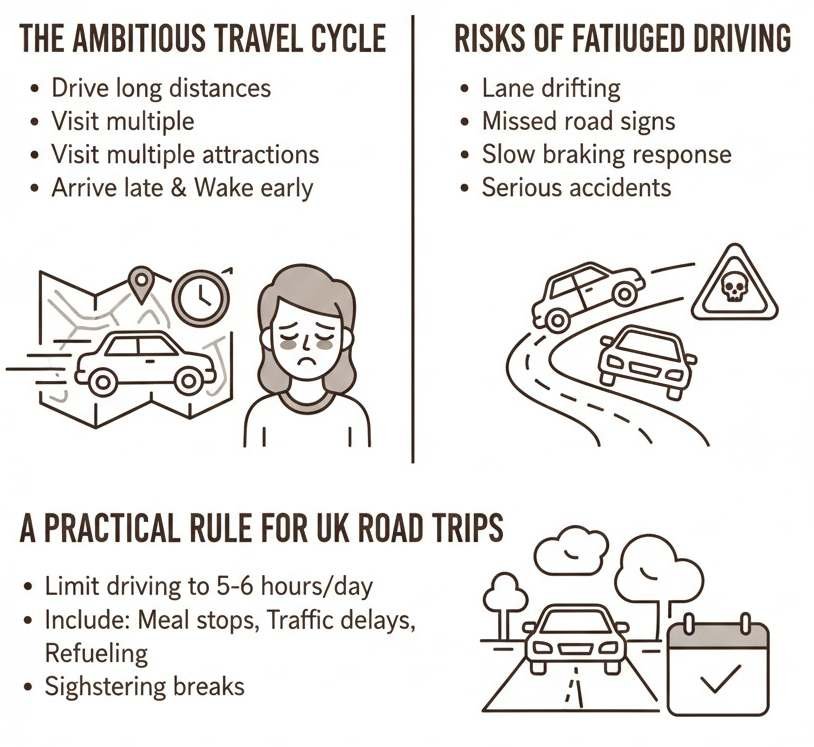
Many road trips fail because their itineraries are too ambitious.
Travellers often try to:
- Drive long distances
- Visit multiple attractions
- Arrive at the accommodation late
- Wake early and repeat the cycle
Fatigue builds slowly but significantly affects reaction time, judgment, and focus.
Tired driving increases the risk of:
- Lane drifting
- Missed road signs
- Slow braking response
- Navigation errors
- Serious accidents
A practical rule for UK road trips is:
Limit driving to five or six hours per day whenever possible.
This should include:
- Meal stops
- Traffic delays
- Refuelling
- Sightseeing breaks
Allowing extra time also prevents panic when encountering:
- Roadworks
- Diversions
- seasonal congestion
- weather disruptions
A flexible schedule improves both safety and enjoyment.
Underestimating the True Cost of a Road Trip
Many people assume road trips are automatically cheaper than flights or trains. While driving can be economical, the real cost extends far beyond fuel.
Common overlooked expenses include:
- Motorway tolls in Europe
- Parking charges in cities
- Congestion zones such as London ULEZ
- Tourist attraction entry fees
- Higher food prices in travel hotspots
- Hotel price spikes during peak season
Surveys consistently show that the three largest road trip expenses are:
- Fuel
- Accommodation
- Food
But secondary costs, such as insurance upgrades, vehicle rental add-ons, or unexpected overnight stays, can quickly increase total spending.
A good strategy is to create a daily spending estimate and add a contingency buffer of at least 20 percent.
This removes financial stress when plans inevitably change.
Not Tracking Spending During the Trip
Budget problems often happen because travellers stop monitoring expenses once the trip begins.
Tracking spending in real time helps you:
- Adjust daily food spending
- Choose cheaper parking options
- Skip unnecessary paid attractions
- Identify fuel price differences between areas
You do not need complex tools. A simple phone budgeting app or even a notes list tracking:
- fuel
- food
- accommodation
- parking
- entertainment
can keep your trip financially under control.
Final Thoughts
Road trips offer independence, flexibility, and unforgettable experiences. For UK travellers, especially, they remain one of the best ways to explore countryside routes, coastal drives, and cross-border European adventures.
But the difference between a memorable holiday and an expensive disaster usually comes down to preparation.
Checking your vehicle, setting realistic driving limits, preparing emergency essentials, researching rest stops, and budgeting accurately can help prevent the most common, costly mistakes.
With thoughtful preparation, your road trip will deliver exactly what it should: freedom, discovery, and lasting memories rather than unexpected bills.