
Most garden advice arrives in April. By the time the clocks go back, the magazines have moved on to slow cookers and log burners, and the average British garden is quietly left to fend for itself through five months of rain, wind and the odd unkind frost. That is the wrong way round. Autumn is when the decisions actually get made. What you do in the third week of October largely determines what is still standing in March.
It also helps to be honest about what a British winter is. We rarely get the sustained continental deep freeze that kills things outright. What we get is wet. Weeks of saturated ground, mild spells that trick plants into pushing out soft growth, then one clear still night that catches them with their guard down. Far more is lost in a UK garden to rot and waterlogging than to cold alone. Plan for water first and temperature second, and the whole job becomes easier.
Know Which Kind Of Cold You Are Actually Dealing With

A forecast of 3°C sounds harmless. It is not, and understanding why will save you a few plants a year.
The Met Office draws a useful distinction in its explanation of how frost forms. An air frost is when the air temperature itself drops to or below freezing. A ground frost is ice forming on soil, paving, or plants whose surface has dropped below freezing, and because the ground loses heat faster than the air above it, you can get one without the other. There is also the unofficial grass frost, where lawns and borders freeze while the pavement and the road stay clear. That last one can catch gardeners out as late as May.
The practical rule of thumb: if the forecast overnight low is anywhere between 0°C and 4°C, and the sky is clear with light winds, assume there will be frost on the grass and on the compost in your pots by morning. Broadcast temperatures are air temperatures, measured well above the ground. Your borders are colder than that.
Match Your Planting To Reality, Not Optimism
The Royal Horticultural Society publishes a nine-band hardiness rating running from H1a for tropical plants that need heated glass through to H7 for things that shrug off below minus twenty. It is genuinely useful, and worth checking before you buy rather than after.
One caveat that labels rarely spell out: a hardiness rating describes cold tolerance and nothing else. A Mediterranean shrub rated to survive minus ten in dry, free-draining conditions may still rot out at minus two if it spends February sitting in cold, sodden clay. On heavy soils across much of the Midlands and the south-east, drainage is the variable that decides survival, not the thermometer.
Local conditions cut the other way too. Urban gardens run noticeably warmer than the surrounding countryside, and a sheltered, south-facing wall can carry a plant through a winter that would finish it off twenty metres away in the open. Learn the warm corners of your own plot and use them.
Choose Furniture That Can Take A Wet Winter
Outdoor furniture in Britain spends far more of the year being rained on than sat on, which should shape the buying decision more than it usually does. Look for garden furniture constructed from durable materials rather than whatever looks good on a bright day in a showroom.
Dense hardwoods such as teak, acacia and eucalyptus handle damp well and will silver gracefully if you let them. Powder-coated aluminium is light, will not rust, and is a sensible choice if you move things about. Stainless steel is excellent, though if you live within sight of the sea it is worth checking the grade, as the higher marine grades resist salt corrosion far better than the standard ones. Synthetic rattan woven onto an aluminium frame is a reasonable all-rounder.
The original warning about plastic deserves a small correction. Ultraviolet light does degrade polymers, and cheap unstabilised plastic will go chalky, fade and turn brittle within a few seasons. Modern UV-stabilised resin furniture is a different proposition and lasts perfectly well. The material to genuinely avoid is untreated softwood, which will be soft and green at the joints inside two winters, and thin mild steel, which rusts from the inside out where you cannot see it.
Whatever you choose, cushions come indoors. And if you use covers, make sure they are breathable or vented, because a sealed cover over damp timber does more harm than leaving the furniture bare.
Feed The Soil Before It Locks Up
Mulching is the single highest-value autumn job, and most people either skip it or do it too thinly to matter. The RHS guidance on mulching with organic matter recommends a layer at least 5cm deep, applied any time from late autumn through to late winter.
For estimating quantities, one standard 70-litre bag covers roughly a square metre at that depth, and a cubic metre of material will do somewhere between fifteen and twenty square metres. Garden compost, well-rotted manure, composted bark and homemade leaf mould all work.
Two things to get right. Do not mulch when the soil is frozen or genuinely squelchy, because you will seal in the wrong conditions. And keep the material pulled back an inch or two from stems, trunks and the crowns of perennials, since piling wet organic matter against a stem is a reliable way to rot it.
Deal With Containers Properly
Pots are the most vulnerable things in the garden, because their compost freezes from all sides rather than just the top.
Raise them onto pot feet or a couple of tiles so water drains away instead of sitting in the base and freezing around the roots. Then group them in a sheltered spot, ideally against a house wall, where they insulate one another and pick up a little warmth from the building. Terracotta and unglazed ceramic need extra thought, as water absorbed into the clay expands when it freezes and cracks the pot from within, so wrap anything you care about in hessian or bubble wrap.
Genuinely tender specimens are better lifted or moved under cover altogether. The RHS sets out the options for overwintering tender plants, including which things are worth lifting and storing dormant rather than trying to nurse through outdoors.
Tidy With Intent, Not Enthusiasm
There is a difference between a tidy garden and a sterile one, and autumn is where people usually overshoot.
Clear leaves from lawns, where a wet mat will kill the grass beneath it, from paths where they become a genuine slip hazard, and from the crowns of perennials. Everywhere else, leave them. The Woodland Trust makes the case well in its guide to putting fallen leaves to use, noting that leaf litter shelters everything from ladybirds and toads to hedgehogs over winter. What you do gather up costs nothing to turn into leaf mould: pile the leaves into a wire cage or a bin bag with a few holes punched in it, keep them damp, and forget about them for a year or two—no turning required. Deciduous leaves break down considerably faster than evergreen ones, so keep them in separate heaps if you have both.
The same restraint applies to bonfires, particularly around 5 November. A pile of branches and leaves left standing for a week is, to a hedgehog, an ideal hibernaculum, and their instinct when threatened is to curl up rather than run. Hedgehog Street’s bonfire guidance is blunt about the fix: build the fire on the day you intend to light it, or if it is already stacked, move it and rebuild it somewhere else before striking a match.
Tools are the other autumn casualty. Secateurs left out under leaf litter will be pitted by February, hoses left connected will freeze and split, and outdoor taps need isolating and lagging. A decent garden storage box solves most of this in one go, and the weatherproof ones are perfectly happy left outside on a patio, which matters if you have not got a shed. Clean and oil metal tools before they go away rather than after.
Get Ahead Of The Water
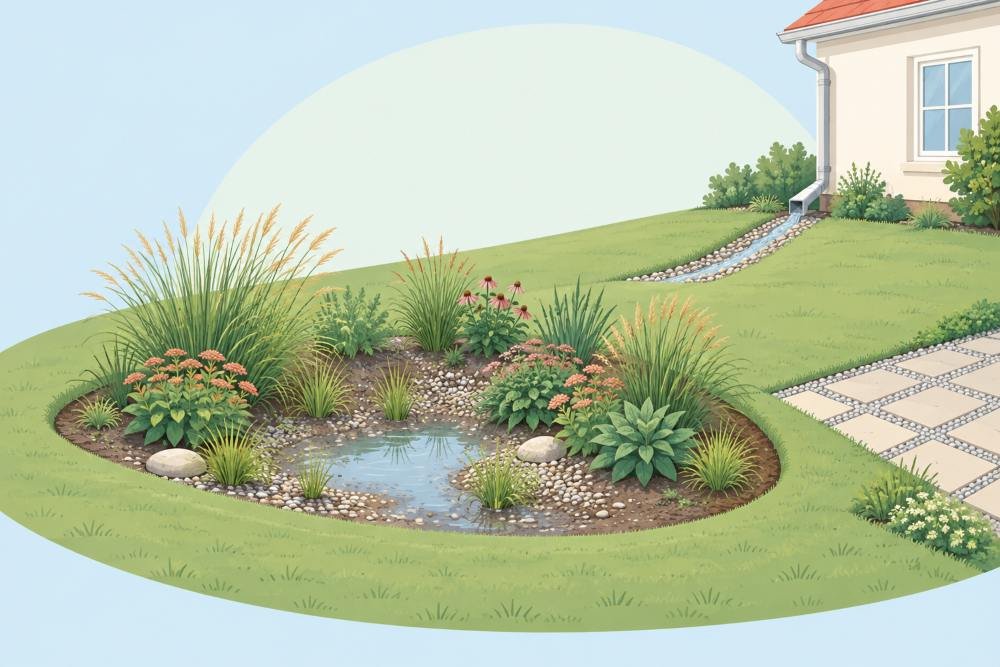
If your garden puddles, sits wet for days, or sends run-off towards the house, autumn is the time to deal with it.
Start by finding out what you are up against. The government’s service to check the long-term flood risk for an area covers England and reports risk from rivers, the sea, surface water, groundwater and reservoirs. Wales and Scotland have their own equivalents through Natural Resources Wales and SEPA respectively. It is a broad indicator rather than a property-level verdict, but it tells you whether surface water is a live concern in your area.
For the garden itself, the fixes are mostly about giving water somewhere to go. Gravel and permeable paving let rainfall soak away instead of running off. A shallow planted depression, or rain garden, will take run-off from a roof or a patio and hold it while it drains. Grading a lawn so it falls away from the house is often all that is needed.
This is also a point of law worth knowing. In England, hard surfacing more than five square metres of a front garden only counts as permitted development if the surface is permeable, or if run-off is directed to a lawn or border within the property. Otherwise, you need planning permission. The full guidance on permeable surfacing of front gardens explains the options, and the rules exist precisely because paved-over front gardens overwhelm drains during heavy rainfall.
Finish with the unglamorous jobs. Clear gutters and downpipes, lift the gratings on gullies and pull out the silt, and check that soakaways have not clogged.
Do It Before The First Named Storm
Every autumn the Met Office starts working through its storm list, and every autumn a predictable number of fence panels end up two gardens away. Walk the boundary now. Press against each post at the base, because that is where rot starts, and replace or brace anything that flexes. Check greenhouse panes and clips, secure trellis and arches, weigh down or fasten water butt lids, and firm in any shrub planted this year, since wind rocking a young plant opens a socket around the stem that fills with water and finishes it off.
None of this is expensive, and almost none of it needs a specialist. It is a weekend of unremarkable work that buys you a garden which comes back in spring rather than one you have to rebuild.
Disclaimer: This article is provided for general information only and does not constitute professional horticultural, structural, drainage or planning advice. Planning rules, permitted development rights and flood risk services differ between England, Wales, Scotland and Northern Ireland, and may change over time. Always confirm current requirements with your local planning authority, and consult a qualified professional for site-specific drainage, tree or structural work.