
Instant play games have changed how people use online entertainment. The old pattern was simple but slow. A user found a game, downloaded an app, waited for installation, accepted updates, created an account, and then finally reached the first moment of play. Today, that feels like too much effort for many people.
Modern users want quicker access. They want to open a link, tap once, and begin. This does not mean people have become less interested in games. It means their expectations have changed. In the UK, where daily life is often shaped by commuting, work breaks, family responsibilities, and mobile browsing, entertainment needs to fit into smaller gaps of time.
Instant play works because it removes delay. It gives people a way to enjoy a short session without making it feel like a commitment. Whether someone is waiting for a train, taking a tea break, sitting at home after work, or scrolling through social media in the evening, the experience needs to begin quickly and feel easy to leave when life continues.
Why Instant Play Has Become So Popular
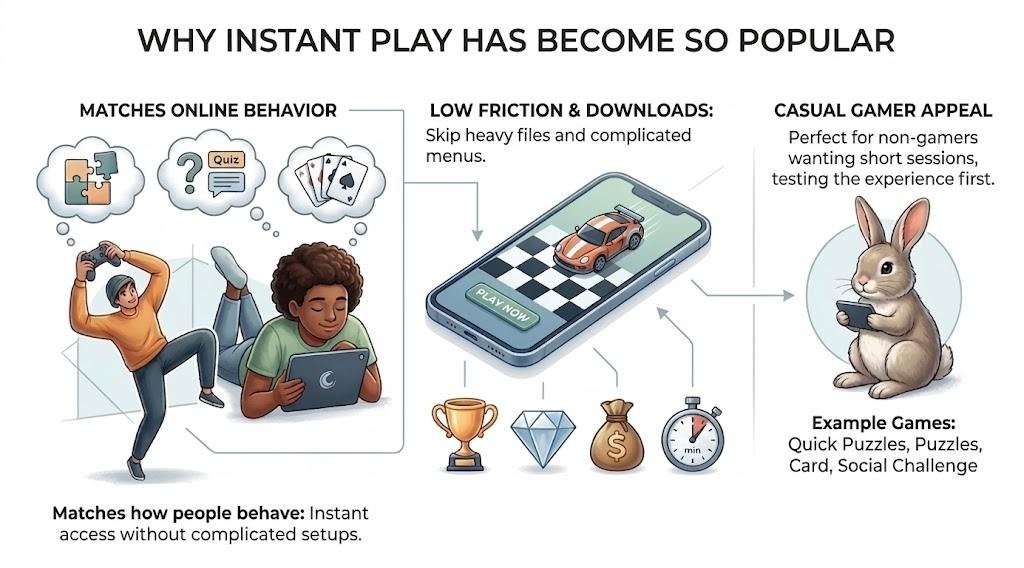
Instant play games are popular because they match how people already behave online. Most users do not want to fight through complicated menus or heavy downloads before deciding whether a game is worth their time. They want to test the experience first.
This is especially important for casual users. A person may not think of themselves as a regular gamer, but they may still enjoy a quick puzzle, quiz, card game, social challenge, or simple interactive experience. Instant play makes that possible without asking for too much upfront.
For example, a platform or lightweight game library such as Tamasha game fits into this wider shift because the focus is on fast access, short sessions, and simple user journeys rather than long setup processes.
First Few Seconds Matter Most
The first few seconds often decide whether a user stays or leaves. If the game opens slowly, asks for too much information, or pushes the User into confusing screens, the moment is lost.
People are used to fast digital experiences. They can order food, check bank balances, stream music, send money, and watch short videos with very little friction. The same standard now judges online games.
A strong instant play experience makes the first action easy. The User should understand what to do almost immediately. It does not need to explain everything at once. It only needs to help the User reach a meaningful first moment.
| Poor First Experience | Better Instant Play Experience |
|---|---|
| Long loading screen before anything happens | Game opens quickly with a clear first action |
| Forced sign up before trial | User can explore or preview before committing |
| Confusing lobby or menu | User lands near the game mode they selected |
| Too many pop ups | Clean screen with one clear next step |
| No progress saved | User can pause, leave, and return easily |
When the first moment feels smooth, users are more likely to continue. When it feels slow or confusing, they leave before the product has a chance to prove itself.
Why Short Sessions Are Now Valuable
Online engagement used to be measured mainly by long sessions. If a user stayed for an hour, that looked successful. But modern digital behaviour is different. A person may return several times a day for short sessions instead of playing once for a long time.
This is where instant play becomes powerful. A five-minute session can still be valuable if the User enjoys it and returns later. The goal is not always to keep someone locked in for hours. The better goal is to make the experience useful, enjoyable, and easy to revisit.
For UK users, this fits naturally into real life. Many people have busy routines, short breaks, and limited attention after work. They may not want a deep gaming session every time. They may want a quick moment of entertainment that feels light and easy.
Designing for Everyday UK Habits
A UK audience often expects digital products to feel practical. People want clear costs, simple controls, privacy settings, mobile-friendly screens, and easy access. If something feels too aggressive or confusing, trust drops quickly.
Instant play games should respect the way people actually use their devices. Many users play on mobile, not on a large desktop screen. Some play on older phones. Some have weaker connections while travelling. Others may be switching between messages, work emails, family chats, and social apps.
This means the design must be simple, responsive, and forgiving. If a call comes in, the User should not lose everything. If the network drops for a moment, the game should recover where possible. If the User closes the browser, returning should not feel like starting from zero.
Deep Links Make Access Easier
Deep links are one of the biggest reasons instant play feels so natural. A good link should take the User directly to the relevant place, not just to a homepage.
If someone shares a challenge, room, round, or event, the link should open that specific experience. This saves time and keeps the original context alive.
A weak link creates friction. The User taps because they expect one thing, then lands somewhere general and has to search. Many users will not bother.
A strong, deep link feels like a shortcut. It understands the User’s intention and reduces the number of steps between interest and action.
Social Sharing Is Changing Discovery
People often discover games through friends, creators, short videos, group chats, and social feeds. This is different from the older model, where users searched app stores or browsed large catalogues.
When a friend shares a clip or a challenge, the moment already has trust. The User is more likely to try it because it came from someone familiar. But that trust only lasts for a short time. If the link is slow, broken, or confusing, the User moves on.
This is why instant play and social sharing work well together. The social post creates interest, and the instant play format turns that interest into action before the User gets distracted.
Fairness Matters More Than Fancy Graphics
Good graphics are useful, but they are not enough. Many users care more about whether the game feels fair, responsive, and easy to understand.
If the screen freezes, taps feel delayed, or results are unclear, users may feel frustrated. Even if the design looks impressive, poor response time can make the experience feel unfair.
For casual users, fairness often means simple things. The rules should be clear. The controls should respond quickly. Any rewards, points, prizes, or progression should be explained in plain language. The User should not feel tricked or pushed into actions they did not understand.
Personalisation Should Feel Helpful, Not Intrusive
Personalisation can improve engagement when it is done carefully. A game might suggest modes the User enjoyed before, remember their progress, adjust difficulty, or show relevant events.
However, personalisation can feel uncomfortable if it seems too aggressive. UK users are increasingly aware of how platforms use data. They may not object to useful recommendations, but they do want clear settings and control.
The best personalisation feels like assistance, not surveillance. It helps the User find what they want faster. It does not pressure them, over-message them, or make them feel watched.
Accessibility Should Be Built Into the Experience
Accessibility is not only for a small group of users. It improves the experience for everyone.
Large buttons help people play on small screens. High contrast helps in bright daylight. Captions help users who are in public places or cannot use sound. Simple language helps users who are new to the game. Reduced motion settings help people who dislike fast animations.
Instant play games are often used in different environments, not just quiet rooms. Someone might be on a bus, in a cafe, at home with family around, or outside in bright light. A product that works well in all these situations will reach more people.
Payments Must Be Clear and Honest
If an instant play game includes payments, the process must be transparent. Nothing damages trust faster than unclear pricing, hidden charges, confusing subscriptions, or pressure-based checkout design.
Users should know what they are paying for before they confirm. If there are optional extras, these should be explained clearly. If a product includes paid features, upgrades, entries, or digital items, the difference between free and paid access should not be hidden.
For UK readers, this is especially important because many households are careful with spending. A product that makes costs clear is more likely to build long-term trust than one that tries to push quick purchases.
Responsible Play Builds Long-Term Trust
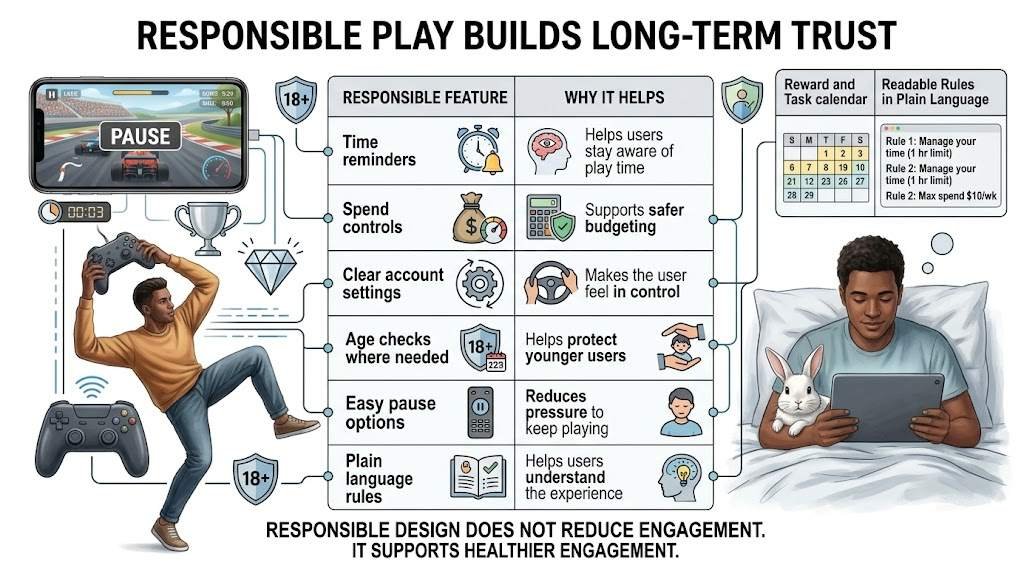
Instant access can be positive, but it also creates responsibility. If a game is easy to start, it should also be easy to pause, limit, or leave.
Responsible play features should be part of the product, not hidden away in a policy page. Users should be able to manage time, spending, notifications, and account settings without difficulty.
This matters even more when games include purchases, prizes, competitive elements, or real money features. Clear limits, age-appropriate access, and simple support options help protect users and make the platform feel more trustworthy.
| Responsible Feature | Why It Helps |
|---|---|
| Time reminders | Helps users stay aware of play time |
| Spend controls | Supports safer budgeting |
| Clear account settings | Makes the user feel in control |
| Age checks where needed | Helps protect younger users |
| Easy pause options | Reduces pressure to keep playing |
| Plain language rules | Helps users understand the experience |
Responsible design does not reduce good engagement. It supports healthier engagement.
What Product Teams Should Learn From Instant Play
Instant play is not only about making games faster. It is about respecting the User’s time.
Product teams should think carefully about every step between interest and action. Is the User forced to wait? Are they asked for information too early? Do they understand what to do? Can they leave without losing progress? Can they return without confusion?
The strongest instant play products are often the ones that feel simple on the surface but are carefully designed underneath. They remove unnecessary steps, reduce frustration, and make each small session feel worthwhile.
Why Trust Is Central to Engagement
Trust is one of the most important parts of online engagement. A user may try a game once because it loads quickly, but they will only return if the experience feels reliable.
Trust comes from small details. The game opens when expected. Links work properly. Rules are clear. Payments are transparent. Settings are easy to find. The experience does not pressure the User unfairly. Support is available when something goes wrong.
For UK audiences, trust can be the difference between a one-time visit and a regular user. People are more likely to return when they feel respected.
Future of Instant Play Games
Instant play is likely to keep growing because it fits modern digital behaviour. People want quick access, smooth performance, and less commitment at the start.
As mobile browsers, cloud systems, payment tools, and social sharing improve, instant play could become common across more areas of entertainment. It may also influence learning apps, quizzes, interactive media, sports engagement, and community platforms.
The most successful platforms will not only be the fastest. They will be the ones who combine speed with fairness, accessibility, safety, and trust.
Final Thoughts
Instant play games are reshaping online engagement because they remove wasted steps. They make it easier for users to move from interest to action, enjoy short sessions, and return later without pressure.
For UK users, this approach makes sense. Life is busy, attention is divided, and people expect digital products to work quickly. A good instant play experience fits around the User instead of demanding too much from them.
The future of online engagement will belong to platforms that respect time, reduce friction, explain costs clearly, protect users, and make every short session feel useful. Instant play is not just about faster gaming. It is about building digital experiences that feel easier, fairer, and more human.
Disclaimer
This article is for general information and editorial purposes only. It should not be treated as legal, financial, gambling, investment, or professional advice. Online games and instant play platforms can vary in terms of age rules, payment features, data use, safety tools, and user protections. UK readers should always check the terms, privacy policy, age requirements, spending controls, and safety features of any platform before using it. Where a game involves real money, prizes, betting, or gambling-style features, users should only use legally permitted platforms and should play responsibly.