
I try not to chase every device that lands in London, partly because a good number of them have quietly vanished within eighteen months. This one held my attention for a slightly awkward reason: almost everything written about it in the UK so far describes it incorrectly, and the error is not cosmetic.
XERF has arrived in Britain, with a Mayfair practice among the first to publicise it. It is being marketed as a non-surgical way to tighten skin at a depth most non-invasive devices cannot reach, with no needles, no incisions and no numbing cream. That much appears to hold up. The bit that does not is the word attached to it in nearly every headline.
First, It Is Not A Laser
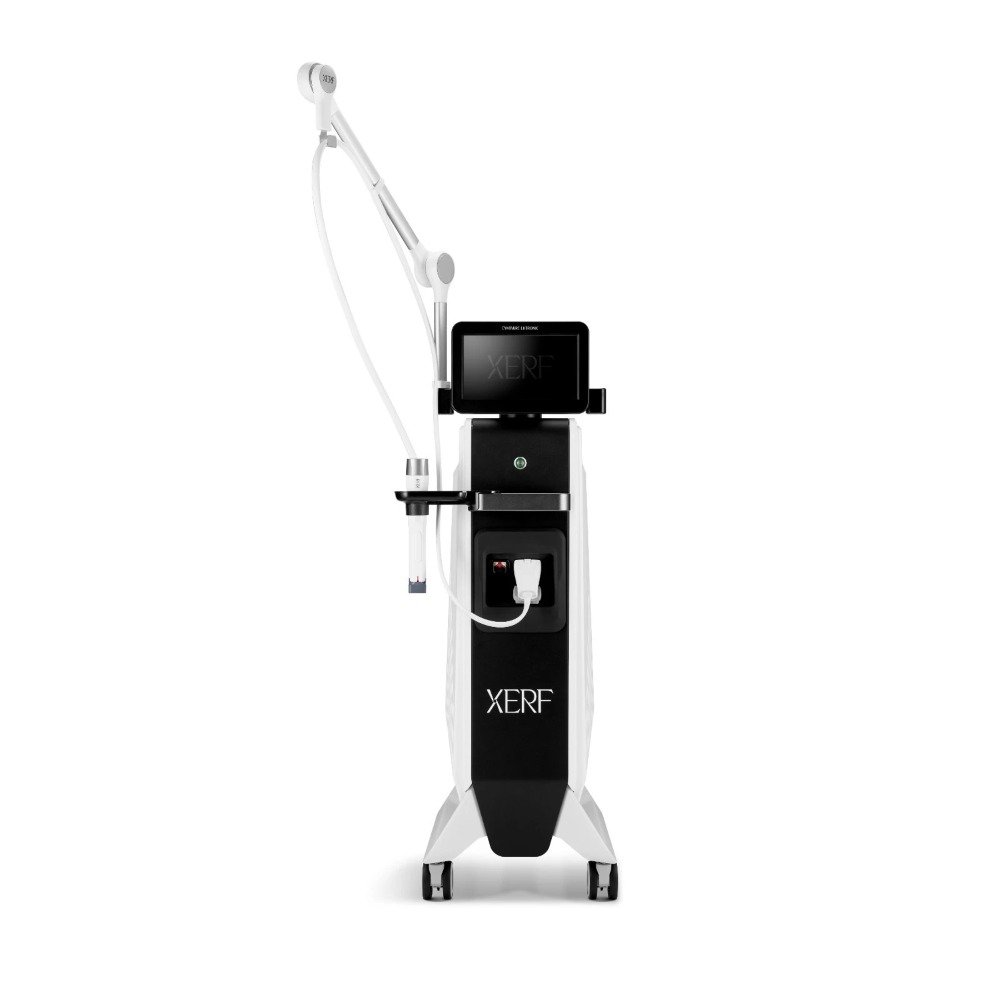
XERF stands for eXtra Enhanced Radiofrequency. It is a dual-frequency monopolar radiofrequency device made by Cynosure-Lutronic, developed in South Korea, and it contains no laser at all. A laser works by delivering light energy that is absorbed by a target in the skin. Radiofrequency works by passing an electrical current through tissue and generating heat through resistance. They are different physics with different risk profiles.
This is not pedantry. The single most repeated selling point for XERF is that it suits a wide range of skin tones, and the reason given is usually that it is heat-based rather than light-based. That reasoning is sound, but only because the device is radiofrequency. If it were a laser, the argument would collapse, because light-based devices can be absorbed by melanin and carry a real risk of burns and post-inflammatory hyperpigmentation in deeper skin tones. Anyone with Fitzpatrick type IV to VI skin deciding on the strength of that sentence deserves to know which technology it actually refers to.
The label has stuck regardless, which is why the clinic’s own treatment page is listed as XERF laser in London and why that is how most people will search for it. Worth knowing what is under the bonnet all the same.
What The Two Frequencies Are Meant To Do
The device delivers two frequencies within a single pulse. The 6.78 MHz frequency works on the upper and mid dermis, the layer associated with surface texture and fine lines. The 2 MHz frequency is designed to travel deeper, toward the superficial musculoaponeurotic system, or SMAS.
The SMAS is a sheet of fibrous tissue and muscle sitting beneath the fat of the face, and it is genuinely the layer a surgeon repositions during a facelift. That anatomical fact is accurate, and it is what makes the device interesting. What it does not mean is that heating a structure produces the same outcome as surgically lifting and re-anchoring it. Radiofrequency causes collagen to contract and then remodel over months. A facelift removes and repositions tissue. Anyone presenting the two as near-equivalents is overselling, and the UK advertising regulator takes a dim view of that sort of comparison.
Dr Hasaneen Al Janabi, the GMC-registered surgeon offering the treatment from his Mayfair practice, has put the case more carefully in press material, describing the depth XERF reaches as “a meaningful difference in how the results tend to look and last” compared with devices that work on surface layers. That is a claim about degree rather than a claim about equivalence, which is the right framing.
What The Evidence Actually Shows, Which Is Not Much Yet
Here is the part the marketing skips. XERF is new, and the published evidence base is correspondingly thin.
There is a retrospective evaluation published in Lasers in Medical Science looking at a single treatment session with three-dimensional imaging and validated patient questionnaires, which is a reasonable start. A separate paper on periorbital treatment is refreshingly honest about its own limits, with the author stating plainly that the observations are anecdotal and should not be read as evidence-based conclusions. A prospective safety and efficacy study of 40 participants is currently underway, single-arm and unmasked.
For comparison, Thermage and Ultherapy, the two devices XERF is usually measured against, have well over a decade of published data each. That does not make XERF ineffective. It means nobody can yet tell you with confidence how it performs at three years, or how it compares head to head against the incumbents, because those studies have not been done. Treat the twelve- to twenty-four-month durability figure circulating in UK coverage as a manufacturer expectation rather than a demonstrated outcome.
What A Session Involves
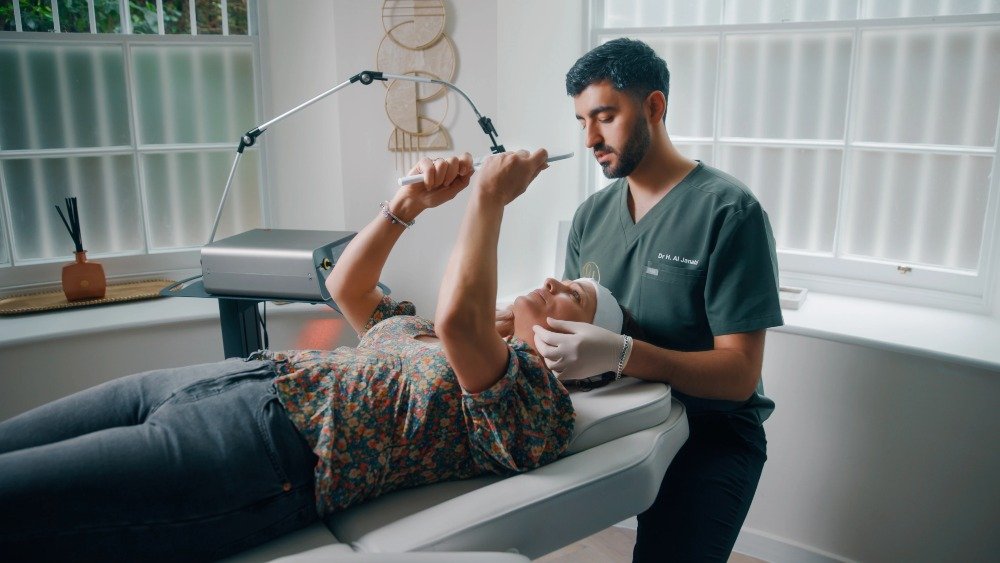
Between 45 and 90 minutes, depending on the areas treated. Built-in cryogen cooling runs alongside the energy delivery, which is why most patients are treated without numbing cream and describe the sensation as building warmth rather than pain. There is no meaningful downtime beyond possible redness for a few hours, and you can go back to work afterwards.
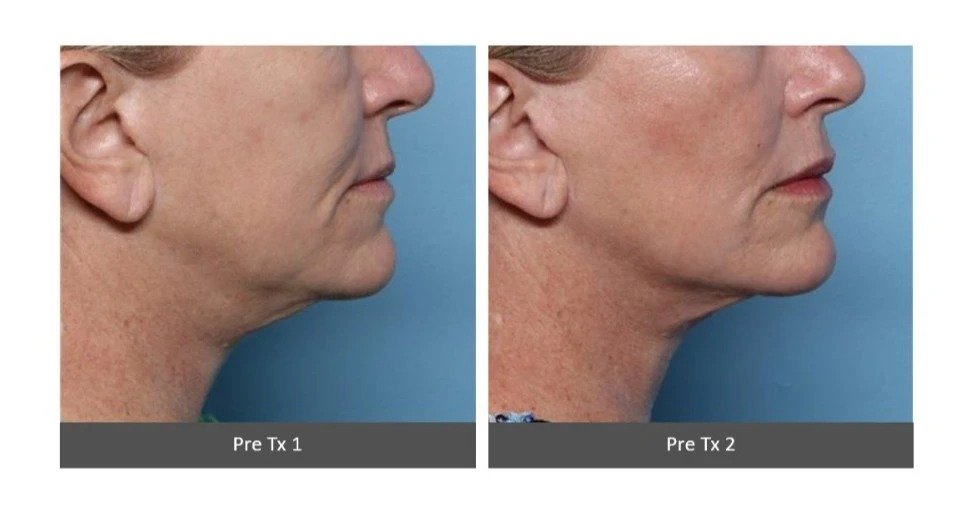
Nothing much happens immediately. Collagen remodelling is slow, and improvement typically builds across three to six months. If someone promises you a visible lift walking out of the room, be sceptical.
“FDA-Cleared” Is Not A UK Approval
This one matters, and almost nobody spells it out. UK clinics, including this one, describe the system as FDA-cleared. That is true, and it is a US regulatory status with no legal force in Britain.
What governs a medical device here is UKCA or CE conformity marking and registration with the MHRA. The CAP Code, which sets the rules for UK advertising, is explicit that medical claims may be made for a device carrying the applicable conformity marking. FDA clearance is not that marking. It is perfectly reasonable to ask a clinic to confirm the device they are using holds UK conformity marking, and a good clinic will answer without blinking.
Note also that FDA clearance, as opposed to approval, generally means a device was shown to be substantially equivalent to something already on the market. It is a lower bar than most consumers assume.
Who It Suits, And Who Should Wait
The people it appears best suited to are in their late thirties through fifties with mild to moderate laxity along the jawline or neck, who are not ready for surgery. It is also used by people maintaining the results of a previous facelift. Younger patients sometimes use it preventatively, though the evidence for prevention as distinct from treatment is essentially absent.
If your laxity is significant, and particularly if there is real excess skin rather than loss of tone, no energy device is going to fix it. A consultation that tells you this honestly is worth more than one that sells you three sessions.
Because it is monopolar radiofrequency, there are specific contraindications that do not apply to light-based treatments, including implanted electronic devices such as pacemakers and defibrillators, and metalwork in the treatment field. Pregnancy and active skin infection in the area are also standard exclusions. None of this is exotic, but it does need to be asked about properly rather than ticked off on a form.
The Regulation Gap Nobody Mentions
Britain does not yet have a licensing scheme for non-surgical cosmetic procedures. Section 180 of the Health and Care Act 2022 created the power to introduce one, the Department of Health consulted in 2023, and the government published its response in August 2025, setting out a red, amber and green risk model, with energy-based devices expected to land in the amber tier. As the House of Commons Library briefing records, further consultation is expected, and the scheme is not in force. Scotland is moving on its own track and has legislated separately.
In practical terms, that means that today there is no legal barrier to a person with minimal training buying an energy device and pointing it at your face. The protections that exist are indirect: professional registration, premises regulation and voluntary standards.
So check three things: that the practitioner is on the relevant professional register, which for a doctor means the GMC, whose guidance for doctors offering cosmetic interventions sets out what you are entitled to expect around consultation and consent that the clinic is registered where registration applies, which the NHS guidance on choosing who does your cosmetic procedure explains clearly. And that the practitioner appears on a voluntary register such as the Joint Council for Cosmetic Practitioners, which is not a legal requirement but is a reasonable proxy for someone taking standards seriously.
On that last point, Dr Hass Clinic is a surgeon-led aesthetic clinic in London on Hill Street in Mayfair, and treatments are performed by the doctor rather than delegated. Given how new the device is in Britain and how few practitioners have completed training on it, that list of available clinics is likely to stay short for a while.
What I Would Ask Before Booking
Does the device hold UK conformity marking, and can you show me? Who performs the treatment, and what training have they had specifically on this system? What is the total cost, including any recommended follow-up, given that pricing here is quoted only after consultation? What happens if I am not satisfied? And what would you recommend instead if I am not a good candidate?
If the answer to the last one is “everyone is a good candidate”, go somewhere else.
Disclosure: this article was produced in association with Dr Hass Clinic. It has not been reviewed or approved by the clinic prior to publication, and the assessment of the evidence is the author’s own.
This article is for general information and is not medical advice. It does not constitute a recommendation for any treatment or provider. Non-surgical cosmetic procedures carry risks, outcomes vary between individuals, and no result can be guaranteed. Always have a face-to-face consultation with a suitably qualified and registered practitioner, and check current regulatory requirements, before proceeding.
References
- Cynosure-Lutronic. XERF: structural skin tightening. Manufacturer product information, dual-frequency monopolar radiofrequency at 6.78 MHz and 2 MHz. https://www.cynosure.com/xerf/
- Erlich, G., Dahan, E. and Wolf, Y. Objective and subjective retrospective evaluation of XERF, a novel single-shot dual-frequency non-invasive monopolar radiofrequency. Lasers in Medical Science, published 18 August 2026. DOI: 10.1007/s10103-026-04996-0. https://www.ncbi.nlm.nih.gov/pmc/articles/PMC13486139/
- ClinicalTrials.gov. Safety and Efficacy Evaluation of the XERF Device for Aesthetic Treatments. Identifier NCT07585591, interventional, single group, 40 participants. https://clinicaltrials.gov/study/NCT07585591
- Committee of Advertising Practice / Advertising Standards Authority. Advertising guidance: the marketing of surgical and non-surgical cosmetic procedures. https://www.asa.org.uk/resource/cosmetic-interventions.html
- House of Commons Library. The regulation of non-surgical cosmetic procedures in England. Research Briefing CBP-10331. Health and Care Act 2022 s.180; DHSC consultation response, 7 August 2025. https://commonslibrary.parliament.uk/research-briefings/cbp-10331/
- General Medical Council. Guidance for doctors who offer cosmetic interventions. https://www.gmc-uk.org/professional-standards/the-professional-standards/cosmetic-interventions
- NHS. Choosing who will do your cosmetic procedure. https://www.nhs.uk/tests-and-treatments/cosmetic-procedures/advice/choosing-who-will-do-your-procedure/
- Joint Council for Cosmetic Practitioners. Practitioner register and standards. https://www.jccp.org.uk/