
Description
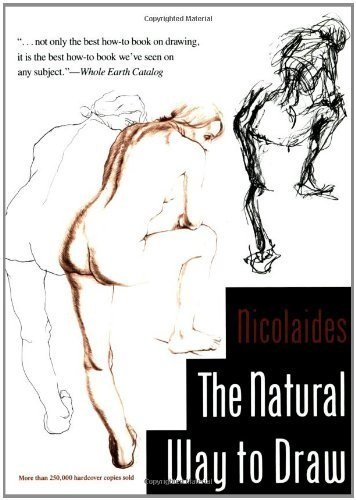
Naturally Drawn Lessons from The Natural Way to Draw
I expected The Natural Way to Draw by Kimon Nicolaïdes to explain how a naturally drawn line should look. Instead, I found a demanding programme built around observation, movement and repeated practice. Its exercises do not promise quick, polished results. They ask the student to slow down, look carefully and develop a physical connection between the subject, the eye and the drawing hand.
What I Learned and Why It Mattered
The most useful lesson was that drawing is not simply copying an outline. Nicolaïdes uses contour work to train sustained observation and gesture drawing to capture movement, energy and direction. These approaches helped me understand why a technically tidy sketch can still feel lifeless, while a rough study may communicate real action.
I also valued the book’s attitude towards imperfect work. Many exercises are training rather than finished art. Their purpose is to strengthen attention, memory and coordination. That reduced the urge to make every page presentable and connected naturally with modest acts of self-love through creative expression.
The structured practice needs patience. Exercises involving contour, gesture, memory, weight, composition and anatomy build upon one another, so progress comes through repetition rather than reading alone. This reminded me of the difficulty of balancing a passion project with a busy schedule. A shorter, consistent session may be more realistic than attempting the entire programme exactly as written and then giving up.
Who Should Read It
This book will suit serious beginners, self-taught artists and experienced sketchers who want disciplined observational training. It is especially useful for people interested in figure drawing and willing to repeat exercises without expecting immediate praise or attractive results.
However, it is not a light weekend guide. Some instructions assume access to a live model, significant practice time and traditional art materials. Modern readers may have to adapt the schedule, use willing friends, attend life-drawing sessions or select suitable household subjects.
I would also avoid treating creative practice as therapy. Drawing may feel calming and personally meaningful, but it does not replace professional mental health care. This distinction appears in my thoughts on activities that feel therapeutic without being therapy.
What Stayed With Me
What stayed with me was the belief that learning to draw begins with learning to see. The book values attention over decoration and honest practice over quick approval.
I finished feeling more naturally drawn to regular sketching without judging every page. Nicolaïdes made drawing seem less like a talent test and more like patient training. For me, that shift is valuable for artistic progress and self-care because it creates room for concentration, interest and quiet effort without forcing a perfect finished result.




Reviews
There are no reviews yet.