
Pregnancy, breastfeeding and major weight loss can change the body in ways that diet and exercise cannot always improve. For some women, the issue is not weight itself, but loose skin, stretched abdominal muscles, breast volume loss, or areas of stubborn fat that remain after a long health journey.
A Mommy Makeover is often discussed as a cosmetic solution, but it should be understood as planned surgery, not a quick beauty treatment. For UK readers, the decision needs careful thought around safety, recovery time, aftercare, travel, cost and long-term expectations.
What Is a Mommy Makeover?
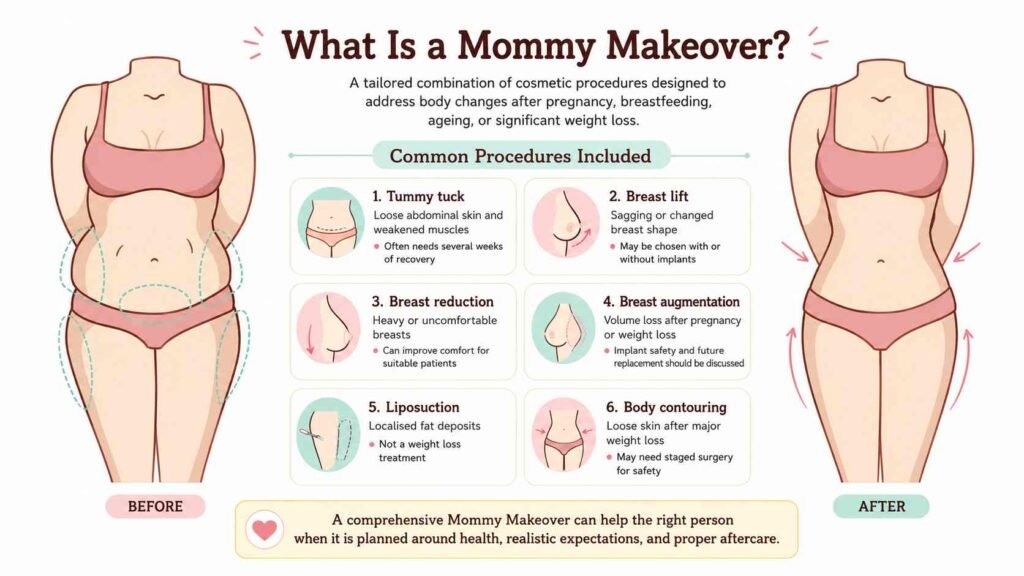
A Mommy Makeover is not one fixed operation. It is a tailored combination of cosmetic procedures designed to address body changes after pregnancy, breastfeeding, ageing, or significant weight loss.
The treatment plan depends on the patient’s body, health, goals and medical suitability. Some women need abdominal repair only, while others may combine tummy surgery with breast surgery or body contouring.
Common Procedures Included
| Procedure | What it may help with | UK reader note |
|---|---|---|
| Tummy tuck | Loose abdominal skin and weakened muscles | Often requires several weeks of recovery |
| Breast lift | Sagging or changed breast shape | May be chosen with or without implants |
| Breast reduction | Heavy or uncomfortable breasts | Can improve comfort for suitable patients |
| Breast augmentation | Volume loss after pregnancy or weight loss | Implant safety and future replacement should be discussed |
| Liposuction | Localised fat deposits | Not a weight loss treatment |
| Body contouring | Loose skin after major weight loss | May need staged surgery for safety |
A comprehensive Mommy Makeover can be helpful for the right person, but only when it is planned around health, realistic expectations and proper aftercare.
Why Women Consider It After Pregnancy or Major Weight Loss
Many women in the UK consider body contouring after they have finished having children, completed breastfeeding, or reached a stable weight after a major lifestyle change or bariatric surgery.
The aim is usually not to look different from others. It is often about feeling more comfortable in clothes, reducing skin-related discomfort, restoring body proportion, or addressing changes that cannot be improved through exercise alone.
1. It Can Address Loose Skin That Exercise Cannot tighten
After major weight loss, the skin may not fully shrink back, especially around the stomach, waist, breasts, arms or thighs. This can cause discomfort, rubbing, difficulty finding clothes that fit well, and frustration after months or years of effort.
A tummy tuck or body contouring procedure may remove excess skin and reshape the area. For some women, this helps their body feel more in line with the progress they have already made.
2. It May Repair Weakened Abdominal Muscles
Pregnancy can stretch or separate the abdominal muscles. This is often called diastasis recti. Some women notice a persistent bulge, weaker core support, or discomfort even after returning to exercise.
During abdominoplasty, the surgeon may repair the abdominal wall where suitable. This can improve the shape of the abdomen, but it is still major surgery and should not be viewed as a fitness shortcut.
3. It Can Restore Breast Shape After Pregnancy or Weight Loss
Breasts often change after pregnancy, breastfeeding or weight loss. Some women experience volume loss, sagging, asymmetry, or a heavier shape that affects comfort.
Depending on the concern, options may include a breast lift, reduction, augmentation, or a combination. A good consultation should cover scars, implant choices if relevant, future screening, recovery and long-term maintenance.
4. It Can Improve Day-to-Day Comfort
The benefits are not always about appearance. Loose skin can cause irritation, sweating, posture issues, or difficulty with certain clothing. Heavy or sagging breasts may also contribute to shoulder, neck or back discomfort.
For UK patients, it is useful to separate cosmetic goals from comfort-related concerns. This helps during consultation because the surgeon can explain what surgery can and cannot realistically improve.
5. It May Support Confidence, But It Should Not Be Sold as a Cure
Feeling more comfortable in your body can improve confidence. Many patients say they feel more at ease wearing fitted clothes, swimwear, workwear or gym clothing after surgery.
However, surgery should not be presented as a cure for low self-esteem or emotional distress. A responsible clinic should discuss motivation, expectations and mental wellbeing before agreeing to treatment.
UK Safety Points Before Considering Surgery
Cosmetic surgery should be treated with the same seriousness as any other operation. UK readers should be especially careful with online offers, package deals, limited-time discounts and social media before-and-after posts.
Check the Surgeon’s Qualifications
Before agreeing to surgery, ask:
- Is the surgeon registered with the General Medical Council?
- Are they on the specialist register for plastic surgery or another relevant surgical specialty?
- How often do they perform this procedure?
- Where will the surgery take place?
- Who provides anaesthesia?
- What happens if there is a complication?
- Who provides follow-up care after you return home?
Membership of professional bodies can be useful, but it should not replace checking registration, training, experience and hospital standards.
Check the Clinic or Hospital
In England, independent hospitals and clinics providing cosmetic surgery should be registered with the Care Quality Commission. In Scotland, Wales and Northern Ireland, patients should check the relevant healthcare regulator for that nation.
A safe clinic should provide:
- A full medical consultation before surgery
- Clear written information about risks and recovery
- Transparent pricing
- Named surgeon and anaesthetist details
- Emergency arrangements
- Follow-up appointments
- Clear aftercare instructions
- No pressure to book quickly
UK vs Turkey: What Patients Should Think About
Turkey is a popular destination for cosmetic surgery because many clinics offer lower prices and package-style treatment plans. These may include hotel stays, airport transfers, translation support and hospital fees.
Some patients have good experiences abroad, but price should not be the main reason for choosing surgery. The real question is whether the clinic can provide safe surgery, proper aftercare and support if something goes wrong.
Patients comparing providers may come across Natural Clinic while researching treatment options in Turkey, but the same safety checks should still apply: surgeon credentials, hospital standards, realistic recovery advice, written aftercare and complication support.
Real Cost Is More Than the Package Price
When comparing the UK and Turkey, include:
| Cost area | Why it matters |
|---|---|
| Surgery fee | What procedures are actually included? |
| Anaesthesia and hospital stay | Are these fully covered? |
| Flights | You may need flexible return dates |
| Hotel stay | Recovery may take longer than planned |
| Travel insurance | Standard policies may not cover elective surgery |
| Time off work | UK workers may need several weeks off |
| Private aftercare | NHS routine aftercare is not guaranteed |
| Revision surgery | Corrective treatment can be expensive |
A cheaper package can become costly if follow-up care is limited or complications happen after returning to the UK.
Surgery Abroad: Extra Risks UK Patients Should Know
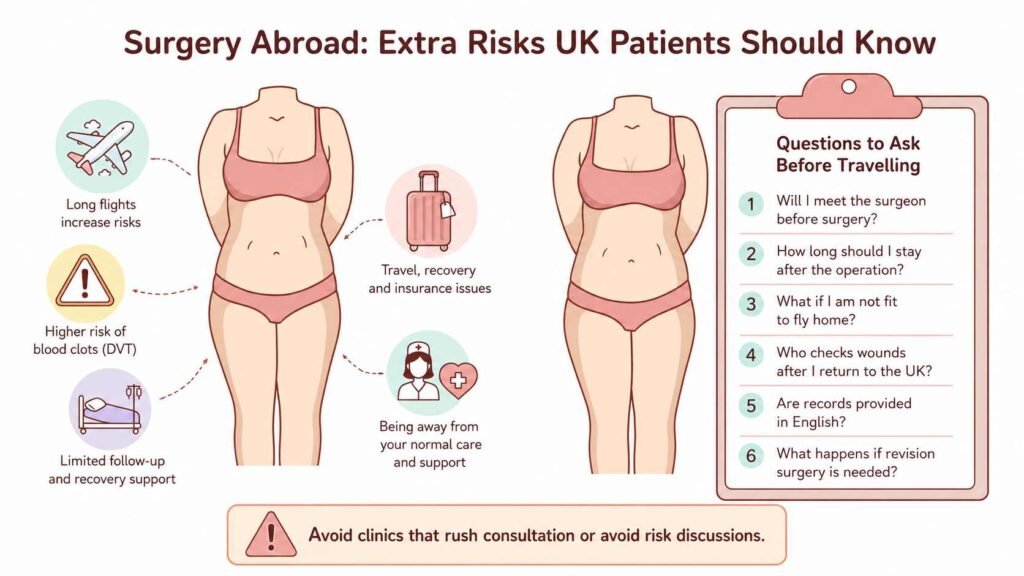
Travelling for surgery adds practical risks. A flight shortly before or after major surgery can increase the risk of blood clots. Recovery can also be harder when you are away from home, family support and your usual healthcare system.
Questions to Ask Before Travelling
Before booking cosmetic surgery abroad, ask the clinic:
- Will I meet the operating surgeon before the day of surgery?
- How many days should I stay after the operation?
- What happens if I am not fit to fly home?
- Who removes stitches or checks wounds after I return to the UK?
- Can I contact the surgeon directly if there is a problem?
- Are medical records provided in English?
- What is included in the package and what costs extra?
- What happens if revision surgery is needed?
Avoid any clinic that rushes consultation, avoids risk discussions, refuses to name the surgeon, or uses heavy sales pressure.
Recovery: What UK Patients Should Plan For
Recovery depends on the number of procedures performed, your general health and the type of work you do. A person with a desk job may return sooner than someone who lifts, drives for long periods, cares for young children, or works in healthcare, retail or hospitality.
Practical Recovery Planning
Patients should think about:
- Help with children, pets and housework
- Time away from work
- Transport to appointments
- Sleeping position
- Wound care
- Pain control
- Compression garments, if advised
- Avoiding heavy lifting
- Follow-up checks
- Signs of infection or complications
Trying to return to normal too quickly can affect healing. Good results depend not only on the operation, but also on careful recovery.
Who May Be a Suitable Candidate?
A Mommy Makeover may be suitable for women who:
- Are at or near a stable weight
- Have completed pregnancy and breastfeeding
- Are in good general health
- Do not smoke, or are willing to stop as advised
- Understand the scars and recovery time
- Have realistic expectations
- Can arrange proper aftercare
- Are choosing surgery for themselves, not due to pressure from others
It may not be suitable for people planning future pregnancies, those with unstable weight, unmanaged health conditions, or anyone expecting surgery to solve deeper emotional concerns.
Red Flags to Avoid
Be cautious if a clinic or provider:
- Offers a discount if you book immediately
- Will not confirm the surgeon’s name
- Avoids discussing risks
- Shows only perfect before-and-after photos
- Says recovery is easy for everyone
- Offers too many procedures in one session without explaining why it is safe
- Does not provide written aftercare
- Has poor communication after payment
- Cannot explain what happens if complications occur
A trustworthy clinic should welcome questions. If a provider becomes defensive when asked about safety, that is a warning sign.
Final Thoughts
A Mommy Makeover after pregnancy or major weight loss can help some women feel more comfortable, balanced and confident. It may address loose skin, abdominal changes, breast shape and body contour concerns that exercise alone cannot change.
However, it is still a major elective surgery. UK readers should look beyond price, package deals and social media results. The safest decision comes from checking qualifications, understanding the risks, planning aftercare and choosing a clinic that puts patient safety ahead of fast bookings.
Whether treatment is considered in the UK or abroad, the right approach is simple: research carefully, ask direct questions, avoid pressure, and make sure the full recovery plan is clear before agreeing to surgery.
Disclaimer
This article is for general information only and does not replace medical advice. Cosmetic surgery carries risks, including infection, bleeding, scarring, poor wound healing, blood clots, anaesthetic complications and dissatisfaction with results. Anyone considering surgery should speak with a qualified medical professional and check the surgeon, clinic, aftercare plan and possible complications before making a decision.
References
- American Society of Plastic Surgeons. “Mommy Makeover.” American Society of Plastic Surgeons Patient Information Resource. Accessed June 12, 2026. Available through the official ASPS cosmetic procedure guide.
- American Society of Plastic Surgeons. “Mommy Makeover Risks and Safety.” American Society of Plastic Surgeons Patient Safety Resource. Accessed June 12, 2026. This resource outlines possible risks, including bleeding, infection, poor wound healing, scarring, asymmetry, deep vein thrombosis, anesthesia risks, and other complications.
- NHS. “Cosmetic Surgery Abroad.” NHS Health A to Z: Cosmetic Procedures. Page last reviewed December 14, 2022. Next review due December 14, 2025. This guidance explains safety considerations, aftercare planning, surgeon consultation, travel risks, and cosmetic surgery package concerns.
- Toma, Tania, Leanne Harling, Thanos Athanasiou, Ara Darzi, and Hutan Ashrafian. “Does Body Contouring After Bariatric Weight Loss Enhance Quality of Life? A Systematic Review of QOL Studies.” Obesity Surgery, Volume 28, Issue 10, October 2018, pages 3333–3341. DOI: 10.1007/s11695-018-3323-8. PMID: 30069862. PMCID: PMC6153583.
- Tremp, Mathias, Tarik Delko, Marko Kraljević, Urs Zingg, Ulrich M. Rieger, Martin Haug, and Daniel F. Kalbermatten. “Outcome in Body-Contouring Surgery After Massive Weight Loss: A Prospective Matched Single-Blind Study.” Journal of Plastic, Reconstructive & Aesthetic Surgery, Volume 68, Issue 10, October 2015, pages 1410–1416. DOI: 10.1016/j.bjps.2015.05.035. PMID: 26162995.