
Many people across the UK experience gum problems such as sore teeth, swollen gums, or bleeding while brushing. These early warning signs are often linked to plaque buildup and poor daily habits. The good news is that small, consistent changes in your routine can make a major difference to your oral health.
The guide explains practical daily habits recommended by UK dental professionals to help keep teeth and gums healthy. By following these routines at home, you can reduce the risk of tooth decay, gum disease, and other dental issues while improving your overall oral hygiene.
Brush Your Teeth Properly Twice a Day
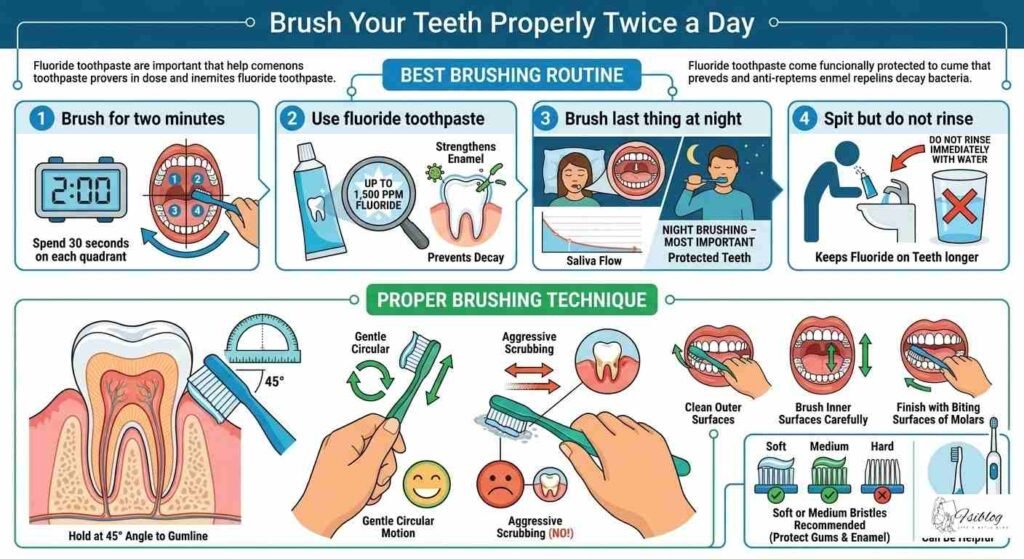
Brushing your teeth twice a day with fluoride toothpaste containing up to 1,500 ppm fluoride is the foundation of good oral health. According to the Oral Health Foundation, consistent brushing significantly reduces the risk of plaque buildup, cavities, and gum disease.
However, properly brushing matters just as much as regularly brushing.
Best Brushing Routine
Dentists in the UK generally recommend the following approach:
| Step | What To Do | Why It Matters |
|---|---|---|
| Brush for two minutes | Spend 30 seconds on each quadrant of your mouth | Ensures every tooth surface is cleaned |
| Use fluoride toothpaste | Look for up to 1,500 ppm fluoride | Helps strengthen enamel and prevent decay |
| Brush last thing at night | Night brushing is most important | Saliva production decreases during sleep |
| Spit but do not rinse | Avoid rinsing immediately with water | Keeps fluoride on teeth longer |
During sleep, your mouth produces less saliva, which normally helps wash away bacteria and neutralise acids. This means plaque acids can more easily damage enamel overnight. Brushing thoroughly before bed helps protect your teeth during these vulnerable hours.
Proper Brushing Technique
A good technique helps remove plaque effectively without damaging your gums.
Follow these simple steps:
- Hold your toothbrush at a 45-degree angle toward the gumline
- Use gentle circular motions, not aggressive scrubbing
- Clean the outer surfaces of teeth first
- Brush the inner surfaces carefully
- Finish with the biting surfaces of molars
Soft or medium bristle toothbrushes are usually recommended because hard bristles can irritate gums and wear down enamel over time.
Electric toothbrushes can also be helpful, particularly for people who struggle with manual brushing technique.
Clean Between Your Teeth Every Day
Brushing alone cleans only about 60 percent of the tooth surface. The remaining areas lie between teeth where plaque and food particles collect.
If plaque remains in these areas, it can irritate the gums and lead to gingivitis, the earliest stage of gum disease.
Daily cleaning between teeth removes this hidden plaque and helps keep your gums healthier.
Options for Cleaning Between Teeth
Several tools can help with interdental cleaning. The best option often depends on the spacing between your teeth and personal preference.
| Tool | Best For | Key Benefit |
|---|---|---|
| Dental floss | Tight spaces between teeth | Removes plaque along gumline |
| Interdental brushes | Slightly wider gaps | Often more effective than floss |
| Water flossers | Braces, implants, sensitive gums | Uses water pressure to clean gently |
Many dentists recommend interdental brushes when possible because they can remove plaque more effectively in wider spaces. They are also easier for many people to use compared to traditional floss.
However, people prefer a water flosser because it is simple to use and comfortable for those with braces, dental implants, or sensitive gums. A water flosser works by directing a steady stream of water between the teeth and along the gumline, flushing away bacteria and debris.
No matter which method you choose, consistency is the key. Cleaning between your teeth once a day can significantly reduce gum inflammation and bleeding.
Pay Attention to Diet and Sugar Intake
What you eat and drink has a major impact on your dental health. The bacteria in plaque feed on sugar and produce acids that weaken tooth enamel.
This is why diet plays a significant role in maintaining healthy teeth and gums.
It is not only the amount of sugar you consume that matters, but also how often you consume it.
For example, sipping sugary drinks throughout the day exposes your teeth to repeated acid attacks. Each time sugar enters the mouth, bacteria produce acid that can damage enamel for around 20 to 30 minutes.
Tips to Protect Teeth Through Diet
Here are some simple changes that support better oral health:
| Healthy Habit | Benefit For Teeth |
|---|---|
| Limit sugary snacks between meals | Reduces frequent acid attacks |
| Drink water regularly | Helps wash away food particles |
| Choose tooth friendly snacks | Nuts, cheese, and vegetables support enamel |
| Reduce fizzy drinks and fruit juices | Prevents enamel erosion |
| Eat balanced meals | Provides nutrients that support gum health |
Crunchy vegetables such as carrots, celery, and cucumbers can also stimulate saliva production. Saliva plays a natural protective role by neutralising acids and helping repair early enamel damage.
Drinking water after meals is another simple habit that helps rinse away food debris.
Replace Your Toothbrush Regularly
A worn toothbrush cannot clean effectively. Dentists recommend replacing your toothbrush or electric toothbrush head every three to four months.
You may need to replace it sooner if:
- The bristles are frayed
- You have recently been ill
- The brush no longer feels effective
Frayed bristles cannot reach plaque properly and may irritate your gums.
Keeping a fresh toothbrush ensures your daily brushing routine remains effective.
Visit Your Dentist and Hygienist Regularly
Even with excellent home care, regular dental checkups remain important. Dentists can identify early signs of problems such as gum disease, cavities, or enamel wear before they become serious.
Dental hygienists can also professionally remove hardened plaque called tartar, which cannot be removed with brushing alone.
Most people in the UK are advised to visit the dentist every 6 to 12 months, though your dentist may recommend a different schedule based on your oral health.
Small Habits Make a Big Difference
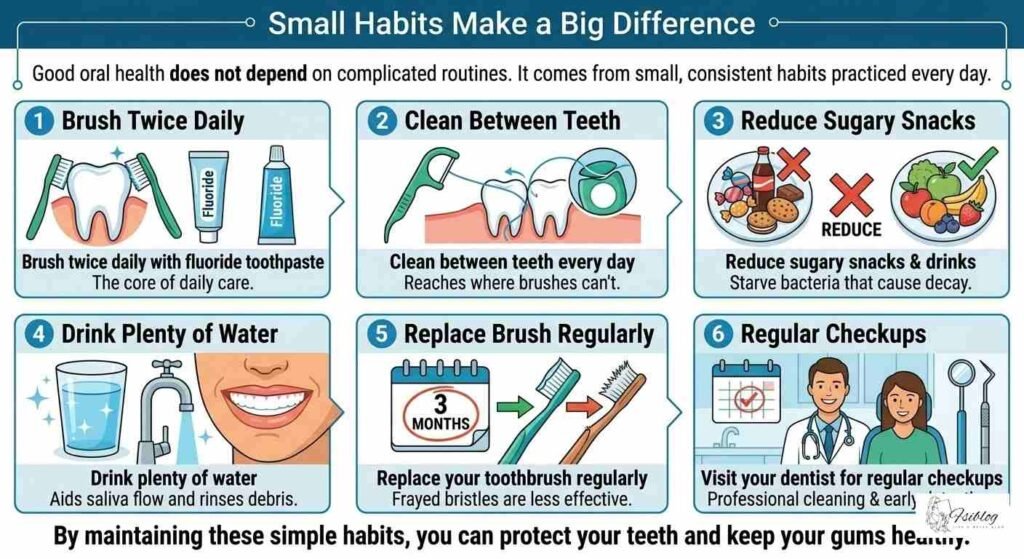
Good oral health does not depend on complicated routines. It comes from small, consistent habits practiced every day.
To summarise the most effective daily habits:
- Brush twice daily with fluoride toothpaste
- Clean between teeth every day
- Reduce sugary snacks and drinks
- Drink plenty of water
- Replace your toothbrush regularly
- Visit your dentist for regular checkups
By maintaining these simple habits, you can protect your teeth, keep your gums healthy, and reduce the risk of future dental problems.
Conclusion
Maintaining healthy teeth and gums does not require complicated treatments or expensive products. In most cases, it comes down to building a few simple daily habits and staying consistent with them. Brushing twice a day properly, cleaning between your teeth, and making smarter food choices can dramatically reduce the risk of tooth decay and gum disease.
Guidance from organisations like the Oral Health Foundation shows that prevention is always easier and more effective than treatment. Small actions such as avoiding frequent sugary snacks, replacing your toothbrush regularly, and keeping up with dental checkups can protect your smile for years to come.
By following these practical habits every day, you support stronger enamel, healthier gums, and fresher breath. Over time, these small routines build a strong foundation for long-term oral health and help you avoid many common dental problems.
Disclaimer
This article is intended for general informational and educational purposes only. It does not replace professional medical or dental advice, diagnosis, or treatment. Oral health needs can vary from person to person, and the information provided here should not be used as a substitute for guidance from a qualified dental professional.
Recommendations mentioned in this guide are based on common oral hygiene practices and guidance from organisations such as the Oral Health Foundation. If you experience persistent tooth pain, bleeding gums, sensitivity, or other dental concerns, it is important to consult a registered dentist or dental hygienist for a proper examination and personalised advice.
Always seek professional dental care for any specific oral health issues or before making significant changes to your dental care routine.