
Most people know they should be prepared for emergencies. Yet, doing it keeps getting pushed to next week, next month, or next year. It may be too complicated. The whole topic seems a bit paranoid. Or it could get buried under all the other things demanding attention.
But think about the last time your power went out for more than an hour. Remember how quickly things got uncomfortable? Now imagine that lasting three days. Or a week. Suddenly, emergency preparedness stops sounding paranoid and starts sounding pretty sensible.
The good news is that getting prepared does not require turning your home into a bunker or spending thousands of dollars. It starts with asking yourself some honest questions about what you actually need and what you currently have. These emergency preparedness questions help cut through the overwhelm and point to real, practical steps that make a genuine difference.
What Disasters Actually Happen Where You Live?
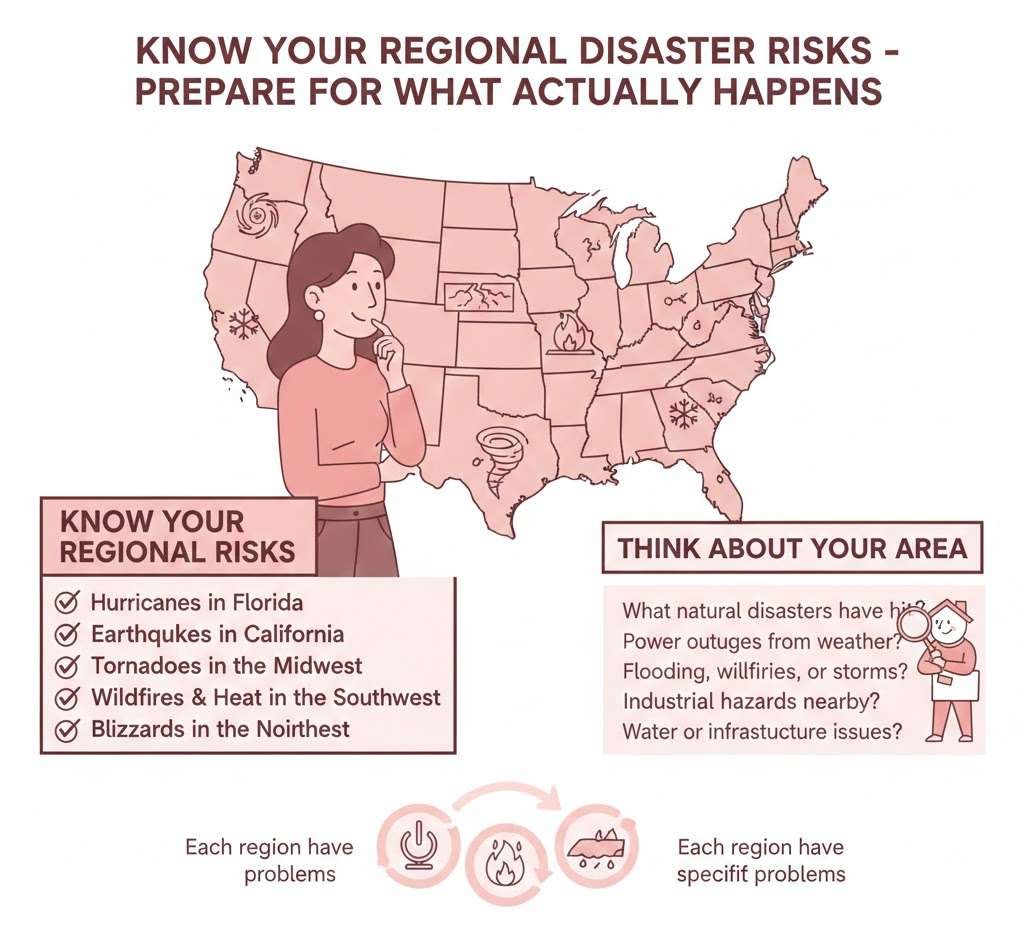
Before buying supplies or making elaborate plans, take a moment to think about what kinds of emergencies actually occur in your area. This matters because someone in Miami faces completely different risks than someone in Denver.
Know Your Regional Risks
Living in Florida means hurricanes are a real possibility. Living in California means earthquakes. The Midwest has tornadoes. The Southwest has wildfires and extreme heat. The Northeast has blizzards and ice storms. Each region comes with its own set of likely problems.
Think about what has happened in your area over the past decade:
- What natural disasters have hit your region?
- How often does severe weather knock out power?
- Has your town dealt with flooding, wildfires, or severe storms?
- Are there industrial facilities nearby that could create hazards?
- What about water supply issues or infrastructure failures?
You do not need to prepare for every possible disaster on Earth. Focus on the ones that could realistically affect you. That makes personal emergency preparedness manageable instead of overwhelming.
Look at Your Specific Situation
Beyond regional risks, your particular home and situation have their own vulnerabilities. Do you live in a basement apartment that could flood? Is your house surrounded by tall trees that might fall during storms? Are you in an area that gets evacuated during wildfires?
Being honest about your specific situation helps you prepare for real risks rather than hypothetical ones. A family living in a high-rise apartment needs different supplies than a family in a rural farmhouse. There is no one-size-fits-all approach to emergency preparedness.
Could You Stay Home for Three Days With No Power or Water?
This is the basic test of emergency readiness. Most experts say you should be able to survive at home for at least 72 hours without any outside help. That means no electricity, no running water, and no quick trip to the store.
Water Is More Important Than You Think
People can survive weeks without food but only days without water. The standard recommendation is one gallon per person per day. That includes drinking water and water for basic hygiene.
So, for a family of four, you need at least 12 gallons to last three days. That sounds like a lot, but it actually fits in a closet. You can buy cases of bottled water, fill clean containers from the tap, or do both.
Here are the water questions worth asking yourself:
- How much water do you currently have stored?
- When did you last check or rotate that water?
- Do you have any way to purify water if needed?
- Does everyone know where the water shut-off valve is?
If those questions make you uncomfortable, you have found your starting point. Water storage and purification supplies are not expensive, and they matter more than almost anything else in your emergency kit.
Food That Does Not Need Cooking
When the power goes out, your refrigerator becomes useless within hours. Your stove might not work either, depending on whether it is electric or gas. So emergency food needs to be shelf-stable and ready to eat without cooking.
Canned soups, vegetables, beans, and meats all work well. So do peanut butter, crackers, dried fruit, nuts, and granola bars. The goal is calories and nutrition without requiring refrigeration or cooking.
Do not forget practical items like a manual can opener, disposable plates and utensils, and garbage bags. Having food you cannot open or eat neatly creates unnecessary problems during an already stressful situation.
Do You Have Your Medical Stuff Sorted Out?
Health issues do not pause during emergencies. In fact, they often get worse when stress levels rise, and normal healthcare access disappears. Personal emergency preparedness has to include medical planning, yet this is where many people have the biggest gaps.
Medications and Medical Supplies
Anyone taking regular medications should have extra on hand. A week’s worth at minimum, more if possible. Talk to your doctor and pharmacist about this. Most understand the need for emergency preparedness and can work with you on getting a small backup supply.
Your emergency medical supplies should include:
- All prescription medications with clear instructions
- Basic pain relievers and fever reducers
- Bandages, gauze, and antibiotic ointment
- Any medical devices you need regularly
- Extra glasses if you wear them
- Medical accessories like blood pressure monitors or glucose meters
People with chronic conditions need to think through their specific needs. People with diabetes need insulin storage and testing supplies. People with severe allergies need EpiPens. Those with asthma need backup inhalers. Whatever your situation, make a list of what you would need for a week without access to a pharmacy or doctor.
Getting Your Medical Information Together
In an emergency, paramedics and doctors might need to know about your medical conditions, allergies, and medications immediately. But what if you are unconscious or too confused to communicate?
This is where medical accessories, such as identification bracelets or information cards, become genuinely important. They tell first responders what they need to know when you cannot tell them yourself.
Ask yourself these emergency preparedness questions:
- Is there a written list of everyone’s medications and dosages?
- Are allergies clearly documented somewhere accessible?
- Do you have medical information cards for each family member?
- Is there a list of doctors and emergency contacts?
- Are these documents stored in a place where they will not be destroyed?
Keep this information in multiple places. Put it on your phone. Print copies for your emergency kit. Consider medical accessories that display critical information. The goal is to make sure this information survives whatever disaster you face.
Can You Reach Your Family When Phones Do Not Work?
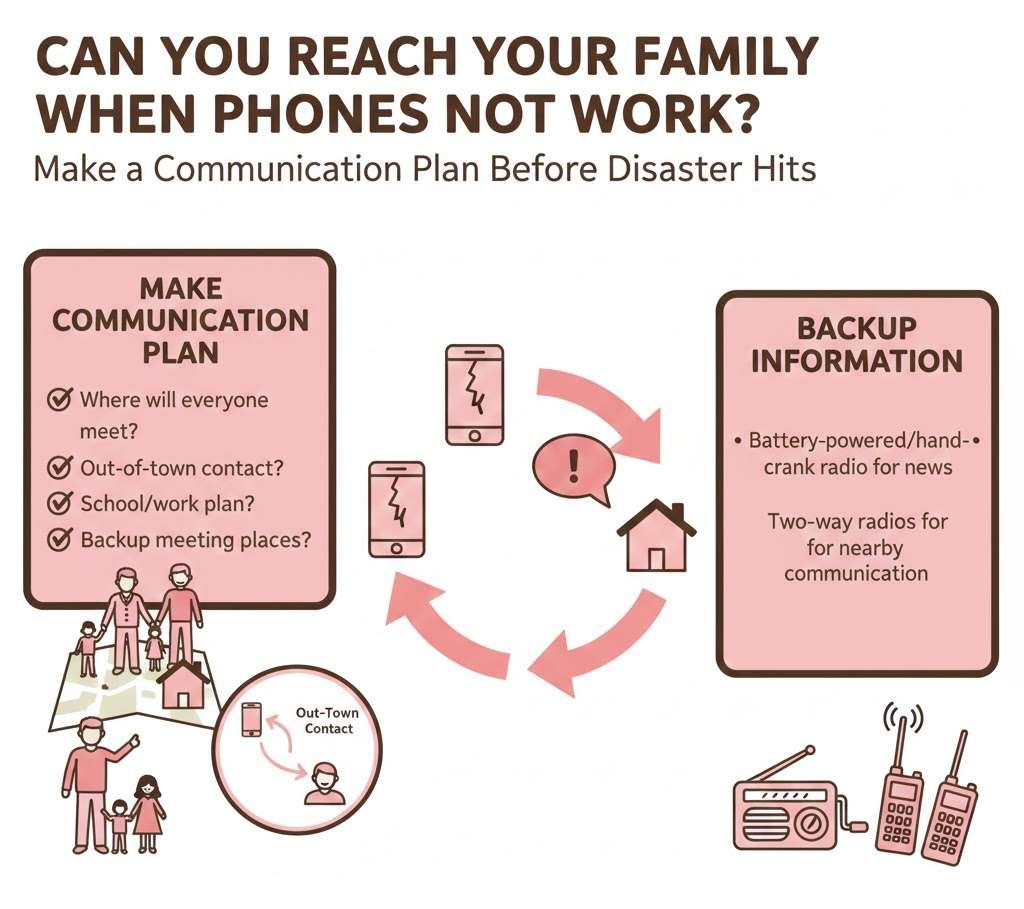
Cell towers fail during major disasters. Phone lines get jammed with everyone trying to call at once. The Internet goes down. Suddenly, you cannot reach your kids, your spouse, or anyone else you care about. This is terrifying, but it is also preventable with basic planning.
Make a Communication Plan Before You Need It
Sit down with your family and work out the details:
- Where will everyone meet if you get separated?
- Who is the out-of-town contact everyone can call?
- What happens if someone is at school or work when a disaster hits?
- What are the backup meeting places if the first one does not work?
Many families pick a relative in another state as their communication hub. When local calls fail, long-distance calls sometimes still work. Everyone calls the designated person to check in, and information flows through that single point.
Write this plan down. Make sure everyone has the contact numbers memorized or written on a card they carry. Practice it occasionally so people remember what to do when stress levels are high.
Have a Backup Way to Get Information
Battery-powered or hand-crank emergency radios receive news and weather alerts when everything else fails. They are not expensive, do not require power or Internet, and keep you informed about what is happening.
Some families also keep two-way radios for communicating between nearby locations when cell service is down. They work for limited distances but can help coordinate within a neighborhood or between family members.
Are Your Important Documents Protected?
Fires, floods, and other disasters destroy homes and everything in them. But some things are incredibly difficult or impossible to replace. Personal emergency preparedness means protecting these documents while keeping them accessible when needed.
What Needs Protection
Think about the documents that would create serious problems if destroyed:
- Birth certificates, Social Security cards, and passports
- Property deeds and vehicle titles
- Insurance policies for home, auto, health, and life
- Bank account information
- Medical records and vaccination records
- Wills, powers of attorney, and other legal documents
- Photos of valuable items for insurance claims
- Recent family photos for identification purposes
A fireproof and waterproof safe keeps physical documents protected. Digital copies stored securely online create a backup that survives even if your home is destroyed.
Cash for When Cards Do Not Work
ATMs and card readers stop working when power goes out. Having cash at home in small bills means you can still buy what you need even when electronic payments are unavailable.
A few hundred dollars in twenties, tens, fives, and ones is usually enough. Keep it somewhere safe but accessible. This is not about hoarding money. This is about having a way to purchase gas, food, or supplies when the normal payment systems are down.
Can You Leave Your Home Quickly If You Have To?
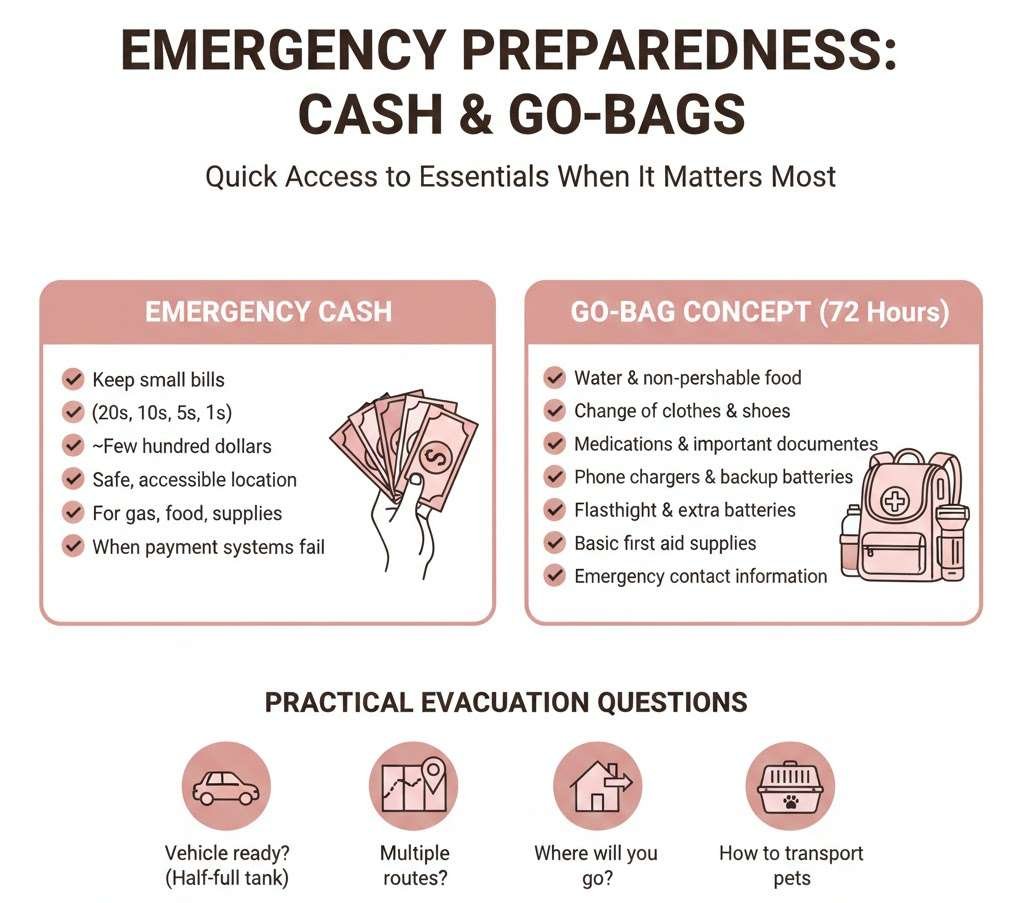
Some emergencies mean staying home and riding things out. Others require immediate evacuation. You need to be ready for both scenarios, and that means having a bag packed and ready to grab.
Go-Bag Concept
A go-bag, sometimes called a bug-out bag, is pre-packed with essentials for 72 hours away from home. When evacuation orders come, you grab the bag and go. No scrambling, no forgetting critical items, no wasting precious time.
What goes in a go-bag:
- Water and non-perishable food
- Change of clothes and sturdy shoes
- Medications and medical accessories
- Copies of important documents
- Phone chargers and backup batteries
- Flashlight with extra batteries
- Basic first aid supplies
- Some cash
- Emergency contact information
Each person needs their own bag. Kids can carry lighter versions with snacks, comfort items, and a change of clothes. Adults carry the heavier supplies and critical documents.
Think About How You Would Actually Leave
Evacuation requires transportation, but gas stations might be closed or have massive lines during mass evacuations. Keeping your vehicle at least half full at all times is a simple habit that ensures you can reach safety.
Ask yourself these practical emergency preparedness questions:
- Does your car already have emergency supplies?
- Do you know multiple routes out of your area?
- Where would you actually go if evacuated?
- How would you transport pets?
- What if you are separated when evacuation orders come?
Do You Actually Practice Your Plans?
Writing plans down or talking about them once does not mean anyone will remember during a real emergency. Practice transforms theoretical plans into automatic responses when stress is high and thinking is hard.
Test Your Personal Emergency Preparedness
Try these drills a couple of times a year:
- Practice evacuating quickly with only your go-bags
- Test your communication plan by having everyone check in through the designated contact
- Spend an evening without power to see what supplies you are missing
- Review and update contact information
- Check expiration dates on food, water, and medications
- Refresh everyone’s memory on meeting locations
These practice runs reveal problems you would never spot just by thinking about them. The go-bag may be too heavy for the person supposed to carry it. The designated meeting spot may be hard to access. Maybe you realize your phone charger is dead, and you never tested the backup radio.
Better to discover these issues during practice than during an actual emergency.
Getting Started Without Feeling Overwhelmed
Looking at all these emergency preparedness questions can feel overwhelming. Nobody expects you to address everything this weekend. Personal emergency preparedness builds one step at a time.
Start with water. Get enough stored to last your household three days. That is step one, and it matters more than almost anything else.
Then move to food. Stock up on shelf-stable items your family will actually eat during a crisis.
Next, gather medications and medical accessories. Make sure everyone has what they need for at least a week.
Work through communication plans and document protection when you are ready.
Each step forward means you are better prepared than you were before. Progress matters more than perfection. The goal is not to become a survival expert. The goal is to have medical accessories ready enough that, when something does happen, you and your family will be okay.
These questions exist to help identify gaps between where you are and where you want to be. Answer them honestly. Work on the biggest gaps first. And gain the peace of mind that comes from knowing you are genuinely prepared for whatever comes next.