
A great weekend at home does not require expensive plans or a packed schedule. In fact, slowing down often helps you enjoy your surroundings more and recharge properly. For many people in the UK, especially after a busy workweek, a well-planned weekend at home can improve mood, reduce stress, and create a better sense of balance.
The key is to focus on activities that match your energy level rather than trying to stay constantly busy. A mix of relaxation, light activity, and connection can make your weekend feel both productive and refreshing.
Setting the Scene for Comfort
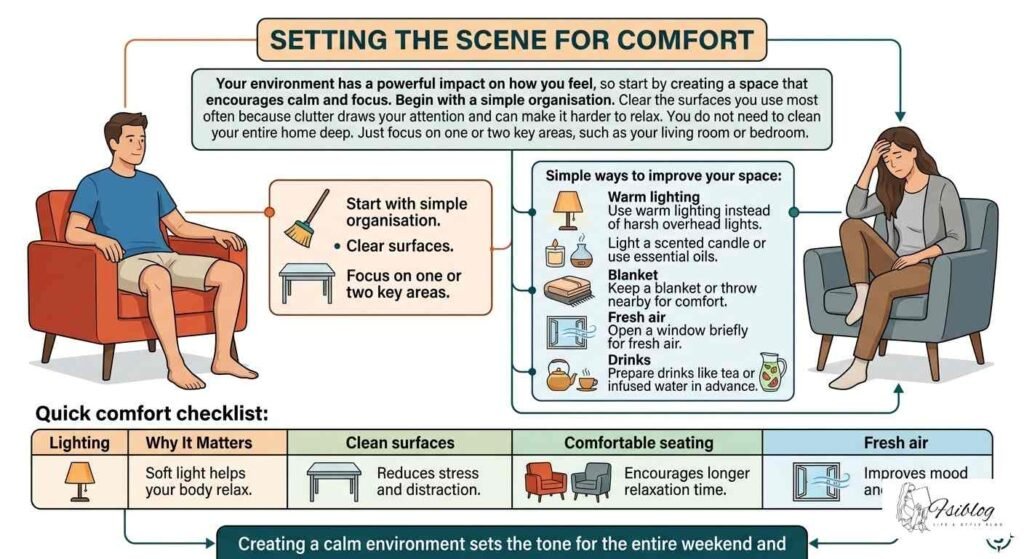
Your environment has a powerful impact on how you feel, so start by creating a space that encourages calm and focus.
Begin with a simple organisation. Clear the surfaces you use most often because clutter draws your attention and can make it harder to relax. You do not need to clean your entire home deep. Just focus on one or two key areas, such as your living room or bedroom.
Simple ways to improve your space:
- Use warm lighting instead of harsh overhead lights
- Light a scented candle or use essential oils
- Keep a blanket or throw nearby for comfort
- Open a window briefly for fresh air
- Prepare drinks like tea or infused water in advance
Quick comfort checklist:
| Element | Why It Matters |
|---|---|
| Lighting | Soft light helps your body relax |
| Clean surfaces | Reduces stress and distraction |
| Comfortable seating | Encourages longer relaxation time |
| Fresh air | Improves mood and focus |
Creating a calm environment sets the tone for the entire weekend and helps you transition out of work mode.
Getting Active Without Pressure
Movement is essential for both physical and mental well-being, but it does not have to be intense. Even light activity can boost your energy and improve your mood.
A short walk around your local area is one of the easiest ways to reset. Many UK neighbourhoods offer parks or quiet streets that are perfect for a quick break.
If you prefer staying indoors, a short mobility routine works well and can be done in just 10 to 15 minutes.
Simple at-home movement ideas:
- Gentle stretching or yoga
- Bodyweight exercises like squats or lunges
- Following an online fitness class
- Dancing to your favourite music
Example 10-minute routine:
| Exercise | Duration |
|---|---|
| Shoulder rolls | 1 minute |
| Hip circles | 2 minutes |
| Slow squats | 2 minutes |
| Light stretching | 3 minutes |
| Deep breathing | 2 minutes |
The goal is not intensity but consistency. Even small amounts of movement can improve circulation and reduce mental fatigue.
Staying Connected and Social
Weekends are also a good time to reconnect with others. Social interaction plays a key role in emotional well-being, even if it is simple and low effort.
Easy ways to stay connected:
- Schedule a short video or phone call
- Share a meal with family or housemates
- Send a thoughtful message to a friend
- Plan a virtual activity like a quiz or game
If you live with others, cooking together can be especially rewarding. It combines teamwork with conversation and creates a shared experience.
Benefits of staying connected:
| Activity | Benefit |
|---|---|
| Video calls | Reduces feelings of isolation |
| Cooking together | Builds stronger relationships |
| Messaging | Maintains regular contact |
| Shared activities | Creates lasting memories |
Even small interactions can have a positive impact on your mood.
Free Entertainment and Games
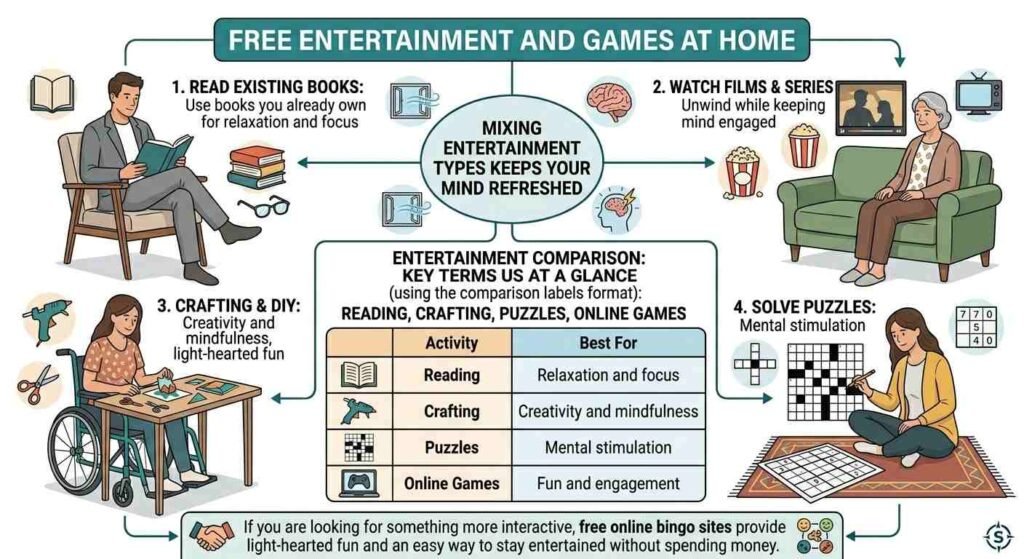
A relaxing weekend at home is the perfect opportunity to enjoy simple, enjoyable activities that often get overlooked during busy weeks.
Popular at-home entertainment options:
- Reading books you already own
- Watching films or series
- Crafting or DIY projects
- Solving puzzles like crosswords or Sudoku
These activities help you unwind while keeping your mind engaged.
If you are looking for something more interactive, free online bingo sites provide light-hearted fun and an easy way to stay entertained without spending money. Choose platforms with clear rules and no-cost entry so you can focus on enjoying the experience.
Entertainment comparison:
| Activity | Best For |
|---|---|
| Reading | Relaxation and focus |
| Crafting | Creativity and mindfulness |
| Puzzles | Mental stimulation |
| Online games | Fun and engagement |
Mixing different types of entertainment throughout the weekend helps prevent boredom and keeps your mind refreshed.
Creating a Simple Weekend Plan
Having a loose plan can make your weekend feel more balanced without making it stressful.
Example weekend structure:
| Time | Activity |
|---|---|
| Morning | Light movement or walk |
| Midday | Cooking or social time |
| Afternoon | Reading or hobbies |
| Evening | Entertainment or relaxation |
This flexible approach allows you to stay organised while still enjoying freedom and spontaneity.
Conclusion
The ultimate weekend at home is about balance, not perfection. By creating a comfortable environment, adding light movement, staying connected, and enjoying simple entertainment, you can turn an ordinary weekend into a genuinely refreshing experience.
Small, intentional choices often have the biggest impact. Whether it is clearing your space, trying a new routine, or enjoying a quiet activity, these moments help you recharge and prepare for the week ahead.
With the right approach, your home can become the perfect place to relax, reset, and enjoy your time.
Disclaimer
This article is for general informational and lifestyle purposes only. It does not constitute medical, psychological, or professional advice. Individual well-being needs may vary, and readers should consult qualified professionals for specific health or mental health concerns.
References
- Kaplan, S. (1995). The restorative benefits of nature: Toward an integrative framework. Journal of Environmental Psychology. DOI: 10.1016/0272-4944(95)90001-2
- Korpela, K. M., & Hartig, T. (1996). Restorative qualities of favourite places. Journal of Environmental Psychology. DOI: 10.1006/jevp. 1996.0018
- Reed, J., & Buck, S. (2009). The effect of regular aerobic exercise on positive-activated affect. Psychology of Sport and Exercise. DOI: 10.1016/j.psychsport.2008.11.009
- Holt-Lunstad, J., Smith, T. B., & Layton, J. B. (2010). Social relationships and mortality risk. PLoS Medicine. DOI: 10.1371/journal.pmed.1000316
- Pressman, S. D., Matthews, K. A., Cohen, S., et al. (2009). Association of enjoyable leisure activities with psychological and physical well-being. Psychosomatic Medicine. DOI: 10.1097/PSY.0b013e3181ad7978
- Csikszentmihalyi, M. (1990). Flow: The psychology of optimal experience. Harper & Row. DOI: 10.1037/0003-066X.55.1.5