
Hi! I’m Robin Seggar, and I want to talk about something that completely changed how I approach poker. I used to jump straight into real money tables before I was ready – watching chips vanish while I second-guessed every single decision. Then I found free poker, and honestly? Everything shifted. What looks like casual fun is actually one of the smartest training tools any poker enthusiast can use.
Free Poker Games: A Risk-Free Place to Actually Learn
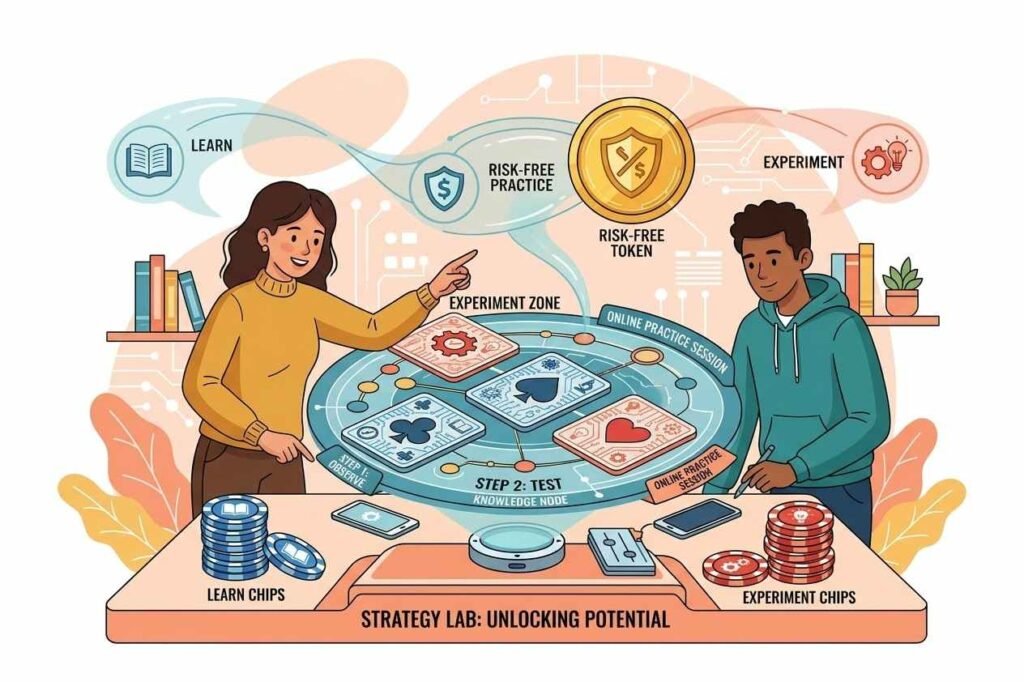
What I love most about free poker games is that you get a consequence-free space to experiment properly. Try bold bluffs. Test aggressive lines. Make mistakes. None of it costs you a penny.
That freedom is genuinely powerful. Online poker sites have invested heavily in their free-play tools, especially since the pandemic pushed so many poker enthusiasts onto digital platforms. The interfaces are sharper, the game environments more realistic, and the options far better than they used to be.
If you want to play poker online without real-stakes pressure, free modes on online poker sites are the perfect entry point. You build confidence, test ideas, and get comfortable with the pace before any real money enters the picture. Whether you are learning Texas Hold ‘ Em from scratch or refining your cash games approach, free play genuinely delivers.
Tip: Free poker isn’t just for newcomers. Experienced poker players use free modes on their preferred poker site to test new strategies before bringing them to paid tables.
How Free Play Actually Improves Your Real Money Game
What most casual players miss is that free games aren’t separate from real money poker. They’re directly preparing for it.
Every hand you play in free mode builds pattern recognition, timing instincts, and decision-making speed. Those skills matter just as much in cash games as they do in poker tournaments. You’re reading opponents, managing pot odds mentally, deciding when to fold under pressure – exactly the habits that separate consistent winners from frustrated newcomers.
The best online poker sites design their free modes to mirror the real-money environment closely. Bet sizing, hand rankings, and table dynamics – all consistent across both modes. That’s what makes the jump from free play to paid play feel natural. A quality poker site ensures that the Texas Hold’em experience in free mode is virtually identical to the real thing.
Example List: What You Are Actually Building in Free Play
- Pattern recognition – repeated hands train your brain to spot betting patterns faster
- Bankroll discipline – practicing disciplined bet sizing with virtual chips builds real habits
- Tilt resistance – losing free chips without real consequences helps you stay calm under pressure
- Hand range awareness – free play gives you space to think through ranges without stress
Tip: Set a specific goal for each free play session. For example, practice folding marginal hands in early position during Texas Hold ‘ Em rather than just playing randomly.
Learning Strategy Through Free Modes – Including WSOP-Style Practice
The wsop platform offers free modes for Texas Hold ’em and Omaha – giving participants structured environments to practice two of poker’s most popular formats. For anyone serious about competing in poker tournaments, that kind of structured free play is genuinely invaluable.
I’ve learned so much from WSOP-style free play specifically because of the structured progression. You move through different table types and difficulty levels, which mirrors how real skill development actually works. You’re not just playing hands randomly – you’re building a foundation in Texas Hold ‘ Em that carries directly into real money play.
Poker coach Jonathan Little regularly shares insights on how to use trusted online poker sites for skill development. His poker strategy reinforces what free play naturally teaches: discipline, patience, and strategic thinking over impulsive decisions. I’ve found that pairing his advice with regular free play sessions accelerates improvement dramatically.
Tip: After reading any poker strategy guide, jump straight into free play and apply what you just read. Immediate practice locks in learning far better than passive reading alone.
Free Poker Apps – Solo Practice Turned Social
Free poker apps have done something I didn’t expect – they’ve turned solo practice into a genuinely social and competitive experience.
Playing against real people in free modes exposes you to genuine human unpredictability. Bots follow patterns. People don’t. That unpredictability is exactly what you’ll face at real money tables and in poker tournaments, so this matters more than most enthusiasts realize. The best poker app options through online poker sites replicate this dynamic really well.
Many free poker app platforms also include chat features, hand history reviews, and community forums. These layers add a learning dimension that goes beyond just playing cards. Some online poker sites even offer poker promotions that reward active free-play participants – giving you extra incentive to keep showing up.
| Feature | Why It Helps |
| Hand history review | Spot mistakes after each session |
| Real opponent matching | Prepares you for unpredictable human play |
| Leaderboard competitions | Simulates real competitive pressure |
| Community forums | Pick up tips and spot tendencies in others |
| Poker promotions for free players | Rewards consistent practice habits |
Tip: Join free poker tournaments within your poker app rather than only playing casual games. Competing against leaderboard-chasing opponents mimics real money pressure far better than solo play ever will.
Tutorials and Guides – Your Roadmap Inside Free Platforms
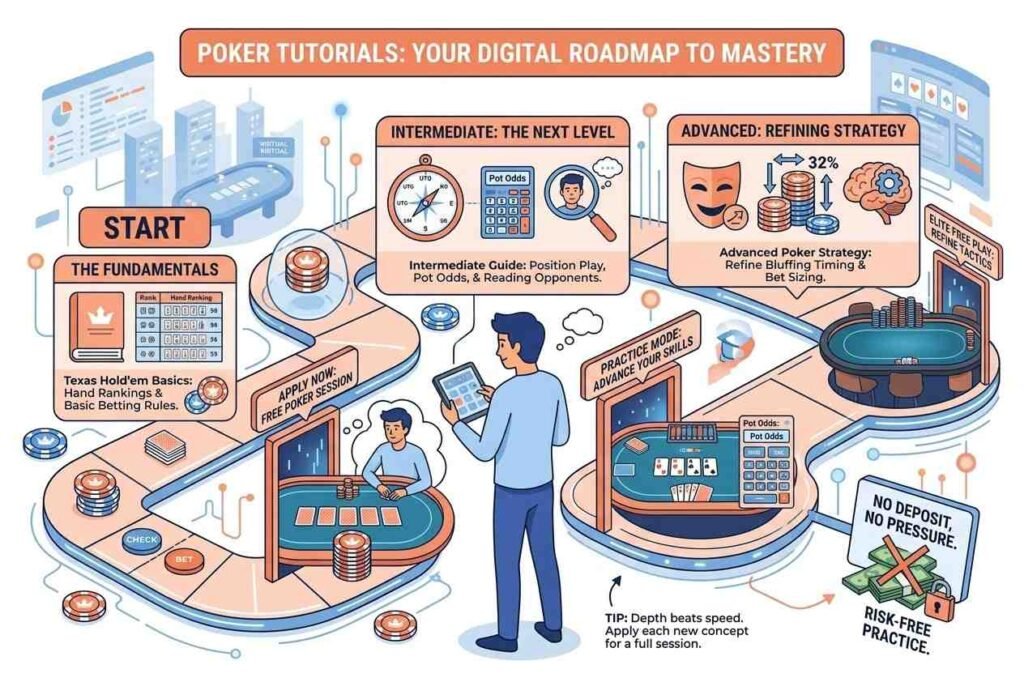
Most quality free poker platforms and online poker sites include built-in tutorials and strategy guides. These aren’t afterthoughts – they’re structured learning paths designed to take you from basic hand rankings to advanced concepts like position play and pot odds.
For newcomers, especially, these resources remove the intimidation factor. You don’t have to figure everything out alone. The poker site walks you through it, and free play mode lets you apply what you just learned immediately. Many online poker sites also pair these tutorials with poker promotions to keep new players engaged throughout the learning process.
- Start with beginner tutorials covering hand rankings and basic betting rules for Texas Hold ‘ Em
- Progress to intermediate guides on position, pot odds, and reading opponents in cash games
- Use advanced poker strategy content to refine bluffing timing and bet sizing decisions
- Apply each section immediately in free poker mode before moving to the next
Preparing for cash games or poker tournaments with this structured approach works. And it’s all available for free – no deposit, no pressure.
Tip: Don’t rush through tutorials. Spend at least one full free play session applying each new concept before moving on. Depth beats speed here every time.
Making the Jump – From Free Play to Real Money Poker
At some point, free play stops being the challenge you need. That’s a good sign – your skills have grown, and the stakes need to match your ability.
The transition to real money poker works best when it’s gradual. Start at the lowest available stakes in cash games. Your goal isn’t to win big immediately – it’s to confirm that your free-play skills transfer cleanly to a real money environment. Online poker sites make this easier by offering micro-stakes tables specifically for players making this move.
PokerStars is recognised as one of the largest online real-money poker sites, offering poker promotions for new customers in select states such as Pennsylvania and New Jersey. Look for a poker site that offers clear poker promotions for transitioning players – these extend your bankroll while you find your footing. Online poker sites like this provide a structured path from free poker to low-stakes real-money games, making the whole process far less overwhelming.
Example List: Signs You’re Ready to Leave Free Poker Behind
- Consistent positive win rate over at least 500 hands of Texas Hold ‘ Em
- Comfortable reading opponents and adjusting your poker strategy mid-session
- Making disciplined folds in free poker without second-guessing yourself constantly
- Familiar with how your chosen poker site handles cash games and poker tournaments
Free online poker games can’t fully replicate the emotional pressure of real money play – and that’s okay. Knowing you’ve built solid fundamentals first makes that pressure manageable rather than paralyzing. I’ve heard this from poker players again and again: the free-play foundation is exactly what made their transition to real money go smoothly.
Tip: Before depositing, set a clear benchmark in free poker. A consistent positive win rate over 500 hands of Texas Hold ’em is a reasonable target before making the switch to real-money poker.
Why Serious Poker Enthusiasts Never Skip Free Play
Free online poker games aren’t a lesser version of poker. They are a training ground where players sharpen skills, experiment with strategy, and build the mental habits that make long-term success possible. Even highly experienced players return to free modes regularly because they provide a controlled environment to test ideas without risking bankroll or confidence.
Poker is a game of decisions repeated thousands of times. The more situations you encounter, the more naturally correct decisions start to feel. Free play accelerates this learning process. You can play more hands, see more scenarios, and refine your instincts faster than you might at real-money tables, where every decision carries financial pressure.
Another reason serious enthusiasts keep free play in their routine is strategy testing. Poker strategies constantly evolve. Players experiment with different bet sizes, bluff frequencies, or positional approaches. Testing these ideas in free poker lets you see how they perform before bringing them into cash games or tournaments, where mistakes could be costly.
Free play also helps maintain discipline. It is easy for players to fall into bad habits over time, especially after losing sessions. Practicing in free modes allows you to reset your mindset and refocus on fundamentals like patience, position awareness, and selective hand ranges. These habits are the backbone of consistent poker performance.
Finally, free poker keeps the game enjoyable. Not every session has to involve financial risk. Many players enjoy the competitive and strategic aspects of poker, and free modes allow them to play regularly while staying relaxed and focused on improvement.
Final Thoughts
Poker is a game that rewards preparation, patience, and continuous learning. Free poker games provide one of the most accessible ways to build those qualities. Whether you are completely new to Texas Hold ‘ Em or an experienced player refining advanced strategy, free play creates an environment where improvement happens naturally through repetition and experimentation.
Instead of viewing free poker as something only beginners use, it’s helpful to see it as part of a comprehensive poker development system. You study strategy, practice in free modes, evaluate your decisions, and then gradually apply what you learn in real-money games. This cycle of learning and practice is how many successful players develop their skills over time.
If used intentionally, free poker games can strengthen decision-making, build confidence, and prepare you for the faster pace and emotional pressure of real-money tables. The key is not just playing casually, but approaching free play with clear goals, reviewing your decisions, and constantly refining your approach.
Disclaimer
This article is intended for informational and educational purposes only. Poker involves risk, and real-money gambling should always be approached responsibly. Free poker games are a useful learning tool, but they cannot fully replicate the psychological pressure of real-money play. Players should ensure they comply with the laws in their region and only play online poker on licensed, regulated platforms. Always gamble responsibly and never wager more than you can afford to lose.