
Photography has always relied on being seen.
Years ago, that meant word of mouth, a small advert in the local paper, a few prints in a café, or a display at a nearby gallery. Those things still have value, especially in local towns and cities across the UK. But most people now look online before they book a photographer.
A couple planning a wedding in Manchester may search Instagram before they email anyone. A family in Bristol may check Facebook groups for portrait recommendations. A small business in Leeds may look at Google, LinkedIn, or TikTok before choosing someone for brand photos.
That is why social media matters. It does not replace skill, trust, or good service. It helps the right people see those things sooner.
A strong website is useful, but it often waits for people to find it. Social media puts your work where people already spend time. With the right plan, photographers can use it to build trust, show their style, and turn casual viewers into real enquiries.
Social Media Turns Your Profile Into A Living Portfolio
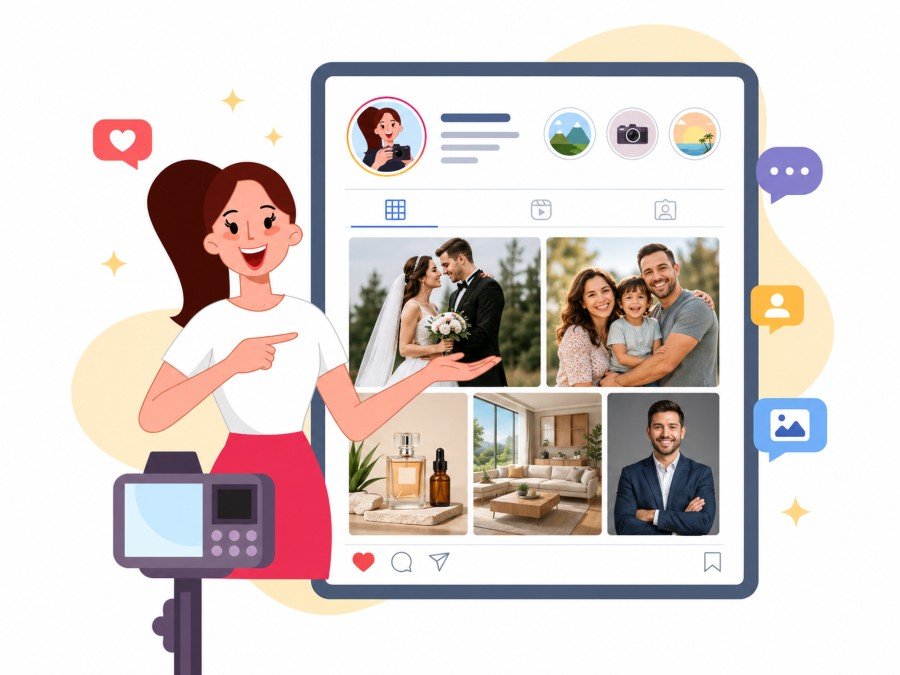
A normal portfolio shows your best work. A good social media profile shows your best work and your working style.
That difference matters.
People do not only want to know whether you can take sharp, well-lit photos. They want to know what it feels like to work with you. They want to know whether you are calm at weddings, patient with children, respectful during family shoots, or clear with business clients.
Instagram, TikTok, Pinterest, Facebook, and Google Business Profile all give photographers different ways to show this.
For example:
| Type Of Photographer | What To Post | Why It Works |
|---|---|---|
| Wedding Photographer | Venue shots, couple portraits, small details, short clips from the day | Couples can picture their own wedding in your style |
| Family Photographer | Natural outdoor portraits, relaxed behind-the-scenes clips, parent-friendly tips | Parents feel safer booking someone who understands children |
| Product Photographer | Before-and-after lighting setups, finished product shots, simple process clips | Small brands can see the value behind the final image |
| Property Photographer | Room angles, lighting examples, editing samples, local area posts | Estate agents and landlords can judge quality quickly |
| Personal Brand Photographer | Headshots, workspaces, client posing guidance, short video clips | Business owners see how you help people look confident |
A static gallery can feel finished. A social profile feels active. That helps people believe you are still working, still improving, and still taking bookings.
For photographers using Instagram, the official Instagram for Business site gives basic tools and guidance for setting up a business presence. Google also explains how businesses can add photos and videos to a Google Business Profile, which is useful for local photographers who want to appear more trustworthy in search results.
Local Reach Is Where UK Photographers Can Win
Many photographers make the mistake of trying to reach everyone.
That sounds good, but it usually weakens the message. A newborn photographer in Birmingham does not need attention from random people across the world. They need parents, local families, maternity clinics, baby shops, and nearby communities to know they exist.
Social media helps because it lets photographers speak to a clear local market.
Useful local actions include:
| Action | Example | Why It Helps |
|---|---|---|
| Use local place names | “Family photography in York” | Helps local people understand where you work |
| Tag venues | Tag a wedding barn, hotel, studio, or event space | People searching that venue may see your work |
| Use local hashtags carefully | #LondonWeddingPhotographer or #GlasgowBrandPhotographer | Helps connect your work with a specific area |
| Post local stories | A shoot in a park, high street, café, or seaside town | Makes your work feel familiar to nearby clients |
| Join local groups | Parent groups, wedding groups, small business groups | Builds trust before selling |
This is especially useful in the UK because many photography bookings are location-based. People often want someone nearby, reliable, and easy to meet if needed.
A photographer in Kent, Cardiff, Liverpool, or Edinburgh can stand out by showing real local work instead of posting only general photography content. Local clients like proof. They want to see that you know the area, understand the light, and have worked with people like them before.
Behind-The-Scenes Content Makes People Trust You Faster
Many photographers hide the process because they think only the final image matters.
That is a missed chance.
Behind-the-scenes content helps people understand the care behind your work. It shows that you are not just turning up with a camera and pressing a button. You are planning, guiding, lighting, calming nerves, solving problems, and making people feel comfortable.
Good behind-the-scenes content can include:
| Content Idea | What It Shows |
|---|---|
| A short clip of setting up lights | You understand the technical side |
| A before-and-after edit | You know how to polish an image without overdoing it |
| A posing tip | You can guide nervous clients |
| A location walk-through | You plan shoots properly |
| A client preparation checklist | You care about the client experience |
| A quiet moment from a wedding day | You notice emotion, not just poses |
For example, a wedding photographer could show how they manage group photos without making the day feel stressful. A family photographer could show how they keep young children relaxed during a shoot. A brand photographer could show how they help a business owner choose outfits, props, and locations.
These small details build trust before a person sends an enquiry.
A Clear Posting Plan Beats Random Posting
Posting whenever you remember is not a strategy. It usually leads to gaps, rushed captions, repeated ideas, and weak results.
A simple plan works better.
A photographer does not need to post every hour or follow every trend. The goal is to stay visible with useful, honest content that matches the type of work they want more of.
A basic weekly plan could look like this:
| Day | Post Idea | Purpose |
|---|---|---|
| Monday | Finished image from a recent shoot | Show quality |
| Tuesday | Behind-the-scenes clip | Build trust |
| Wednesday | Client tip or booking advice | Help people take action |
| Thursday | Local venue or location post | Reach nearby clients |
| Friday | Testimonial or client story | Prove reliability |
| Weekend | Short Reel or casual update | Keep the profile active |
This is where a planned Social Media Marketing Promotion approach helps. It gives the photographer a simple direction instead of posting random images and hoping someone notices.
The best content plan answers three questions:
| Question | Why It Matters |
|---|---|
| Who do I want to book me? | Keeps content focused |
| What type of shoots do I want more of? | Stops you attracting the wrong work |
| What do clients need to know before they trust me? | Makes posts useful, not just pretty |
For example, if a photographer wants more wedding bookings, their feed should not be full of street photography, pets, and random sunsets. Those photos may be good, but they confuse the buyer.
People book faster when the profile makes the offer clear.
Each Platform Has A Different Job
Not every social media site should be used the same way.
Photographers often burn out because they try to post the same thing everywhere. A better method is to give each platform a clear role.
| Platform | Best Use For Photographers | Good Content Ideas |
|---|---|---|
| Portfolio, Reels, Stories, client trust | Finished shoots, behind-the-scenes clips, venue tags | |
| TikTok | Short, natural video content | Editing clips, shoot tips, funny real moments, gear talk |
| Long-term traffic and visual search | Wedding ideas, mood boards, travel photography, outfit guides | |
| Local reach and community bookings | Family shoots, event albums, local group posts | |
| Google Business Profile | Local search trust | Studio images, service photos, reviews, opening details |
| Business and corporate photography | Headshots, team shoots, brand photography examples |
TikTok can work well when the content feels natural and useful. The official TikTok Creative Center can help creators see what kinds of formats and ideas are working on the platform.
Pinterest is useful for photographers because people often use it to plan weddings, home ideas, outfits, travel, and events. The official Pinterest Business site explains how businesses can use pins and visual planning content to reach people earlier in their decision-making.
Facebook still matters for many UK photographers, especially those working with families, schools, local events, and community groups. It may not feel as trendy as other apps, but local trust often grows there.
Trust And Consent Matter In Photography Marketing
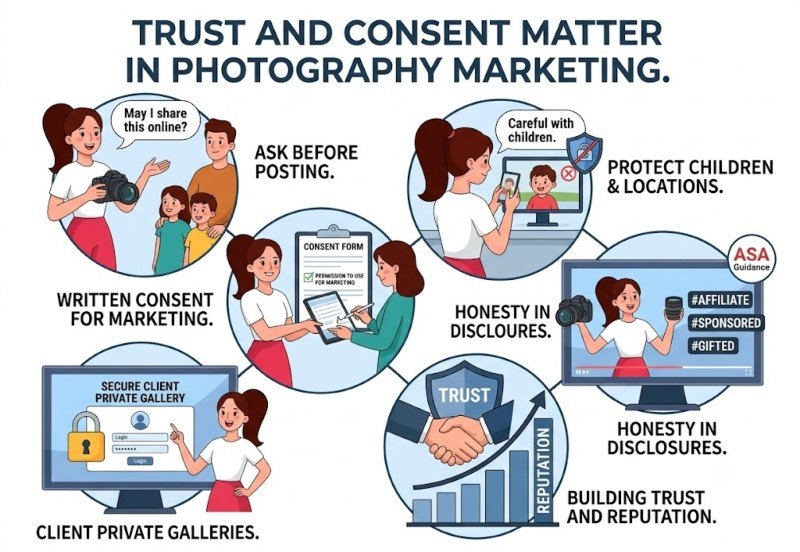
Photographers need to be careful with client photos.
Just because a client paid for a shoot does not always mean they are happy for the images to be used online. This is even more important with weddings, children, schools, medical settings, private homes, and sensitive events.
A simple consent process protects both sides.
Good habits include:
| Good Habit | Why It Matters |
|---|---|
| Ask before posting client images | Shows respect and avoids complaints |
| Use written consent for marketing use | Gives clear proof of permission |
| Let clients choose private galleries if needed | Builds confidence |
| Be careful with children’s images | Parents may have safety concerns |
| Do not post private locations without permission | Protects client privacy |
| Explain where images may be shared | Avoids confusion later |
The UK Intellectual Property Office has guidance on copyright and UK GDPR for photographers. The ICO also notes that if someone can be recognised in a photograph, it is usually treated as personal data, which matters when images are used online.
Photographers should also be honest about paid partnerships, gifted products, affiliate links, and sponsored posts. The ASA guidance on recognising ads on social media is useful for anyone working with brands or promoting gear.
This may not sound exciting, but it helps protect your reputation. Trust is hard to build and easy to lose.
Comments And Messages Are Part Of The Marketing
Many photographers focus only on posting.
But the real work often happens after the post goes live.
A person may comment, ask a price, send a direct message, or save a post for later. That is not just engagement. It is a possible enquiry.
Photographers should treat comments and messages like the front desk of their business.
Useful habits include:
| Habit | Why It Helps |
|---|---|
| Reply to comments properly | Shows the account is active |
| Answer direct messages clearly | Makes booking feel easy |
| Save common replies | Saves time without sounding cold |
| Ask simple follow-up questions | Helps move people towards enquiry |
| Add booking links to the bio | Reduces friction |
| Pin useful posts | Helps new visitors understand your work fast |
For example, if someone comments, “Where was this taken?” do not reply with one word. Say something helpful, such as:
“This was taken at Roundhay Park in Leeds. It works really well for relaxed family shoots because there is open space, trees, and softer light in the evening.”
That answer helps the person who asked. It also helps anyone else reading.
Social Proof Turns Attention Into Enquiries
People trust people.
A strong photo can get attention, but a real review can help someone decide. Social media gives photographers a chance to share proof without sounding pushy.
Good social proof includes:
| Type Of Proof | How To Use It |
|---|---|
| Client testimonials | Share a short quote with a matching image |
| Before-and-after examples | Show the value of editing, lighting, or direction |
| Repeat bookings | Mention when families or brands return |
| Venue tags | Show where you have worked |
| Printed products | Show albums, wall art, or finished prints |
| Client stories | Explain the problem and how the shoot helped |
For example, instead of writing, “Book me for family photos,” a photographer could share:
“A mum told me she was worried her toddler would not sit still. We planned a short outdoor session, kept it playful, and gave the child time to move. These are the kinds of shoots I love because they feel real.”
That sounds more human. It also handles a common client worry before they even ask.
Paid Ads Can Help, But Only After The Basics Are Right
Paid social media ads can work for photographers, but they should not be the first step.
If the profile is unclear, the website is weak, the booking page is confusing, or the portfolio does not match the offer, paid ads may only send more people into a poor experience.
Before spending money on ads, check:
| Area | What To Check |
|---|---|
| Profile bio | Does it say what you do and where you work? |
| Portfolio | Does it show the type of shoots you want to sell? |
| Contact method | Can people enquire quickly? |
| Pricing guidance | Is there enough information to avoid confusion? |
| Reviews | Is there proof that clients trust you? |
| Website | Does it load well and look current? |
Paid ads are most useful when promoting a clear offer, such as:
| Offer | Best Audience |
|---|---|
| Christmas mini sessions | Local families |
| Wedding photography consultation | Engaged couples in a set region |
| Brand photography day | Small business owners |
| School portrait service | Local schools and parent groups |
| Headshot sessions | Professionals and companies |
For many photographers, a small local campaign can be more useful than a large broad campaign. Clear targeting usually beats big numbers.
A Simple Audience Growth Funnel For Photographers
Online growth works best when people are guided step by step.
Most viewers will not book the first time they see your work. They need to notice you, trust you, and understand what to do next.
A simple funnel looks like this:
| Stage | What Happens | Content To Use |
|---|---|---|
| Discovery | A new person finds your work | Reels, hashtags, local tags, Pinterest pins |
| Interest | They look at more of your profile | Portfolio posts, Stories, pinned posts |
| Trust | They begin to believe you are the right fit | Reviews, behind-the-scenes clips, client stories |
| Action | They enquire or book | Bio link, booking form, clear call to action |
| Loyalty | They return or recommend you | Follow-up posts, email list, print offers |
A person should not have to guess where you work, what you offer, how to contact you, or whether you are taking bookings.
Common Mistakes Photographers Make On Social Media
Many photographers are talented but still struggle online because their content is unclear.
Here are the mistakes that hurt growth most often:
| Mistake | Why It Causes Problems | Better Choice |
|---|---|---|
| Posting only final images | People do not see the service behind the work | Mix final images with process content |
| Using vague captions | The post looks nice but does not guide the viewer | Add useful context and a next step |
| Ignoring local keywords | Nearby clients may not realise you work in their area | Mention towns, venues, and regions naturally |
| Copying trends without purpose | The account loses its own voice | Use trends only when they fit your service |
| Not replying to messages quickly | Warm enquiries go cold | Set simple reply times or saved responses |
| Hiding prices completely | Some clients feel unsure and leave | Give starting prices or package guidance |
| Posting without permission | Can damage trust | Use clear consent before sharing client images |
It should work more like a shop window, a friendly conversation, and a trust builder all at once.
Final Thoughts
Social media gives photographers a practical way to be seen by the right people. It helps turn quiet talent into visible work, especially for photographers serving local UK clients.
The aim is not to post all day or chase every trend. The aim is to show your style clearly, explain your process, respect your clients, and make it easy for people to enquire.
A photographer who posts with care, speaks like a real person, and shows useful proof will usually build a stronger audience than someone who only posts polished images with empty captions.
Good photography gets attention. Good communication turns that attention into trust. That is where real growth begins.