
There is something deeply rewarding about creating something with your own hands. In a busy family life filled with school runs, work commitments, and endless to-do lists, sewing and knitting offer a rare chance to slow down and focus on something simple, creative, and calming.
For many mums across the UK, these traditional crafts are making a meaningful comeback. Whether it is knitting a cosy blanket during a quiet evening or sewing practical items for the home, these skills are not just hobbies; they are tools for relaxation, saving money, and even building family connections.
Why Sewing and Knitting Are More Popular Than Ever
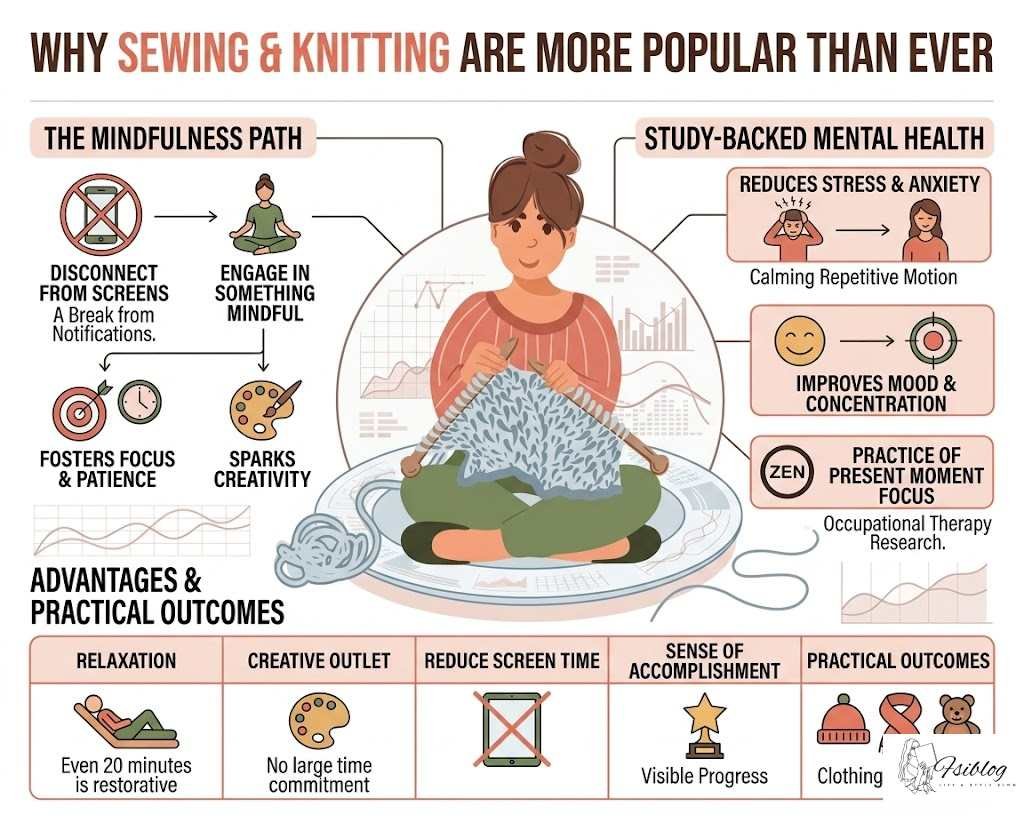
Many people are looking for ways to disconnect and engage in something more mindful. Sewing and knitting provide exactly that. They encourage focus, patience, and creativity, offering a break from screens and constant notifications.
Recent studies in occupational therapy and mental well-being suggest that repetitive, hands-on activities like knitting can reduce stress and anxiety while improving mood and concentration. These crafts are often compared to mindfulness practices because they help you stay present in the moment.
Benefits for Busy Mums
- Encourages relaxation and stress relief
- Provides a creative outlet without needing large time commitments
- Helps reduce screen time
- Creates a sense of accomplishment
- Offers practical outcomes such as clothing, gifts, or home décor
Even just 20 minutes of knitting during nap time or after bedtime can feel incredibly restorative.
Getting Started with Knitting: A Simple First Step
Knitting is one of the easiest crafts to begin with, making it ideal for complete beginners.
What You Need to Start
- A pair of knitting needles (size 4mm to 6mm is ideal)
- Medium-weight yarn (acrylic or cotton is beginner-friendly)
- A simple pattern or tutorial
Learn the Basics First
Focus on mastering two essential stitches:
- Knit stitch
- Purl stitch
These form the foundation of nearly all knitting projects.
Beginner Projects to Try
- Dishcloths
- Scarves
- Baby blankets
- Simple hats
Start small and manageable. This helps build confidence quickly and avoids overwhelm.
UK Tip
Visit local haberdasheries such as Hobbycraft or independent yarn shops. Many offer beginner kits and even in-store workshops where you can learn hands-on.
Sewing Basics: From Everyday Repairs to Creative Projects
Sewing is both practical and creative. It starts with simple repairs but can quickly evolve into making clothes, accessories, and home décor.
Essential Sewing Kit
- Needles
- Thread
- Fabric scissors
- Pins and a pin cushion
- Measuring tape
Start with Simple Tasks
- Sewing on buttons
- Fixing small tears
- Hemming trousers
- Making cushion covers
These small wins build confidence and teach essential techniques.
Choosing Your First Sewing Machine
If you enjoy sewing and want to take it further, a sewing machine is a worthwhile investment.
What to Look for in a Beginner Machine
- Easy threading system
- Basic stitch options
- Adjustable speed control
- Good reviews and reliability
Vintage vs Modern Machines
There are two popular options:
Modern Machines
- User-friendly features
- Lightweight and portable
- Ideal for beginners
Vintage Machines
- Durable and long-lasting
- Excellent straight stitch quality
- Often, more affordable second-hand
Many experienced sewists in the UK love restoring older machines. If you are considering this route, sourcing parts and accessories from specialists like Vintage & Modern Sewing Machines can help you maintain performance and extend the life of your equipment.
Crafting with Your Children: Building Skills and Memories
Sewing and knitting are fantastic activities to share with your children.
Age-Appropriate Ideas
- Young children: threading beads, choosing fabrics
- Primary age: simple stitching and basic knitting
- Teenagers: using sewing machines and making clothes
Skills Children Learn
- Patience and focus
- Fine motor coordination
- Problem-solving
- Creativity and independence
More importantly, it creates valuable bonding time away from screens.
Saving Money and Supporting Sustainable Living
With the rising cost of living in the UK, sewing and knitting can also help families save money.
Practical Ways to Save
- Repair clothes instead of replacing them
- Make school uniform adjustments
- Create handmade gifts
- Upcycle charity shop finds
Environmental Benefits
Fast fashion contributes significantly to waste and pollution. By making, mending, and reusing, you are actively reducing your environmental impact.
Knitting with natural fibres and choosing durable fabrics supports a more sustainable lifestyle, something many UK families are increasingly prioritising.
Finding Craft Communities in the UK
Crafting does not have to be a solo activity. There are many ways to connect with others:
Offline Options
- Local knitting groups
- Community centre workshops
- Library craft sessions
Online Platforms
- Ravelry for knitting patterns and forums
- Facebook groups for UK sewing communities
- Instagram for inspiration and tutorials
Joining a group can provide motivation, support, and a sense of belonging.
Practical Tips to Stay Consistent
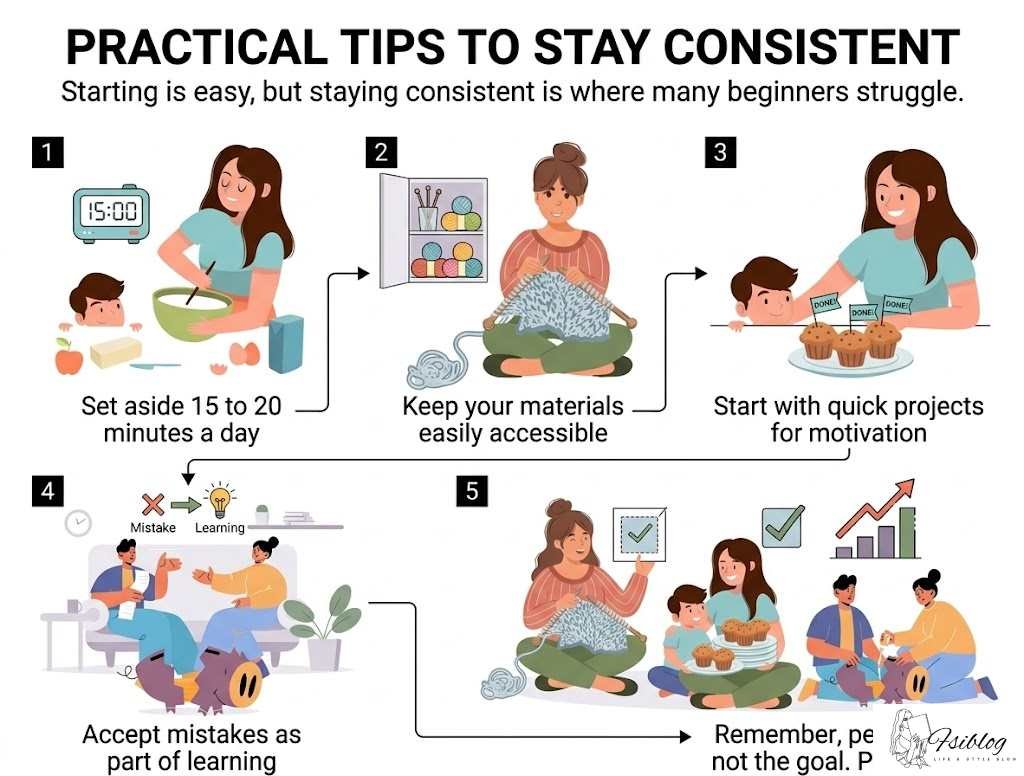
Starting is easy, but staying consistent is where many beginners struggle.
Simple Strategies
- Set aside 15 to 20 minutes a day
- Keep your materials easily accessible
- Start with quick projects for motivation
- Accept mistakes as part of learning
Remember, perfection is not the goal. Progress is.
Final Thoughts
Sewing and knitting are more than just hobbies. They are practical life skills, creative outlets, and powerful tools for improving mental well-being. For mums balancing busy households, these crafts offer a rare opportunity to slow down, create something meaningful, and even involve the whole family.
You do not need expensive tools or natural talent to begin. All you need is curiosity and a willingness to try. Over time, those small stitches can turn into something much bigger, a fulfilling and lasting hobby that benefits both you and your family.
References
- Riley, J., Corkhill, B., & Morris, C. (2013). The benefits of knitting for personal and social well-being in adulthood. Journal of Public Health. DOI: 10.1093/pubmed/fdt042
- Collier, A. F. (2011). The well-being of women who create with textiles: Implications for art therapy. Art Therapy Journal. DOI: 10.1080/07421656.2011.578238
- British Heart Foundation (Lifestyle and stress reduction insights related to mindful activities)