
Interactive kiosk solutions are transforming how UK businesses operate, offering faster services, reduced costs, and improved customer experiences. From retail shops and restaurants to hospitals and transport hubs, kiosks are now a practical tool for automation and efficiency.
To get real value, businesses need a complete end-to-end approach from planning and design to deployment and long-term support. Investing in custom digital kiosk solutions ensures systems are tailored to specific needs, delivering better results and scalability.
Understanding Business Needs and Use Case Definition
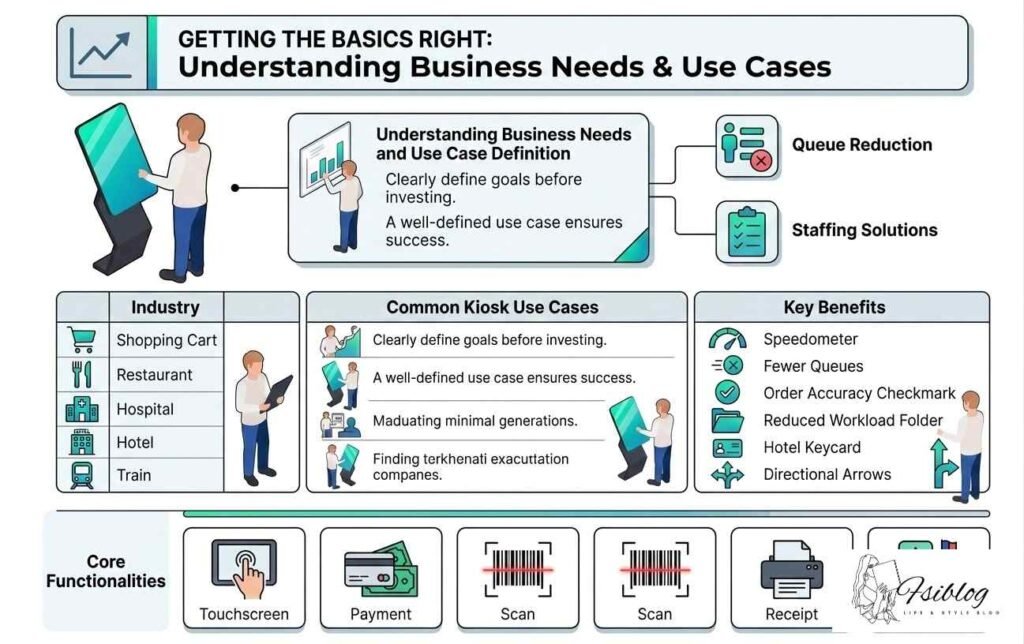
Before investing in kiosk technology, businesses must clearly define their goals and understand how kiosks will fit into daily operations. This stage lays the foundation for a successful project and prevents costly mistakes later.
A well-defined use case ensures that kiosks solve real problems such as long queues, staff shortages, or inefficient processes. It also helps prioritise features and avoid unnecessary complexity.
Industry-Specific Use Cases
| Industry | Common Kiosk Use Cases | Key Benefits |
|---|---|---|
| Retail | Self-checkout, product browsing | Faster service, fewer queues |
| Restaurants | Self-ordering, digital menus | Increased order accuracy |
| Healthcare | Patient check-in, appointment booking | Reduced admin workload |
| Hospitality | Hotel check-in, concierge services | Improved guest experience |
| Transport | Ticketing, wayfinding | Better customer flow |
Core Functionalities
- Touchscreen navigation
- Payment processing
- QR or barcode scanning
- Receipt printing
- Multi-language support
Hardware Design and Customisation with Custom Digital Kiosk Solutions
Hardware is the physical backbone of any kiosk system. A well-designed kiosk must be durable, user-friendly, and suitable for its environment. With custom digital kiosk solutions, businesses can create hardware that perfectly matches their operational needs.
Customisation ensures that kiosks are not only functional but also aligned with branding and user expectations.
Hardware Components Overview
| Component | Description | Importance |
|---|---|---|
| Display Screen | 10-inch to 55-inch touchscreen | User interaction |
| Touch Technology | Capacitive or infrared | Accuracy and durability |
| Enclosure | Indoor or outdoor casing | Protection and lifespan |
| Cooling System | Fans or heat dissipation design | Prevents overheating |
| Mounting Options | Wall-mounted, floor-standing | Space optimisation |
Peripheral Integration
- Payment terminals for secure transactions
- Barcode and QR scanners for quick input
- Cameras for identification or AI features
- NFC/RFID for contactless interaction
- Printers for receipts or tickets
Software Development and System Integration with Many Top Digital Signage Manufacturers in China
Software controls how users interact with kiosks and how businesses manage them. Many companies partner with many top digital signage manufacturers in China to access advanced, fully integrated solutions.
A strong software system ensures smooth performance, easy management, and secure operations.
Software Features Breakdown
| Feature | Purpose | Benefit |
|---|---|---|
| UI/UX Design | User-friendly interface | Faster task completion |
| CMS | Content management | Remote updates |
| POS Integration | Payment processing | Seamless transactions |
| CRM Integration | Customer data handling | Personalised experience |
| Cloud Connectivity | Remote monitoring | Easy scalability |
Key Integration Systems
- POS systems for transactions
- ERP systems for inventory
- CRM systems for customer data
- Payment gateways for secure payments
Manufacturing, Testing, and Quality Assurance
Once design and development are complete, manufacturing ensures the kiosk is built to perform reliably in real-world conditions.
This stage focuses on quality, consistency, and compliance with UK and international standards.
Certification Standards
| Certification | Purpose |
|---|---|
| CE | European safety compliance |
| FCC | Electronic communication standards |
| RoHS | Environmental safety |
| ISO | Quality management systems |
Testing Types
- Functional testing to ensure all features work
- Stress testing for high-usage environments
- Performance testing for speed and stability
Deployment, Maintenance, and After-Sales Support
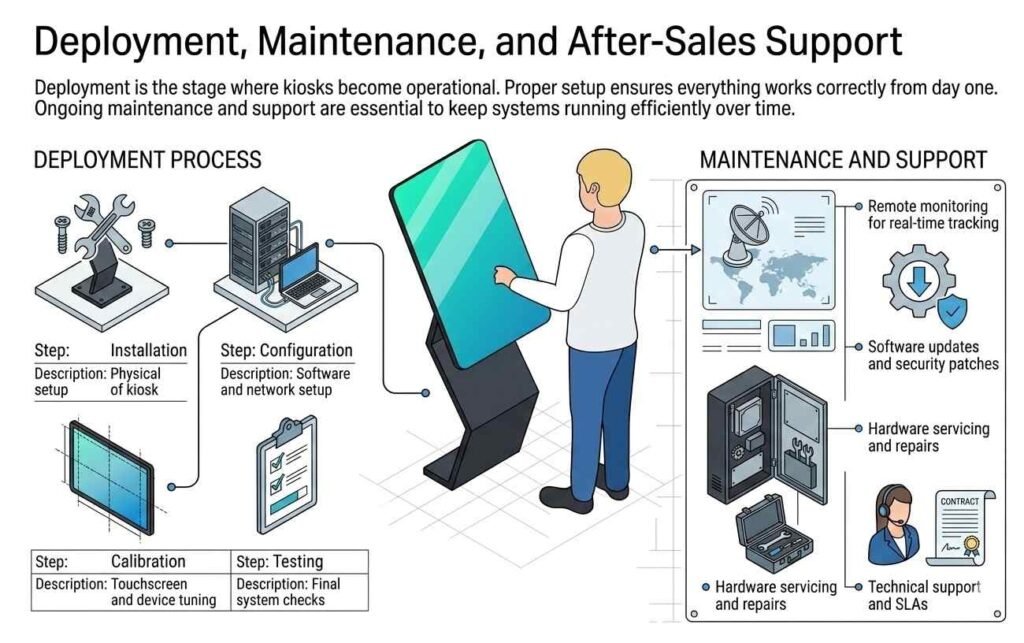
Deployment is the stage where kiosks become operational. Proper setup ensures everything works correctly from day one.
Ongoing maintenance and support are essential to keep systems running efficiently over time.
Deployment Process
| Step | Description |
|---|---|
| Installation | Physical setup of kiosk |
| Configuration | Software and network setup |
| Calibration | Touchscreen and device tuning |
| Testing | Final system checks |
Maintenance and Support
- Remote monitoring for real-time tracking
- Software updates and security patches
- Hardware servicing and repairs
- Technical support and SLAs
Benefits of End-to-End Interactive Kiosk Solutions for UK Businesses
End-to-end solutions provide more than just convenience—they deliver measurable business value.
Key Benefits
| Benefit | Impact |
|---|---|
| Efficiency | Faster service, reduced queues |
| Cost Reduction | Lower staffing costs |
| Customer Experience | Improved satisfaction |
| Scalability | Easy expansion |
| Data Insights | Better decision-making |
Common Challenges and Solutions
While kiosks offer many advantages, businesses may face challenges during implementation.
Challenges vs Solutions
| Challenge | Solution |
|---|---|
| Low user adoption | Simple and intuitive UI |
| Technical issues | Reliable hardware and testing |
| Integration problems | Experienced solution providers |
| Maintenance costs | Remote monitoring systems |
Future Trends in Interactive Kiosk Solutions
The kiosk industry continues to evolve with new technologies shaping the future.
Emerging Trends
| Trend | Description |
|---|---|
| AI Integration | Personalised user experiences |
| Contactless Tech | Mobile and QR-based interaction |
| Cloud Systems | Centralised management |
| Data Analytics | Advanced customer insights |
Conclusion
Interactive kiosks are becoming essential for UK businesses looking to improve efficiency and customer experience. By adopting a complete end-to-end approach and investing in custom digital kiosk solutions, companies can build systems that are reliable, scalable, and future-ready.
Working with experienced partners, including many top digital signage manufacturers in China, ensures seamless integration of hardware and software, helping businesses achieve long-term success.
With the honorable strategy, kiosks can transform operations, reduce costs, and create a better experience for customers across all industries.