
The first half of the year often fills up quickly with work events, social gatherings, travel plans, and family celebrations. By the time autumn arrives, many people notice their skin looking uneven, tired, or lacking its usual glow. Months of sun exposure, changing weather, and busy routines can quietly affect tone, hydration, and texture.
Starting a brightening-focused skincare routine early in the year gives your skin time to recover gradually. Instead of rushing into quick fixes before important events, a steady approach helps create a smoother, more radiant complexion that looks healthy both in person and in photos.
Why Skin Tone Often Looks Dull Before the Holidays
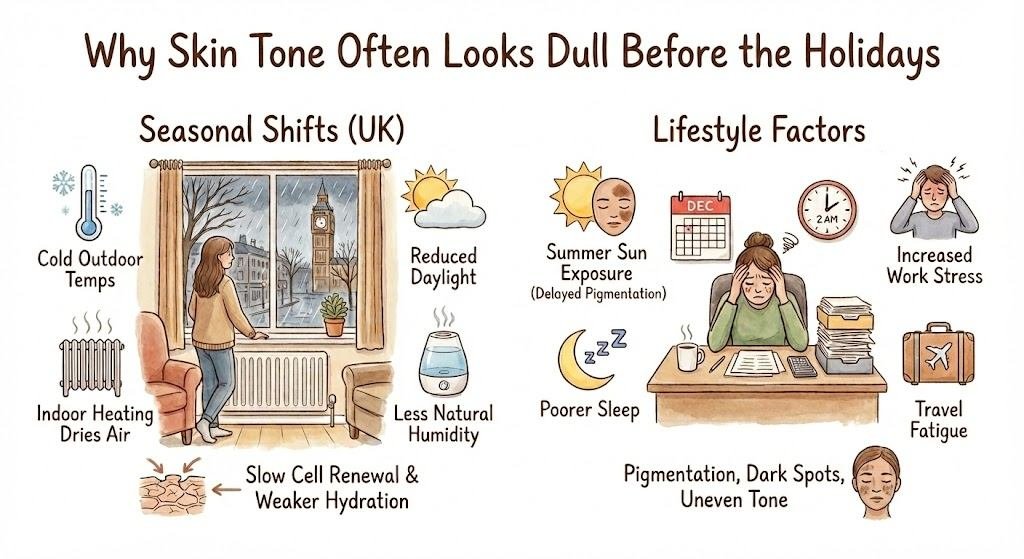
Several factors combine throughout the year to affect how your skin looks by late autumn and winter.
In the UK, especially, seasonal shifts mean:
- Reduced daylight during autumn and winter
- Cold outdoor temperatures
- Indoor heating that dries the air
- Less natural humidity
These conditions can slow skin cell renewal and weaken hydration, leaving the complexion looking flat or rough.
At the same time, lifestyle factors play a role:
- Summer sun exposure is causing delayed pigmentation
- Increased work stress toward the year-end
- Poorer sleep during busy periods
- Travel fatigue and disrupted routines
Pigmentation develops when excess melanin forms in response to UV exposure or hormonal changes. This can show up as dark spots, sun patches, or uneven tone that makeup cannot fully disguise.
Importantly, sun damage does not always appear immediately. Many people only notice uneven tone months after summer has ended.
Why Starting Brightening Skincare Early Makes a Real Difference
Modern brightening skincare is no longer about harsh bleaching or aggressive treatments. Today’s approach focuses on supporting the skin’s natural renewal process.
Effective brightening routines typically aim to:
- Regulate melanin production
- Encourage gentle, consistent exfoliation
- Strengthen the skin barrier
- Improve hydration and light reflection
Skin brightening products designed for gradual, results-driven care over several months allow results to develop naturally. This reduces irritation and produces a more believable, healthier glow than last-minute intensive treatments.
Starting early also means your skin becomes more stable and predictable, which is especially helpful before weddings, holiday parties, or professional events.
Key Ingredients That Actually Help Even Skin Tone
The most successful brightening routines rely on ingredient combinations that support each other rather than compete.
| Ingredient | Description | Main Benefit |
|---|---|---|
| Vitamin C | A cornerstone brightening ingredient that helps improve radiance, support collagen, and reduce the visibility of discolouration. Morning use also helps defend against environmental stress. | Brightening, collagen support, environmental protection |
| Alpha Hydroxy Acids (AHAs) | Gentle chemical exfoliants that remove dull surface cells so fresher skin reflects light more evenly. Regular mild exfoliation often works better than occasional strong peels. | Smooths skin & improves radiance |
| Niacinamide | Helps regulate oil balance, reduce redness, and support even tone while strengthening the skin barrier. Particularly useful for sensitive or combination skin. | Oil control, calming, barrier support |
| Melanin-regulating ingredients | These target pigment production at its source, helping prevent new dark spots from forming rather than only treating existing ones. | Prevents hyperpigmentation & dark spots |
Dermatology guidance consistently shows that steady, moderate use beats aggressive layering. Overloading the skin with too many active products often causes irritation, which can actually worsen pigmentation.
A Simple UK-Friendly Brightening Routine (Realistic for Busy Schedules)
If you want a practical starting structure:
Morning
- Gentle cleanser
- Vitamin C serum
- Lightweight moisturiser
- Broad-spectrum SPF 30 or higher
Evening
- Cleanser
- Brightening serum or treatment
- Moisturiser suited to your skin type
1–2 times weekly
This simple consistency often produces better long-term results than complicated 10-step routines.
Supporting Habits That Make Brightening Products Work Better

Skincare products alone rarely deliver full results without supportive daily habits.
Use SPF every single day.
- Even during cloudy UK winters, UV exposure continues to trigger pigmentation. Daily SPF is the single most effective step for maintaining even tone.
Hydrate both externally and internally.
- Well-hydrated skin reflects light more evenly. Drink enough water and use moisturisers suited to the season. Richer creams often help during colder months.
Avoid aggressive scrubbing
- Over-exfoliating damages the skin barrier and may trigger inflammation, worsening uneven tone.
Prioritise sleep where possible
- Consistent sleep supports hormonal balance and overnight skin repair.
Start early before big events
- If you want a visible improvement, allow at least 8–12 weeks of consistent routine rather than trying quick fixes.
When to Consider Professional Advice
If pigmentation is persistent, spreading, or resistant to standard skincare, it may be worth consulting a dermatologist or qualified skin specialist.
Professional treatments such as supervised chemical peels, prescription-strength topicals, or laser therapies can sometimes accelerate results safely when combined with a stable home routine.
Final Thoughts
The biggest mistake many people make is treating skincare like an emergency project before major events. Healthy, bright skin rarely comes from last-minute products.
Instead, the most reliable approach is:
- Start early
- stay consistent
- protect daily
- adjust gradually with the seasons
When your skin is supported year-round, the holiday season becomes easier. Instead of trying to fix dullness quickly, you maintain the healthy glow you have already built.