
You followed the trending routines. You bought the serums influencers recommend. You committed to long Sunday self-care sessions. Yet your skin still breaks out, feels irritated, or looks dull.
If this sounds familiar, you are not alone. Many people across the UK spend years trying popular products that promise glowing results but deliver very little. The frustration builds because it feels like everyone else has found the secret except you.
Dermatologists such as Dr Ophelia Veraitch often emphasise a simple truth: skincare rarely fails because your skin is “difficult”. It fails because most routines are not designed for your individual biology, lifestyle, or environment.Once you understand that, the path to better skin becomes much clearer.
Real Problem With One-Size-Fits-All Skincare
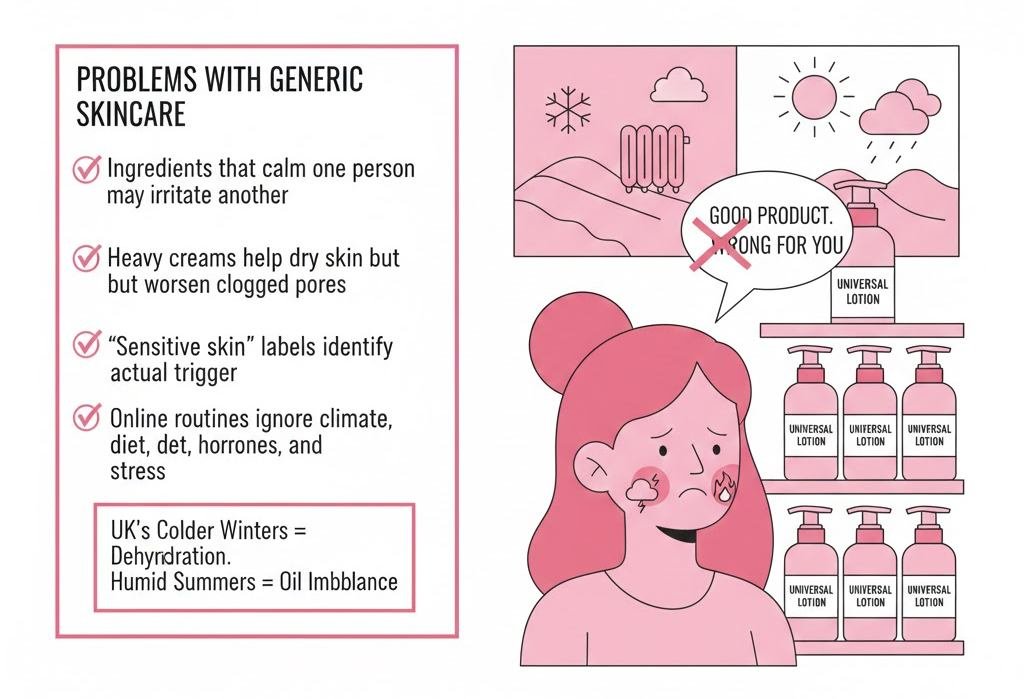
The skincare industry largely operates on mass-market formulas. Products are designed to suit the widest possible audience, aiming to be broadly tolerated rather than perfectly targeted.
This creates several problems:
- Ingredients that calm one person may irritate another
- Heavy creams may help dry skin, but worsen clogged pores
- “Sensitive skin” labels rarely identify the actual trigger
- Online routines ignore climate, diet, hormones, and stress
For example, the UK’s colder winters and indoor heating often increase dehydration, while humid summer spells can trigger an imbalance in oil production. A routine copied from someone living in a different climate may never suit your skin.
The product itself may be good. It is simply wrong for you.
What Personalised Skincare Actually Means
True personalised skincare is not choosing “oily” or “dry” from a website menu. Real personalisation considers multiple factors together:
- Current skin condition, not just long-term type
- Lifestyle, including sleep, stress, and diet
- Environmental exposure, such as pollution or heating
- Hormonal patterns and medication
- Ingredient tolerance and past reactions
The most reliable approach involves a professional clinical consultation, where a specialist evaluates these factors and creates a targeted plan rather than guessing through trial and error.
Even one professional assessment can save years of wasted spending on unsuitable products.
Signs Your Current Routine Is Not Working
Many people keep using ineffective skincare for far too long. Watch for these warning signs:
- No visible improvement after 12 weeks of consistent use
- Tightness or stinging after applying moisturiser
- Skin swings between oily and flaky
- Breakouts repeatedly return in the same areas
- Redness or pigmentation never fades
If these happen, the issue is rarely a lack of patience. It usually means the routine doesn’t match your skin’s needs.
Recognising this early helps you change direction faster.
How to Build a Routine That Actually Works
Focus on concerns, not labels.
Instead of asking “What skin type am I?”, ask:
- Do I want fewer breakouts?
- Do I need a brighter tone?
- Am I dealing with redness?
- Is dehydration the real issue?
Choose products based on these real concerns.
Introduce new activities slowly.
Trying multiple new products together makes it impossible to identify what works.
Better approach:
- Add one new active ingredient
- Wait 4 to 6 weeks
- Observe carefully
- Only then add another
This prevents irritation and gives clear results.
Give ingredients enough time.
Many people abandon products too early.
Typical timelines:
- Retinoids: 8 to 12 weeks
- Vitamin C: 6 to 10 weeks
- Niacinamide: 4 to 8 weeks
- Pigmentation treatments: 3 to 4 months
Skin renewal takes time. Fast results are rarely stable results.
When Prescription-Grade Skincare Makes Sense
Over-the-counter products have limited ingredient strengths due to regulations. Prescription treatments can include:
- Higher-strength retinoids for acne or ageing
- Targeted pigment-reducing formulas
- Anti-inflammatory treatments for rosacea
- Medicated creams for persistent breakouts
These are not simply “stronger products”. They are carefully calibrated to match both the condition and your tolerance level.
For persistent acne, pigmentation, or redness, prescription guidance is often the turning point.
Small Personalisation Habits That Transform Results
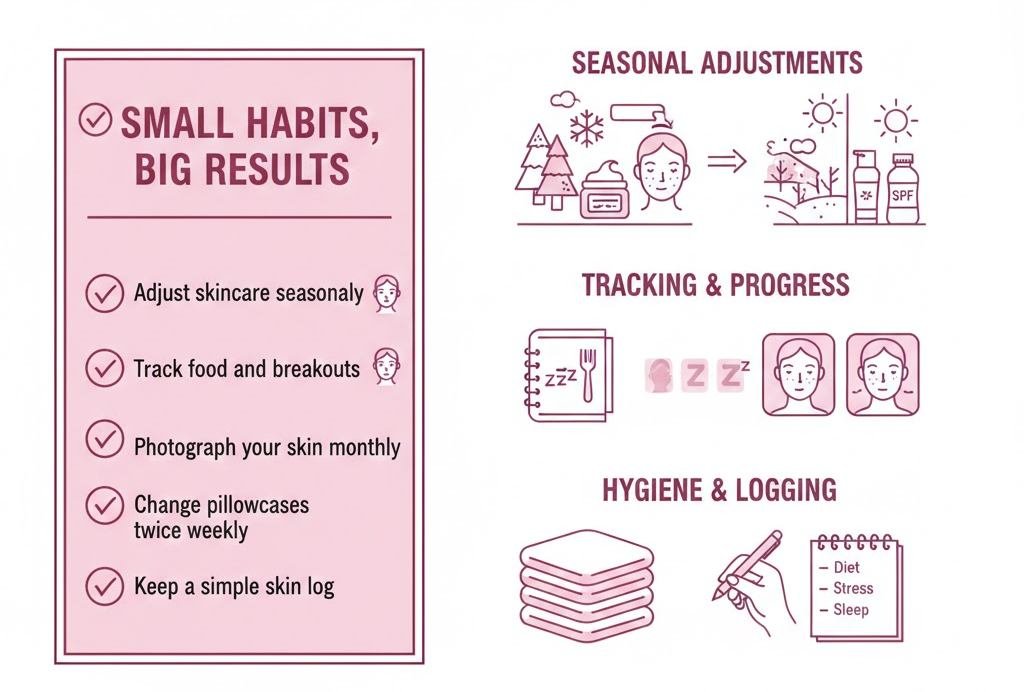
You do not need a complicated routine to see real improvement. Small habits consistently followed often matter more than expensive products.
Adjust skincare seasonally
Winter may require heavier hydration, while summer often calls for lighter formulas and a stronger SPF.
Track food and breakouts.
Common UK triggers include dairy, high sugar intake, alcohol, and irregular sleep patterns.
Photograph your skin monthly.
Progress is gradual. Photos reveal improvements that mirrors hide.
Change pillowcases twice weekly.
Fabric collects bacteria, oils, and residue that transfer directly onto your skin.
Keep a simple skin log.
Note:
- new products
- stress levels
- sleep changes
- breakouts
Patterns appear surprisingly quickly.
Why Your Skin Is Not the Problem
| Key Idea | Meaning | Why It Matters |
|---|---|---|
| Your Skin Is Not Failing | Skin issues aren’t a personal flaw. | Shifts focus from blame to understanding. |
| Your Routine Isn’t Personalised | Most routines are copied from trends, not built for your needs. | Explains why “popular” routines often don’t work. |
| Observe Your Skin Patterns | Pay attention to how your skin reacts over time. | Makes results more predictable and intentional. |
| Personalised ≠ Complicated | You don’t need a 10-step routine. | Simplicity often works better. |
| Right Steps > More Steps | Using correct products beats copying social media routines. | Fewer, well-chosen steps deliver better results. |
Final Thought
Healthy skin rarely comes from the most popular products. It comes from understanding your own skin’s behaviour, introducing treatments thoughtfully, and adjusting based on real feedback rather than trends.
Your skin is unique.
Your routine should be too.