
Driving with kids can be one of the most memorable parts of a family holiday. It can also feel stressful when roads become narrow, winding, wet, or unfamiliar, and the children in the back seat start getting restless. Whether you are navigating rural country lanes, coastal roads in Cornwall, steep Scottish routes, or dealing with sudden British weather changes, tricky roads demand extra focus and planning.
The good news is that with the right preparation, family road trips can feel calmer, safer, and far more enjoyable. Below are practical, realistic tips that help UK families stay prepared, keep children comfortable, and reduce stress while driving on challenging roads.
1. Accept the Risk and Prepare for Emergencies
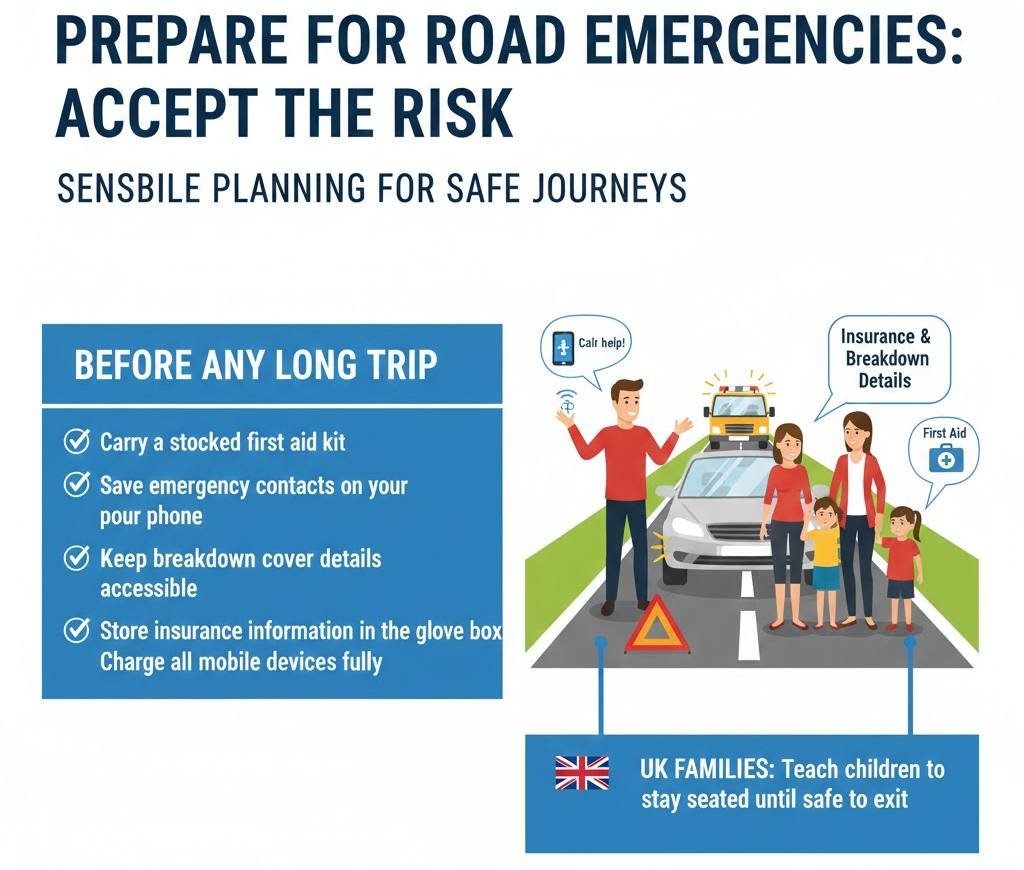
Every driver hopes for a smooth journey, but experienced motorists understand that accidents can happen even when you drive carefully. Preparing mentally for this possibility helps you stay calm and organised if something unexpected occurs.
Statistics show that Great Britain recorded 1,579 fatalities in road accidents, underscoring the importance of preparation. This does not mean you should feel anxious. Instead, it encourages sensible planning.
Before any long trip, make sure you:
- Carry a stocked first aid kit
- Save emergency contacts on your phone
- Keep breakdown cover details accessible
- Store insurance information in the glove box
- Charge all mobile devices fully
If you were ever involved in a serious collision abroad, some families may even need specialist legal advice, such as contacting an auto accident lawyer in Colorado Springs or another regional expert if travelling internationally. Knowing where help comes from removes panic and allows you to focus on protecting your family.
For UK travel specifically, also teach older children basic safety steps such as staying seated after a stop and waiting for instructions before exiting the vehicle.
Prepared families react faster and stay calmer.
2. Prepare Children Before the Journey Starts
Children cope much better when they know what to expect. Before leaving, explain the type of roads you may drive on.
Tell them in simple terms:
- The car might turn frequently on country roads
- Hills may feel steep in some areas
- Traffic might slow down in villages
- Rain could make the journey longer
When children understand the situation, they are less likely to feel scared or frustrated.
You can also involve them in planning by:
- Showing the route on Google Maps
- Letting them pick a snack stop
- Allowing them to choose one travel game
- Giving them a simple printed itinerary
Research often shows that children aged three to four can be the most challenging travellers because they struggle with patience and time awareness. Giving them visual progress markers, such as “after this town we stop”, works far better than saying “soon”.
For tricky roads, especially, avoid activities that cause motion sickness. Instead of screens during winding routes, prepare:
- Sticker books
- Audiobooks
- Magnetic travel games
- Story podcasts
- Soft toys for comfort
Rotate activities regularly to prevent boredom from building up.
3. Prioritise Comfort to Prevent Meltdowns
Comfort is one of the biggest factors that determines whether a difficult drive feels manageable or exhausting.
Start with clothing. Dress children in breathable layers that can be added or removed easily. UK weather can change quickly, especially when travelling between regions or coastal areas.
Inside the car, keep essentials within reach:
- Neck pillows for naps
- Lightweight blankets
- Easy open water bottles
- Spill-proof snack containers
- Sick bags for winding roads
Schedule short stops every 90 minutes where possible. Even five minutes outside the car can reset everyone’s mood. Let children stretch, walk briefly, or breathe fresh air.
Parents often underestimate how much hunger affects behaviour. Keep slow-release snacks like bananas, oat bars, or sandwiches on hand rather than relying solely on sugary treats that cause energy crashes.
A comfortable child is far less likely to complain about slow traffic or twisting roads.
4. Watch the weather closely and Adjust Early
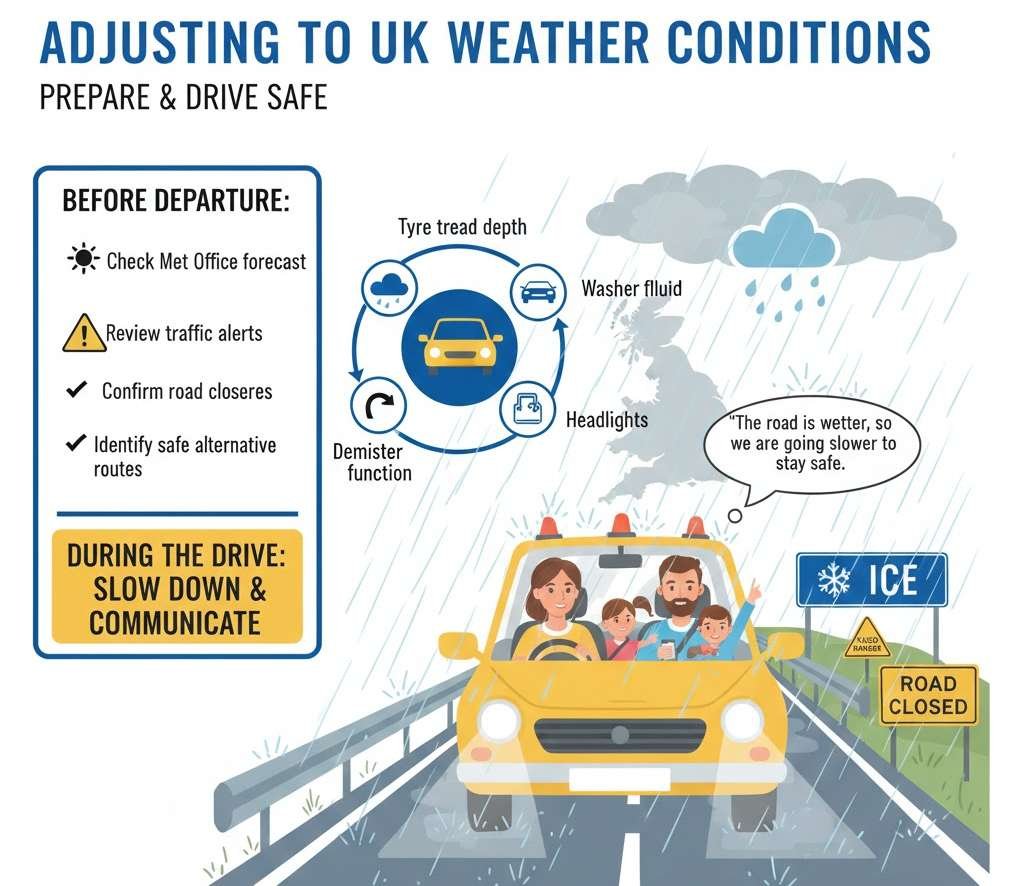
The weather is one of the biggest challenges for UK road trips. Heavy rain, fog, icy mornings, and strong winds can transform a simple route into a difficult drive.
Recent reports show the UK has experienced unusually wet conditions, increasing flood risks in several regions. This means drivers must plan more carefully, particularly during winter and early spring.
Before departure:
- Check the Met Office forecast
- Review traffic alerts
- Confirm road closures
- Identify safe alternative routes
During the drive, adjust early rather than late. If rain intensifies, slow down immediately rather than wait for visibility to drop. Children often notice tension in the car, so explain calmly why you are changing speed or route.
For example, say:
“The road is wetter now, so we are driving a bit slower to stay safe.”
Clear communication reassures children rather than worrying them.
Also, ensure your vehicle is ready by checking:
- Tyre tread depth
- Windscreen washer fluid
- Working headlights
- Demister function
- Fuel levels before rural routes
These small checks prevent major travel stress later.
Frequently Asked Questions
Is travelling with children worth the effort?
Yes. Family travel builds shared memories, confidence, and curiosity in children. Although planning takes more effort, most parents find the long-term emotional benefits extremely valuable.
At what age is it hardest for road trips?
Many parents find the ages of three to four the most challenging because children want independence but lack the patience and emotional regulation needed for long journeys.
Why do children struggle with long drives?
Children dislike long drives mainly due to boredom, restricted movement, disrupted sleep, and hunger. Keeping routines flexible and activities varied helps reduce frustration.
Final Thoughts
Driving with kids on tricky roads doesn’t have to feel overwhelming. When you prepare for emergencies, explain the journey clearly, prioritise comfort, and respect changing UK weather conditions, family road trips become smoother and far more enjoyable.
Many of the best family memories come from the unexpected parts of the journey, whether that is a scenic countryside stop, a spontaneous snack break, or laughter during a slow winding drive.
With smart preparation and realistic expectations, even the most challenging roads can become part of the adventure rather than a source of stress.