
Poker is back in focus. One week, Kylie Jenner is suddenly in the middle of a Vanity Fair poker moment, talking about home games, cards, nerves, and her now much-discussed “normal poker outfit.” Then Stake quickly follows up with Nina Drama, flipping the tone into a playful parody that spreads rapidly across Instagram and X.
Nina Drama’s clip, captioned “rate my poker outfit,” racks up millions of views, clearly riding the wave created by Jenner’s earlier buzz. Meanwhile, Kylie’s own reel pulls massive engagement, reminding people that poker can sit comfortably inside mainstream culture again.
At first glance, it’s just another viral moment of celebrities, aesthetics, and algorithm-friendly content. But underneath that surface, something more meaningful is happening. Poker didn’t need saving. It was already growing, evolving, and finding new audiences. These viral moments accelerated the spotlight.
Glow Is Nice, But Tournaments Can Sting
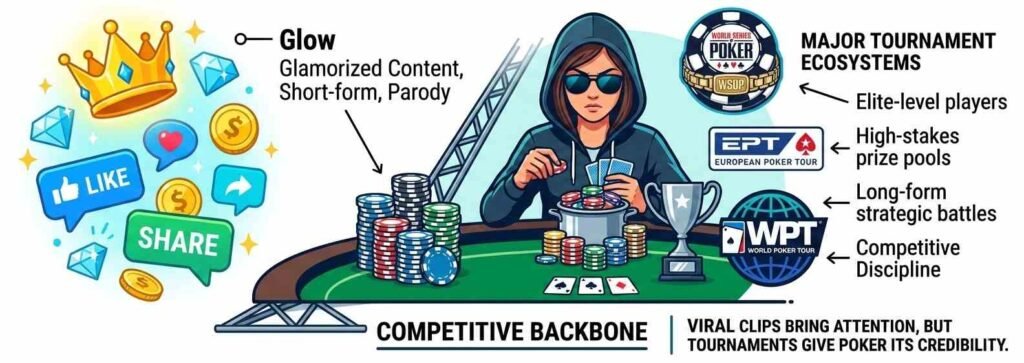
Poker is uniquely resilient. It can absorb trends without losing its identity.
You can glamorize it, parody it, or turn it into short-form content, and it still holds up under the intense pressure of real competition. That’s rare.
Major tournament ecosystems like the World Series of Poker, European Poker Tour, and World Poker Tour prove that poker isn’t just entertainment; it’s a serious competitive discipline.
These events bring:
- High-stakes prize pools
- Elite-level players
- Long-form strategic battles
The viral clips bring attention, but tournaments give poker its credibility. Without that competitive backbone, the trend wouldn’t last.
From Home Games to the Big Stage
Poker thrives because it exists on multiple levels at once.
Kylie Jenner made the game feel accessible by sharing her personal journey learning the basics, using cheat sheets, and hosting casual home games. That relatability pulled new audiences in.
Then Nina Drama reshaped that same idea into something more playful and internet-native.
- One version feels aspirational
- The other feels entertaining and self-aware
Yet both point back to the same truth: poker is easy to start, but difficult to master.
That duality is what keeps people engaged.
Strategy Behind the Style
Poker may look simple, but it quickly becomes a mental battlefield.
Beyond the visuals and personalities, the real game is built on layered decision-making:
- Position awareness – Acting later gives you more information
- Stack size strategy – Your chip count shapes your aggression
- Opponent reading – Patterns, timing, and behavior matter
- Risk management – Knowing when not to play is just as important
- Emotional control – Staying calm under pressure is everything
In tournaments, these factors intensify. There are no second chances. Every move carries weight.
That’s why poker remains compelling; it constantly tests both logic and intuition.
How Social Media Is Reshaping Poker’s Audience
The way people discover poker has changed dramatically.
Instead of diving straight into strategy-heavy content, new players now enter through entertainment:
- Viral reels
- Influencer collaborations
- Short-form storytelling
Figures like Kylie Jenner and Nina Drama act as cultural bridges, making poker feel less intimidating and more inviting.
This shift matters because it lowers the barrier to entry. People no longer need deep knowledge to get interested; they need curiosity.
Online Poker Growth Is Fueling the Momentum
While social media drives awareness, digital platforms are driving participation.
Playing poker online has become one of the biggest growth engines for the industry. It offers convenience, accessibility, and a wide range of game formats that appeal to both beginners and experienced players.
Key growth drivers include:
- Mobile accessibility
- Larger, shared player pools
- Faster game formats
- Lower entry stakes
This digital expansion means that curiosity sparked by a viral clip can quickly turn into real gameplay.
It also creates a smoother journey:
- Watch content
- Get curious
- Try the game
- Improve over time
That loop didn’t exist this seamlessly before.
Why Poker Tournaments Deliver Better Drama
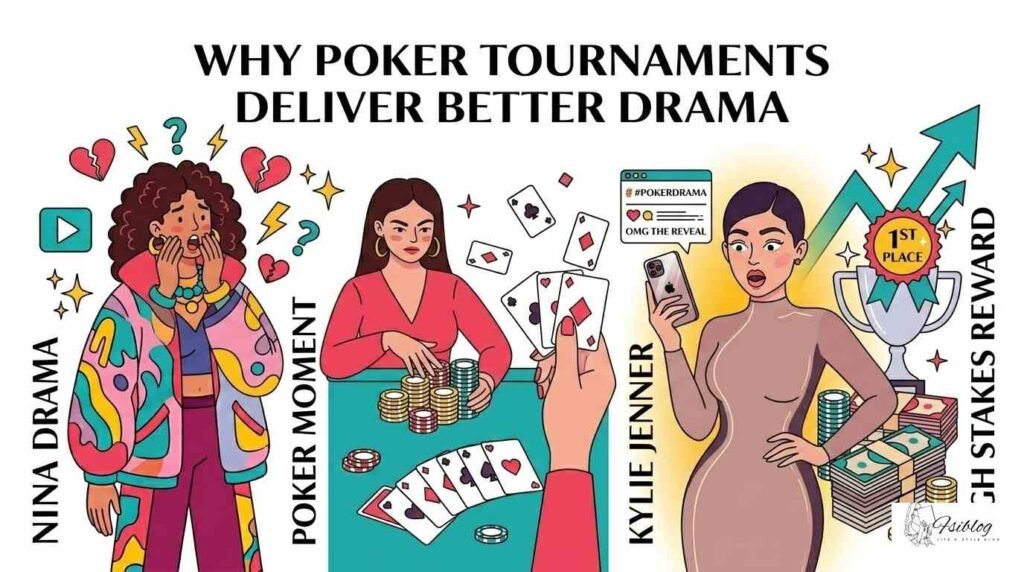
Poker tournaments succeed because they tell stories over time.
Unlike most gambling formats, which are quick and outcome-focused, tournaments build tension gradually:
- Players rise and fall
- Mistakes compound
- Pressure increases with every level
Events like the World Series of Poker create narratives that feel almost cinematic.
You get:
- Underdog runs
- Brutal eliminations
- Strategic rivalries
- Emotional highs and lows
This storytelling element keeps viewers engaged far longer than a single win or loss ever could.
Balance Between Luck and Skill
One of poker’s most fascinating aspects is its balance.
In the short term, luck plays a role. Anyone can win a hand.
But over time, skill becomes the deciding factor.
This balance creates:
- Accessibility for beginners
- Depth for experienced players
- Long-term engagement
It’s also why poker maintains credibility as a competitive game rather than just a form of entertainment.
What This Means for New Players and Brands
This moment creates real opportunities.
For new players:
- Easier entry through relatable content
- More platforms to practice and learn
- A clearer path from casual play to competition
For brands:
- Poker is culturally relevant again
- Influencer marketing is proving effective
- Content-driven engagement is working
The combination of entertainment and strategy makes poker uniquely marketable.
Conclusion
The moment driven by Nina Drama and Kylie Jenner didn’t revive poker; it amplified an already growing ecosystem.
What makes poker special is its ability to evolve without losing its core identity.
It can exist as:
- A casual home game
- A viral social media trend
- A high-stakes competitive arena
And it moves between these worlds effortlessly.
The viral clips may fade, but the structure behind the game, its strategy, its tournaments, and its growing digital presence ensure that poker remains relevant.
That’s why poker doesn’t just trend. It lasts.
Disclaimer
This content is for informational and entertainment purposes only. Poker involves financial risk and may be subject to legal restrictions depending on your location. Always ensure you are of legal age and participate responsibly. Avoid chasing losses and set clear limits when engaging in any form of gambling.