
When you start thinking about replacing your car, the news cycle can make the decision feel confusing. One week, reports suggest prices are falling, and the next you hear that new-model waiting lists are pushing buyers back into the second-hand market. At the same time, many families are feeling pressure from rising household costs, so making the wrong financial decision feels riskier than ever.
The truth is, the UK used-car market is no longer experiencing the extreme volatility seen in recent years. Supply chains are stabilising, pricing trends are more predictable, and buyers now have more negotiating power than they did before. That does not mean every deal is automatically good, but it does mean this period may offer genuine opportunities for careful buyers.
If you are wondering whether now is the right time to purchase a used car, this guide walks you through key market shifts, financial considerations, inspection tips, timing strategies, and long-term ownership factors to help you make a confident, informed decision.
Understanding the Current Used Car Price Landscape
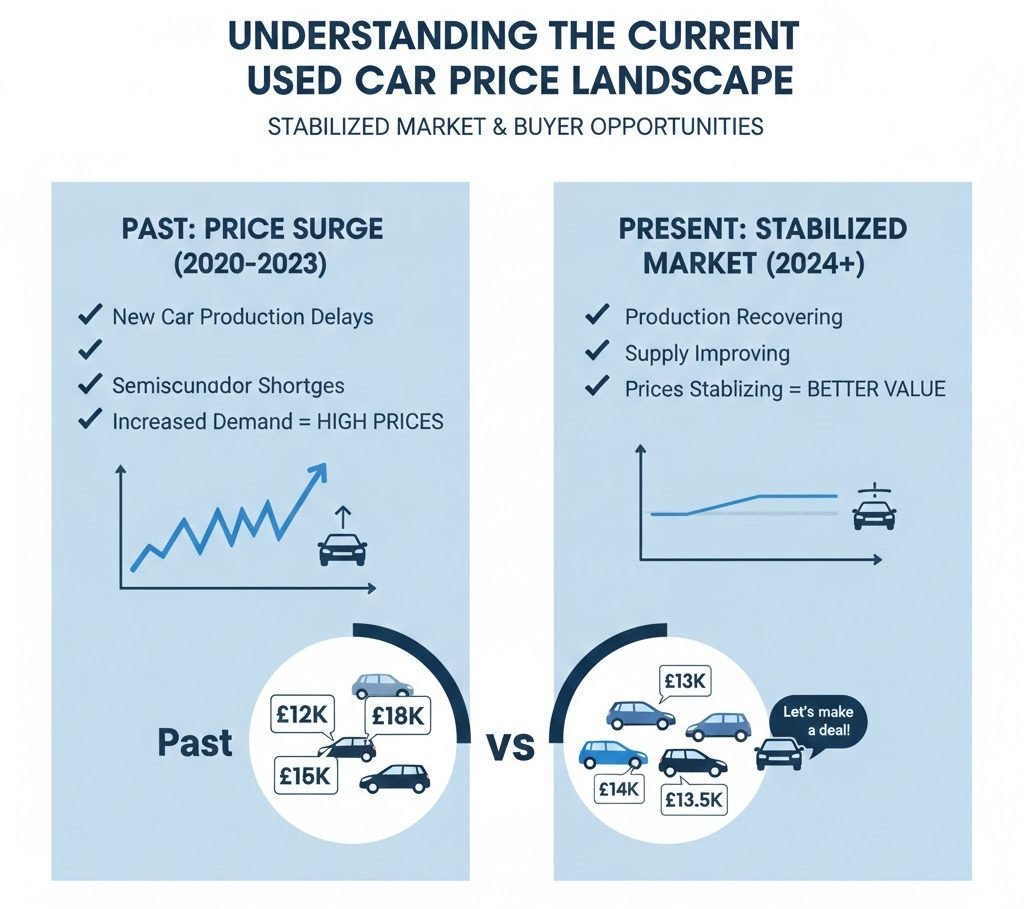
Over the past few years, used-car prices rose sharply due to production delays for new cars, semiconductor shortages, and increased demand. Buyers who needed vehicles had fewer choices, which pushed prices up quickly.
Today, the market looks different.
Prices for many mainstream vehicles such as small hatchbacks, family SUVs, and compact saloons have stabilised. While they have not fully returned to pre-shortage levels, the dramatic month-to-month jumps have slowed. This stability makes it easier for buyers to judge whether a price reflects genuine value or inflated demand.
For example:
- One year ago, similar cars could vary by thousands of pounds purely due to availability
- Now, comparable vehicles tend to cluster within narrower price ranges
- Dealers are more willing to negotiate than during peak shortage periods
This does not mean every car is cheap, but it does mean the market is more predictable, which benefits buyers who take time to research.
Why Increased Supply Works in Your Favour
Vehicle production levels have improved across Europe and Asia, leading to more new cars reaching buyers. As new vehicles are delivered, trade-ins and lease returns increase, replenishing the used market with fresh stock.
This change matters because supply directly affects buyer power.
When supply was tight, buyers often had to:
- Accept higher prices
- Skip full inspections
- Make fast decisions
- Travel long distances for limited stock
Now, you are more likely to:
- Compare several versions of the same model
- Choose between mileage ranges
- Select preferred trim levels
- Test drive multiple vehicles locally
This wider choice lets you prioritise quality rather than rushing into the first available option.
How Strong Demand Still Influences Pricing
Even with improved stock levels, used-car demand remains strong in the UK.
Many households still see second-hand vehicles as the most practical option because:
- New car prices remain historically high
- Insurance premiums continue rising
- Delivery times for some models remain lengthy
- Financing new vehicles often requires larger deposits
Because of this, desirable used cars still sell quickly when priced correctly.
That means timing matters.
If you find a well-maintained car with:
- Full service history
- Clean MOT record
- Reasonable mileage
- Fair price compared to similar listings
It is wise to arrange a viewing promptly rather than waiting weeks.
Waiting too long can mean losing a good vehicle to another buyer, even in a more balanced market.
How Financing Conditions Affect Your Purchase Timing
Interest rates and financing conditions have become a major factor in the decision to buy a used car.
Monthly affordability matters more than sticker price for many buyers. Before committing, it helps to use a car finance calculator to see price differences between vehicles, deposit sizes, and contract lengths.
For example:
- A £2,000 higher purchase price might increase payments only slightly
- A shorter contract may raise monthly costs but reduce total interest
- A larger deposit can significantly lower long-term expenses
Running these scenarios early helps you:
- Avoid emotional overspending
- Focus on realistic monthly budgets
- Compare vehicles based on total ownership cost
- Understand affordability before viewing cars
This preparation reduces stress and prevents last-minute financial surprises.
Changing Role of Electric and Hybrid Vehicles
One of the biggest shifts in the UK used car market involves Electric and hybrid models.
New EV manufacturers have introduced aggressive discounts and leasing incentives, which have pushed down resale values of older electric cars.
For buyers, this creates a unique opportunity.
You may now find:
- Three-year-old EVs are priced close to petrol equivalents
- Hybrid family cars are available at significantly reduced prices
- Nearly-new electric vehicles below previous market expectations
This price adjustment reflects rapid technological improvement rather than vehicle quality issues.
However, buyers should still consider:
- Battery warranty remaining duration
- Home charging availability
- Insurance costs for electric vehicles
- Range suitability for daily travel
If your lifestyle aligns with electric ownership, the current market may represent one of the most accessible entry points yet.
How Seasonal Timing Impacts Used Car Deals
The time of year can influence both availability and pricing.
| Time Period | Market Trend | What It Means for Buyers |
|---|---|---|
| January to March | Dealers push to move stock after Christmas slowdown. | Strong potential for good deals. |
| April to June | More trade-ins enter the market before new registrations. | Increased choice in used vehicles. |
| July to August | Demand rises due to holiday travel. | Slightly higher competition when buying. |
| September | New registration period brings more trade-ins. | More availability in the market. |
| November to December | Dealers aim to meet annual targets. | Possible year-end discounts. |
Buying during quieter retail periods often improves negotiation chances.
Should You Buy From a Dealer or Private Seller
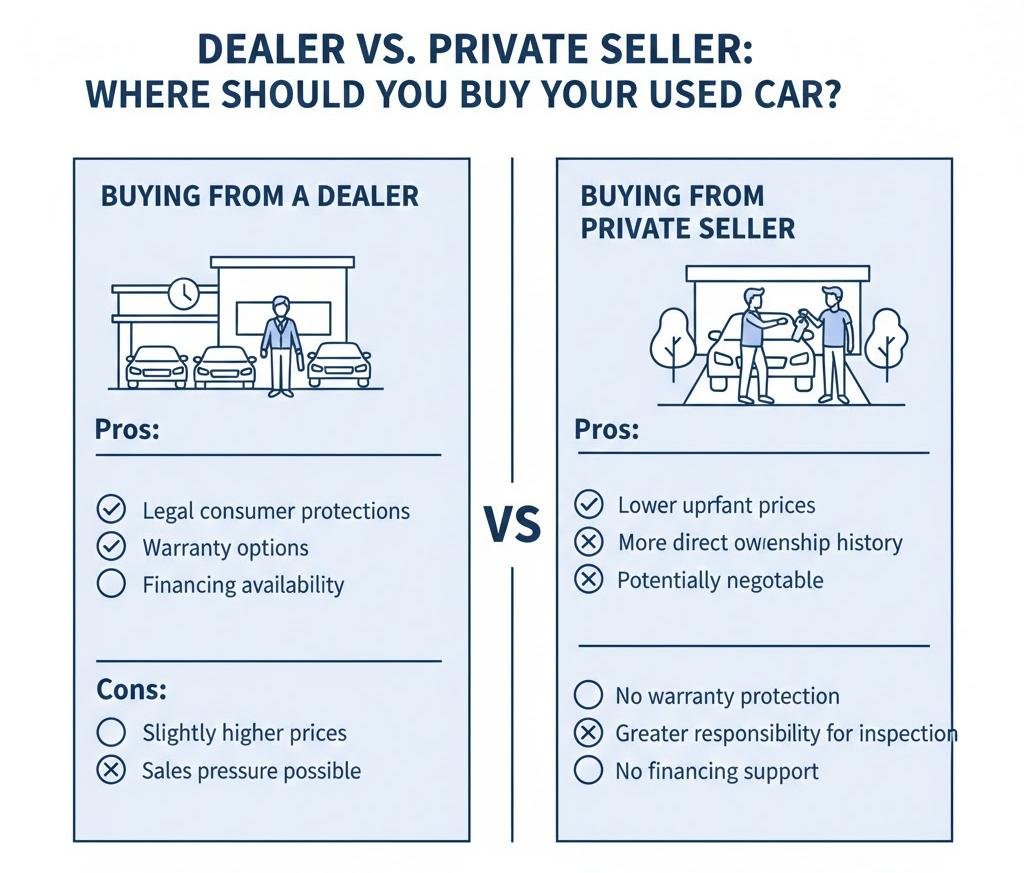
Both options have advantages depending on your priorities.
Buying From a Dealer
Pros:
- Legal consumer protections
- Warranty options
- Financing availability
- Trade-in convenience
Cons:
- Slightly higher prices
- Sales pressure possible
Buying From a Private Seller
Pros:
- Lower upfront prices
- More direct ownership history
- Potentially negotiable
Cons:
- No warranty protection
- Greater responsibility for inspection
- No financing support
For many UK buyers, dealers offer reassurance worth the extra cost, especially for higher-value vehicles.
Essential Checks Before Buying Any Used Car
Regardless of market timing, inspection remains critical.
Always check:
Vehicle History
- HPI or similar background check
- Outstanding finance
- Insurance write-off history
- Previous ownership count
MOT Records
Review online MOT history for:
- Repeated advisory issues
- Rust concerns
- Brake wear patterns
- Suspension problems
Service Documentation
Look for:
- Regular servicing intervals
- Manufacturer-approved garages
- Timing belt replacement is required where necessary
Physical Inspection
Check:
- Uneven tyre wear
- Panel alignment
- Interior condition vs mileage
- Warning lights on the dashboard
Skipping these checks can turn a cheap purchase into an expensive repair project.
Hidden Ownership Costs UK Buyers Often Forget
Purchase price is only part of the financial picture.
Consider:
- Insurance group rating
- Road tax band
- Fuel consumption
- Maintenance parts availability
- Parking permit costs
- ULEZ or Clean Air Zone charges
Sometimes, a slightly more expensive but reliable model proves cheaper long term.
When Waiting Might Be the Better Choice
Despite improving conditions, waiting could make sense if:
- You expect interest rates to fall soon
- Your current vehicle remains reliable
- You are uncertain about switching to electric
- You plan a major relocation or job change
Buying a car works best when your personal situation is stable.
Market timing matters less than lifestyle timing.
Signs That Now Is the Right Time for You Personally
You may be ready to buy if:
- Your current vehicle requires frequent repairs
- Running costs are rising significantly
- Safety and reliability concerns are increasing
- You need better fuel efficiency
- Your commute or family needs have changed
Replacing a failing vehicle early often costs less than repeated repair bills.
Practical Strategy for Getting the Best Used Car Deal
Follow this structured approach:
| Step | Action | Purpose |
|---|---|---|
| 1 | Research model reliability first | Avoids costly long-term problems. |
| 2 | Set maximum total ownership budget | Keeps spending aligned with finances. |
| 3 | Compare at least five similar listings | Helps identify fair market value. |
| 4 | Run financing scenarios beforehand | Prevents surprises in monthly costs. |
| 5 | Inspect vehicle history thoroughly | Reveals past accidents or issues. |
| 6 | Test drive under mixed road conditions | Assesses real-world performance. |
| 7 | Negotiate calmly using comparable prices | Improves chances of a better deal. |
This method prevents rushed decisions and improves confidence.
Final Thoughts
The UK used-car market is no longer experiencing the extreme price volatility seen in recent years. Supply has improved, pricing has stabilised, and buyers now have more flexibility to compare vehicles carefully before committing.
While strong demand still exists, the balance between stock availability and buyer choice has shifted in a way that rewards patient, informed shoppers.
For many households, especially those managing tighter budgets and long-term financial planning, the current market offers realistic opportunities to secure reliable transport at a fair price.
Ultimately, the right moment to purchase a used car is not defined purely by headlines or market speculation. It comes when the vehicle fits your needs, your finances are in order, and the specific car passes quality checks.
Make the decision based on preparation rather than pressure, and your purchase is far more likely to feel right both immediately and years down the road.