



Big purchases are rarely just about finding the lowest price. A car, sofa, boiler, laptop, kitchen appliance, or set of fitted wardrobes can affect your finances and daily comfort for years. Choose well, and the purchase feels sensible every time you use it. Choose badly, and the saving you thought you made can disappear through repairs, poor performance, or the need to replace it sooner than expected.
For UK households, this matters more than ever. Rising bills, higher mortgage or rent costs, expensive childcare, and the general pressure of the consistently high cost of living mean that many people are being more careful with major spending. That does not mean always buying the cheapest option. It means understanding value properly before you commit.
Look Beyond the Sticker Price
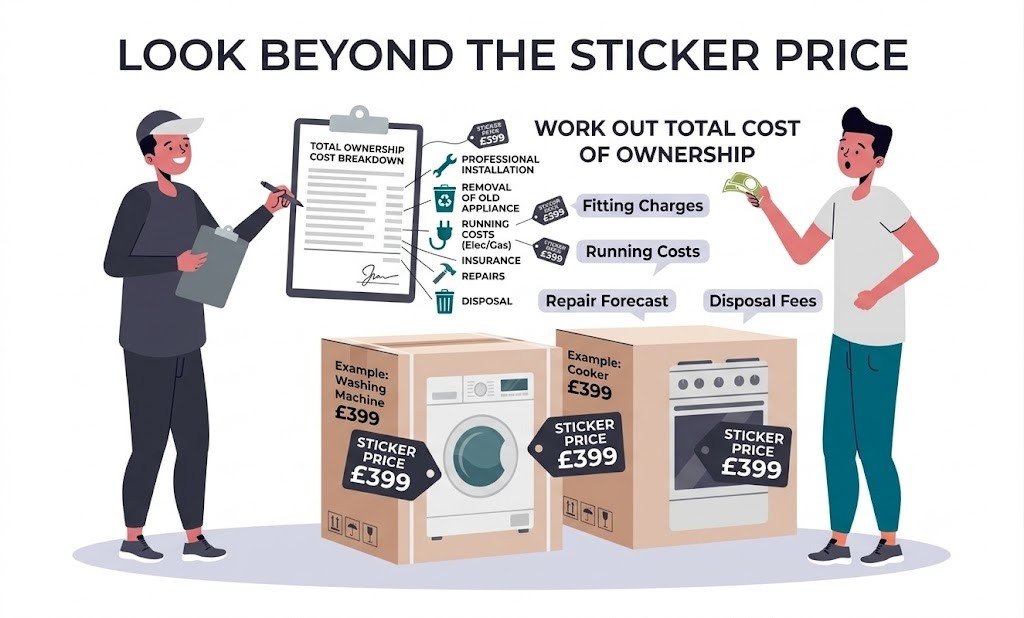
The price you see first is often not the price you finally pay. This is especially true with larger purchases, where delivery, fitting, running costs, insurance, repairs, and disposal can all change the real total.
A washing machine that costs £80 less than a better-rated model may look like the smarter buy at checkout. But if it uses more electricity, has a smaller drum, or is likely to need repairs sooner, the savings may not last. The same applies to cars, furniture, laptops, boilers, and garden equipment.
Work Out the Total Cost of Ownership
Before spending, ask what the item will cost over the next few years, not just today. For example:
- A car may need insurance, road tax, servicing, tyres, fuel, MOT work, parking permits, and finance interest.
- A cooker may need professional installation, removal of the old appliance, delivery charges, and suitable electrical or gas connections.
- A laptop may need extra storage, a warranty, software, repairs, or accessories.
- A sofa may need delivery, stain protection, assembly, or removal of old furniture.
This wider view helps you avoid false bargains. A product is only a good value if it performs well, lasts long enough, and does not create surprise costs.
Compare Like With Like
Many shoppers lose money because they compare products too quickly. Two items may look similar online, but the details can be very different.
With appliances, check energy rating, capacity, warranty length, noise level, parts availability, and installation requirements. With cars, compare mileage, service history, MOT status, ownership history, emissions, insurance group, and whether there is any finance still attached. With furniture, look at frame material, fabric quality, cushion filling, delivery times, and return terms.
Match the Purchase to Your Real Life
The best purchase is not always the largest, newest, or most expensive one. It is the one that fits how you actually live.
A huge American-style fridge freezer may be impressive, but it may be wasteful in a small kitchen or a household that shops little and often. A large television may feel tempting, but if it overwhelms the room or does not fit the viewing distance, the extra spend is not useful. A high-spec laptop may be unnecessary if you mainly use it for emails, browsing, schoolwork, or basic office tasks.
Good buying starts with honest use. Ask yourself:
- What problem does this purchase solve?
- How often will I use it?
- What features will I genuinely need?
- What features sound impressive but will probably go unused?
- Will it fit my home, routine, budget, and long-term plans?
This is where many UK buyers can save money without lowering quality. Cutting unnecessary features is very different from buying something poor.
Buy at the Right Time
Timing can have a big effect on price. Retailers often discount products when they need to clear stock, hit monthly targets, or make space for newer models.
Electrical goods are commonly reduced during seasonal sales, bank holiday promotions, January sales, and Black Friday periods. Furniture retailers often run offers around Easter, summer, and Boxing Day. Cars can sometimes be cheaper near the end of a quarter, when dealers are trying to meet sales targets, or around plate change periods in March and September.
At certain places, like car auctions, the scope for savings can be substantial. That said, auctions are not for everyone. They can move quickly, may offer limited protection compared with buying from a dealer, and require careful checks before bidding. For confident buyers who understand the risks, they can offer value. For first-time buyers, a reputable dealer, an approved used scheme, or an independent inspection may be safer.
Avoid Sale Pressure
A sale is only useful if the item was worth buying in the first place. UK shoppers are often pushed by countdown timers, “limited stock” messages, and large crossed-out prices. These can create urgency, but they do not always prove value.
Before buying in a sale, check the price history where possible. Compare the same model across several retailers. Look at independent reviews, not only customer ratings on the retailer’s own website. For cars, check valuation tools and similar listings. For appliances, compare running costs and warranty support.
If the discount is genuine but the product is not right for you, it is still wasted money.
Use UK Consumer Protections Wisely
UK buyers have useful protections, but it is better to understand them before something goes wrong.
When buying from a business, goods should be of satisfactory quality, fit for purpose, and as described. This matters when buying appliances, furniture, electronics, and vehicles from traders. Online purchases usually come with cancellation rights, although there are exceptions for custom-made goods and some services.
Paying by credit card can also offer added protection on eligible purchases between £100 and £30,000 under Section 75. That can be useful for expensive items such as furniture, electronics, holidays, and some home improvement work.
Keep the Paper Trail
For major purchases, keep records. Save receipts, order confirmations, warranty details, delivery notes, inspection reports, finance agreements, and written promises made by the seller.
If a sofa arrives damaged, a car develops a serious fault, or an appliance fails early, clear paperwork makes it easier to resolve the issue. Verbal promises are much harder to prove.
Negotiate Without Making It Awkward
Many people in the UK feel uncomfortable negotiating, especially in shops or with tradespeople. But polite negotiation is normal on big-ticket items, particularly cars, furniture, appliances, home improvement work, and package deals.
The way that you negotiate can affect the final price, but it can also affect the quality of the deal. A good negotiation is not about being aggressive. It is about being prepared, realistic, and clear.
Ask for Value, Not Just a Discount
Sometimes the seller cannot reduce the price much, but they may be able to improve the deal. You might ask for free delivery, installation, removal of the old item, a longer warranty, accessories, servicing, or a better finance rate.
For example, when buying a car, you might ask for a fresh MOT, a service, new tyres, or minor cosmetic work to be completed before collection. When buying a washing machine, you might ask for delivery, connection, and old appliance removal to be included. When buying furniture, you might ask whether the retailer can match a competitor’s price or include fabric protection.
Know When to Walk Away
The strongest position is being willing to leave the deal. If the seller knows you are desperate, you may have less room to negotiate. Set your maximum budget before you start. If the numbers do not work, walk away calmly.
This is especially important with finance offers. A low monthly payment can hide a high total cost. Always check the APR, term length, deposit, final payment, and total amount payable. If you cannot explain the finance agreement clearly to someone else, do not sign it yet.
Be Careful With Second-Hand Purchases
Second-hand buying can be one of the best ways to save money, especially for cars, furniture, tools, bikes, baby equipment, and refurbished electronics. But it needs more caution than buying new.
For private sales, your rights are usually more limited than when buying from a business. You need to inspect carefully before paying. Check for signs of damage, missing parts, poor repairs, and safety issues.
Safety Checks Matter
Some items should be treated with extra care. Used child car seats are risky if you do not know their full history, because previous accident damage may not be visible. Gas appliances should only be fitted by a Gas Safe registered engineer. Electrical goods should be checked for damage, overheating, loose plugs, or frayed cables. Upholstered furniture should have the correct fire safety labels.
Saving money is not worth taking avoidable safety risks.
Do Not Ignore Reviews, Repairs, and Aftercare
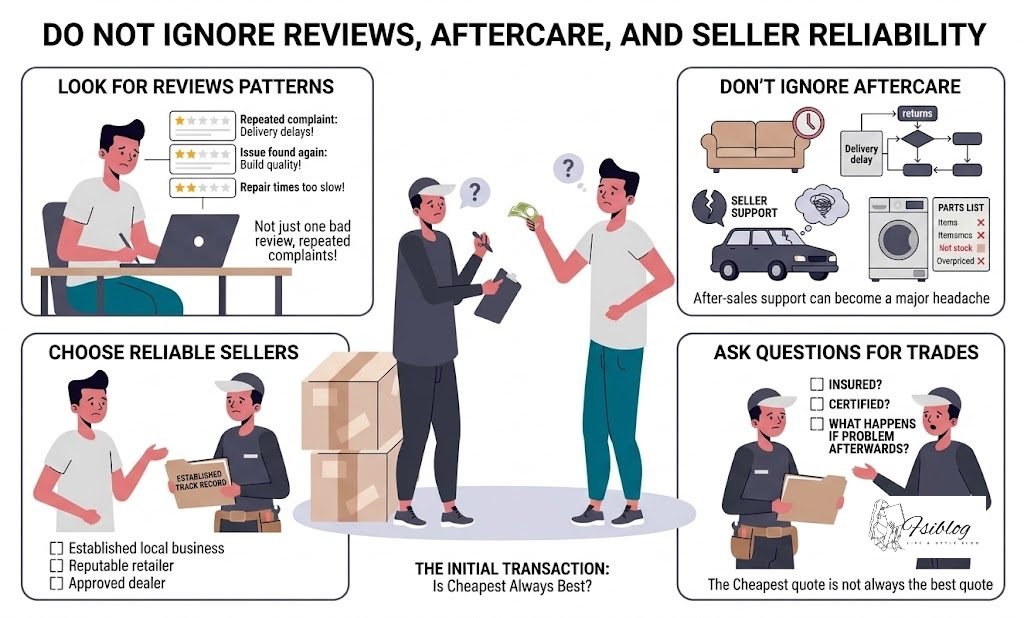
A product’s aftercare can be just as important as its features. A cheaper appliance from a brand with poor parts availability may become expensive if it breaks. A sofa with a long delivery delay and a difficult returns process can cause frustration. A car from a seller with poor after-sales support can become a headache if a fault appears.
Look for patterns in reviews. One bad review is not always meaningful, but repeated complaints about the same issue should be taken seriously. Pay attention to delivery problems, warranty disputes, build quality, customer service, and repair delays.
Choose Sellers With a Track Record
For larger purchases, the seller matters. A reputable retailer, established local business, approved dealer, or well-reviewed installer can reduce risk. The cheapest quote is not always the best quote, especially for work in your home.
For trades and installations, ask what is included, who will do the work, whether they are insured, whether any certification is needed, and what happens if there is a problem afterwards.
Build a Simple Buying Plan
A practical buying plan can stop you from making a rushed decision. Before committing, write down:
- Your maximum budget
- Your must-have features
- Your nice-to-have features
- The full cost, including delivery, fitting, insurance, finance, and running costs
- At least three comparable options
- The seller’s return policy and warranty
- Any safety or installation requirements
- What will you do if the item develops a fault
This takes a little time, but it can prevent expensive mistakes.
Final Thoughts
Saving money on big purchases is not about being tight with every pound. It is about spending with more control. The cheapest option can become expensive if it is unreliable, unsafe, inefficient, or unsuitable. The most expensive option can also be wasteful if you are paying for features you do not need.
The best value usually sits somewhere between the two. It comes from knowing the real cost, comparing carefully, timing the purchase well, using your rights, negotiating politely, and refusing to be rushed.
For UK households, that approach can make a real difference. A careful purchase does not just protect your bank balance today. It helps you avoid regret months or years later.