



Many UK homeowners are looking for better ways to use the space they already have. Moving to a larger property can be expensive, stressful, and difficult, especially in popular areas where demand stays strong, and suitable homes do not remain on the market for long.
For homeowners in Kingston and the wider south west London area, improving an existing property can often feel more practical than relocating. A well-planned loft conversion can create an extra bedroom, a home office, a quiet study area, or a more flexible family space without losing garden area or changing neighbourhood.
The best home improvements are not only about adding square footage. They are about making a property work better for daily life, improving comfort, and protecting long-term value.
Why Homeowners Are Improving Instead of Moving
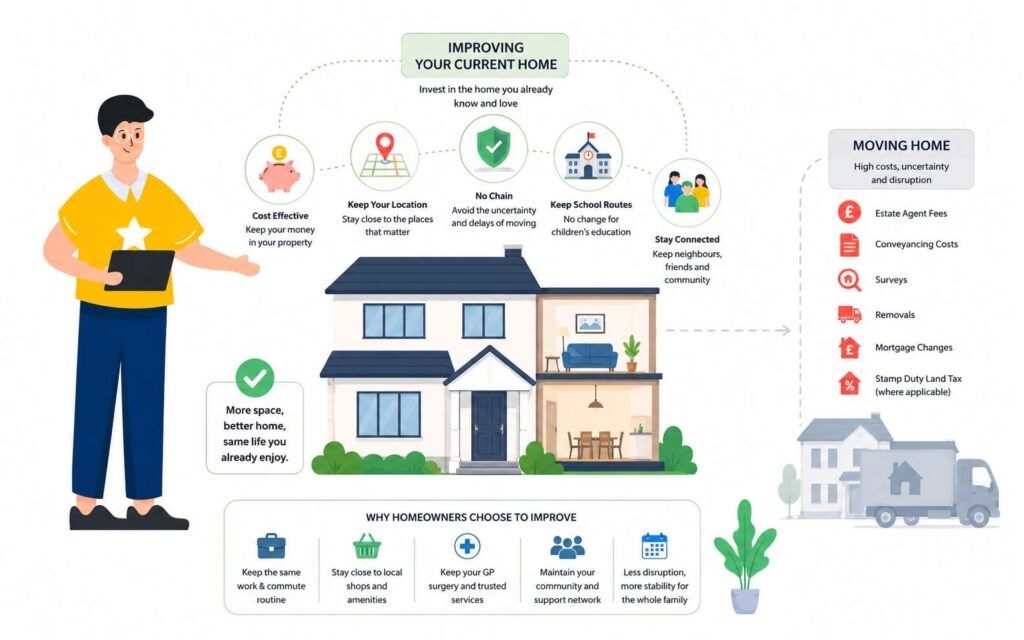
The cost of moving in the UK can be high. Homeowners may need to consider estate agent fees, conveyancing costs, surveys, removals, mortgage changes, and Stamp Duty Land Tax where it applies. In an area such as Kingston, where homes are often in strong demand, the price difference between a current property and a larger one can be significant.
Improving an existing home means the investment goes into a property the homeowner already knows. The family can keep the same school routes, transport links, local shops, GP surgery, neighbours, and daily routine. This matters because a home is not only a building. It is also connected to work, family life, children’s education, and local convenience.
For many households, the real question is not whether a bigger home would be useful. It is whether moving is the best way to get that extra space. In many cases, adapting the current home is the more realistic answer.
Making Better Use of Existing Space
Many properties contain areas that are not being used to their full potential. The loft is a common example. In many homes, it is used only for storage, even though it may have enough potential to become a practical living area with the right design and approvals.
This approach is especially useful where outdoor space is limited. Building outwards may reduce garden size, affect natural light, or require more complex planning decisions. A loft conversion can allow homeowners to increase usable space while keeping the existing footprint of the house largely the same.
For homeowners who want to stay local while gaining more room, professionally planned loft conversions in Kingston can be a practical way to turn unused roof space into a comfortable and valuable part of the home.
How Lifestyle Changes Have Increased Demand for Space
Modern family life has changed. Many people now work from home for part of the week. Children may need quiet study areas. Families may need guest accommodation, storage, or a separate room where someone can take calls without disturbing the rest of the household.
A kitchen table or spare corner may work for a short time, but it is not always a long-term solution. A dedicated room can make the home feel calmer and more organised. It can also help separate work from family life, which is important for comfort and wellbeing.
A loft room can be designed for one main purpose while still allowing future flexibility. A home office today may become a child’s bedroom later. A guest room may become a hobby room. A quiet study area may later become a private space for an older teenager. This flexibility is one of the main reasons conversion projects appeal to growing households.
Choosing the Right Loft Conversion Type
Not every loft conversion is suitable for every property. The right choice depends on roof shape, head height, structure, budget, planning rules, and the way the space will be used.
A rooflight conversion is often the simplest option where the loft already has good height. It keeps the roof shape mostly unchanged and brings in daylight through roof windows. This can suit homeowners who want a modest extra room without major changes to the outside of the house.
A dormer conversion is common across many terraced and semi-detached homes because it creates more headroom and floor space. A rear dormer can make a loft feel much closer to a normal room, but the design still needs care. The size, materials, windows, and roof proportions should suit the property.
A hip-to-gable conversion may suit some semi-detached or detached homes with a sloping side roof. It changes the side of the roof to create more internal space. A mansard conversion can create even more room, but it is usually more complex and may need closer planning consideration.
The best option is not always the biggest one. A good conversion should fit the house, respect the street, and solve the homeowner’s real space problem.
Kingston Homes Need Local Planning Awareness
Kingston has a wide range of property types, including Victorian terraces, Edwardian homes, interwar houses, post-war homes, flats, maisonettes, and newer developments. A design that works well on one street may not be suitable on another.
Some homes may sit within conservation areas or have planning restrictions that affect what can be changed. Flats and maisonettes usually have different rules from houses. Homes that have already been extended or altered may also need extra checks before permitted development rights can be relied on.
This is why local knowledge matters. Homeowners should not assume that a neighbour’s loft conversion means the same design will automatically be acceptable for their property. Even similar houses can have different structures, ownership details, or planning histories.
Before committing to the work, it is sensible to check the Planning Portal, Kingston Council guidance, and, where needed, speak to a planning professional.
Planning Permission and Building Regulations Are Different
One common mistake is thinking that planning permission and building regulations are the same thing. They are not.
Planning permission focuses on whether the work is acceptable in planning terms. This can include the size of the conversion, the appearance of the roof, the impact on neighbours, privacy, and local planning rules.
Building regulations focus on safety and construction standards. They cover areas such as structure, insulation, fire safety, stairs, ventilation, drainage, electrics, and energy performance.
Some loft conversions may fall under permitted development, which means a full planning application may not be needed. However, building regulations approval is still normally required when a loft becomes a habitable room. This approval is important because it helps confirm that the new space is safe and properly built.
A finished room without the right paperwork can cause problems later when selling, remortgaging, or dealing with insurance. It is better to handle approvals correctly from the start than try to fix missing documents years later.
Structure, Stairs, and Head Height Matter
A loft conversion must work safely as part of the whole house. This starts with the structure. The existing ceiling joists are often not designed to support the weight of a new living space, furniture, and regular use. A structural engineer may need to calculate new supports, beams, and floor requirements.
Stair placement is just as important. A loft may look promising, but if the stairs take up too much space from the floor below, the overall layout can suffer. A poor staircase position may make an existing bedroom smaller, narrow the landing, or create an awkward route through the home.
Head height also needs an honest assessment. Once insulation, flooring, ceiling finishes, and structural changes are included, the usable height may be less than expected. A professional survey can help homeowners understand whether the loft is genuinely suitable before spending heavily on drawings or building work.
Fire Safety Should Never Be Compromised
A loft conversion can change the fire safety needs of a house. In many cases, the property effectively becomes a three-storey home, which means escape routes, fire doors, smoke alarms, and stair safety need careful attention.
These details may not be the most exciting part of the project, but they are essential. A cheaper quote that ignores fire safety is not a good value. It creates risk and may fail building control checks.
Homeowners should ask how fire safety will be handled before work begins. The answer should be clear, specific, and linked to building regulations. Vague promises are not enough.
Comfort Depends on Insulation and Ventilation
Loft rooms can be more exposed to heat and cold than rooms lower in the house. Without proper insulation and ventilation, a new room may become too hot in summer and too cold in winter.
Good design should consider insulation, roof ventilation, window performance, heating, and airflow together. Energy-efficient lighting and suitable heating controls can also improve comfort and running costs.
This is especially important in the UK, where households are more aware of energy bills and long-term efficiency. A loft conversion should not simply add space. It should add space that is pleasant to use throughout the year.
Storage Should Be Included in the Design
Many families use their loft for storage before converting it. Once that space becomes a room, the household still needs somewhere for suitcases, seasonal items, decorations, tools, and spare belongings.
A good loft design can include built-in eaves storage, cupboards under sloping ceilings, or fitted furniture around awkward corners. This helps keep the new room practical and prevents clutter from moving into other parts of the house.
Storage should be discussed early, not added as an afterthought. It can make the difference between a room that looks good when finished and a room that works well every day.
Bathrooms Add Value but Need Careful Planning
An ensuite can make a loft conversion more useful, especially if the new room will be a main bedroom or guest suite. However, bathrooms add cost and complexity.
The design needs to consider water pressure, waste pipe routes, ventilation, floor strength, waterproofing, and future access for maintenance. Poor bathroom placement can reduce usable floor space or create plumbing problems later.
Homeowners should be realistic about whether an ensuite is worth the extra cost. In some homes, a well-designed bedroom and storage area may be more valuable than squeezing in a small bathroom that feels cramped.
Managing Disruption During the Build
A loft conversion is often less disruptive than moving house, but it is still building work inside a lived-in home. Families should expect noise, dust, scaffolding, deliveries, and workers on site.
Before work starts, the contractor should explain how access will be managed, where materials will be stored, how waste will be removed, and what hours the team will work. Home security and weather protection should also be discussed, especially during roof work.
Good communication reduces stress. Homeowners should know who to contact if there is a problem, how changes will be priced, and what happens if delays occur. A clear written agreement is safer than relying on informal conversations.
Party Wall Matters Should Be Handled Early
Many loft conversions in terraced and semi-detached homes involve work close to a shared wall. This may bring the Party Wall etc. Act on the project, especially where beams are inserted into a party wall, or work affects neighbouring structures.
Serving notice does not mean there will be a dispute. It is a legal process that helps protect both sides. The problem usually starts when homeowners leave it too late or fail to communicate properly.
Speaking to neighbours early can make the process smoother. People are often more reasonable when they understand what is planned, how long it may take, and who will handle concerns during the work.
Budgeting Realistically
The cost of a loft conversion can vary widely depending on size, roof type, structure, finish, bathroom requirements, access, and local labour rates. A simple conversion will cost less than a large dormer or mansard project with an ensuite and high-end finishes.
The quote should be checked carefully. Some prices may not include design work, planning advice, building control fees, structural calculations, scaffolding, decoration, flooring, bathroom fittings, or electrical certification.
A contingency budget is also sensible. Older homes can hide issues with wiring, plumbing, roof structure, previous alterations, or insulation. Finding these problems during construction can increase cost and affect the schedule.
The cheapest quote is not always the best quote. A detailed, realistic price from an experienced contractor is usually safer than a low price that leaves too many items unclear.
Paperwork Matters When Selling Later
A loft conversion can become a strong selling point, but only if the paperwork is in order. Buyers, solicitors, mortgage lenders, surveyors, and insurers may ask for evidence that the work was properly approved and completed.
Important records may include building regulations completion certificates, structural calculations, electrical certificates, planning approval where required, Lawful Development Certificate if obtained, Party Wall documents, warranties, guarantees, and contractor invoices.
Missing paperwork can slow down a sale and may lead to extra questions or price negotiations. Keeping documents organised from the start protects the homeowner later.
When a Loft Conversion May Not Be the Best Choice
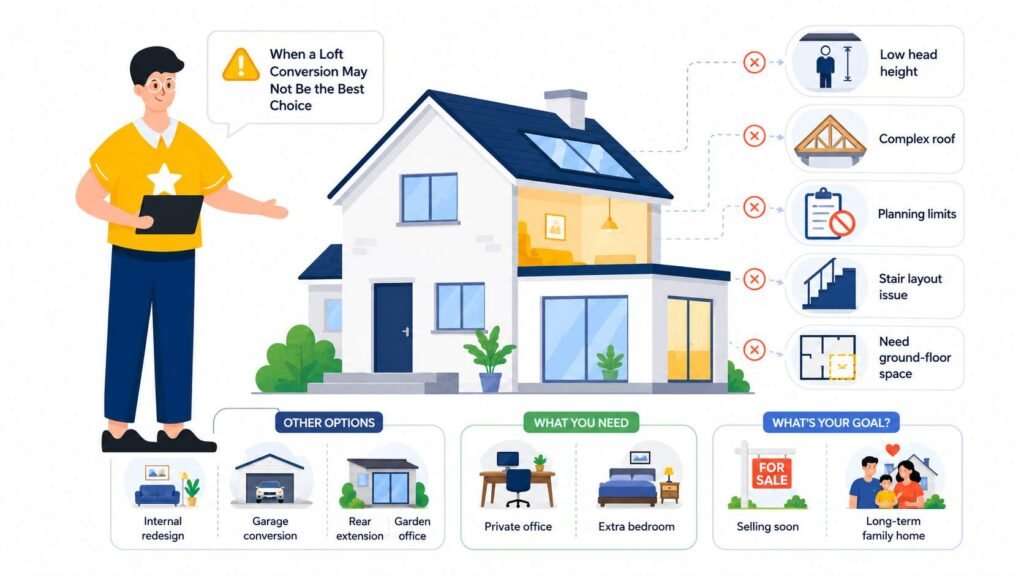
A loft conversion is not right for every home. If head height is limited, the roof structure is difficult, planning restrictions are tight, or the stairs would damage the layout below, another option may work better.
Some households need ground-floor space more than another upstairs room. In that case, an internal redesign, garage conversion, rear extension, or garden office may be more suitable.
The right decision starts with the problem the homeowner wants to solve. A family needing a private office may need a different solution from a family needing another bedroom. A homeowner planning to sell soon may also make different choices from someone creating a long-term family home.
Final Thoughts
Smart home improvements are becoming more important for UK homeowners who want extra space without the cost and disruption of moving. In Kingston, where location is a major reason many people stay put, making better use of an existing property can be a practical long-term decision.
A well-planned loft conversion can improve daily comfort, create a flexible living space, and strengthen the appeal of a home. However, the best results come from careful planning, safe construction, realistic budgeting, and proper approvals.
A successful project is not just about gaining another room. It is about creating space that fits the house, supports the people living there, and continues to add value for years to come.