
Finding the right dumpster for your project may be daunting when you are dealing with the large heaps of junk and a long list of things to do. Often, individuals fail to realize the extent to which a buildout, remodel, or clear-out can generate waste, only to find that they have selected a waste container that is either too small or unbelievably large.
Such a mismatch can lead to additional charges, wasted time, and unwarranted frustration. Similarly, renting a container that is too large may result in wasted space and increased costs, whereas renting one that is too small may require mid-project changes and additional expenses.
To avoid such a burden, you need to think ahead when selecting a dumpster rental solution. You have to consider all possible variants and understand exactly what your job requires. By having a clear selection strategy, you reduce stress, limit costs, and maintain an organized, efficient worksite.
1. Project Size Assessment and Dumpster Rental Needs
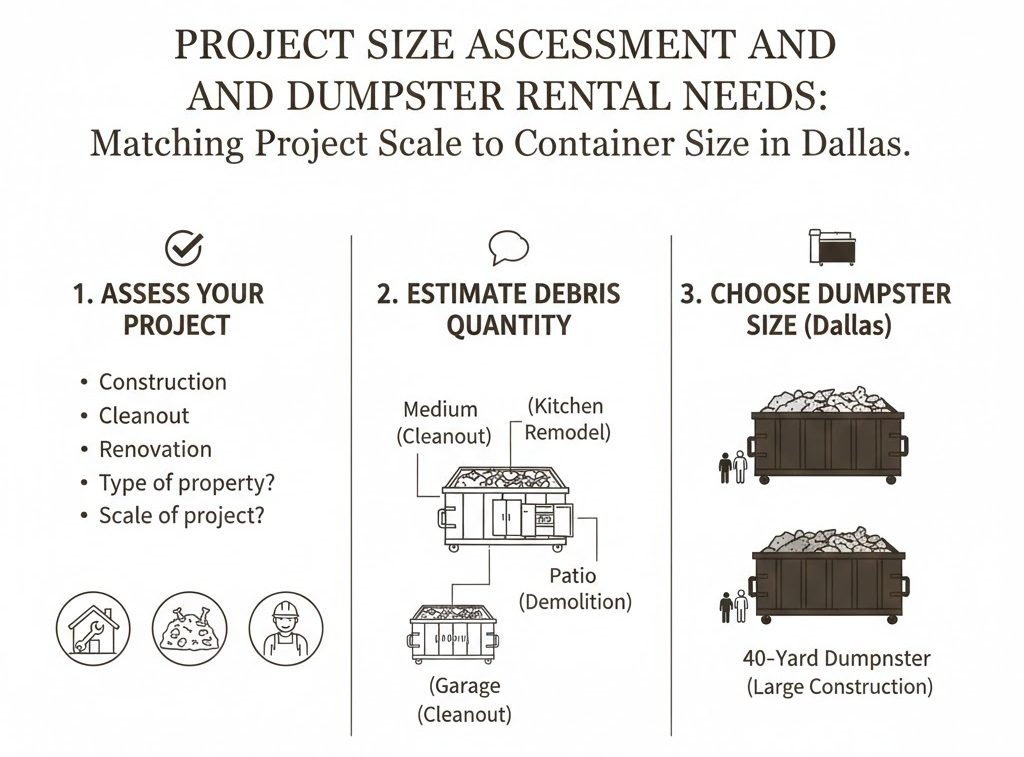
The first step is to realistically assess the scale and scope of your work before requesting a quote. For example, if your project is in Dallas, construction, cleanout, and renovation work can generate substantial waste, depending on the type of property and the scale of the project.
Even a small garage cleanout produces far less waste than a full kitchen remodel, while demolition work, such as removing a patio, generates significantly more debris than either project. Since local projects vary widely, early estimates of debris quantities can help avoid overcapacity in the future.
Local service knowledge becomes significant in this regard. Dumpster rental Dallas services in Dallas usually offer a variety of dumpster sizes, such as small 10-yard containers for residential jobs and 40-yard dumpsters for large construction waste.
As soon as the project scale matches the locally available size options, planning becomes more precise, cost management is enhanced, and the rental process remains proactive rather than reactive.
2. Evaluate Debris Type and Weight Considerations
The type of materials is as important as volume. Concrete, bricks, dirt, or tile can very easily exceed a dumpster’s weight capacity before the container appears to be full. This is why most rental companies impose weight limits to ensure safety and compliance during transportation.
Bulky items such as wood, drywall, or household junk take up a lot of space yet remain relatively light. On the contrary, dense construction debris quickly consumes space. If your project involves a lot of heavy debris, you may need to choose a smaller container and arrange more frequent hauls to stay within weight limits.
Selecting the correct container size and commissioning additional hauls as required helps avoid excess weight fees and makes your budget more predictable.
3. Dumpster Size Selection Based on Common Uses
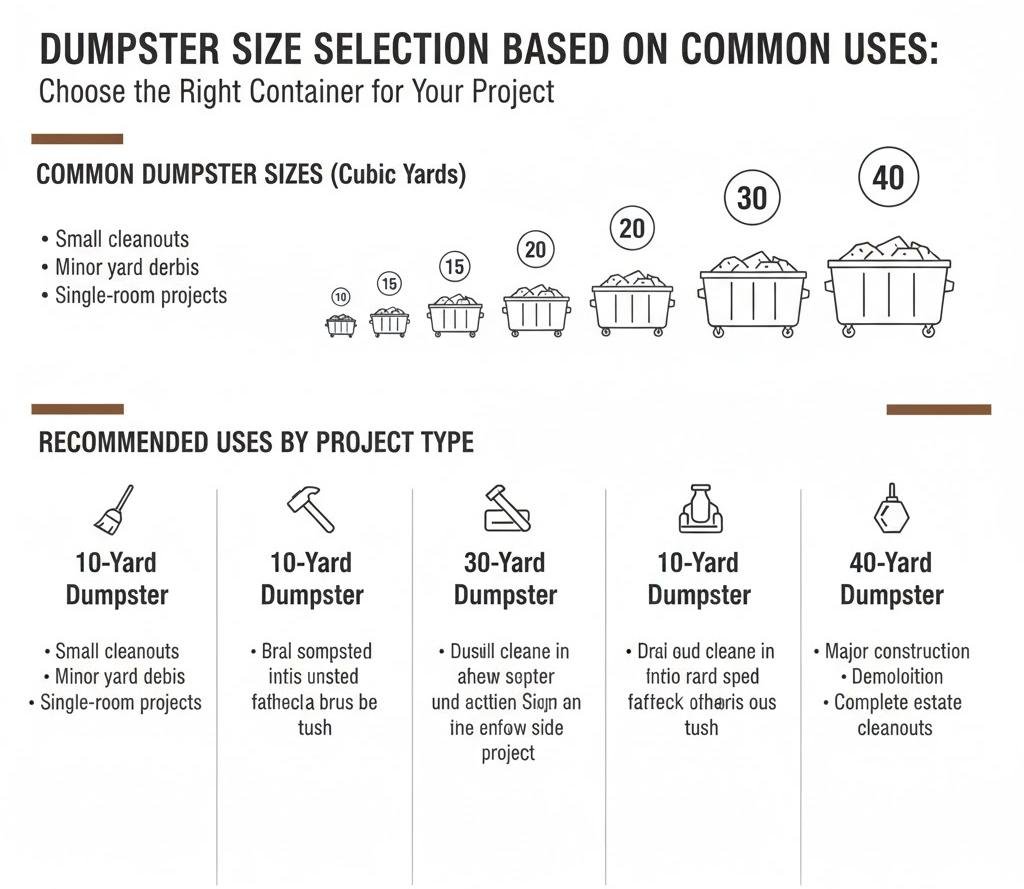
Learning about the sizes of the most common dumpsters and the types of materials they handle makes the selection much easier. Standard roll-off containers are sized in cubic yards, with the most common sizes being 10, 15, 20, 30, and 40 cubic yards.
- 10-Yard Dumpster — Ideal for small home cleanouts, minor yard debris, or single-room projects
- 15-Yard Dumpster — Better for moderate remodel debris or medium-sized clear-outs
- 20-Yard Dumpster — A versatile choice for larger renovations like kitchens or flooring projects
- 30-Yard Dumpster — Best for big remodels, additions, or commercial job sites
- 40-Yard Dumpster — Suited for major construction, demolition, or complete estate cleanouts
Matching your estimated waste volume to these common guidelines would help ensure that your selected dumpster can handle the task without leaving space or incurring unnecessary cost.
4. Available Space and Placement Planning
Before ordering your dumpster, measure the area where you plan to place it at your property or work site. You need enough room for delivery and pickup without obstructing driveways, walkways, or vehicular access. Also, make sure overhead clearance is adequate so delivery trucks can operate safely.
If you plan to place the container on a street or public right-of-way, local regulations may require a permit. These vary by city and neighborhood, but addressing them early keeps your project on schedule and prevents fines or service delays. Taking placement logistics into account up front gives you a smoother delivery experience and fewer surprises.
5. Budget, Rental Period, and Hidden Fees
Cost is often a major concern when renting a dumpster. Prices vary not just by size but by rental duration, location, and additional service fees. Many companies offer base pricing for a set period and may charge more if you keep the dumpster beyond the agreed time.
Overage fees may also apply for weight excess or for prohibited materials. Heavier loads increase transport costs, which is why pricing includes weight limits and extra charges when they are exceeded.
Communicating clearly with the rental provider about your timeline, anticipated debris type, and total volume helps avoid unexpected charges. It also lets you plan more accurately for delivery, pickup, and potential extra days.
Bottomline
Choosing the right dumpster rental for your project becomes much easier when you break the process into clear steps. Start by evaluating your project size, debris type, and estimated waste volume to select a container that fits both your workload and budget.
In addition, planning where the dumpster will be placed and reviewing local rules helps avoid delivery issues or penalties. Clear communication about rental duration, weight limits, and possible extra fees further protects you from unexpected costs.
With proper planning, you maintain an organized site, reduce delays, and ensure waste removal supports your timeline instead of slowing it down.