
Choosing the right roof can feel hard for many homeowners. Metal roofing lasts about two to three times longer than asphalt shingles. This guide will help you compare cost, durability, energy savings, and looks.
Find out which roofing material is best for your home below.
Key Differences Between Metal Roofing and Asphalt Shingles
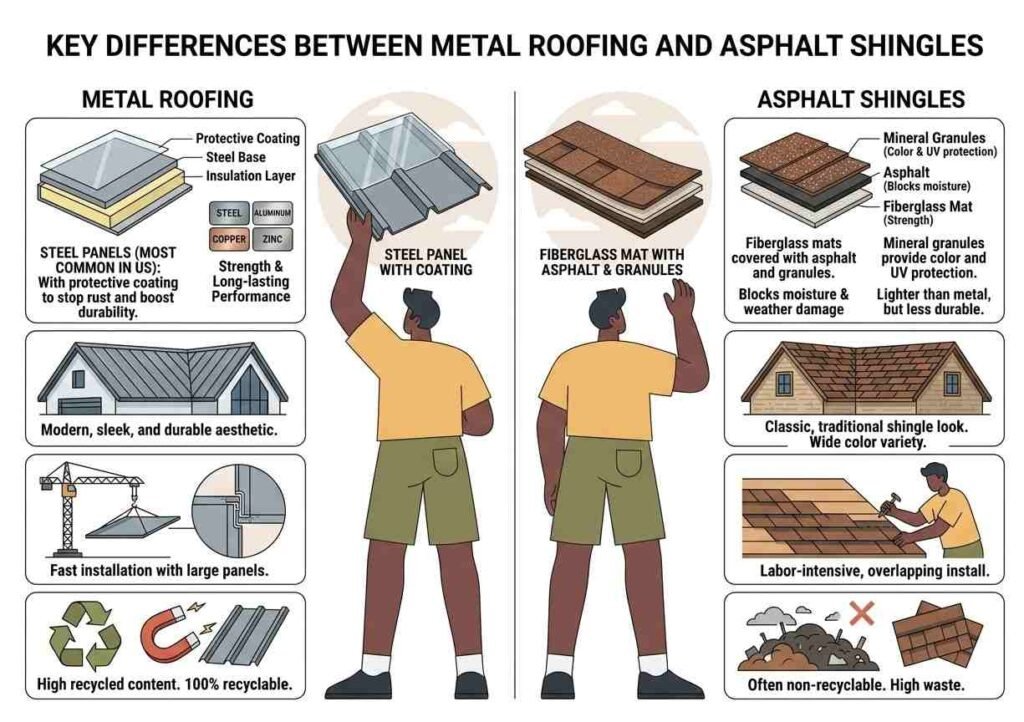
Metal roofing and asphalt shingles use different materials and give homes a unique look. Their visual appeal, value, installation process, and environmental impact also set them apart.
Material Composition
Metal roofing uses steel, aluminum, copper, or zinc. Steel panels are the most common choice in the United States. They often have a protective coating to stop rust and boost durability.
These roofs work well for people who want strength and long-lasting performance.
Asphalt shingles rely on fiberglass mats covered with asphalt and mineral granules. The fiberglass adds strength while the asphalt helps block moisture and weather damage. Mineral granules give each shingle color and protect it from UV rays.
This mix makes asphalt shingles lighter than metal roofs but less resistant to damage over time.
Appearance and Style Options
Metal roofing and asphalt shingles offer different looks for your home. Metal roofs come in various colors and styles, often resembling tiles or shingles. They can add a modern touch to any building.
Asphalt shingles also provide many choices; they come in different shapes, sizes, and colors. These options make it easy to match your roof with the rest of your home’s look.
Both types have their own appeal. Homeowners want at least some visual attraction on their roofs. Metal roofing stands out more due to its sleek finish. Shingles blend well into traditional settings but still offer vibrant colors that catch attention.
Changing the style of your roof can boost curb appeal without major changes to the house itself.
A beautiful roof adds value from both aesthetic and practical standpoints.
Cost Comparison
Metal roofing costs more upfront than asphalt shingles. Yet, metal roofs can save you money in the long run due to their durability and low maintenance needs.
Upfront Costs
Metal roofing costs more upfront than asphalt shingles. The average price for metal roofing ranges from $100 to $300 per square. Asphalt shingles, on the other hand, cost about $90 to $100 per square.
Though metal roofs have a higher initial price, they can save money over time.
Fewer repairs and longer lifespans make metal roofs a better investment in the long run. Homeowners should think about these factors when deciding on roofing materials.
Long-Term Value
Metal roofing often costs more upfront than asphalt shingles. Yet, it can save you money over time. Metal roofs last much longer, sometimes up to 50 years or more. In contrast, asphalt shingles usually need replacing every 15 to 30 years.
Lower maintenance costs add to the long-term value of metal roofs. They resist weather better and do not warp easily. Homeowners may also find energy savings with metal roofing in hot months.
This reduces cooling costs significantly as less heat enters your home compared to traditional shingles. A smart choice today can yield great returns later on; it’s clear that durability plays a crucial role here.
Next, let’s explore how each option stands against various weather conditions.
Durability and Lifespan
Metal roofing is built to last. It can resist strong winds, heavy rain, and even hail. Asphalt shingles may not hold up as well over time. They can wear down faster in harsh weather conditions.
Resistance to Weather Elements
Weather can be tough on a roof. Metal roofing stands strong against rain, snow, and high winds. It won’t crack or warp like asphalt shingles may do over time. This resistance helps keep your home safe from leaks and other damage.
Asphalt shingles can wear down faster in harsh conditions. They might blow off during storms. However, they are designed to handle some weather elements too, but not as well as metal roofs do.
Knowing how different materials react to the weather is important for choosing the right roof type for your home. Let’s look at how long each option lasts next.
Expected Lifespan of Each Option
Metal roofing can last 40 to 70 years. It is very durable and holds up well against harsh weather. Asphalt shingles, on the other hand, typically have a lifespan of 15 to 30 years.
They are less resistant to severe conditions compared to metal roofs.
Choosing between these materials affects long-term costs. Metal roofs require fewer replacements over time. This makes them a better choice for durability and longevity, even if they cost more upfront.
Energy Efficiency and Sustainability
Metal roofs reflect sunlight. This can lead to lower energy bills in hot months. Asphalt shingles may not offer the same savings, but they are also recyclable, which helps the planet.
Both options have an impact on our environment and could play a role in your choice.
Energy Savings Potential
Metal roofs can help save energy. They reflect sunlight. This keeps homes cooler in hot weather. As a result, homeowners spend less on air conditioning.
Asphalt shingles absorb heat. This can make houses hotter in summer. Higher temperatures lead to higher cooling costs for homeowners. Energy-efficient roofing materials like metal contribute to lower bills over time.
Environmental Impact
Metal roofing is eco-friendly. It reflects sunlight, keeping homes cooler in summer. This can lead to lower energy bills. Many metal roofs are made from recycled materials. They can also be recycled at the end of their life.
Asphalt shingles have a larger environmental footprint. Most are not recyclable and end up in landfills. The production process can release harmful chemicals, too. Choosing metal over asphalt may help reduce waste and pollution, making it a better choice for the planet.
Maintenance and Repairs
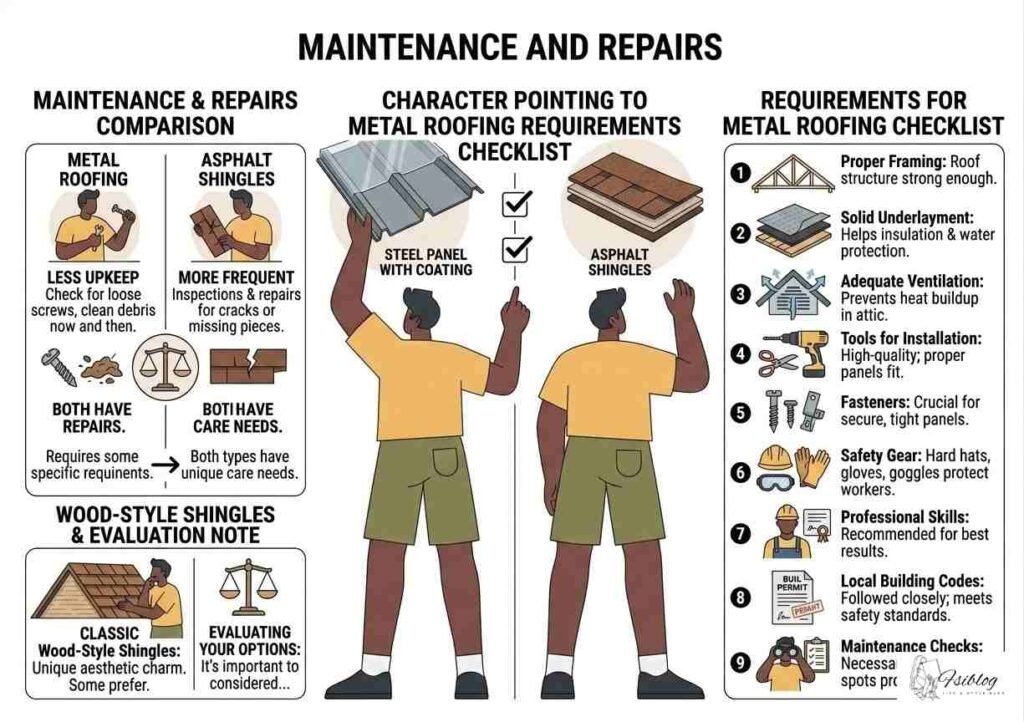
Metal roofing needs less upkeep than asphalt shingles. You might only need to check for loose screws and clean off debris now and then. On the other hand, asphalt shingles may require more frequent inspections and repairs for cracks or missing pieces.
Both types have their own unique care needs.
Requirements for Metal Roofing
Metal roofing needs some specific requirements. This ensures a good installation and long-lasting results.
- Proper framing is important. The roof structure must be strong enough to support the metal panels. Weak framing can lead to problems in the future.
- A solid underlayment is required. This helps with insulation and water protection. It keeps moisture from getting under the metal panels.
- Adequate ventilation is vital. Good airflow prevents heat buildup in the attic space. It also reduces moisture issues, which can harm other parts of the home.
- Tools for installation should be high-quality. Using proper tools makes the job easier and safer. They ensure that each panel fits correctly.
- Fasteners are crucial for securing panels tightly. The right screws or clips prevent leaks and keep everything in place during storms.
- Safety gear must be worn during installation. Hard hats, gloves, and goggles protect workers from injuries on the job site.
- Professional skills are recommended for the best results. Hiring experienced installers often leads to better workmanship and fewer issues later on.
- Local building codes must be followed closely. These rules ensure that roofing installations meet safety standards in your area.
- Maintenance checks are necessary over time. This ensures any potential problems are spotted early, helping extend the life of your roofing system.
Some homeowners prefer the classic appearance of wood-style shingles for their unique aesthetic charm.
When evaluating your roofing options, it’s important to consider the metal roof cost vs shingles to determine which will provide the best long-term value.
Weather resistance will depend on the quality of materials used; choosing a reputable brand can make all the difference in performance against rain, snow, and hail.
Requirements for Asphalt Shingles
Asphalt shingles are a popular choice for many homeowners. They are affordable and easy to install.
- Choose quality materials. High-quality asphalt shingles offer better durability and longevity.
- Ensure proper installation. Hire experienced roofers to get the best results and avoid leaks.
- Check the roof structure. The roof must be strong enough to hold the weight of the shingles.
- Maintain ventilation. Proper airflow helps prevent moisture buildup and extends the lifespan of shingles.
- Clean gutters regularly. Clogged gutters can lead to water damage and shorten shingle life.
- Inspect for damage after storms. Look for missing or damaged shingles, and replace them quickly.
These requirements help keep your asphalt roof in great shape. Next, let’s explore maintenance needs for metal roofing.
Conclusion
Both metal roofing and asphalt shingles have their perks. Metal roofs last longer and resist bad weather well. Asphalt shingles are cheaper upfront but may need more repairs over time.
Think about your budget, style, and how much maintenance you want to do. Choose wisely for a roof that fits your needs best!