
Cement is one of those building materials that looks simple until you are actually standing in a builders’ merchant staring at several different bags. At first, it seems obvious. It is grey powder, you add water, mix it with the right materials, and use it for the job. In reality, the type of cement you buy can make a big difference to how strong, neat, and long-lasting the finished work will be.
This is where many DIY jobs go wrong before the mixing has even started. People often assume all cement does the same thing, but it does not. Some products are made for fast setting, some are used for stronger structural work, and others are made for wet or specialist repair conditions. For most normal home and garden jobs, the best choice is usually much simpler. A good general-purpose cement is often enough for pointing brickwork, laying a small path, setting fence posts, repairing a concrete floor, or handling basic jobs around the house.
The problem is that specialist products can sound more impressive than they need to be. A rapid-setting cement might look like the better option because it sounds stronger or more professional, but it can be awkward if you are not used to working quickly. If you are filling a small crack in a garden wall or doing a simple repair on a Saturday morning, you do not want the mix going off before you have had time to shape it properly. Sometimes the sensible product is not the most technical one. It is the one that gives you enough working time and suits the job in front of you.
What The Bag Actually Tells You
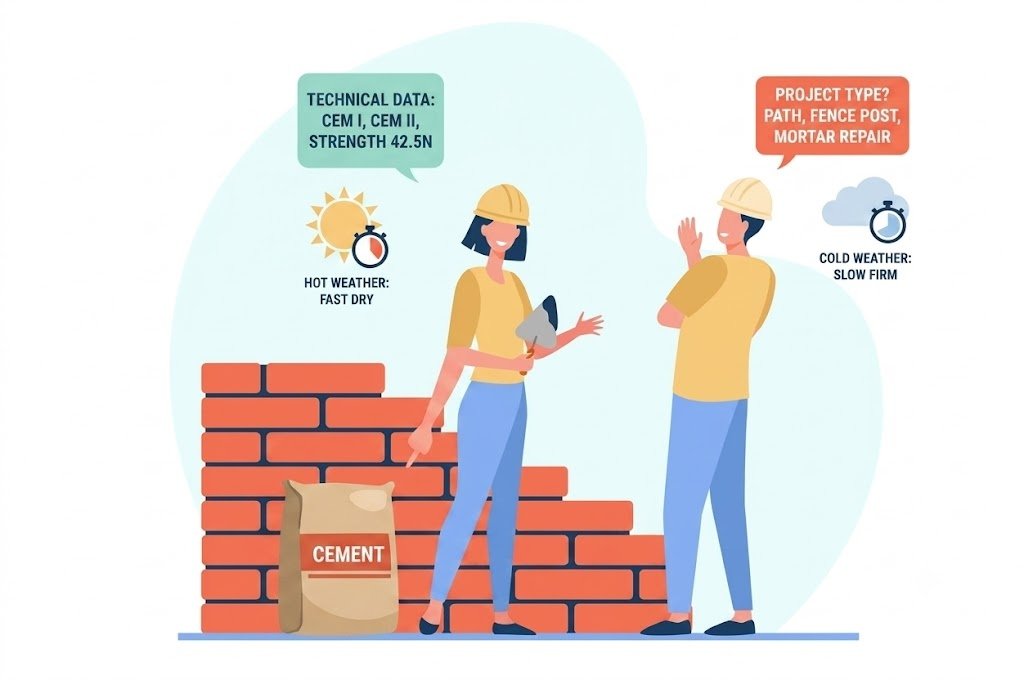
The information on a cement bag can be useful, but it is not always written in a way that helps the average DIY buyer. You may see terms such as CEM I or CEM II, along with a strength class printed somewhere on the packaging. CEM I usually means Portland cement, while CEM II is blended with another material that can change how it performs slightly.
For most everyday home repairs, you do not need to get lost in the technical details. The more important question is what you are actually using it for. A small path, a fence post, a bit of patching, and a mortar repair are not the same job, so the mix and product choice should match the task.
What the bag may not make obvious is how long you have to work with the mix once water has been added. This depends on the weather, the amount of water used, the surface you are working on, and how quickly you can get the job done. On a warm summer day, cement can become difficult to work with faster than expected. In cold weather, it can take longer to firm up, which can also cause delays if you were expecting the job to be finished quickly.
Storage Matters More Than People Think
A lot of people buy too much cement because they do not want to run out halfway through a job. That is understandable, but cement does not stay perfect forever once it is sitting in a shed or garage. Moisture is the real problem. Even if the bag looks closed, damp air can still get in over time.
Once cement starts to form hard lumps, it has already been affected. Small soft lumps can sometimes be broken down, but hard lumps are a bad sign. Using old or damp cement can leave you with a weaker mix, and that weakness may not show straight away. It might only become clear later when the repair starts cracking, crumbling, or failing under pressure.
For a small DIY job, it is usually better to buy what you need rather than stockpile bags for months. If you do have some left over, keep it off the floor, away from damp walls, and sealed as well as possible. A dry shelf or raised pallet is far better than leaving it directly on a garage floor.
Getting The Mix Right Without Making It Complicated
The right mix depends on what you are doing. Mortar for brickwork is not the same as concrete for a path or base. A common mortar mix is around one part cement to five parts soft sand. For general concrete work, a common mix is around one part cement, two parts sharp sand, and three parts aggregate.
These ratios are not there to make the job sound complicated. They are used because they tend to give reliable results. If you add too much sand, too much aggregate, or not enough cement, the finished work may not hold together properly. If you add too much cement, the mix can become harder to work with and may not behave as expected.
The biggest mistake is usually adding too much water. A wet mix feels easier at first because it spreads quickly, but it can weaken the finished result. The mix should be workable, not runny. If it looks like soup, it is too wet. You want it to hold its shape when moved with a trowel, while still being soft enough to place and finish properly.
Why Bigger Jobs Need More Planning
For small patch repairs, you can usually mix as you go and take your time. For a larger path, base, or slab, planning matters much more. Once the cement is mixed, the clock is ticking. You need to know where the mix is going, how you will move it, what tools you need, and who is helping if the job is too much for one person.
Many DIYers start with confidence and then realise halfway through that the mix is drying, the area is not prepared, or the tools are missing. That is when the job becomes stressful. Before mixing anything, clear the area, check levels, dampen surfaces if needed, and make sure everything is ready.
This is also where the weather matters. Very hot weather can dry the mix too quickly, while cold or wet weather can slow things down or affect the finish. If the job is outdoors, check the forecast properly before starting. A bit of patience at this stage can save a lot of repair work later.
Asking At The Trade Counter Is Not A Bad Thing
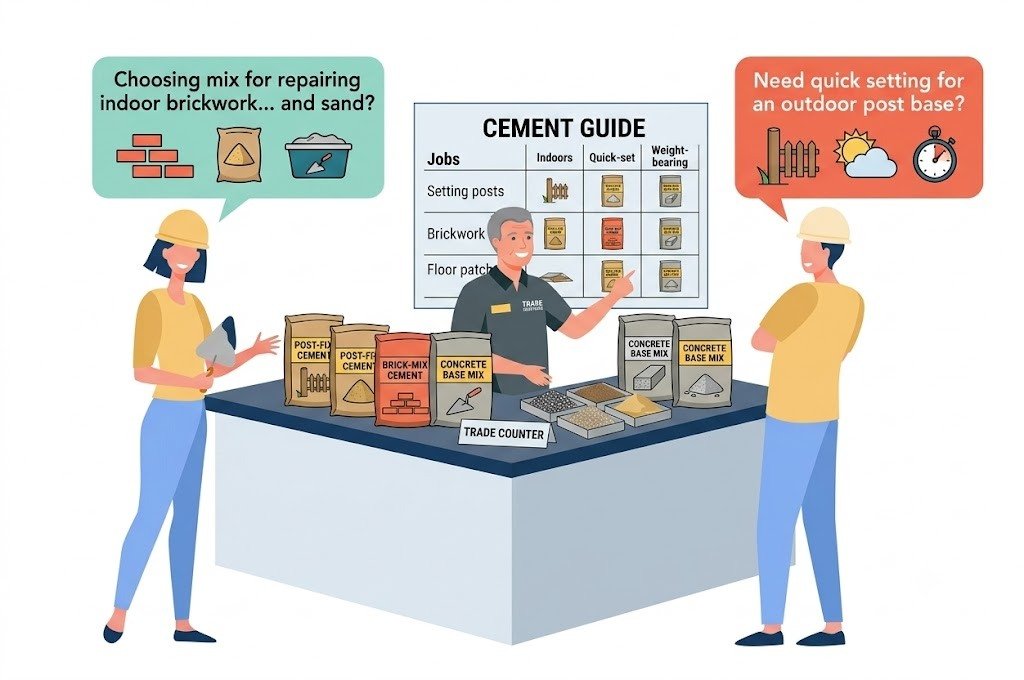
There is no shame in asking for advice when buying cement. Builders’ merchants and trade counter staff deal with these questions all the time. If you explain the job clearly, they can usually point you towards the right product and tell you what else you will need.
It helps to be specific. Instead of saying you need cement, explain whether you are repairing brickwork, setting posts, laying a small base, patching a floor, or making concrete. Mention whether the work is indoors or outdoors, whether it will carry weight, and whether it needs to be set quickly.
Most mistakes happen because people guess. They buy the wrong bag, use the wrong sand, add too much water, or start the job without checking the basics. A two-minute conversation before buying can prevent a poor result.
Final Thoughts
Buying cement for a DIY project does not need to be difficult, but it does need a bit of thought. The best choice is not always the strongest-sounding product or the most specialist bag on the shelf. It is the cement that suits the job, gives you enough time to work, and helps create a solid finish.
For most home and garden repairs, keeping things simple is often the best approach. Buy the right amount, store it properly, mix it carefully, and do not drown it with water. If you are not sure, ask before you start. That small step can be the difference between a repair that lasts and one you have to redo a few months later.