
Noticing your teeth shifting or overlapping often begins as a small concern. Over time, however, crooked teeth and bite problems can start affecting much more than appearance. Many people exploring teeth straightening in Singapore or elsewhere are not only looking for cosmetic improvements. They want better comfort, improved oral hygiene, easier chewing, and more confidence in everyday life.
Misaligned teeth can influence speech, jaw comfort, and even long-term dental health. The good news is that modern orthodontic treatments are more advanced, discreet, and comfortable than older methods. Whether you are considering braces for a teenager or clear aligners as an adult professional, there are now several effective solutions available.
Understanding Why Teeth Become Misaligned
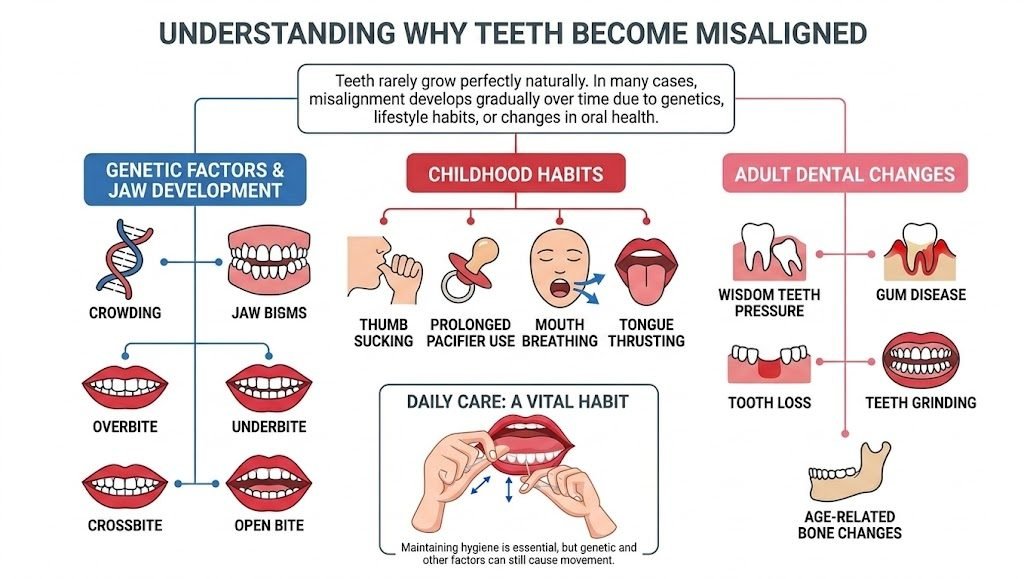
Teeth rarely grow perfectly naturally. In many cases, misalignment develops gradually over time due to genetics, lifestyle habits, or changes in oral health.
Genetic Structure and Jaw Development
Genetics often plays a major role in dental alignment. Some people naturally inherit smaller jaws with larger teeth, creating crowding and overlapping as permanent teeth emerge.
Others may inherit bite issues such as:
- Overbite
- Underbite
- Crossbite
- Open bite
These alignment problems can become more noticeable with age if left untreated.
Childhood Habits and Early Growth Patterns
Certain habits during childhood can influence tooth positioning and jaw development. Common examples include:
- Thumb sucking
- Prolonged pacifier use
- Mouth breathing
- Tongue thrusting
Although these habits may seem harmless initially, they can gradually affect the positioning of teeth and the shape of the jaw.
Adult Dental Changes
Teeth can continue shifting even during adulthood. Many adults in the UK begin noticing movement in their thirties or forties due to:
- Wisdom teeth pressure
- Gum disease
- Tooth loss
- Teeth grinding
- Age-related bone changes
This explains why some people who had straight teeth as teenagers may later develop crowding or spacing issues.
Why Teeth Straightening Is About More Than Appearance
A straighter smile can certainly improve confidence, but orthodontic treatment also supports better long-term oral health.
When teeth overlap or sit unevenly, cleaning becomes more difficult. Plaque and bacteria collect in hard-to-reach spaces, increasing the risk of:
- Tooth decay
- Gum disease
- Bad breath
- Enamel wear
Misalignment can also place uneven pressure on the jaw joints and surrounding muscles. Over time, this may contribute to headaches, jaw discomfort, and uneven tooth wear.
Correcting alignment often improves:
- Bite balance
- Speech clarity
- Chewing efficiency
- Oral hygiene
- Overall comfort
Modern Teeth Straightening Options Available Today
Orthodontic treatment has evolved significantly over the past decade. Patients now have several treatment options depending on their needs, lifestyle, and budget.
Traditional Braces for Comprehensive Correction
Traditional braces remain one of the most reliable solutions for moderate to severe alignment issues.
How Braces Work
Braces use metal brackets connected by wires that apply steady pressure to move teeth into the correct position gradually.
Regular adjustments help guide movement throughout the treatment process.
Benefits of Traditional Braces
Traditional braces are particularly effective for:
- Severe crowding
- Complex bite issues
- Rotated teeth
- Significant spacing problems
Although they are more visible than aligners, modern braces are smaller and more comfortable than older designs.
NHS and Private Orthodontic Treatment in the UK
In the UK, NHS orthodontic treatment may be available for children under 18 if clinically necessary. Adults generally seek private orthodontic treatment unless the condition is medically severe.
Clear Aligners for Discreet Treatment
Clear aligners have become one of the fastest-growing orthodontic solutions worldwide.
These custom-made transparent trays gradually shift teeth using carefully planned stages.
Why Adults Prefer Clear Aligners
Many adults choose aligners because they are:
- Nearly invisible
- Removable while eating
- Easier to clean
- More comfortable for daily life
Professionals and university students often appreciate the discreet appearance during meetings, presentations, or social settings.
This has made aligners especially popular among people researching teeth straightening in Singapore, as well as patients in major UK cities where cosmetic dentistry demand continues to grow.
Responsibilities That Come With Aligners
Aligners require commitment. Patients must usually wear them for 20 to 22 hours daily for effective results.
Failure to wear aligners consistently may slow treatment progress.
Ceramic Braces for a Less Visible Alternative
Ceramic braces work similarly to traditional braces but use tooth coloured or clear brackets.
A Balance Between Appearance and Strength
Ceramic braces offer a middle ground between metal braces and clear aligners.
They are often suitable for patients who:
- Need a stronger correction than aligners can provide
- Prefer less noticeable brackets
- Want fixed treatment without removable trays
However, ceramic brackets may require slightly more care to avoid staining.
Lingual Braces for Hidden Orthodontics
Lingual braces are attached behind the teeth rather than the front surface.
Advantages of Lingual Braces
These braces remain largely hidden during normal conversation and smiling.
They may appeal to:
- Public-facing professionals
- Adults are concerned about aesthetics
- Patients seeking discreet fixed treatment
However, lingual braces can sometimes take longer to adjust to and may initially affect speech slightly.
Choosing the Right Teeth Straightening Treatment
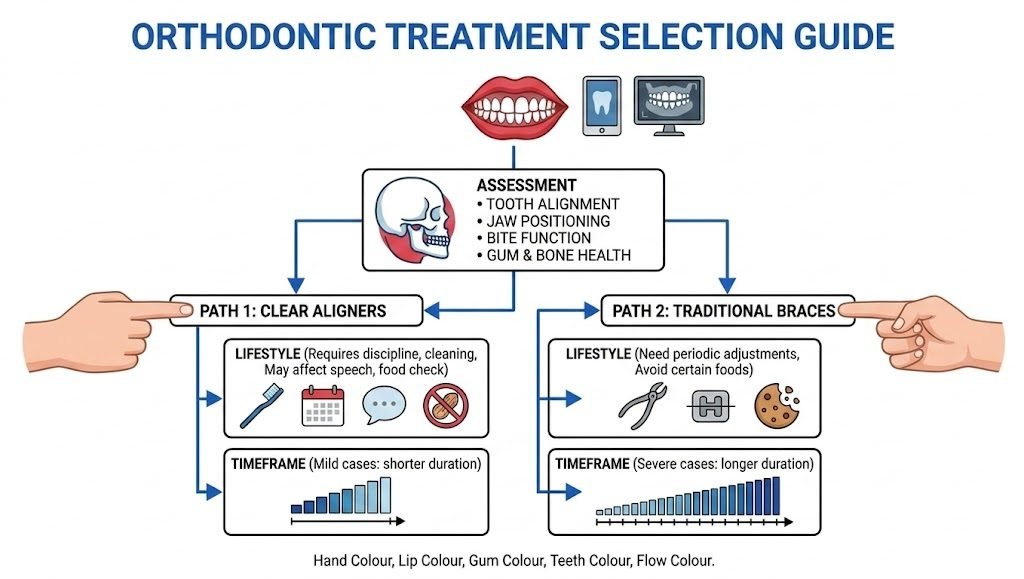
Every smile is different, which means orthodontic treatment should always be personalised.
Clinical Assessment Matters
A dentist or orthodontist will assess:
- Tooth alignment
- Jaw positioning
- Bite function
- Gum health
- Bone support
Digital scans and X-rays are commonly used to build a customised treatment plan.
Lifestyle Considerations
Your daily routine also affects which treatment suits you best.
For example:
- Clear aligners require discipline and cleaning
- Braces need periodic adjustments
- Some treatments may affect speech temporarily
- Certain foods must be avoided with braces
A treatment that fits comfortably into your lifestyle often leads to better long-term compliance.
Treatment Timeframes
Treatment duration varies based on complexity.
Mild cases may improve within several months, while severe crowding or bite correction may require two years or more.
Consistency and follow-up care play a major role in successful outcomes.
What to Expect During Orthodontic Treatment
The first few weeks of treatment often involve mild pressure or soreness as teeth begin shifting.
This discomfort is temporary and usually improves as the mouth adapts.
Throughout treatment, regular appointments allow your dentist to monitor progress and make necessary adjustments.
Over time, small changes become more noticeable, improving both appearance and function gradually.
Importance of Oral Hygiene During Treatment
Orthodontic appliances create additional areas where food and plaque can accumulate.
Good oral hygiene becomes even more important during treatment.
Daily care should include:
- Thorough brushing
- Flossing or interdental cleaning
- Cleaning aligners properly
- Limiting sugary snacks and drinks
Regular dental visits help prevent complications such as cavities, gum inflammation, and staining during orthodontic treatment.
Retainers and Long-Term Maintenance
Teeth naturally try to shift back after treatment. Retainers help maintain the corrected alignment.
Patients may need:
- Fixed retainers behind the teeth
- Removable nighttime retainers
- Long-term follow-up appointments
Skipping retainer use is one of the most common reasons teeth begin moving again after treatment.
Professional Dental Support Makes a Difference
Choosing an experienced orthodontic provider can greatly improve both comfort and results.
Clinics such as Nuffield Dental are often selected by patients seeking personalised orthodontic care, structured treatment planning, and continuous monitoring throughout the alignment process.
A strong dental team provides:
- Accurate diagnosis
- Realistic treatment expectations
- Ongoing progress monitoring
- Preventive care support
- Tailored solutions for different lifestyles
Common Questions Patients Ask Before Starting Treatment
| Question | Answer |
|---|---|
| Will teeth straightening affect speech? | Some treatments, particularly aligners and lingual braces, may temporarily affect speech during the adjustment period. Most patients adapt within a few days or weeks. |
| Is orthodontic treatment painful? | Most patients experience mild pressure rather than severe pain. Temporary soreness after adjustments is normal and manageable. |
| Can adults still straighten their teeth? | Yes. Adults of almost any age can benefit from orthodontic treatment if their teeth and gums are healthy. |
| Are clear aligners suitable for severe cases? | Some severe bite or crowding issues may still require traditional braces for optimal correction. |
| Does orthodontic treatment improve oral health? | Straightening teeth often improves cleaning ability, reduces plaque buildup, and lowers the risk of gum disease and uneven tooth wear. |
Conclusion
Teeth straightening is about much more than improving appearance. Correcting misalignment supports healthier teeth, improved bite function, easier cleaning, and better daily comfort.
Modern orthodontics now offers multiple solutions for different lifestyles and dental needs, from traditional braces to discreet clear aligners and ceramic systems.
Whether you are considering orthodontic care in the UK, Singapore, or elsewhere, understanding your options helps you make informed decisions with confidence. With proper professional guidance and consistent care, achieving a healthier and more balanced smile is more accessible than ever.
Disclaimer
This article is for informational purposes only and does not replace professional dental advice, diagnosis, or treatment. Always consult a qualified dentist or orthodontist regarding personal dental concerns, treatment suitability, and oral health recommendations.
References
- Proffit WR, Fields HW, Larson B, Sarver DM. Contemporary Orthodontics and Dentofacial Orthopedics. Mosby Elsevier. DOI: 10.1016/B978-0-323-54387-3.00001-0
- Littlewood SJ, Millett DT, Doubleday B, Bearn DR, Worthington HV. Orthodontic retention procedures for stabilising tooth position after treatment. Cochrane Database Syst Rev. 2016;1(1): CD002283. DOI: 10.1002/14651858.CD002283.pub4
- Peres KG, et al. Oral diseases and oral health practices. Lancet. 2019;394(10194):249-260. DOI: 10.1016/S0140-6736(19)31146-8
- Watt RG, Daly B, Allison P, et al. Ending the neglect of global oral health. Lancet. 2019;394(10194):261-272. DOI: 10.1016/S0140-6736(19)31133-X
- Zheng M, et al. Clear aligners for orthodontic treatment. BMC Oral Health. 2017;17(1):24. DOI: 10.1186/s12903-017-0313-9
- Fleming PS, Johal A. Self-ligating braces in orthodontics. Angle Orthod. 2010;80(3):575-584. DOI: 10.2319/081009-454.1
- Papageorgiou SN, et al. Clinical effectiveness of orthodontic treatment. J Dent Res. 2014;93(7 Suppl):49S-55S. DOI: 10.1177/0022034514531908