
Returning to work after a career break can feel like stepping into the unknown. Whether you took a year of maternity leave or several years off to focus on raising your children, updating your CV and re-entering the workforce can seem daunting. The job market moves quickly, technology and tools have evolved, and you may feel like everyone else has moved on. But the truth is, your skills, experience, and resilience as a parent are highly valuable to employers. The key is knowing how to present them effectively.
Why Career Breaks Are Nothing to Be Ashamed Of
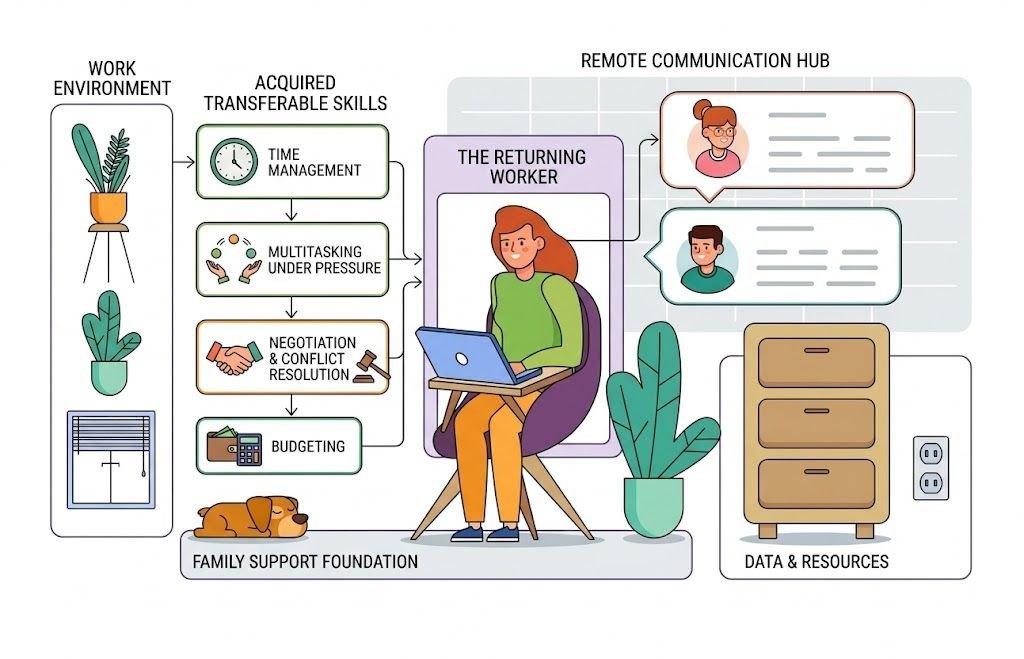
Many parents worry that a gap on their CV will make them less competitive. However, attitudes are changing. Employers increasingly recognise that taking time out for family is not a weakness, but a choice that comes with its own transferable skills.
Think about it: parenting daily requires:
- Time management: juggling school runs, appointments, and deadlines.
- Multitasking under pressure: managing multiple tasks simultaneously.
- Negotiation and conflict resolution: handling disagreements calmly and effectively.
- Budgeting and planning: managing household finances or organising family events.
These are exactly the kinds of skills employers value in the workplace. The important thing is to own your career break confidently. Trying to hide it usually backfires, as recruiters can easily spot gaps. Instead, include a simple, positive statement in your CV or cover letter, such as:
“Took time out to focus on family responsibilities; now ready to return to the workplace with renewed energy and relevant skills.”
Updating Your CV: Where to Start
If it has been several years since your last role, your CV needs more than a minor update. UK employers increasingly use Applicant Tracking Systems (ATS), which filter CVs for specific keywords before a human even looks at them. This means your CV must be readable by these systems and tailored to the role.
Steps to update your CV effectively:
- Analyse job descriptions: Look at current job adverts for roles you are interested in. Note the skills, qualifications, and language they emphasise.
- Mirror keywords naturally: Incorporate relevant terms from job descriptions into your CV without exaggeration.
- Focus on transferable skills: Highlight skills you developed during your career break that apply to the workplace.
For example, if you managed a household budget while raising children, that can translate into financial planning or project management experience in your CV.
Tailoring Your Application for Every Role
Sending a generic CV to every job is a common mistake. Each application should reflect the specific role and company.
- Adjust your personal statement: Highlight skills and achievements most relevant to the position.
- Frontload key experience: Place the most important skills and roles near the top of your CV.
- Include recent learning or projects: Even small freelance, volunteer work, or online courses can help bridge gaps.
Professional support can also make a real difference. Career coaching and CV writing services, like Your Next Jump, specialise in helping returning parents present their experience compellingly, particularly when competing with candidates who have continuous work experience.
Confidence Factor
A major barrier for returning parents is confidence. You might worry that you’ve fallen behind, or that employers won’t consider you because of a gap. These feelings are common, but often worse than reality.
Employers value diverse candidates with real-world experience. Many UK companies now run returner programmes specifically designed for parents re-entering the workforce. Organisations like Women Returners and government Back to Work schemes provide mentoring, practical support, and resources to boost your confidence.
Looking after your mental and physical well-being is also crucial. Job hunting can be stressful, so make time for exercise, mindfulness, and family support networks.
Upskilling and Filling the Gaps
If you’ve been out of work for a while, refreshing your skills can increase both confidence and employability.
- You don’t need a university degree; short courses on FutureLearn, OpenLearn, or Coursera are excellent options.
- Digital skills, project management, basic coding, or industry-specific updates are all valuable.
- Even volunteering or freelance work in your field counts as recent experience.
For example, learning about the latest energy-efficient heating systems could be useful if you’re applying for roles with companies like Worcester Bosch, while understanding plumbing regulations may help if targeting firms such as Able Plumbing. These references also demonstrate that you’ve researched your industry.
Practical Tips for the Job Search
Networking is as important as your CV. Many jobs are never advertised, and personal connections often open doors that cold applications cannot.
- Reconnect with former colleagues on LinkedIn.
- Attend industry events or webinars relevant to your career.
- Be open about your return: Many professionals are happy to offer advice or referrals.
When preparing for interviews:
- Practice talking about your career break positively and confidently.
- Prepare specific examples of skills gained during your time away from work.
- Remember, interviews are a two-way conversation; you are also assessing whether the company fits your family and lifestyle.
Flexible Working: Know Your Rights
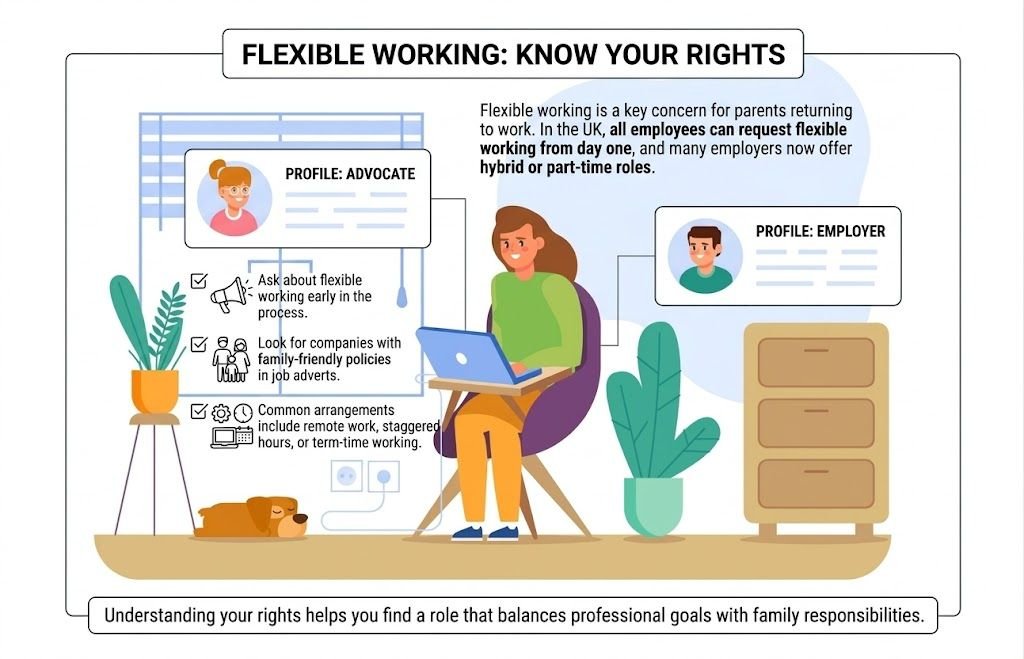
Flexible working is a key concern for parents returning to work. In the UK, all employees can request flexible working from day one, and many employers now offer hybrid or part-time roles.
- Ask about flexible working early in the process.
- Look for companies with family-friendly policies in their job adverts.
- Common arrangements include remote work, staggered hours, or term-time working.
Understanding your rights helps you find a role that balances professional goals with family responsibilities.
Conclusion
Returning to work after a career break may feel overwhelming, but it is entirely possible to make a smooth and successful transition. Your experiences as a parent have given you valuable skills, perspective, and resilience that employers need. By updating your CV thoughtfully, highlighting transferable skills, exploring upskilling opportunities, and leveraging professional support such as Your Next Jump, you can confidently re-enter the workforce.
Remember, the right role is out there, one that respects your experience, your ambitions, and your need for flexibility. Take the first step, trust your abilities, and adopt this exciting next chapter. Your career comeback is not just possible; it can be one of the most rewarding phases of your professional life.