
Modern housing in the UK has changed significantly over the past decade. The way people live, work, and interact with their homes has evolved, and property design has followed. Today, buyers are not just looking for a place to live. They want homes that support flexible lifestyles, reduce running costs, improve well-being, and adapt to future needs.
From energy-efficient construction to smart home technology and community-focused developments, the way that new homes are built today reflects both modern expectations and government regulations, such as The UK Future Homes Standard.
Energy Efficiency and Low Carbon Living in the Way That New Homes Are Built Today
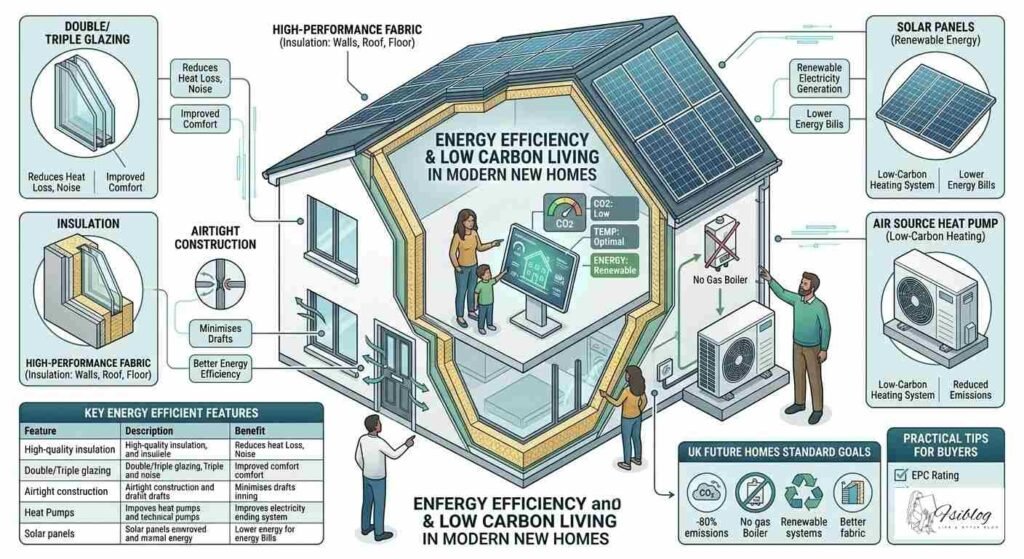
Energy efficiency is no longer optional. It is now one of the most important aspects of modern housing design in the UK. Rising energy costs and environmental concerns have pushed developers to focus on reducing energy consumption and carbon emissions.
the way that new homes are built today prioritises performance, meaning homes are designed to retain heat, reduce waste, and use cleaner energy sources.
Key Energy Efficient Features in Modern Homes
| Feature | Description | Benefit |
|---|---|---|
| High quality insulation | Walls, roofs, and floors retain heat | Lower heating costs |
| Double or triple glazing | Reduces heat loss and noise | Improved comfort |
| Airtight construction | Minimises drafts | Better energy efficiency |
| Heat pumps | Low carbon heating systems | Reduced emissions |
| Solar panels | Renewable electricity generation | Lower energy bills |
Role of The UK Future Homes Standard
The UK Future Homes Standard is shaping the future of housing by requiring new homes to produce significantly fewer carbon emissions.
Key goals include:
- Reducing emissions by up to 80 percent compared to older homes
- Phasing out gas boilers in new builds
- Encouraging renewable energy systems
- Improving building fabric and insulation
Practical Tips for Buyers
- Check the EPC rating before purchasing
- Ask about heating systems and insulation
- Look for renewable energy features
- Consider long-term energy savings, not just purchase price
Flexible Living Spaces for Work and Family Life
Modern homes are designed to adapt to changing lifestyles. With remote work becoming more common, homes now need to serve multiple purposes.
The way that new homes are built today includes flexible layouts that allow spaces to evolve.
Common Flexible Design Features
| Feature | Use Case | Advantage |
|---|---|---|
| Home office space | Remote work or study | Increased productivity |
| Open plan layouts | Living and dining combined | Better use of space |
| Multi use rooms | Guest room, gym, or office | Adaptability |
| Loft conversions | Extra living area | Future expansion |
Why Flexibility Matters
- Supports hybrid working
- Reduces the need to move house
- Adapts to growing families
- Increases property value
Design Considerations
- Choose layouts that allow easy changes
- Look for good natural light
- Ensure sufficient storage space
- Plan for future needs
Smart Technology and Connected Living in Modern Homes
Technology is playing a bigger role in how homes function. Smart systems are now a standard feature in many new UK properties.
The way that new homes are built today includes integrated digital solutions that improve convenience, security, and efficiency.
Popular Smart Home Features
| Technology | Function | Benefit |
|---|---|---|
| Smart thermostats | Control heating remotely | Energy savings |
| Security systems | Cameras and alarms | Improved safety |
| Smart lighting | Automated lighting control | Convenience |
| Energy monitoring | Track electricity usage | Cost management |
Benefits of Smart Homes
- Greater control over energy use
- Enhanced security
- Improved comfort
- Remote access via mobile devices
Tips for Buyers
- Check compatibility with devices
- Ensure reliable internet connectivity
- Look for user-friendly systems
- Consider future upgrades
Designing Healthier and More Resilient Communities
Modern housing design is not just about individual homes. It also focuses on creating better communities.
The way that new homes are built today includes planning for green spaces, walkability, and social interaction.
Features of Modern Communities
| Feature | Description | Benefit |
|---|---|---|
| Green spaces | Parks and gardens | Better mental health |
| Walkable areas | Shops and services nearby | Reduced car use |
| Cycle paths | Safe cycling routes | Health and sustainability |
| Community areas | Shared spaces | Social interaction |
Importance of Well-Being
- Access to nature improves mental health
- Safer environments support families
- Community design encourages social connections
Climate Resilience
Modern developments also focus on:
- Flood-resistant design
- Sustainable drainage systems
- Urban cooling through greenery
Materials and Construction Methods in the Way That New Homes Are Built Today
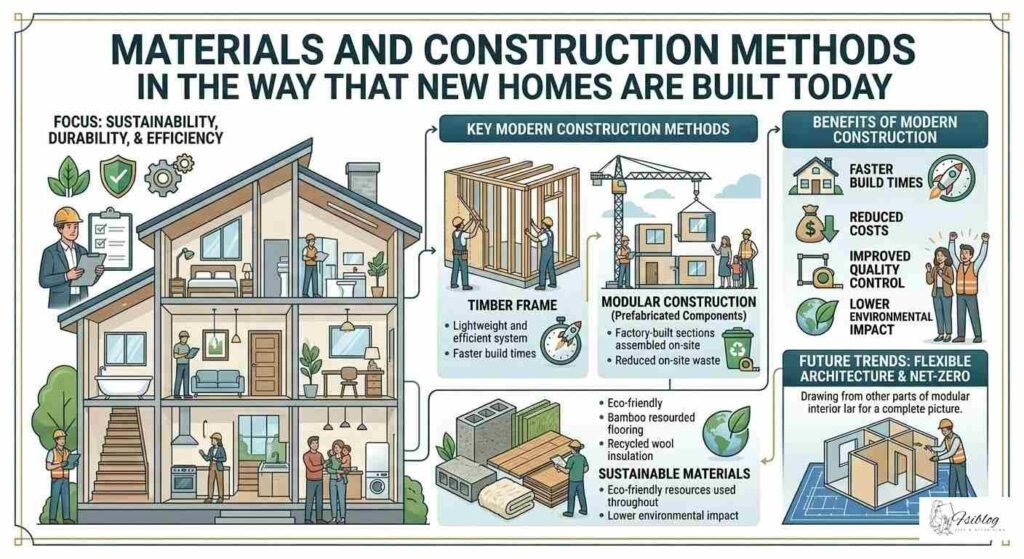
The materials and methods used in construction have also evolved. Developers now focus on sustainability, durability, and efficiency.
Common Modern Construction Methods
| Method | Description | Benefit |
|---|---|---|
| Timber frame | Lightweight and efficient | Faster construction |
| Modular construction | Prefabricated components | Reduced waste |
| Sustainable materials | Eco friendly resources | Lower environmental impact |
Benefits of Modern Construction
- Faster build times
- Reduced costs
- Improved quality control
- Lower environmental impact
Financial and Long-Term Value Considerations
Modern homes may have higher upfront costs, but often provide long-term savings.
Cost vs Value
| Factor | Short Term Cost | Long Term Benefit |
|---|---|---|
| Energy systems | Higher | Lower bills |
| Smart technology | Moderate | Convenience and savings |
| Quality materials | Higher | Less maintenance |
What Buyers Should Evaluate
- Running costs
- Maintenance requirements
- Future resale value
- Government incentives
Future Trends in UK Housing Design
The housing market continues to evolve. Future homes will likely include:
Emerging Trends
| Trend | Description |
|---|---|
| Net zero homes | Zero carbon emissions |
| AI integration | Smarter automation |
| Flexible architecture | Easily adjustable layouts |
| Sustainable cities | Eco friendly urban planning |
Conclusion
Modern housing design in the UK reflects changing lifestyles, environmental concerns, and technological advancements. The way that new homes are built today focuses on efficiency, flexibility, and well-being, making homes more comfortable and future-ready.
With regulations like the UK Future Homes Standard driving innovation, buyers can expect higher standards and better performance from new properties.
By understanding these trends and features, you can make smarter decisions when buying or designing a home that supports your lifestyle today and in the future.