



There is a particular hour in a British evening that did not really exist twenty years ago. The dishwasher is grumbling, the kettle has been boiled once too often, and the telly is on, but nobody is watching it. Somebody reaches for a phone. What happens in the next forty minutes is leisure, technically, but it looks nothing like the leisure our parents recognised.
We have stopped choosing between activities and started layering them. A run tracked on Strava, a half-listened-to podcast, a scroll through a fashion feed, a browse through something interactive all of it stacked into the same slice of a Tuesday night. The categories that used to organise free time have quietly dissolved, and the platforms that thrive in this environment are the ones that ask for the least commitment upfront.
How Britain Actually Spends Its Evenings Now
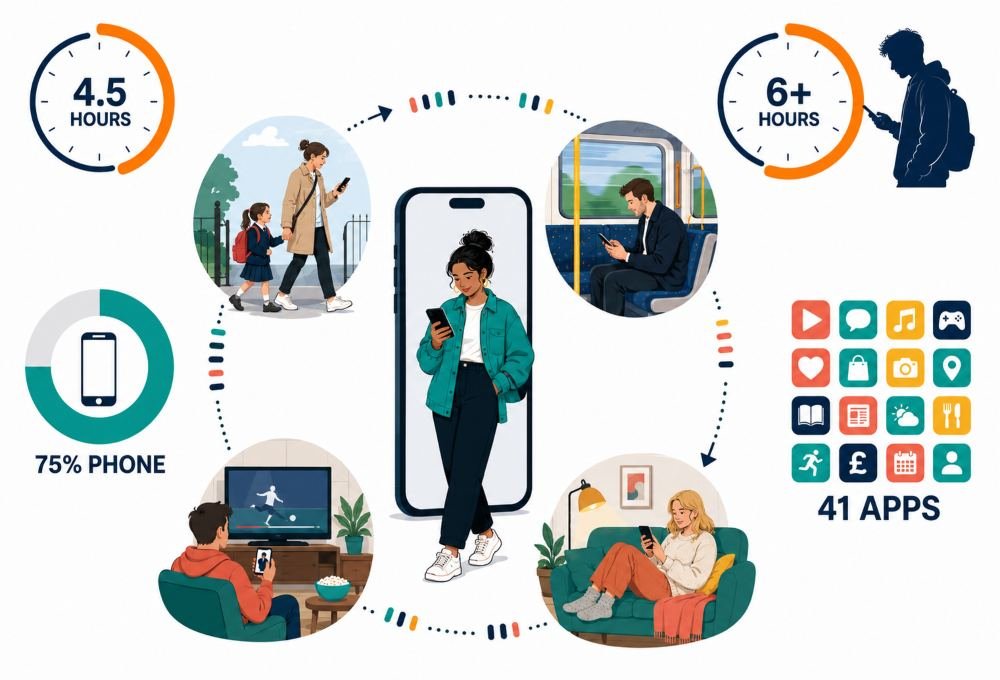
The scale of the shift is easier to see in the regulator’s own numbers than in any lifestyle think-piece. Ofcom’s annual Online Nation research found that UK adults now spend an average of four and a half hours a day online outside of work, ten minutes more than the year before. Among 18 to 24-year-olds, that figure climbs past six hours. Roughly three-quarters of it happens on a smartphone, across an average of 41 apps a month.
That last detail matters more than the headline. Four and a half hours is not one long sitting; it is dozens of short ones, threaded between the school run, the commute and the ad break. Anything that demands a download, a lengthy sign-up, or a desktop machine has already lost. This is the environment every entertainment product in Britain is now competing in, whether it sells recipe boxes, football highlights or card games.
Numbers Behind The Shift
It is worth being precise here, because the online entertainment sector is prone to inflating itself. According to the Gambling Commission’s Gambling Survey for Great Britain, 47 per cent of adults took part in some form of gambling in the past four weeks, and 37 per cent did so online. Strip out the people who only bought a lottery ticket, though, and online participation drops to 15 per cent. Casino-style play is a genuine minority pursuit in Britain, not a national habit.
What is growing is spend, not headcount. The Commission’s operator data covering the first quarter of 2026 shows total online gross gambling yield up 7 per cent year on year to £1.55 billion, with slots rising 12 per cent while the number of average monthly active accounts actually fell slightly, to 13.4 million. Fewer accounts, more money. That is a market getting more intense rather than broader, and it is precisely the pattern that makes personal limits worth thinking about before you start rather than after.
Where A Platform Like Winspirit Sits
Against that backdrop, the competitive battleground has shifted away from sheer game count. Nobody is won over by a catalogue of six thousand titles any more. What people notice is whether the site loads properly on a bus, whether the withdrawal takes two days or twelve, and whether the interface treats them like an adult. Win Spirit casino is one of the operators leaning into that instant-play, mobile-first approach, with an emphasis on getting out of the user’s way rather than burying them in menus.
One practical note before you sign up to anything, though, and it applies universally: if you are playing from the UK, check the operator against the Gambling Commission’s public register of licensed businesses. A GB licence is what gives you access to the complaints process, the deposit-limit tools and the self-exclusion scheme described below. Sites licensed elsewhere may be perfectly reputable, but they sit outside that safety net, and you should know which side of the line you are on.
Why The Rules Changed The Product, Not Just The Paperwork
British online gaming genuinely feels different from its overseas equivalents now, and that is by design. Following the Gambling Act review, the Government confirmed statutory stake limits and a mandatory levy on operators: a maximum of £5 per spin on online slots for adults aged 25 and over, and £2 per spin for 18- to 24-year-olds, bringing online play into line with the machines in a physical casino. Alongside that sits a minimum spin duration of two and a half seconds and the end of autoplay features.
The levy, expected to raise around £100 million, is ring-fenced for research, prevention and treatment, with a substantial share directed to NHS-led services. You can debate whether the numbers are set plenty of people correctly do but the effect on the experience is not in dispute. British slots are slower and cheaper per round than they were, which pushes the appeal towards the texture of the session rather than the size of the stake.
Design, Friction And The Lifestyle Overlap
There is a reason this crosses over so naturally with fashion and wellness audiences: they are all judging the same things. A well-made interface, a sensible use of your attention, and an exit that is as easy as the entrance. The people who care about the weight of a jumper’s knit or the way a skincare routine is sequenced tend to notice when a website is designed to trap them.
Treating an evening’s play as one item on a rotation a fortnightly thing rather than a nightly one, alternated with a novel, a swim, a genuinely good film is not a puritanical suggestion. It is simply how people who enjoy things sustainably tend to behave. Variety is what stops any pastime curdling into a habit you no longer notice yourself performing.
Keeping It In Proportion
The tools are considerably better than they were, and largely underused. Deposit limits, loss limits, session reminders and cooling-off periods are built into every licensed British site, usually in the account settings within two clicks. Setting a deposit limit at the start, when nothing is at stake emotionally, is a very different exercise from trying to set one mid-session.
If you want a firmer boundary, GAMSTOP lets you exclude yourself from every gambling site licensed in Great Britain in a single registration, for six months, one year or five years. For free, confidential advice for yourself or someone you are worried about, GambleAware runs the National Gambling Helpline around the clock. And if the concern is really about money rather than play, the government-backed guidance at MoneyHelper is a better first stop than any budgeting app.
None of that is a warning label bolted onto the end of an article. It is the same principle you would apply to a credit card or a second glass of wine: decide the shape of the thing in advance, and the rest looks after itself.
Social Layer Nobody Predicted
The part that has genuinely surprised the industry is how communal all this became. Chat functions, leaderboards, seasonal tournaments and shared challenges have turned what was assumed to be a solitary pastime into something closer to a pub quiz team. For people working from a spare room in Leeds or Bristol, that low-stakes contact with strangers has a real value, and it explains a good deal of the retention that operators talk about in earnings calls.
It is worth being clear-eyed about it too. Community features are engagement features, and the reason they exist is that they work. Enjoy them, and notice them working.
Where This Leaves Your Free Time
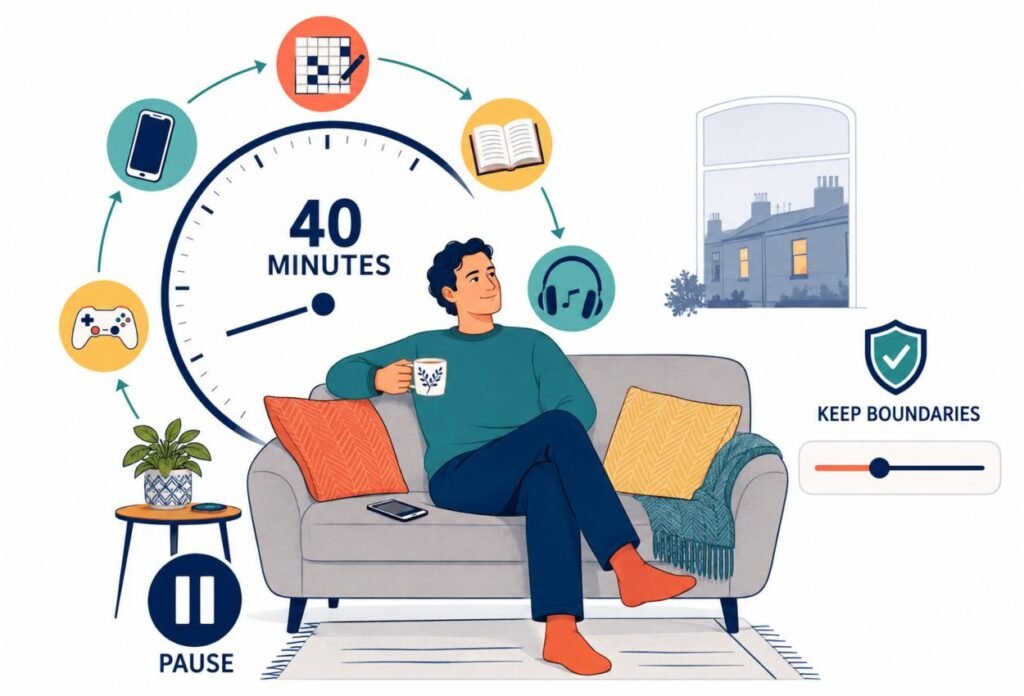
Britain’s leisure hours have become smaller, more frequent and more portable, and the entertainment that fits that shape is going to keep growing. There is nothing to apologise for in that. The evening scroll is not a moral failure any more than the crossword was.
What is worth carrying into it is the same standard you would apply anywhere else: choose things made by people who respect your time, keep the boundaries you set when you were thinking clearly, and rotate your pleasures often enough that none of them goes stale. Do that, and forty minutes on a Tuesday is exactly what it should be: a pause, and nothing heavier.
You must be 18 or over to gamble in the UK. If gambling is affecting you or someone you know, free confidential support is available from the National Gambling Helpline on 0808 8020 133.