



Mental health plays an important role in overall well-being, yet many people are unsure when it is time to seek professional help. While occasional stress or sadness is normal, persistent emotional struggles can interfere with daily life and relationships.
Recognizing the warning signs early can make a big difference in receiving the right support. Understanding when to reach out to a mental health professional is an important step toward improving emotional health and long-term stability.
Recognizing the Need for Professional Support

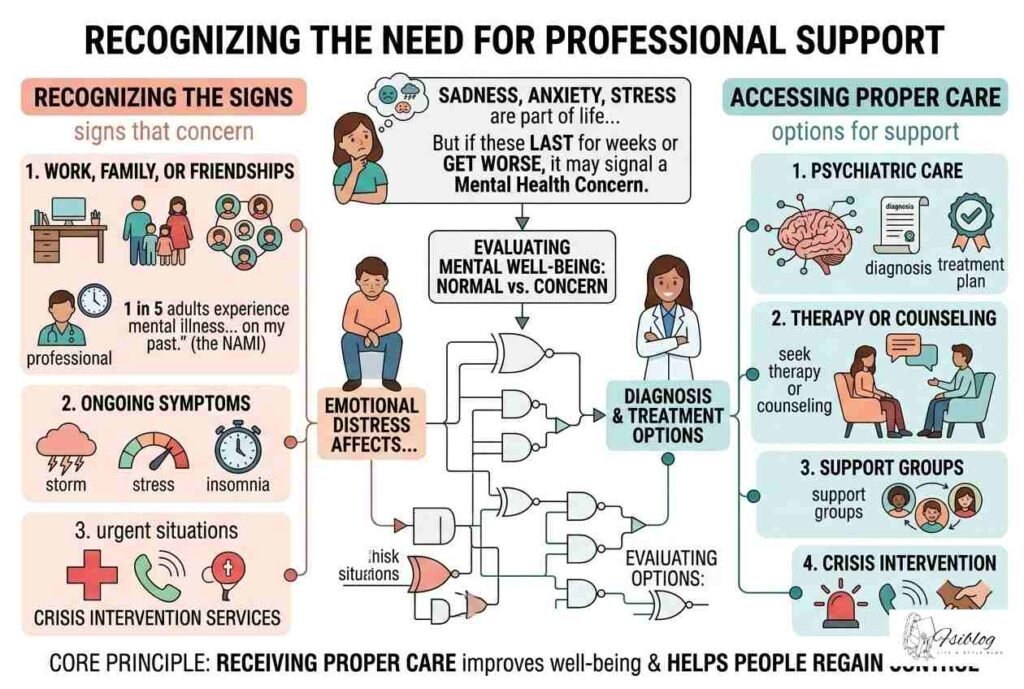
- Feeling sad, anxious, or stressed is part of life. But if these feelings last for weeks or get worse over time, it may signal a mental health concern. Around 1 in 5 adults in the United States experience mental illness each year, according to the National Alliance on Mental Illness (NAMI).
- This shows that many people need help and support at some point.
- Professional psychiatric care can offer diagnosis and treatment options when personal efforts are not enough. If emotional distress affects work, family, or friendships, it is helpful to seek therapy or counseling.
- Support groups and crisis intervention services are also available for those who struggle with ongoing symptoms or face urgent situations like thoughts of self-harm. Receiving proper care improves emotional well-being and helps people regain control over their lives.
Key Indicators to Seek Psychiatric Help
Sometimes, mental health issues can make it hard to handle daily tasks or keep up with friends and family. If you notice ongoing changes in your mood or actions, consider speaking with a psychiatrist for extra support.
Impaired daily functioning
- Trouble getting out of bed, missing work, or falling behind in school may signal impaired daily functioning. Skipping meals, neglecting personal hygiene, or being unable to finish chores can also show that mental health needs support.
- “Serious changes in your energy and focus often point to a need for psychiatric care.” If these patterns last more than two weeks or disrupt your relationships, it is time to seek therapy or counseling.
- Moving from this, severe emotional distress or mood swings can further affect your well-being and may require help from a psychiatrist.
Severe emotional distress or mood swings
- Severe emotional distress can make you feel hopeless, anxious, or very angry often. Some people cry a lot or have sudden mood swings. These feelings may last for weeks and do not get better over time.
- Mood swings can happen without a clear reason and affect how you interact with others at home, work, or school. Sudden highs and lows might signal bipolar disorder, which also needs specialized psychiatric care.
- Mental health professionals like psychiatrists or psychologists use counseling and therapy to help manage these problems. They may suggest treatment options such as medication if needed, based on your diagnosis.
If intense emotions start to hurt your daily life or relationships, consider seeking more support soon. Withdrawal from social activities is another key warning sign that deserves attention next.
Withdrawal from social activities
- Social withdrawal often indicates a problem. People who distance themselves from friends and family may be dealing with their mental health. They might avoid outings or skip events they once enjoyed.
- This behavior can lead to feelings of loneliness and sadness.
- Isolation impacts emotional well-being. It can worsen existing mental illnesses or create new issues. Pursuing professional psychiatric support is essential if social withdrawal becomes a habit.
Therapy, counseling, or group support can assist individuals in reconnecting with others and enhancing their mood and functioning.
Substance abuse or dependency
- Withdrawal from social activities can sometimes result in substance abuse or dependency. Many individuals use drugs or alcohol to manage their emotions. This can swiftly escalate into a challenge.
- When someone depends on substances, it impacts their daily life and relationships.
- Indicators of substance abuse include needing more of the drug to feel its effects. It may also indicate concealing your usage from others or feeling uneasy when attempting to reduce consumption.
Seeking help is crucial at this stage, as professional psychiatric support can assist you in achieving recovery and improved emotional health.
Suicidal thoughts or self-harm tendencies
- Suicidal thoughts and self-harm are serious signs that need attention. These feelings can be frightening and overwhelming. People might feel trapped or hopeless, thinking there is no way out.
- It is essential to seek help immediately if you ever have these thoughts. Talking to a mental health professional can provide support and guidance during tough times.
- Self-harm often stems from deep emotional pain. Some people hurt themselves as a way to cope with their feelings. This behavior indicates the need for psychiatric support. Treatment options like therapy can help individuals understand their emotions better and find healthier ways to deal with them.
- Reaching out for help is a significant step towards recovery and improved emotional well-being.
If you’re considering therapy, a psychiatrist in Anchorage can provide valuable guidance and support tailored to your needs.
Steps to Find the Right Psychiatric Support

To find the right psychiatric support, start by asking friends or family for referrals. Then, check out their qualifications and areas of expertise before your first meeting.
Gather referrals and recommendations
Finding the right psychiatric support can feel tough. Getting referrals and recommendations makes it easier.
- Ask your friends or family for recommendations. They may know good psychiatrists or therapists.
- Talk to your primary care doctor. They can help connect you with mental health professionals.
- Look online for reviews of local therapists and psychiatrists. Websites often show ratings and client feedback.
- Reach out to support groups or community centers. They can give you names of trusted providers in your area.
- Check if your insurance has a list of covered mental health professionals. This can save money on treatment.
- Contact schools or universities for counseling services if you are a student; they often have resources available.
- Seek recommendations from other healthcare providers you trust, like psychologists or social workers; their insights are valuable too.
- Consider contacting hotlines for immediate advice on finding help; they can offer quick suggestions based on your needs.
Research qualifications and specialties
Gathering referrals and recommendations is just the start. Next, it is essential to research the qualifications and specialties of potential psychiatrists to find the best support for your needs.
- Check their education. Ensure they have a degree in psychiatry. Look for board certification to confirm their expertise.
- Explore their specialties. Some psychiatrists focus on specific areas, like anxiety or depression. Find one who matches your needs.
- Review their experience. Look for how long they have practiced psychiatry. More experience often means better care.
- Investigate treatment approaches. Some may use therapy, while others might focus more on medication. Understand their methods before deciding.
- Read reviews and testimonials from patients. Past experiences can provide insight into their practice style and effectiveness. In addition to therapy, many organizations provide mental health support through community programs and online resources.
- Verify licensing status with state medical boards to ensure they are allowed to practice in your area.
- Ask about continuing education efforts, which show a commitment to staying updated on the latest mental health practices and treatments.
- Consider any affiliations with hospitals or clinics; these connections can indicate the level of care you might receive.
Researching these aspects helps you make an informed choice about psychiatric support that fits your emotional health needs best.
Ask questions during initial consultations.
Finding the right psychiatric support is important for emotional health. Asking questions can help you feel more comfortable with your provider.
- Begin with your concerns. Share what issues led you to seek help. Be clear about your feelings and thoughts.
- Inquire about their experience. Ask how long they have been practicing. Find out if they have specific training related to your needs.
- Discuss treatment options. Understand what types of therapy or medications they recommend. How these approaches might help you.
- Explore their approach to care. Learn if they follow a specific method or if they personalize treatment plans based on each patient.
- Ask about follow-up care. Find out how often you will meet and what to expect in future sessions.
- Clarify the costs involved. Get details about fees, insurance coverage, and payment plans upfront.
- Seek information on crisis intervention methods if needed urgently during treatment.
- Discover resources for additional support, like group therapy or community services, that may help you further in recovery.
- Don’t hesitate to ask for clarification if something is unclear during the meeting; it’s crucial to understand everything fully before starting treatment.
- Understand the next steps after the initial consultation and what will happen moving forward in your mental health journey.
Making the Most of Treatment
Set clear goals with your provider. Explore different types of therapy and medication to find what works best for you.
Setting realistic goals with your provider
Setting goals with your provider is key in mental health treatment. Talk openly about what you want to achieve. Your psychiatrist can help you create goals that fit your needs. Focus on small, specific steps rather than big changes.
Make sure these goals are clear and measurable. This helps track your progress over time. Celebrate small wins along the way to keep motivation high. Working together this way makes treatment more effective and personalized for you.
Exploring therapy options and medication if needed
- Setting goals with your provider helps guide your treatment. Therapy options can vary widely. Some people find talk therapy helpful. Others may benefit from cognitive-behavioral therapy, which focuses on changing negative thoughts.
- Medication might also be an option. Antidepressants and anti-anxiety medications can help manage symptoms of mental health issues. A psychiatrist will discuss whether medication is right for you based on your needs and goals.
- The key is to work together with your provider to find the best support for your recovery journey.
Conclusion
Obtaining psychiatric help is a significant step. It demonstrates strength and self-awareness. Many individuals encounter challenges that can feel overwhelming. Receiving support can ease the burden.
You are not alone on this journey to better mental health.
Disclaimer
The information provided in this article is for general educational purposes only and is not a substitute for professional medical, psychiatric, or psychological advice. Mental health conditions can vary in severity and may require individualized assessment and treatment. If you or someone you know is experiencing severe emotional distress, thoughts of self-harm, or any urgent mental health crisis, seek immediate help from a licensed mental health professional, local emergency services, or a crisis hotline. Always consult a qualified psychiatrist, psychologist, or healthcare provider for diagnosis, treatment, or personalized guidance regarding mental health concerns.