



Finding clever ways to save money without giving up the things you love can be a game-changer. With a bit of savvy planning, you can enjoy a comfortable lifestyle while keeping your budget in check. One of the easiest ways to start saving is by using Latest Deals discount vouchers to find great deals on the products and services you use daily.
Make Use of Technology
Technology is more than just a convenience; it’s a powerful tool for financial control. From monitoring spending patterns to alerting you about price drops, modern apps and digital tools make budgeting intuitive and effortless. You don’t need to spend hours tracking every purchase smart apps do it for you, giving you actionable insights that help prevent overspending before it happens. Technology also empowers you to find deals and alternatives, saving you money while keeping your lifestyle intact.
Budgeting Apps: Let the Numbers Do the Nagging
A solid budgeting app turns your bank chaos into something you can read. Apps like Mint or YNAB (You Need A Budget) link to your accounts, categorize spending automatically, and show you what’s actually happening, not what you think is happening.
Easy Wins:
- Automatic categorization and rules: make coffee, takeaways, and online shopping appear as their own categories.
- Spending alerts: get pinged when you’re about to blow past a limit.
- Weekly money check-in: five minutes on a Sunday beats end-of-month panic.
Price Comparison Tools: Stop Overpaying by Default

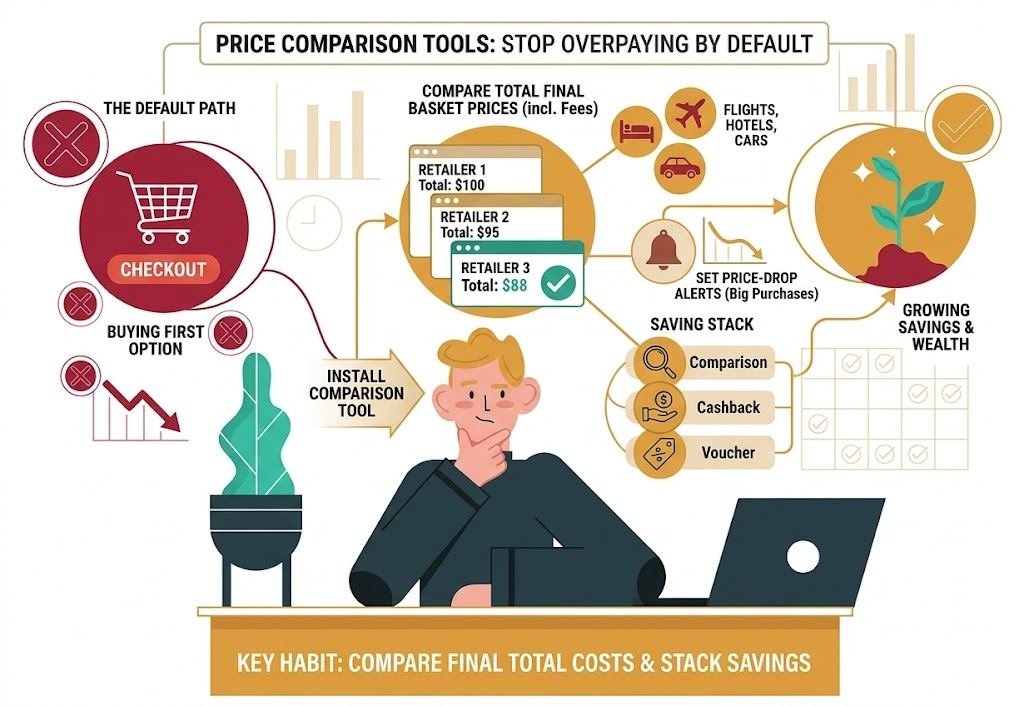
Most people overspend not because they’re reckless but because they buy the first option they see. Price comparison tools fix that.
Tips:
- Flights, hotels, car hire: compare across platforms and book where the total cost, including fees, is lowest.
- Everyday shopping: check prices across retailers before hitting buy now.
- Big purchases: set up price-drop alerts so you buy on your timeline.
Fast-Saving Habits:
- Compare the final basket price, not just the headline price.
- Stack savings: comparison tool + cashback + discount voucher.
Optimize Subscriptions
Subscriptions can quietly drain your budget. Many of us sign up for services we rarely use, assuming the small monthly charges won’t matter. However, these recurring payments add up quickly. By reviewing what you pay for, downgrading unnecessary features, or rotating services, you can save a significant amount without changing your entertainment or lifestyle habits. The key is to keep what you genuinely use and cut what doesn’t bring value.
Review and Cancel
- Audit subscriptions monthly or quarterly.
- Check streaming platforms, music apps, cloud storage, gyms, delivery memberships, and forgotten free trials.
- If unused for weeks, cancel it today.
Downgrade Instead of Ditching
- Drop 4K to HD, remove extra screens, switch family plans to individual, or downgrade from premium to basic.
Rotate Services
- Keep one or two services at a time, cancel, then rotate when ready.
Bundle Only If It’s Actually Saving You Money
- Look for bundles you were already paying for, like internet + mobile or streaming + delivery perks.
- Avoid promo pricing traps and unused add-ons.
Smart Grocery Shopping
Grocery bills are one of the largest recurring expenses for most households, but they are also highly controllable. By planning meals, shopping seasonally, and buying in bulk wisely, you can significantly reduce your monthly spend without compromising on quality or nutrition. A little organization goes a long way, turning a potentially stressful weekly shop into a streamlined, cost-effective routine.
Meal Planning Without Making It a Whole Lifestyle
- Pick 3–4 core dinners and plan leftovers for lunch.
- Build meals around what you already have.
- Repeat a default week when busy.
Buy in Bulk Only for the Right Stuff
- Pantry staples, household basics, freezer-friendly items.
- Avoid bulk traps like items you might not use or huge packs of fresh produce.
Seasonal Buying: Cheaper, Better, Less Disappointing
- Buy what’s in season and plan meals accordingly.
- Freeze seasonal extras for later.
- Swap expensive out-of-season ingredients for affordable alternatives.
Energy Efficiency
Energy costs are unavoidable, but you can control them with smarter usage and efficient devices. Small adjustments, like using LEDs or smart plugs, can significantly reduce monthly bills over time. Energy-efficient habits not only save money but also extend appliance lifespans and reduce environmental impact, giving you a practical way to cut expenses without changing how you live.
Transportation Savings
Transportation is a major budget drain, especially if you rely on a car every day. However, careful planning and smart choices can lower costs without affecting your mobility. Options like carpooling, public transport, or batching errands can reduce fuel consumption, maintenance, and insurance expenses while still getting you where you need to go.
Carpooling
- Share fuel and parking costs with a simple weekly rotation and shared payment app.
Public Transport
- Compare all-in driving costs to monthly passes or hybrid options like park-and-ride.
Drive Less
- Batch errands into one trip per week to reduce mileage.
Insurance and Vehicle Efficiency
- Shop around annually, raise your excess if possible, and check for discounts.
- Keep tires properly inflated, maintain filters and alignment.
Rent Instead of Own
- If a car is rarely used, public transport plus weekend rental can be cheaper than full ownership.
Eating Out Wisely
Dining out is an important part of life, but small choices can make a big difference. Using discounts, strategically timing visits, sharing dishes, and managing drink choices help you enjoy meals without overspending. With these approaches, going out becomes a treat rather than a budget concern.
| Strategy | What to Do |
|---|---|
| Use Dining Discounts | Look for early-week specials, set menus, happy hours, and 2-for-1 offers. |
| Choose the Right Time | Opt for lunch menus and early-bird deals instead of dinner. |
| Be Strategic With Drinks | Limit multiple drinks; choose one quality option or go non-alcoholic. |
| Share and Take Home | Share starters, skip extras, and take leftovers home. |
| Ask Questions | Ask about specials, substitutions, or tap water—smart budgeting, not awkward. |
Adopt DIY
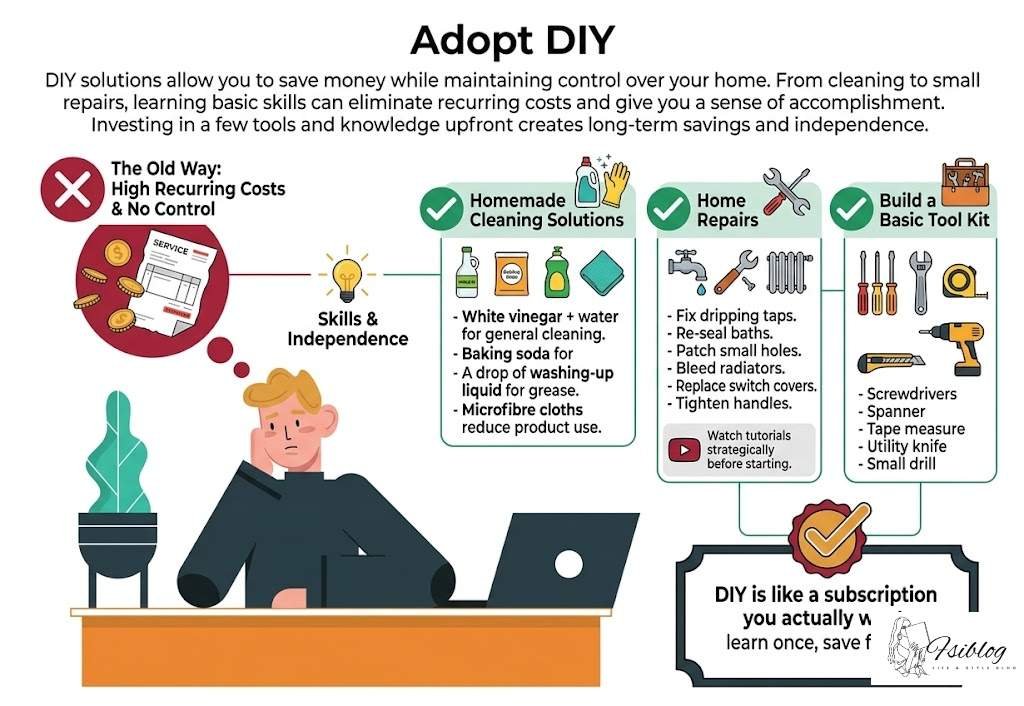
DIY solutions allow you to save money while maintaining control over your home. From cleaning to small repairs, learning basic skills can eliminate recurring costs and give you a sense of accomplishment. Investing in a few tools and knowledge upfront creates long-term savings and independence.
Homemade Cleaning Solutions
- White vinegar + water for general cleaning.
- Baking soda for scrubbing stains.
- A drop of washing-up liquid for grease.
- Microfibre cloths reduce product use.
Home Repairs
- Easy DIY tasks: fix dripping taps, re-seal baths, patch small holes, bleed radiators, replace switch covers, tighten handles.
- Watch tutorials strategically before starting.
Build a Basic Tool Kit
- Screwdriver set, adjustable spanner, tape measure, utility knife and small drill.
DIY is like a subscription you actually want: learn once, save forever.
Conclusion
Saving money in 2026 doesn’t require sacrifice or a dull lifestyle. By using technology wisely, optimizing subscriptions, planning meals, improving energy efficiency, managing transportation costs, eating out smartly, and welcoming DIY skills, you can keep more money in your pocket while enjoying the things you love. The key is consistency, awareness, and small adjustments that compound into meaningful savings, making your daily life both comfortable and financially smarter.